Risk Analysis, Tolerance, and Strategies
Not sure you’re ready?
Take the ~3-minute readiness diagnostic and see where you stand.
Perfect security is a thermodynamic impossibility in any functioning IT environment. Every open port on a network switch, every user account provisioned in an operating system, and every physical server drawing power introduces a measurable probability of failure or compromise. As cybersecurity professionals, the objective is not the absolute elimination of these threats, but rather the rigorous, calculated management of them. Understanding risk analysis is the mechanism by which technical vulnerabilities—a missing patch, an overly permissive firewall rule, an aging piece of hardware—are translated into the universal language of business: financial impact and statistical probability.
Before an organization can calculate or treat risk, it must define its operational boundaries. You cannot protect a network efficiently if you do not understand the business’s threshold for pain.
We define this using two highly specific concepts: risk appetite and risk tolerance.
- Risk appetite is the broad, total amount of risk an organization is willing to accept to achieve strategic objectives. Think of this as the overarching philosophy. A venture-backed tech startup launching a new app will inherently have a much higher risk appetite than a century-old commercial bank operating under strict federal regulations.
- Risk tolerance defines the specific degree of variance from the risk appetite that an organization is willing to accept.
To understand the difference, imagine a highway speed limit. The government’s risk appetite for highway travel dictates a general speed of 65 miles per hour to balance safety with transit efficiency. However, a police officer’s risk tolerance dictates that they will not actually pull you over until you exceed 72 miles per hour. Tolerance is the exact, measurable variance permitted in day-to-day operations.
about_10.9_miles_north_of_Nevada_State_Route_535(Idaho_Street)_in_Elko_County%2C_Nevada.JPG)
When a vulnerability scanner lights up your dashboard with alerts, you must determine how much danger each vulnerability poses. There are two distinct methodologies used to measure this threat.
| Analysis Type | Definition | Best Used For |
|---|---|---|
| Qualitative | Qualitative risk analysis uses subjective labels such as high, medium, or low to assess the likelihood and impact of a threat. | Rapid triage, initial risk assessments, and evaluating threats where exact financial data is impossible to obtain. |
| Quantitative | Quantitative risk analysis assigns specific monetary values and numeric probabilities to calculate expected risk losses. | Justifying security budgets, evaluating expensive infrastructure changes, and performing rigorous cost-benefit analyses. |
Qualitative analysis relies on human judgment and experience. It is fast and intuitive. Quantitative analysis, however, strips away subjectivity. It forces the IT administrator to answer mathematically: Exactly how much money will this downtime cost us, and what is the exact probability it will occur?
To perform a proper quantitative risk assessment, you must learn the mathematics of disaster. We rely on three primary acronyms—EF, SLE, and ARO—to calculate our ultimate metric: ALE.
1. Exposure Factor (EF)
If a devastating event occurs, how much of the asset is truly destroyed? The acronym EF stands for Exposure Factor. By definition, the Exposure Factor represents the percentage of an asset's total value that is lost due to a single risk event.
Crucial Rule: An Exposure Factor of one hundred percent means the asset is completely destroyed by the threat event. For example, a catastrophic database deletion without backups yields an EF of 100%. A minor power surge that damages a few hard drives in a server rack might yield an EF of 15%.

2. Single Loss Expectancy (SLE)
The acronym SLE stands for Single Loss Expectancy.
Single Loss Expectancy is the total monetary loss expected from a single occurrence of a specific threat. It translates the physical damage of the Exposure Factor into raw dollars.
Formula: Single Loss Expectancy is calculated by multiplying the Asset Value by the Exposure Factor.
SLE=AssetValue×ExposureFactor
Example: You operate a data center with an asset value of $1,000,000. You evaluate the threat of a minor localized fire. You estimate the fire would destroy 20% of the room.
Therefore, \$1,000,000 (Asset Value) \times 0.20 (EF) = \$200,000 (SLE). Every time a localized fire happens, you lose $200,000.
3. Annualized Rate of Occurrence (ARO)
The acronym ARO stands for Annualized Rate of Occurrence.
The Annualized Rate of Occurrence is the estimated number of times a specific threat event will happen within a single year. If historical weather data dictates that a hurricane hits your facility roughly once every ten years, your ARO is 0.1. If a user clicks a phishing link on your network five times a year, the ARO is 5.0.

4. Annualized Loss Expectancy (ALE)
The acronym ALE stands for Annualized Loss Expectancy. This is the ultimate number management cares about.
Annualized Loss Expectancy is the total expected monetary loss for an asset due to a specific threat over a one-year period.
Formula: Annualized Loss Expectancy is calculated by multiplying the Single Loss Expectancy by the Annualized Rate of Occurrence.
ALE=SLE×ARO
Returning to our fire example: If our fire SLE is $200,000, and building history dictates this happens once every twenty years (an ARO of 0.05), our calculation is \$200,000 \times 0.05 = \$10,000. Our ALE for this specific threat is $10,000.
The Real-World Application: Justifying Budgets
Why do you need to memorize these formulas? Because as an IT professional, you cannot simply demand a blank check for new security tools.
Security professionals justify the cost of a control by comparing the Annualized Loss Expectancy before and after the control is implemented.
If the ALE of a malware infection is $50,000, and a new endpoint detection system costs $10,000 a year but reduces the malware ALE to $5,000, the control effectively saves the company $35,000 annually. The math proves the investment is logical. If the control cost $60,000 a year, purchasing it would be mathematically irrational.
Before you take any action to secure your environment, you are dealing with inherent risk. Inherent risk is the baseline level of risk that exists before any security controls or countermeasures are applied. It is the raw, untamed danger of operating your business.
Once we assess our inherent risk, we must choose how to treat it. There are five fundamental strategies for risk treatment.
1. Risk Mitigation
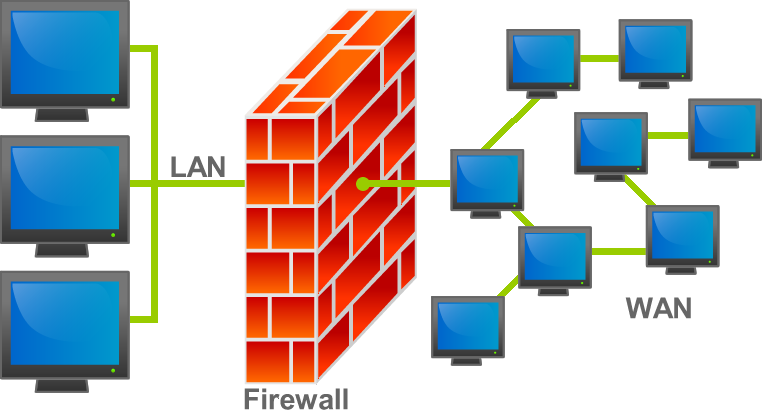
Risk mitigation reduces the likelihood or impact of a risk by implementing active security controls. This is the strategy IT administrators use most frequently in their daily reality. Installing antivirus software and configuring network firewalls are examples of risk mitigation. You aren't eliminating the existence of hackers on the internet, but you are actively reducing the probability they will successfully breach your network.
2. Risk Avoidance
Sometimes a threat is too great to mitigate. Risk avoidance requires completely stopping the business activity or process that causes the risk. You alter the architecture so the risk physically cannot manifest. Moving a data center out of a flood zone to prevent flood damage is an example of risk avoidance. You haven't lessened the impact of a flood; you have entirely removed your assets from the flooded area, dropping the ARO to absolute zero.
3. Risk Transfer
If you cannot mitigate or avoid a risk, you can make it someone else's financial problem. Risk transfer shifts the financial burden of a risk event from the organization to a third party.
How is this done in practice?
- Purchasing a cybersecurity insurance policy is a common method of risk transfer. If a ransomware gang encrypts your servers, the insurance company absorbs the financial blow of the recovery.
- Likewise, outsourcing a risky business function to a specialized third-party vendor serves as a form of risk transfer. If processing credit card payments poses too high an inherent risk to your local servers, you transfer that function to a dedicated payment gateway provider like Stripe or PayPal.
4. Risk Sharing
Similar to transferring, risk sharing involves distributing the risk burden across multiple parties to lessen the financial impact on any single organization. This is frequently seen in joint ventures or shared infrastructure models, where multiple organizations pool their resources so that if a catastrophic failure occurs, no single entity absorbs the total monetary devastation.
5. Risk Acceptance
Finally, what happens when a risk cannot be mitigated, avoided, transferred, or shared efficiently?
Risk acceptance involves acknowledging a risk and actively choosing not to implement any countermeasures.
Why would an administrator willingly leave a system vulnerable? Because mathematics dictates it. Risk acceptance is typically chosen when the cost of security controls exceeds the potential cost of the risk event.
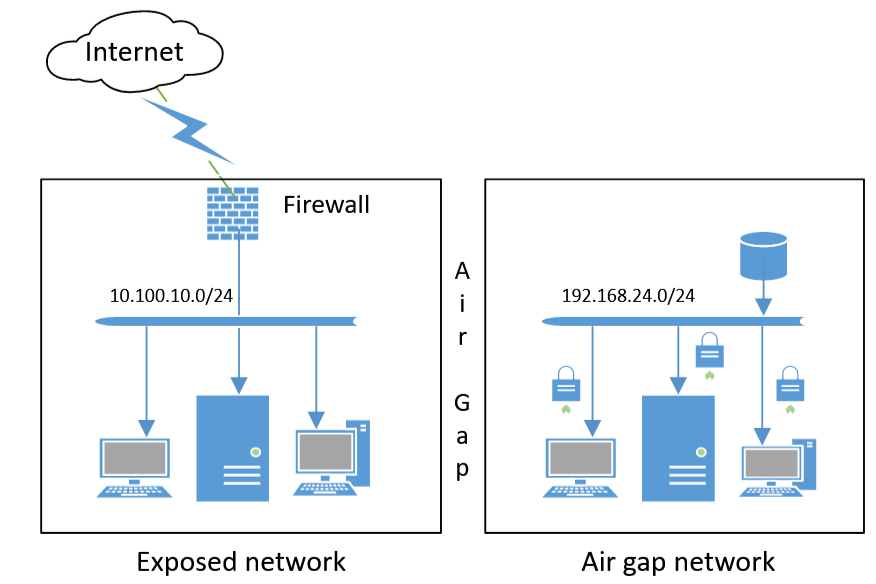
For example, choosing to run an unsupported legacy server due to budget constraints is an example of risk acceptance. If migrating an old, air-gapped Windows Server 2003 machine to a modern OS costs $80,000 in proprietary software rewrites, but the ALE of the machine failing is only $2,000, the logical, professional choice is to simply accept the risk of the system crashing.
Once you have applied your chosen treatment strategies (mitigation, transfer, etc.), the danger that is left over is known as residual risk. Residual risk is the level of risk that remains after an organization implements security controls. No matter how well you configure your firewalls, residual risk will always be greater than zero.
In a modern enterprise network, you will be calculating SLEs, balancing risk tolerances, and executing mitigation strategies across thousands of assets simultaneously. Relying on memory or disjointed email threads is professional negligence.
To manage this complex ecosystem, security teams utilize a central repository. A risk register is a formal document used to track identified risks, potential impacts, and selected treatment strategies.
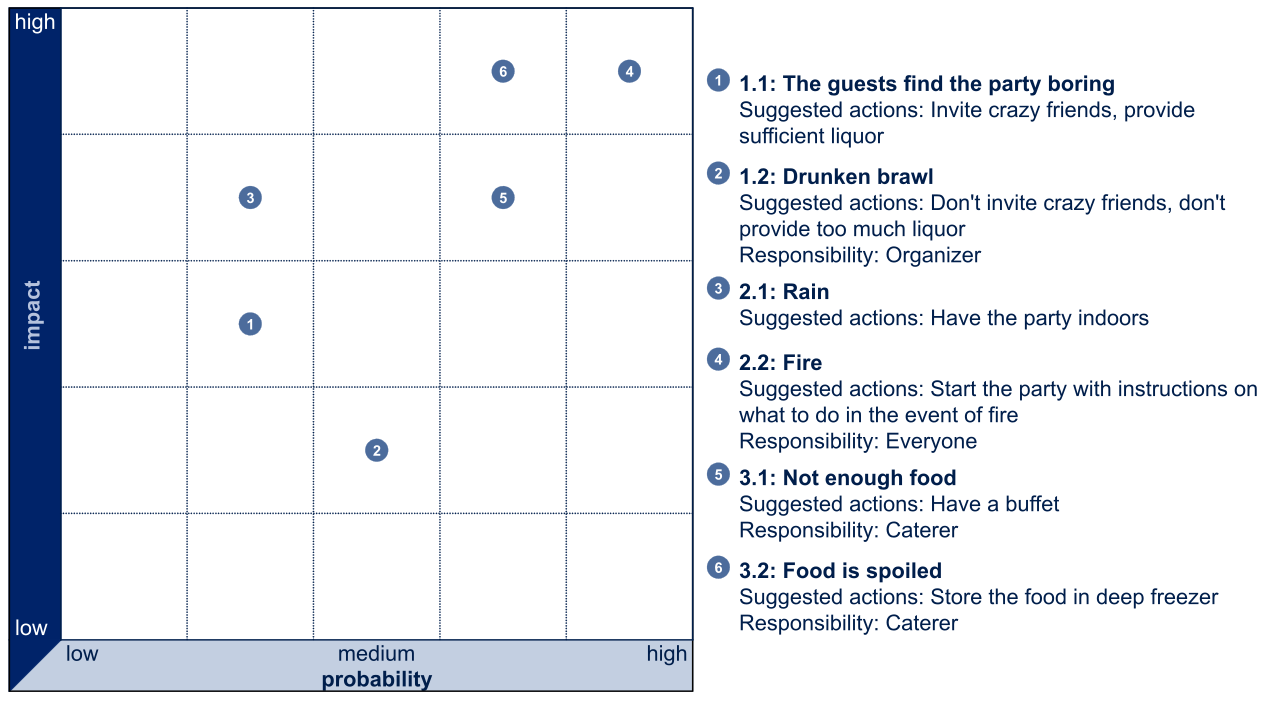
The risk register is your ultimate ledger of operational reality. It records the inherent risk of an unpatched database, details the quantitative ALE calculation, logs the decision to mitigate the risk via a web application firewall, and documents the final, acceptable residual risk. It transforms the chaotic, abstract terror of cyber threats into a disciplined, manageable science.