Social Engineering Attacks
Not sure you’re ready?
Take the ~3-minute readiness diagnostic and see where you stand.
An organization can invest millions of dollars in next-generation firewalls, zero-trust network architectures, and advanced encryption protocols, yet find its entire infrastructure compromised in minutes simply because someone politely asked for the keys. This is the reality of human-centric attacks. While technical vulnerabilities exist in code and silicon, social engineering manipulates human psychology to gain unauthorized access to systems or information. It bypasses the firewall entirely by targeting the user operating behind it.
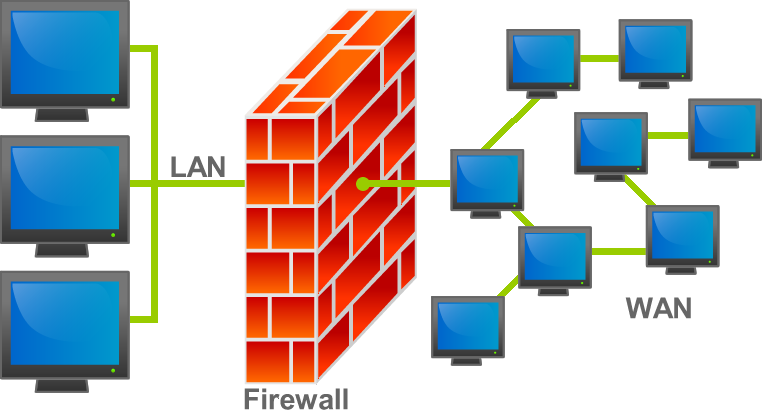
As a cybersecurity professional, your perimeter extends beyond routers and endpoints; it includes the human mind. The primary goal of social engineering is remarkably practical: to obtain credentials, financial data, or sensitive company information. Because no software patch can reprogram human nature, security awareness training is the primary mitigation strategy against social engineering attacks. By understanding the exact vectors, psychological levers, and scenarios attackers use, you can better equip your users to recognize and neutralize these threats before a breach occurs.
Technical exploits rely on buffer overflows or misconfigured permissions. Social engineering exploits inherent human traits such as trust, fear, urgency, and curiosity. An attacker's fundamental tactic is to create a false sense of urgency to rush a victim into making an insecure decision. When the human brain is hurried or frightened, it bypasses critical thinking and defaults to compliance.
Attackers weaponize specific psychological principles to force this compliance:
- Authority: An attacker leverages the psychological principle of authority by impersonating a CEO or law enforcement officer to force compliance. A junior employee is highly unlikely to question an urgent directive from the "Chief Financial Officer."
- Intimidation: Closely related to authority, an attacker leverages the psychological principle of intimidation by threatening negative consequences if the victim does not comply. This might involve threatening termination, legal action, or public embarrassment.
- Consensus: Also known as social proof, an attacker leverages the psychological principle of consensus by convincing a victim that others have already performed the requested action. ("The rest of the accounting team has already updated their portal credentials.")
- Scarcity: An attacker leverages the psychological principle of scarcity by claiming a resource or opportunity is in limited supply. ("Only 10 VPN tokens are left for remote access; click here to claim yours.")
- Familiarity: To drop a target's guard, an attacker leverages the psychological principle of familiarity by establishing common ground or mutual acquaintances with the victim, often citing shared connections discovered on social media.
Phishing is a social engineering attack that uses fraudulent electronic communications to deceive a target. It is the most pervasive delivery mechanism for modern cyberattacks, operating as a numbers game where millions of messages are sent in hopes of catching a few victims.
The Mechanics of the Phish: Phishing emails frequently contain malicious links designed to steal user credentials by directing victims to fake login portals. Alternatively, phishing emails frequently contain malicious attachments designed to install malware, such as ransomware or remote access trojans (RATs), the moment the file is opened.
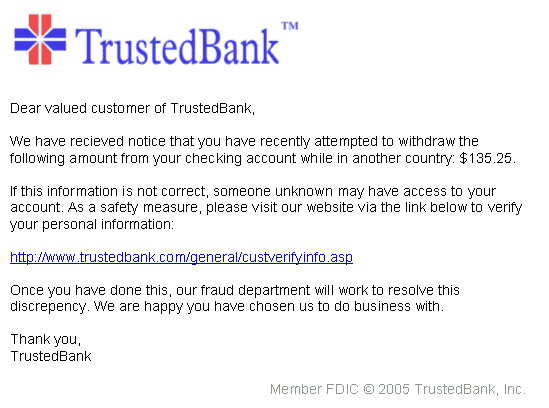
While traditional phishing casts a wide net, attackers refine their methods to increase success rates through specialization:
Targeted Phishing
- Spear Phishing: Moving away from generic blasts, spear phishing is a highly targeted phishing attack aimed at a specific individual or organization. Attackers customize the email to reference the target's specific department, projects, or colleagues.
- Whaling: A specialized subset of spear phishing, whaling is a form of spear phishing that specifically targets high-level executives or senior management. Compromising a "whale" (like a CEO) yields immense internal access and authority.
Alternate Delivery Channels
The desktop email client is no longer the sole vector. Attackers follow users to their mobile devices and communication platforms.
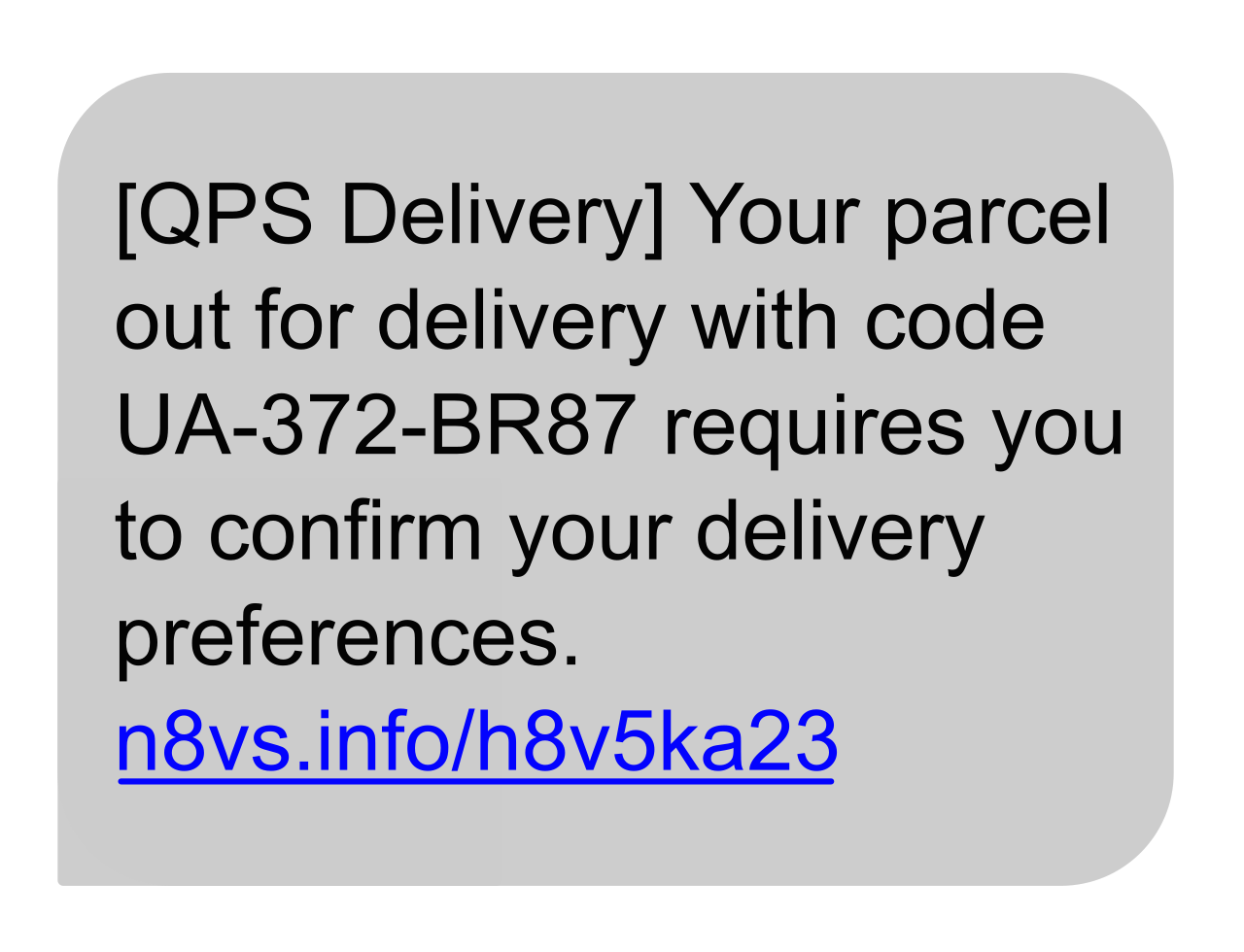
- Smishing: Smishing is a form of phishing that utilizes Short Message Service (SMS) text messages. Because text messages are brief and often viewed on smaller screens, smishing attacks often include a shortened URL to hide the true destination of the malicious link. Users are accustomed to trusting texts from their banks or delivery services, making this highly effective.
- Vishing: Vishing is a form of phishing conducted over voice communication platforms such as telephone calls or Voice over IP (VoIP). To bypass immediate skepticism, vishing attackers frequently use caller ID spoofing to make the call appear to originate from a trusted organization, like the internal IT helpdesk or a regional bank.

The vishing threat landscape has evolved drastically with artificial intelligence. Today, deepfake audio technology is increasingly used in vishing attacks to convincingly mimic the voice of a trusted individual. An attacker only needs a brief audio sample of a CEO from a public earnings call to generate a synthetic voice that commands an employee to authorize a financial transfer over the phone.
When attackers require deep access or high-value payouts, they move beyond simple links and attachments, opting for elaborate, multi-stage deceptions.
Pretexting
Pretexting involves an attacker creating a fabricated scenario to manipulate a target into providing sensitive information. Unlike a simple phishing email, pretexting requires the attacker to establish a credible persona to gain the trust of the victim.
For example, an attacker employs pretexting by posing as an IT support technician to trick an employee into revealing a password over the phone under the guise of "verifying an active directory migration." To make this persona believable, pretexting relies heavily on open-source intelligence gathering (OSINT) to collect background information about the target. If the attacker knows the employee's manager's name and the specific endpoint protection software the company uses, the illusion becomes nearly impenetrable.
Business Email Compromise (BEC)
Perhaps the most financially devastating social engineering tactic is Business Email Compromise (BEC). This is an exploit where an attacker gains access to a corporate email account to conduct fraudulent wire transfers.
BEC is an exercise in extreme patience. Business Email Compromise attackers often monitor compromised email accounts for weeks to understand internal billing processes, vendor relationships, and communication patterns. They wait for the perfect moment—such as the finalization of a massive real estate transaction or supply chain purchase.
A common Business Email Compromise tactic involves intercepting a legitimate invoice and modifying the payment routing instructions to point to an attacker-controlled bank account.
Crucial Concept: Security systems often fail to detect BEC because the emails originate from a genuinely compromised internal account or a trusted vendor. Because of this, Business Email Compromise attacks frequently succeed without the use of malware or malicious links. No antivirus will flag an urgent text-only email from the CEO demanding a wire transfer.
Brand Impersonation and Typosquatting
To further lend credibility to their pretexting and phishing campaigns, attackers utilize brand impersonation. This occurs when an attacker uses the branding of a legitimate company to deceive victims. Attackers copy company logos and email templates to create convincing brand impersonation campaigns, making a fake Microsoft 365 or Salesforce login page look pixel-perfect.
To host these fake portals, attackers employ typosquatting. Typosquatting is frequently used in brand impersonation to create domain names that look visually similar to the legitimate brand (e.g., micros0ft.com or paypaI.com using a capital "i"). Typosquatting relies on users making typographical errors when entering a website address into a browser, or simply failing to notice the slight misspelling in an email header.

Not all social engineering happens across a network. Many attacks exploit the physical environments where employees work and the predictable habits they form.
In-Person Deception
- Baiting: Baiting is a social engineering attack that uses a false promise to lure a victim into a trap, exploiting human curiosity or greed. Leaving a malware-infected USB drive in a company parking lot is a practical example of a baiting attack. The drive might be labeled "Executive Salary Q3" to ensure the finder plugs it into a corporate machine.
- Tailgating vs. Piggybacking: Both involve breaching physical access controls (like badge readers), but the distinction lies in the authorized user's awareness. Tailgating involves an unauthorized person physically following an authorized person into a secure area without the authorized person's consent (e.g., catching a door right before it clicks shut). Conversely, piggybacking occurs when an authorized person knowingly allows an unauthorized person to enter a secure facility, often out of misguided politeness (e.g., holding the door for someone carrying heavy boxes).

- Shoulder Surfing: In a busy coffee shop or an airplane, shoulder surfing involves an attacker looking over a victim's shoulder to visually steal sensitive information like passwords or PINs as they are typed.
- Dumpster Diving: Information security extends to how you destroy data. Dumpster diving involves an attacker searching through physical trash to find sensitive organizational information, such as discarded org charts, printed source code, or sticky notes with passwords.
Information Gathering & Web Traps
- Elicitation: Not all attacks are aggressive or urgent. Elicitation is the subtle extraction of sensitive information from a target during what appears to be a casual conversation. An attacker at an industry conference might chat with an engineer at the bar, casually flattering them to reveal details about the proprietary network architecture they just designed.
- Watering Hole Attack: Instead of attacking users directly, attackers poison the environments they frequent. A watering hole attack compromises a specific legitimate website that a targeted group of users is known to visit. For example, if attackers want to compromise developers at a specific tech firm, they might infect a niche programming forum those developers frequent with drive-by malware.
Social engineering is no longer confined to stealing an individual's credentials; it has scaled to the societal and geopolitical levels. The same psychological principles of authority, consensus, and fear used to trick a single employee can be amplified to trick millions.
Influence campaigns utilize social media and other platforms to sway public opinion or spread disinformation. By creating networks of fake accounts, attackers can manufacture a false sense of consensus around controversial topics, dividing populations or damaging corporate reputations.
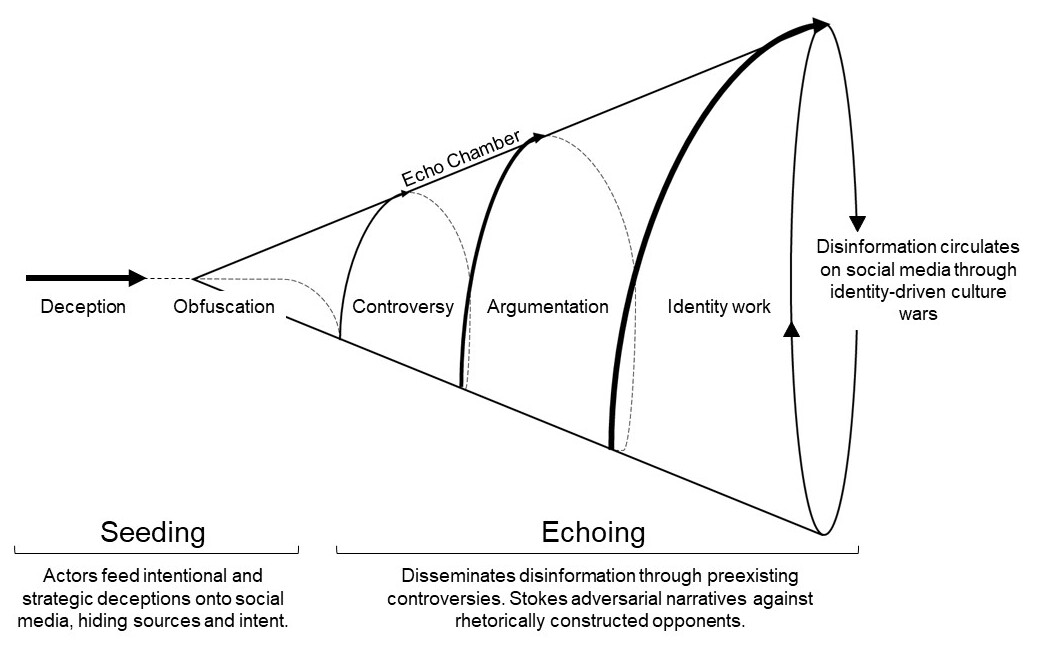
On an international level, hybrid warfare often incorporates social engineering and disinformation campaigns to destabilize a target nation or organization. Rather than strictly using kinetic military force, adversaries combine cyberattacks (like grid shutdowns) with massive social engineering campaigns designed to cause panic, degrade trust in institutions, and paralyze a nation's ability to respond.
Understanding social engineering is fundamentally about understanding the human operating system. By analyzing how trust is forged, how urgency is manufactured, and how familiar environments are manipulated, you transform your workforce from a vulnerable attack surface into your organization's most intelligent, adaptable firewall.