Every network architecture implicitly assumes an adversary. You do not configure access control lists, implement zero-trust protocols, or deploy endpoint detection systems in a vacuum. You build them to resist human beings acting with specific intent, budgets, and operational constraints. In cybersecurity, we cannot defend systems mathematically if we ignore the physics of the attacker. To protect a network, you must understand exactly who is knocking at the perimeter, what they want, and what resources they possess.
A threat actor is any entity responsible for an event that impacts the security of a system or network.
As a security professional or network administrator, this is the foundational reality of your daily work. A generic firewall rule might automatically drop a careless automated probe, but it is fundamentally inadequate against a highly funded, patient human adversary who adapts to your defenses in real-time. To build effective defenses, threat actors are systematically classified by their level of technical sophistication and available financial resources.
Regardless of their classification, all adversaries share a common starting line. Before a single packet is sent maliciously, Open-Source Intelligence (OSINT) is frequently used by all classifications of threat actors to gather target information before launching an attack. From reviewing LinkedIn profiles to discover who has administrative access, to scanning public code repositories for accidental API key leaks, reconnaissance is universal.
From that baseline, the threat landscape diverges drastically based on the origin of the attacker: External threat actors originate from outside the organization's network boundary, while internal threat actors originate from inside the organization's logical or physical network boundary.
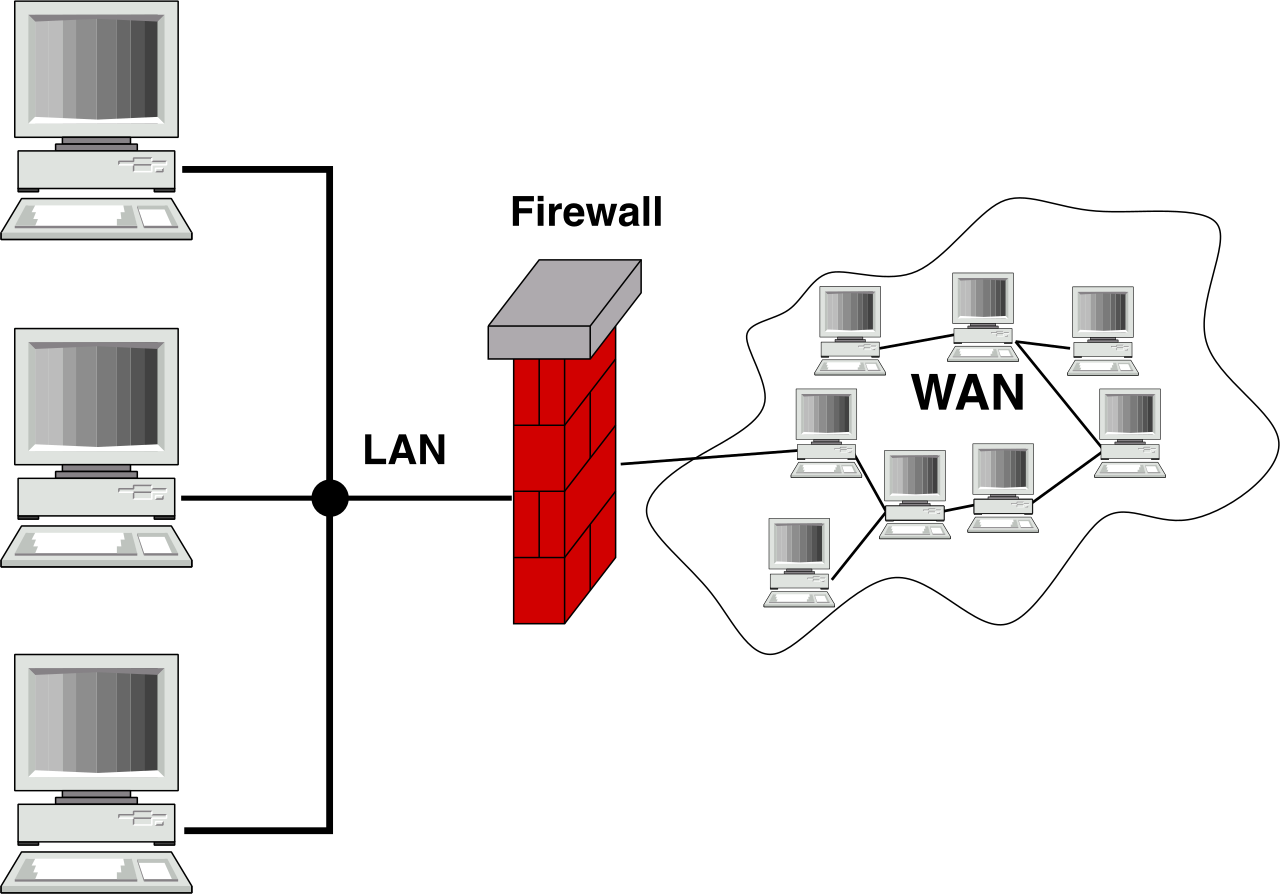
A network firewall acts as the security perimeter separating the public internet from the internal network, forming the primary logical barrier against external threat actors.
When we look outside the perimeter, we are evaluating adversaries based on a spectrum of capability—from sovereign nations with virtually unlimited funds to curious amateurs running downloaded scripts.
Nation-State Actors and APTs
At the absolute apex of the cyber threat ecosystem are nation-state actors. These are highly skilled cyber attackers sponsored by a national government. Because they are backed by the geopolitical apparatus of a country, nation-state threat actors possess the highest level of resources and funding among all attacker types.
Their goals are rarely monetary. The primary motivation for nation-state attackers is typically political espionage or military advantage. They are not looking for quick payouts; rather, nation-state attackers often seek to steal government secrets or proprietary intellectual property from other nations to bypass decades of costly research and development. Furthermore, state-sponsored actors frequently target critical infrastructure to cause national disruption during geopolitical conflicts, mapping out power grids, water treatment facilities, and financial systems to use as leverage or weapons during physical conflicts.
Because their goals require long-term stealth, Advanced Persistent Threats (APTs) are most commonly associated with nation-state threat actors.
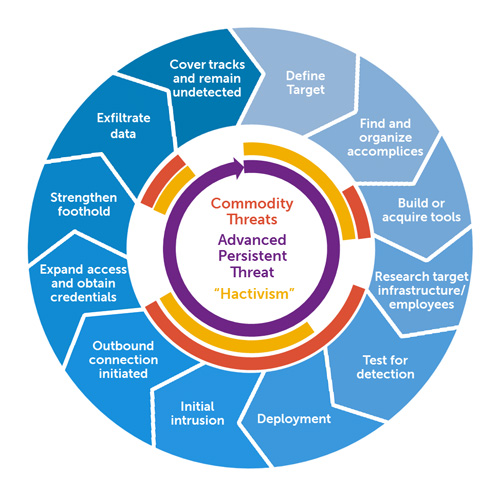
An Advanced Persistent Threat (APT) maintains long-term undetected access to a compromised network to continuously extract data.
The staged lifecycle of an Advanced Persistent Threat (APT), demonstrating how sophisticated adversaries establish and maintain long-term, stealthy access within a target network to continuously exfiltrate data.
If you are defending against an APT, you are not dealing with a smash-and-grab robbery; you are dealing with a silent parasite that may live inside your active directory environment for years.
Organized Crime Syndicates
Moving from geopolitical warfare to pure illicit capitalism, we find organized crime syndicates. These entities operate as highly structured groups of professional cybercriminals. They have corporate structures, HR departments, help desks for their victims, and specialized operational wings.
The primary motivation for organized crime threat actors is financial gain. To achieve this, organized crime actors frequently deploy ransomware to extort money from targeted organizations. They operate on a massive scale, and because their attacks are highly profitable, organized crime syndicates often possess significant financial resources to purchase undocumented zero-day exploits. This makes them incredibly dangerous to everyday businesses; they use enterprise-grade weapons to cripple IT infrastructure for millions of dollars in ransom.
Competitor Threat Actors
Sometimes, the call comes from a rival business. Competitor threat actors attack rival organizations to gain an unfair market advantage. In this scenario, the primary motivation for competitor threat actors is corporate espionage.
These actors actively seek to steal proprietary intellectual property or confidential customer data from business rivals. If a company spends ten years developing a groundbreaking algorithm, stealing it allows a rival to rush a competing product to market for a fraction of the cost. Beyond theft, aggressive competitors sometimes fund external attacks against rivals to disrupt the rival organization's business operations, ensuring a competitor's e-commerce site is offline during the most profitable days of the year.
Hacktivists
Not all highly motivated actors care about money or national dominance. Hacktivists are threat actors driven by political, social, or ideological beliefs.
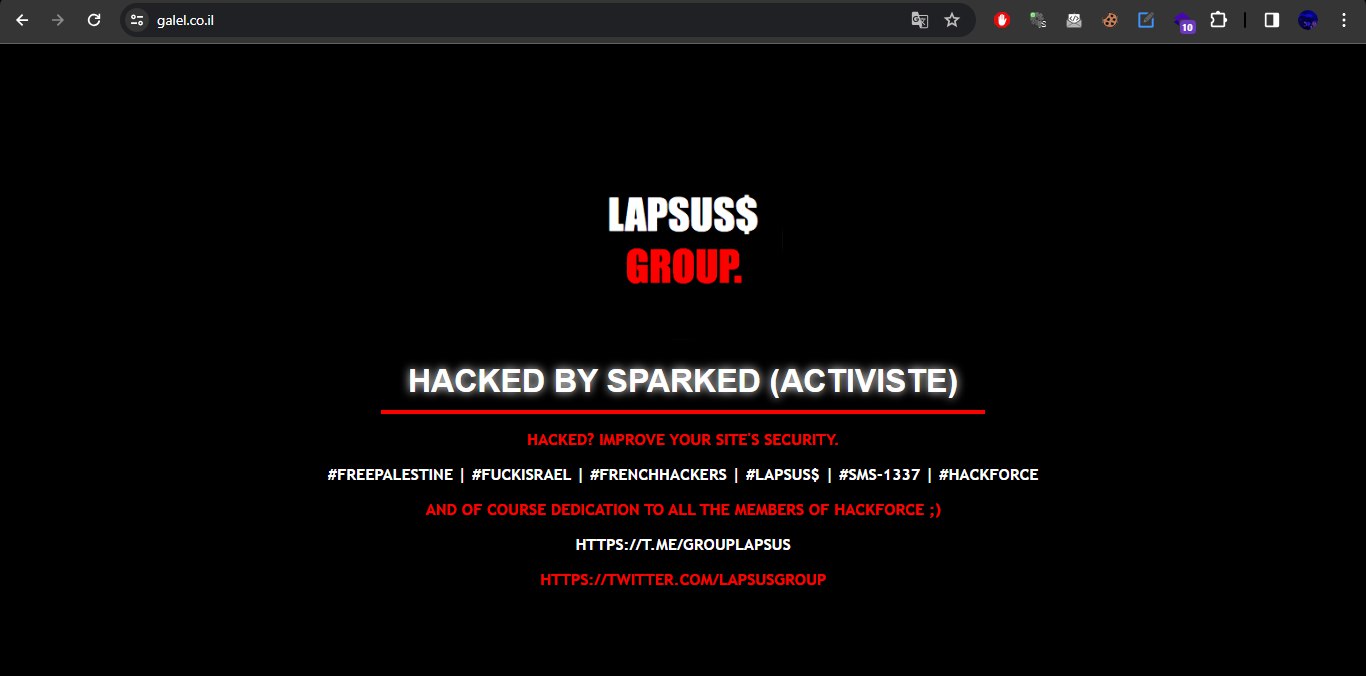
The primary motivation for a hacktivist is to promote a specific cause or publicize a grievance. Because their goal is visibility and awareness, their tactics reflect a need for an audience. Hacktivists frequently use website defacement to spread a political message directly to the public, replacing a corporate home page with their own manifesto. Additionally, hacktivists often utilize Distributed Denial of Service (DDoS) attacks to disrupt target organizations associated with opposing ideologies, attempting to silence the victim organization by overwhelming their network bandwidth.
An example of website defacement, a common hacktivist tactic where legitimate webpage content is replaced with an unauthorized ideological or political message to maximize public visibility.
Vulnerability Brokers
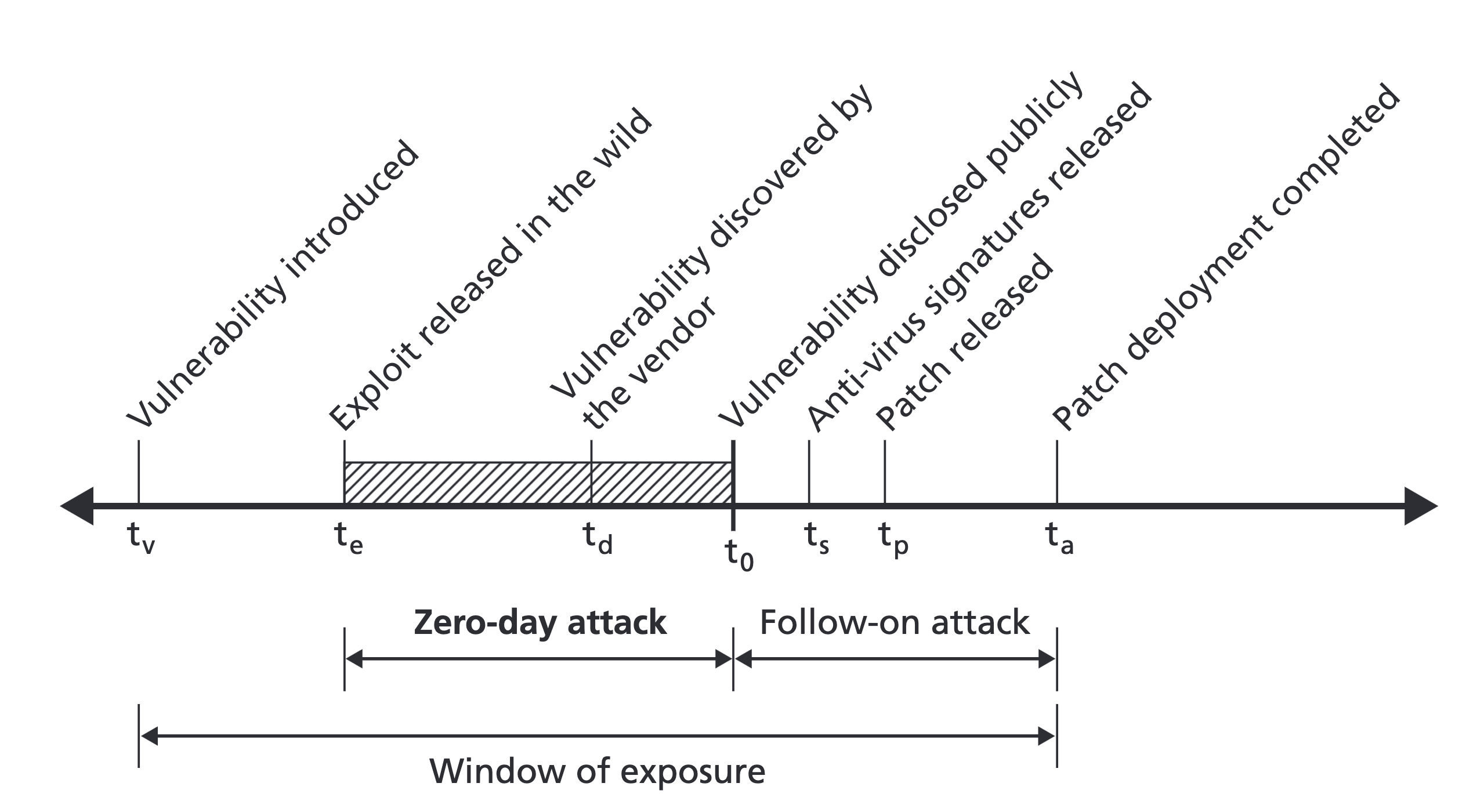
Hidden within the ecosystem are the arms dealers of the cyber world. Vulnerability brokers are threat actors who discover zero-day vulnerabilities specifically to sell the exploit details to other attackers. They do not typically launch attacks themselves. Instead, a vulnerability broker's primary motivation is direct financial compensation, selling critical software flaws to the highest bidder—which is frequently a nation-state or organized crime syndicate.
A timeline illustrating a zero-day vulnerability, highlighting the critical window of exposure where brokers can discover and sell exploit details before a vendor releases a protective patch.
Unskilled Attackers
At the bottom of the sophistication matrix are unskilled attackers, who are threat actors who lack deep technical knowledge of cybersecurity. Because they do not understand the underlying protocols or memory allocation mechanisms they are manipulating, unskilled attackers rely entirely on pre-written scripts and automated tools to launch cyber attacks.
For this reason, unskilled attackers are historically referred to in the cybersecurity industry as script kiddies. Their reach is limited because unskilled attackers typically lack external funding and advanced computing resources. Unlike organized crime or nation-states, the motivation for unskilled attackers often includes bragging rights or simple curiosity. Despite their lack of skill, they remain a constant source of background noise and lower-level alerts on any internet-facing firewall.
The most impenetrable fortress walls are useless if the adversary already has the keys to the gate. An insider threat is a security risk originating from within the targeted organization.
These actors are inherently dangerous because insider threats bypass traditional perimeter security controls because the actors already operate inside the network boundary. Firewalls and intrusion prevention systems are designed to keep the outside world out, but insider threats already possess authorized access to the targeted organization's systems and physical facilities.
We must categorize insiders by their intent and status. Insider threats include current employees, former employees, and trusted contractors.
The Malicious Insider
When an insider turns hostile, the damage is severe. The motivation for a malicious insider threat is frequently revenge against an employer, perhaps due to a poor performance review, passed promotion, or impending termination. Driven by this animosity, malicious insider threats deliberately sabotage corporate systems or steal sensitive data, often attempting to wipe servers, delete backups, or export client lists to a private drive before they walk out the door.
The Unintentional Insider
However, malice is not a prerequisite for disaster. An unintentional insider threat occurs when an employee accidentally exposes sensitive data through negligence or poor security practices. An administrator accidentally leaving an AWS S3 bucket publicly readable, or an accountant falling for a phishing email, can cause a data breach indistinguishable in impact from a highly sophisticated targeted attack.
Shadow IT
A specific, systemic form of insider risk is the unauthorized deployment of technology.
Shadow IT refers to information technology systems deployed without the explicit knowledge or approval of the organizational IT department.
If a marketing team finds the corporate file-sharing rules too restrictive, they might independently purchase and use personal Dropbox accounts for company data. Employees typically deploy Shadow IT to bypass corporate restrictions for convenience or perceived efficiency.
While the intent is usually just to "get work done," the result is catastrophic for a network administrator: Shadow IT creates severe internal vulnerabilities by bypassing corporate security policies and monitoring. You cannot patch, monitor, or defend a server or cloud service that you do not know exists.
Understanding who is attacking your network gives you the context you need to build the right defenses. Understanding why they are attacking tells you what they will target. We can distill attacker motivations into three distinct operational goals:
Data Exfiltration: This is a primary actor motivation involving the unauthorized transfer of sensitive information out of an organization's network. Whether it is a nation-state stealing missile schematics, a competitor stealing source code, or a malicious insider walking away with the CRM database, the objective is to quietly duplicate the data and move it across the perimeter.
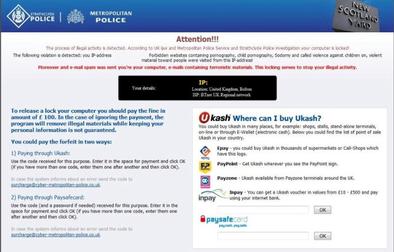
Blackmail and Extortion: This motivation relies on holding an organization hostage. Blackmail and extortion involve threatening to release stolen data or disrupt systems unless the victim pays a ransom. Often, modern organized crime syndicates utilize double-extortion: they encrypt the data so you cannot use it, and threaten to release it publicly if you refuse to pay millions of $ for the decryption key.
A ransomware screen displaying a fraudulent law enforcement warning to extort payment from the victim, illustrating a hallmark blackmail tactic of financially motivated cybercriminals.
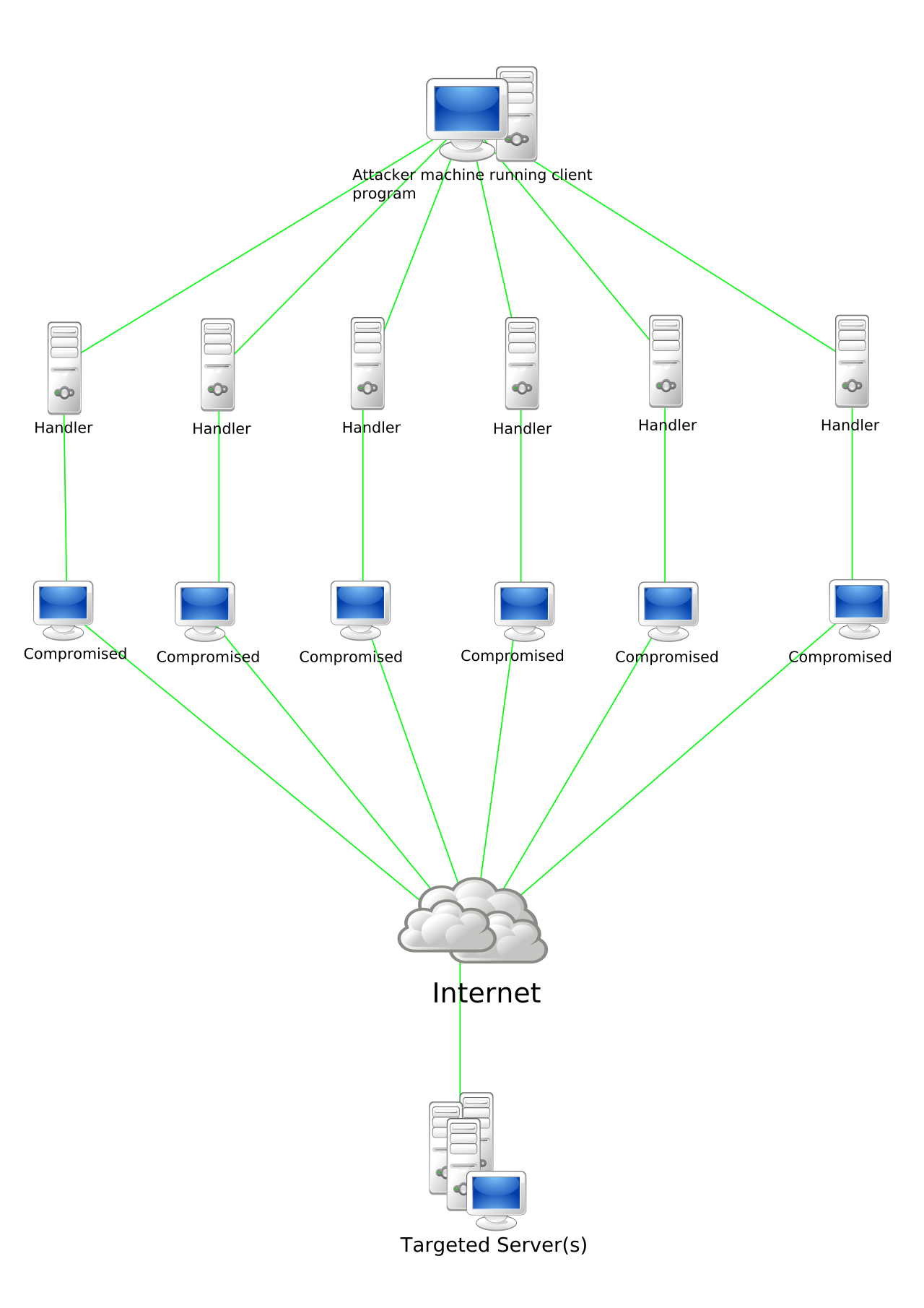
Disruption: Sometimes, the goal is simply chaos. Disruption as a motivation aims to intentionally halt business operations or take critical systems offline. This could be a hacktivist launching a DDoS attack against a political target, a competitor paying to knock an e-commerce rival offline, or a nation-state crippling a municipal power grid.
A diagram of a Distributed Denial of Service (DDoS) attack, showing multiple compromised systems coordinated to overwhelm a single target and intentionally disrupt its operational availability.
To operationalize this knowledge for your exams and daily administration tasks, visualize the threat landscape through this comparative matrix:
Threat Actor
Typical Sophistication
Funding/Resources
Primary Motivation
Common Tactics
Nation-State
Apex / Highest
Virtually Unlimited (Gov. backed)
Espionage, Military advantage
APTs, zero-days, infrastructure targeting
Organized Crime
Very High
Significant / Self-funding
Financial gain
Ransomware, extortion, buying zero-days
Competitor
Moderate to High
Corporate budgets
Unfair market advantage
IP theft, corporate espionage, funded disruption
Hacktivist
Variable
Low to Moderate
Ideology, Cause promotion
Website defacement, DDoS
Vulnerability Broker
High
Variable
Financial compensation
Discovering and selling zero-day exploits
Unskilled (Script Kiddie)
Lowest
None
Curiosity, Bragging rights
Pre-written scripts, automated tooling
Insider (Malicious)
Variable
None (Relies on access)
Revenge
Data sabotage, data theft from inside
Insider (Unintentional)
Variable
None
Convenience, Negligence
Accidental data exposure, Shadow IT
By mastering these profiles, you transform cybersecurity from a game of reacting to random alerts into the strategic defense of your infrastructure against measurable, motivated human adversaries. You do not just block the IP address; you neutralize the actor.