CFP Board's Code of Ethics and Standards of Conduct
Not sure you’re ready?
Take the ~3-minute readiness diagnostic and see where you stand.
The architecture of financial advising rests upon an invisible infrastructure of trust. Just as a physicist understands that gravity dictates the motion of celestial bodies, a financial professional must understand that ethical standards dictate the viability of client relationships. The CFP Board’s Code of Ethics and Standards of Conduct are not a series of arbitrary compliance hurdles. They are the structural physics of the profession. When you recommend a portfolio shift or draft a complex estate strategy, the client's willingness to execute that advice depends entirely on their belief that you are operating purely for their benefit. Understanding these rules is about mastering the mechanics of professional integrity.
The CFP Board’s Code of Ethics establishes the high-level professional ideals that dictate how a CFP professional interacts with the public, clients, and colleagues. You can think of the Code as the fundamental laws of thermodynamics for our profession—they apply universally and constantly.
The Code of Ethics requires a CFP professional to:
- Act with honesty, integrity, competence, and diligence.
- Act in the client’s best interests.
- Exercise due care.
- Avoid or disclose and manage conflicts of interest.
- Maintain the confidentiality and protect the privacy of client information.
- Act in a manner that reflects positively on the financial planning profession and CFP certification.
These six principles cascade downward into the enforceable Standards of Conduct.
Whenever you provide Financial Advice, you must act as a fiduciary. This means you must act in the best interests of the client at all times during that provision.
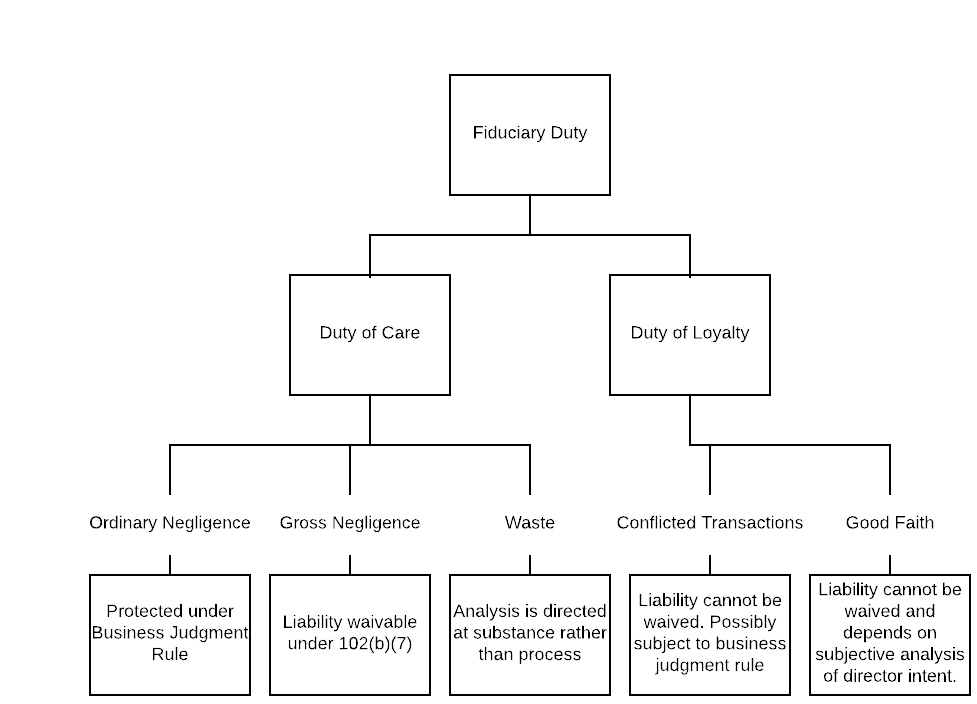
The Fiduciary Duty is not a monolith; it is composed of three distinct sub-duties: The Duty of Loyalty, the Duty of Care, and the Duty to Follow Client Instructions.
1. The Duty of Loyalty
Loyalty means the client's needs eclipse all others. The Duty of Loyalty requires placing the client’s interests ahead of the CFP professional’s interests and ahead of the professional’s firm’s interests.
- You must act without regard to your own financial interests when providing advice.
- You must avoid conflicts of interest, or fully disclose and manage material conflicts of interest.
2. The Duty of Care
Good intentions are insufficient without competence. The Duty of Care requires you to act with the care, skill, prudence, and diligence that a prudent professional would exercise. You cannot give generic advice; this duty requires evaluating financial advice in light of the client’s specific goals, risk tolerance, objectives, and personal circumstances.
3. The Duty to Follow Client Instructions
You are the architect, but the client owns the building. You must comply with all lawful and reasonable terms of the client engagement. If a client gives an instruction that is illegal or entirely unreasonable, you are not bound to follow it—but otherwise, their lawful parameters govern the engagement.
To maintain the public's trust, CFP professionals must uphold rigorous behavioral standards.
Integrity: The principle of Integrity requires absolute honesty and candor, which may never be subordinated to personal gain or advantage. Integrity simply cannot co-exist with deceit or the subordination of principle. However, the CFP Board recognizes human fallibility: allowances for innocent error and legitimate differences of opinion do not violate the principle of Integrity.
Competence: The principle of Competence requires possessing the relevant knowledge and skill to apply that knowledge to client services. If you encounter a complex situation—say, a nuanced cross-border tax issue—for which you lack competence, you have four distinct ethical choices. You must:
- Gain competence.
- Obtain assistance (from a qualified expert).
- Limit the scope of the engagement.
- Terminate the engagement.
Diligence: The principle of Diligence requires providing professional services in a timely and thorough manner.
Sound and Objective Professional Judgment: You must protect your objectivity. This principle prohibits a CFP professional from accepting any gift or entertainment that could reasonably compromise objectivity.
Professionalism: Professionalism requires treating clients, fellow professionals, and others with dignity, courtesy, and respect. Furthermore, you must not intentionally or recklessly participate in another person's violation of CFP Board standards or applicable laws, nor engage in conduct that reflects adversely on your integrity or fitness, the CFP marks, or the profession.
A conflict of interest is not inherently a violation, but hidden conflicts destroy trust. A conflict exists when:
- The CFP professional’s interests are adverse to the duties owed to a client.
- A CFP professional has duties to one client that are adverse to another client.
Materiality: A conflict of interest is considered material when a reasonable client would consider the conflict information important in making a decision regarding the engagement.
If a material conflict exists, you must provide sufficiently specific facts to allow a reasonable client to understand it. Crucially, you must obtain informed consent from the client before providing financial advice.
Do not rely on your own good intentions: a sincere belief that your advice is in the best interests of the client does not excuse a failure to disclose a material conflict of interest. Furthermore, the CFP Board views consent on a sliding scale of risk—the greater the potential harm from a conflict of interest, the less likely informed consent will be inferred by the CFP Board without explicit, documented consent.
The terminology used to describe compensation is strictly regulated because clients rely on these words to evaluate potential conflicts.
"Fee-Only"
A CFP professional may represent their compensation as "fee-only" only if the professional, the professional's firm, AND all related parties receive no sales-related compensation in connection with services provided to clients.
- What is Sales-Related Compensation? It includes commissions, trailing commissions, 12b-1 fees, spreads, and transaction fees.
- What is Excluded? Sales-related compensation excludes soft dollars, reasonable and customary fees for custodial services, and non-monetary benefits not based on sales.

"Fee-Based"
The CFP Board defines "fee-based" compensation as entirely equivalent to "commission and fee" compensation.
- A CFP professional using the term "fee-based" must not imply a "fee-only" structure.
- They must clearly state that the CFP professional earns both fees and commissions.
Confidentiality and Privacy
The principle of Confidentiality and Privacy requires a CFP professional to keep client non-public personal information strictly confidential. However, absolute secrecy is occasionally impossible. You may breach client confidentiality in these specific scenarios:
- To share information for ordinary business purposes with your firm or third-party service providers.
- To disclose information to law enforcement or regulators when legally required or requested.
- To defend against charges of wrongdoing or in a civil dispute between you and the client.
- To perform specific services explicitly authorized by the client.
Client Assets and Loans
The boundaries around client money are absolute. A CFP professional must not commingle a client’s financial assets with the financial assets of the CFP professional or the professional's firm.
Furthermore, you must not borrow money from or lend money to a client, with only two strict exceptions:
- The client is a family member.
- The client is an institution in the business of lending money (e.g., a bank).
Technology and Third-Party Reliance
In the modern era, advice is heavily augmented by technology. You must exercise reasonable care and judgment when selecting, using, or recommending technology for client services. You must have a reasonable basis for believing that the technology produces reliable outcomes.
Similarly, if you engage or recommend a third-party professional to your client, you must have a reasonable basis for believing that third party is competent. You must also use reasonable care when supervising persons acting under your direction.
Not every piece of financial advice constitutes "Financial Planning." If a client asks, "Should I put my cash in a high-yield savings account or a CD?" that is Financial Advice, but likely not Financial Planning.
However, Financial Advice requires the rigorous application of the full Financial Planning process under three conditions:
- The client explicitly agrees to receive Financial Planning.
- The client has a reasonable basis to believe they will receive Financial Planning.
- The advice requires integration of relevant elements of the client's personal and financial circumstances.
Relevant Elements: These include goals, assets, liabilities, cash flow, risks, tax implications, educational needs, and retirement.
If a client's situation involves multiple complex elements, you cannot ethically provide a fragmented, isolated answer. If the integration factors demand Financial Planning, but the client refuses to engage in the full process, the CFP professional must take one of three actions: limit the scope of the engagement, provide no advice, or terminate the engagement.
The 7 Steps of the Financial Planning Process
When Financial Planning is required, you must execute the process sequentially.
Step 1: Understanding the Client’s Personal and Financial Circumstances. You must obtain both qualitative (feelings, values) and quantitative (numbers, statements) information from the client.
Step 2: Identifying and Selecting Goals. You must discuss the impact that selecting one specific financial goal may have on other financial goals (e.g., funding a child's 529 plan versus maximizing 401(k) contributions).
Step 3: Analyzing the Client’s Current Course of Action and Potential Alternative Courses of Action. You must evaluate whether the current course of action or alternatives maximize the potential for meeting the client's goals.
Step 4: Developing the Financial Planning Recommendations. You must consider the underlying assumptions (inflation, market returns), the basis for making the recommendation, and the optimal timing of the recommendation.
Step 5: Presenting the Financial Planning Recommendations. Present the developed strategies to the client.
Step 6: Implementing the Financial Planning Recommendations. You must clearly clarify the implementation responsibilities of the CFP professional, the client, and any third party (such as an attorney or CPA).
Step 7: Monitoring Progress and Updating. You must establish exactly how and when recommendation monitoring will occur, and determine if financial planning recommendations need to be updated as circumstances evolve.

Client Disclosures
Transparency is the mechanism by which trust is verified. Required client disclosures prior to providing Financial Advice include:
- A description of the services and products to be provided.
- An explanation of how the client pays for the products and services.
- How the CFP professional, the professional's firm, and any related party are compensated.
- Any material public disciplinary history or personal bankruptcy information.
Crucially: When Financial Planning is provided, all required information disclosures must be delivered to the client in writing.
The 30-Day Reporting Rule
The CFP Board must be kept informed of serious matters that could impact the integrity of the marks. A CFP professional must report specific events to the CFP Board within 30 calendar days. These reports must be made via a written narrative statement accurately describing the material facts of the reportable event.
You must report within 30 days if you:
- Receive a felony or relevant misdemeanor conviction or charge.
- Are the subject of a regulatory action alleging failure to comply with professional laws.
- Are involved in a personal bankruptcy, or a business bankruptcy where you are a control person.
- Receive notice of a federal tax lien on property you own.
- Are subject to a civil action resulting in a settlement of $15,000 or more involving professional services.

The Gravity of Bankruptcy
Because financial professionals are expected to demonstrate financial prudence, a bankruptcy filing is taken incredibly seriously. It is grounds for sanction and a public censure by the CFP Board.
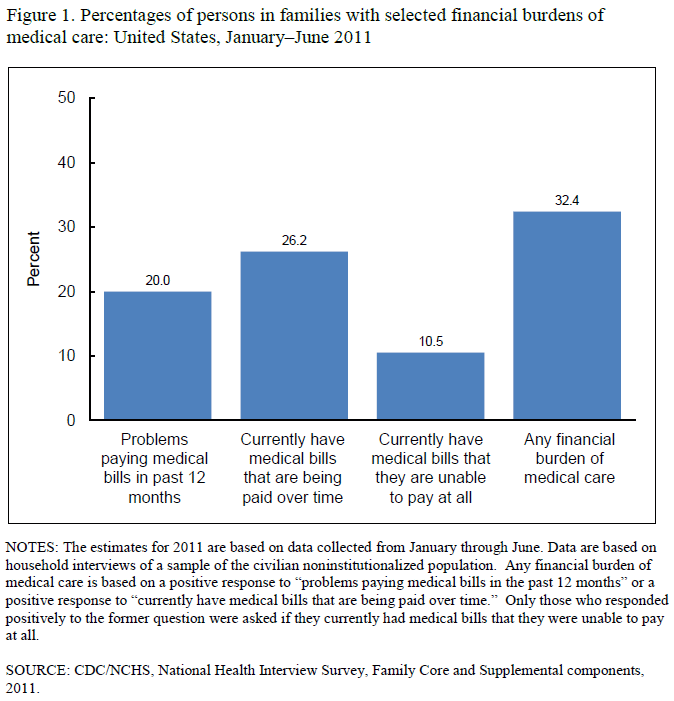
However, a CFP professional can rebut this bankruptcy sanction presumption. To do so, they must prove the bankruptcy did not demonstrate an inability to manage financial affairs responsibly (for instance, if the bankruptcy was caused by overwhelming, unforeseen medical debt rather than gross negligence). Regardless of the sanction outcome, a CFP professional is explicitly required to inform clients of the existence of any personal or business bankruptcy they have filed.