Florida Producer Licensing, Appointment & Continuing Education
Not sure you’re ready?
Take the ~3-minute readiness diagnostic and see where you stand.
An insurance license is a legal instrument of trust. It is the state’s certification that an individual is intellectually and ethically equipped to guide citizens through the financial consequences of mortality and morbidity. However, possessing the document itself grants no power to transact business; it merely establishes the foundation. To operate in the Florida insurance market, one must master the machinery of regulation—the rigid mechanics of acquiring the license, the symbiotic necessity of appointments, and the strict ethical boundaries that separate a fiduciary from a fraud.
Before you can advise a family on life insurance or structure a health plan for a small business, you must prove to the state that you possess the baseline competence to do so. Florida views the producer license as a strict gatekeeping mechanism.
To qualify for a resident insurance producer license, an applicant must satisfy a few foundational criteria. First, you must be a legal adult—at least 18 years old. Second, you must have the legal right to work in this country; you must be a United States citizen or a legal alien with work authorization.
Third, you must actually live where you claim to operate. A Florida resident applicant must reside in the state of Florida. To enforce this, Florida law mandates that a resident insurance license applicant cannot hold a resident insurance license in another state. You cannot be a "resident" of two jurisdictions for licensing purposes.
The Vocabulary Lesson: Prelicensing Education
Insurance is a language of contracts. To ensure you speak this language, Florida requires state-approved prelicensing education. The requirement scales with the complexity of the authority you are seeking:
- Comprehensive Authority: An applicant for a Florida Life, Health, and Variable Annuity producer license must complete 60 hours of prelicensing education.
- Specialized Authority: An applicant for a Florida Life-only or Health-only producer license must complete 40 hours of prelicensing education.
Once the education is complete, the state verifies your identity and history. A Florida insurance license applicant must submit fingerprints for a criminal background check. Finally, to prove your intellectual readiness, you must pass the state licensing exam.

There is a profound difference between holding a license and having the authority to sell insurance. Think of a license as a driver's license, and an appointment as a car. You can have a valid driver's license, but without a vehicle, you aren't going anywhere.
In Florida, an insurance producer cannot legally act as an agent without an active appointment from an authorized insurer. The license proves to the state that you are qualified; the appointment proves to the public that a specific insurance company legally backs your actions.
When an insurer decides to back you, the clock starts ticking. An appointing insurer must file a producer's appointment with the Florida Department of Financial Services (DFS) no later than 45 days after the date of the appointment.
The Lifespan of a License
Florida insurance licenses are perpetual and do not expire—as long as the producer maintains at least one active appointment. You do not "renew" your license in Florida; you renew your appointments.
A Florida insurance producer appointment must be renewed every 24 months during the producer's birth month. If you let your appointments lapse, a countdown begins. If a Florida producer goes 48 consecutive months without an active appointment for a specific line of authority, the license for that line automatically expires. The state assumes your knowledge has grown stale, and you must start over.
Terminating the Relationship
Business relationships end, but they must end methodically to protect the consumer. If an insurer decides to terminate your appointment, they cannot simply cut you off overnight without warning. An appointing entity must give a Florida producer at least 60 days of advance written notice of its intention to terminate an appointment. Furthermore, the appointing entity must file written notice of an appointment termination with the Florida DFS within 30 days of terminating a producer's appointment, ensuring the state’s registry is completely accurate.
The Department of Financial Services relies on perfect data to regulate effectively. If a consumer files a complaint, or if a law changes, the state must know exactly how to reach you.
Entropy happens—people move, businesses relocate, names change through marriage or divorce. Florida law dictates that a licensee must notify the DFS in writing within 30 days after a change of:
- Legal name
- Residence address
- Principal business address
- Mailing address or email address
Failing to send a simple address update might seem trivial, but the state treats it as a breakdown in regulatory compliance. A first offense for failing to notify the DFS within 30 days is subject to a fine of up to $250. A subsequent offense for the same failure escalates rapidly, subject to a fine of at least $500 or outright license suspension.
Furthermore, your resident license is tied to your physical presence. If a Florida resident licensee moves their principal residence and principal place of business out of the state, their Florida license and all appointments are immediately terminated. You have severed your jurisdictional tie to the state.
Insurance law, tax codes, and product structures are highly dynamic. Therefore, your education does not end when you pass the state exam. Florida imposes strict Continuing Education (CE) requirements, with deadlines keyed to the last day of the producer's birth month every two years.
The amount of required education decreases slightly as you gain tenure and practical wisdom in the industry:
| License Tenure | CE Requirement (Every 2 Years) |
|---|---|
| Less than 6 years | 24 hours of approved CE |
| 6 years or more | 20 hours of approved CE |
Within those hours, the state forces you to review the rules of the road. Every Florida insurance producer must complete a 4-hour Law and Ethics Update course specific to their license type as part of their CE requirement. Additionally, because of their unique complexity and potential for consumer harm, Florida life insurance producers must complete a one-time 4-hour Annuity Best Interest course before selling any annuities.
Efficiency and Penalties
The state encourages proactive learning. Excess continuing education hours accumulated during any 2-year compliance period may be carried forward to the next 2-year compliance period. However, you cannot simply take the exact same easy class over and over; a producer cannot repeat the same CE course for credit within a 24-month period.
What happens if you miss the deadline? The state provides a brief, expensive grace period. If a producer fails to complete CE by the deadline, they have up to 90 days to sign a stipulation agreement and pay a $250 fine to keep their appointments active. Failure to resolve this deficiency within 90 days after the deadline is fatal to your current business: it results in the absolute cancellation of all of the producer's active appointments.
When a client hands you a premium check, that money does not belong to you. All premium funds received by a Florida insurance agent are considered trust funds and must be accounted for in a fiduciary capacity. A fiduciary is someone legally obligated to act entirely in the best interest of another party. Mixing premium funds with your own operating account, or delaying their transfer to the insurer, destroys that trust.
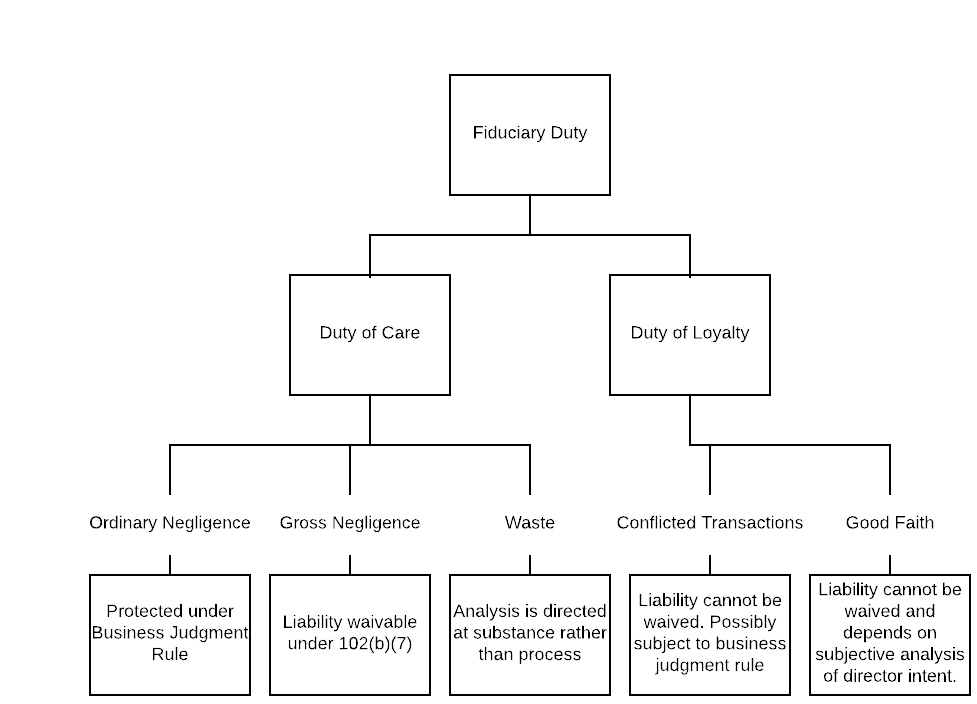
Consequently, the Department of Financial Services wields swift disciplinary power. A Florida insurance producer license may be revoked for misappropriating or unlawfully withholding money belonging to an insurer or an insured. The DFS may also suspend or revoke a producer license for misrepresenting or committing fraud in an insurance application, or for willfully violating any proper order or rule of the Department.
To ensure accountability long after a policy is sold, a Florida insurance agent must maintain records of insurance policies transacted by the agent for a period of at least 5 years after the policy expiration date.
The Limits of "Controlled Business"
The state grants you a license to serve the public, not merely to capture wholesale discounts for your inner circle.
Controlled business is defined as insurance written on the interests of the producer, the producer's family members, or the producer's business associates.
While you are allowed to write policies for your family and partners, it cannot be the primary engine of your livelihood. In Florida, the maximum amount of controlled business an agent may produce in any 12-month period is 50% of the agent's aggregate commissions. If you cross this threshold, you are no longer a public agent; you are exploiting a license for private arbitrage.
The insurance market relies on honest comparisons and informed consent. Florida law strictly defines and prosecutes specific deceptive practices:
- Sliding: The unlawful act of charging an applicant for an ancillary insurance coverage in addition to the cost of the main policy without the applicant's informed consent. Think of this as slipping an extra item onto a restaurant bill, assuming the customer won't notice the difference.
- Twisting: The unlawful act of making a misleading representation or incomplete comparison to induce a person to surrender or convert an insurance policy. Twisting usually involves convincing a client to drop a competitor's policy by hiding the drawbacks (like surrender charges or new contestability periods).
- Churning: Similar to twisting, but done internally. Churning is the unlawful act of using the values in an existing life insurance policy or annuity to purchase another policy with the same insurer to generate extra commission. The client gains no real economic benefit, but the agent pockets a new first-year commission.
- Coercion: An unfair trade practice involving physical or mental force to persuade a consumer to buy an insurance policy. Insurance must be a voluntary transfer of risk, not a transaction born of intimidation.
In almost every state in America, offering a client part of your commission to entice them to buy a policy is strictly illegal. It is called rebating.
Rebating is the practice of giving or offering anything of value to a prospect as an inducement to buy an insurance policy.
However, Florida operates under a unique, highly regulated exception. Rebating is permitted in Florida, but only if it functions like a transparent, universally available retail discount rather than a secret bribe.

To offer a legal rebate in Florida, a producer must satisfy a strict checklist of constraints:
- Uniformity: The rebate must be available to all insureds in the same actuarial class.
- Filed Schedule: A permitted rebate must follow a rebating schedule filed by the agent with the insurer issuing the policy.
- Strict Application: The agent must uniformly apply the rebate schedule to all insureds who purchase the same policy.
- Public Display: The agent must prominently display the rebate schedule in public view at their place of business.
- Record Keeping: The agent must maintain a copy of all rebate schedules for the most recent 5 years.
- No Extortion: A permitted rebate cannot be refused or granted based upon the applicant's purchase or failure to purchase collateral business. You cannot tell a client, "I will only give you a rebate on your life insurance if you also buy health insurance from me."
- Insurer Approval: Finally, an agent cannot offer a rebate if the insurer issuing the policy prohibits its agents from rebating commissions. The carrier always has the final say on how its products are priced and discounted in the field.
Understanding these fundamentals is not merely about passing an exam. These statutes and definitions form the literal operating system of your future business. Mastering them ensures you protect your license, respect the capital of your clients, and honor the fiduciary weight of the profession.