Other Provisions, Clauses, and Riders
Not sure you’re ready?
Take the ~3-minute readiness diagnostic and see where you stand.
An insurance contract is not a single, impenetrable monolith of legal jargon; it is a modular machine. At its core sits the fundamental engine of the agreement—the clauses that bind two parties together in a transfer of risk. Surrounding this engine are the specialized attachments, or riders, that recalibrate the machine to fit the precise contours of a human life. To understand life and health insurance is to understand how these interchangeable parts function together. When a client hands over a premium check, they are not buying a stack of paper; they are buying a highly specific set of conditional promises.
As an insurance producer, you will spend your career explaining these mechanics to people who are simply trying to protect their families, their incomes, and their businesses. You must be able to translate the rigid architecture of an insurance policy into the practical reality of your client’s life. Let us dismantle this machinery piece by piece, examining the essential clauses that establish the contract and the specific riders that customize its power.
Every insurance policy must establish the basic rules of engagement before it can dictate the specifics of coverage. Three fundamental provisions serve as the foundation of this relationship: the insuring clause, the consideration clause, and the free look provision.
The Insuring Clause: The Ultimate Promise
If you strip away every other word in a health insurance policy, the insuring clause is what remains. Conceptually, the insuring clause is the insurance company's basic agreement to pay benefits under the health policy. Because it is the most critical declaration in the entire document, the insuring clause is typically located on the first page of the health insurance policy.
Think of this clause as the grand introduction. It does not hide in the fine print; it stands at the front door. The insuring clause explicitly identifies the insured individual and the insurance company, formally linking them together. Furthermore, the insuring clause specifies the specific types of losses and perils covered by the health insurance policy.
In Practice: When your client asks, "Does this policy actually say you're going to cover my hospital stays?" you point to the first page. The insuring clause is where the insurer firmly declares, "We, XYZ Insurance, agree to pay John Doe for losses incurred due to covered sickness and accidents, subject to the provisions herein."
The Consideration Clause: Value for Value
In contract law, an agreement is merely a wish unless something of value is traded between the parties. This exchange is called consideration. The consideration clause specifies the exact value exchanged by both parties in an insurance contract. It is the fuel that makes the contract legally binding.
But what exactly are the two parties trading?
- The Insured's Consideration: The insured's legal consideration consists of the premium payment and the truthful statements made in the insurance application. You are giving the company money, but you are also giving them facts (your health history) upon which they base their risk.
- The Insurer's Consideration: The insurer's legal consideration is the binding promise to pay benefits according to the policy terms. The insurer is not giving the client money upfront; they are giving a guarantee of future capital if a specific event occurs.
The Free Look Provision: The Safety Valve
Insurance is an intangible product, often purchased based on illustrations and summaries. To protect consumers from buyer’s remorse or aggressive sales tactics, the law mandates a testing period. The free look provision allows the policyholder to review the health insurance contract for a specified number of days.
If the client decides the policy does not meet their needs, the policyholder can return the health insurance policy during the free look period for a full refund of all premiums paid. No questions asked, no penalties assessed.
For exam purposes, you must know exactly how this clock operates:
- The Trigger: The free look period begins exactly on the date the health insurance policy is physically or electronically delivered to the policyholder. It does not begin on the date of application or the date of approval.
- The Duration: Standard free look periods for health insurance policies typically range from 10 to 30 days, depending on the state and the policyholder's age (seniors buying Medicare Supplements often get the full 30 days).
Underwriting health and disability insurance is an exercise in probability. But what happens when an applicant is generally healthy, yet possesses one severely damaged biological "part"?
Imagine a 35-year-old construction worker applying for a health policy. He is in peak physical condition, but five years ago, he shattered his L4 vertebra in a dirt-biking accident. Statistically, his back is a massive, guaranteed liability for the insurance company. Without a way to isolate that specific risk, the underwriter would have to reject his application entirely.
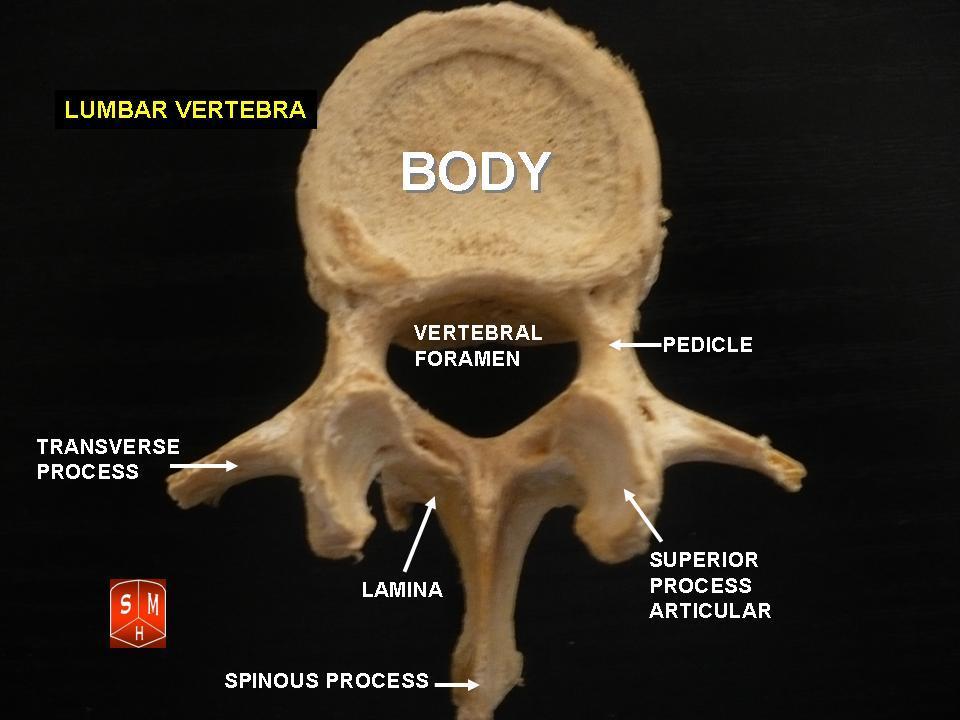
Enter the impairment rider (sometimes called an exclusion rider). An impairment rider permanently excludes coverage for a specific pre-existing medical condition.
By strategically carving out the damaged spine from the policy’s coverage, the impairment rider allows a person with a severe pre-existing condition to obtain health insurance coverage for all other conditions. This is a profound tool for a producer. Attaching an impairment rider to a health policy prevents the insurer from having to decline a high-risk applicant entirely. It turns a "No" into a "Yes, except for..."
The Premium Reality Check Clients often ask: "If you aren't covering my back, shouldn't my premium be cheaper?" The answer is no. The addition of an impairment rider does not reduce the health insurance policy's standard premium rate. The standard premium assumes a standard, healthy body. The rider simply brings an uninsurable applicant back down to the baseline of standard risk for everything else (heart attacks, cancer, broken arms, etc.).
While impairment riders subtract coverage to make a policy viable, other riders exist to multiply coverage under specific, highly tragic circumstances.
A multiple indemnity rider pays a specified multiple of the principal sum if a loss occurs under specific accidental conditions. The most common iteration of this is the double indemnity rider, which pays exactly twice the face amount of the policy for a covered accidental death. If a client has a $100,000 policy with a double indemnity rider and dies in a car crash, the beneficiary receives $200,000.
However, insurance companies require strict boundaries to prevent ambiguity. For a death to trigger a multiple indemnity payout, it must meet rigid criteria:
- The 90-Day Rule: Multiple indemnity riders typically require the accidental death to occur within 90 days of the qualifying accident. If someone is in a severe accident, lingers in a coma for 100 days, and then passes away, the policy pays the standard base amount, not the multiplied amount. The law draws a line to ensure the accident was the proximate, immediate cause of death.
- The Sickness Exclusion: Deaths resulting from sickness or disease are strictly excluded from multiple indemnity rider payouts. Even if a disease comes on suddenly and unexpectedly, it is biological, not accidental.

As a producer, you must set clear expectations. Multiple indemnity is a cheap rider to add because true, qualifying accidental deaths are statistically rare compared to natural mortality.
Human lives are not static. A client who buys a policy at age 25 will likely have drastically different financial obligations at age 35. They may have a mortgage, a spouse, and children. They need more coverage. But what if, at age 32, they developed a chronic illness that makes them completely uninsurable?
The guaranteed insurability rider solves this exact problem. It allows the insured to purchase additional insurance coverage at specified future times. The absolute magic of this rider—and the reason you will recommend it to your young professional clients—is that the insured is not required to provide evidence of insurability to exercise a guaranteed insurability option. Even if they are sitting in a hospital bed with a terminal diagnosis on the option date, the insurance company must issue the additional coverage.

Triggers and Pricing
Guaranteed insurability options typically allow additional coverage purchases at specific ages (e.g., ages 25, 28, 31, 34, 37, 40) or during major life events like marriage or the birth of a child.
However, this future coverage is not locked at the client's original, youthful price. Additional coverage purchased through a guaranteed insurability rider is priced based on the insured's attained age at the time of purchase. If a client exercises an option at age 34, that new block of coverage is priced for a 34-year-old.
The Health Insurance Application: Disability Income
While guaranteed insurability is famous in life insurance, it plays a massive role in the health insurance sector as well. Guaranteed insurability riders in the health insurance sector are most commonly attached to disability income policies.
Why? Because disability income replaces a percentage of a worker's salary. A young medical resident making $60,000 a year needs a disability policy that reflects that income. Ten years later, as a specialized surgeon making $400,000 a year, their original disability policy is woefully inadequate. The guaranteed insurability rider (often called a Future Increase Option in disability policies) allows them to increase their monthly disability benefit as their income grows, completely bypassing the medical underwriting that might otherwise disqualify them.
When sitting for your state exam, keep these relationships neatly categorized in your mind.
| Feature | Core Function | Key Exam Fact to Remember |
|---|---|---|
| Insuring Clause | The basic promise to pay. | Found on Page 1; names the parties and perils. |
| Consideration Clause | The exchange of value. | Premium + Truth = Promise to Pay. |
| Free Look | The refund window. | 10 to 30 days; starts exactly on delivery. |
| Impairment Rider | Excludes a pre-existing condition. | Prevents total denial; does not lower premium. |
| Multiple Indemnity | Multiplies payout for accidents. | Death must occur within 90 days of the accident. |
| Guaranteed Insurability | The right to buy more later. | No medical exam needed; priced at attained age. |
By understanding these clauses and riders not just as vocabulary words, but as mechanical parts of a financial engine, you will be well-equipped to pass your exam and, more importantly, architect meaningful protection for your future clients.