Guaranty Associations, Workers Comp Framework, and Remedies
Not sure you’re ready?
Take the ~3-minute readiness diagnostic and see where you stand.
Insurance is fundamentally the sale of an invisible product: a promise, printed on a contract, exchanged for cash today to make a policyholder whole after a disaster tomorrow. But a promise is only as strong as the financial reality of the institution making it. If a Category 5 hurricane levels a coastal city, the sudden, overwhelming concentration of collective losses can push an insurance company into insolvency, threatening to render thousands of policy contracts worthless. Similarly, the inherent friction in claims processing and the complex liabilities of the modern workplace require rigorous legal scaffolding so the system does not collapse under the weight of human injury or corporate bad faith. To protect the public trust, the property and casualty industry is backstopped by a heavily regulated framework of financial safety nets, statutory trade-offs, and potent enforcement mechanisms.

Imagine you are an insurance producer, and you have just placed homeowners policies for fifty families in a coastal neighborhood. A devastating storm hits. The claims flood in, but the insurance company you placed them with goes bankrupt. Who pays to rebuild those homes?
The answer lies in the Property and Casualty Insurance Guaranty Association. Every state has a Property and Casualty Insurance Guaranty Association. These organizations exist for a singular, critical purpose: state Guaranty Associations protect policyholders in the event of an insurer insolvency. When an insurance company goes under, the Guaranty Association steps in as the insurer of last resort.
How They Protect the Consumer
Guaranty Associations perform two primary financial rescues for consumers:
- Paying Claims: Guaranty Associations pay unpaid claims on behalf of an insolvent insurance company. If your client's home burned down right before their insurer went bankrupt, the Association steps into the shoes of the insurer to settle the loss.
- Refunding Premiums: They do not just pay active claims. Guaranty Associations refund unearned premiums to policyholders of an insolvent insurance company. If a client paid an annual premium of $1,200 in January and the insurer fails in June, the Association will refund the remaining six months of unearned premium so the client can purchase replacement coverage elsewhere.
However, this safety net is not absolute. To protect the solvency of the Association itself, state Guaranty Associations impose a statutory maximum limit on the amount paid for a single covered claim (often capped around $300,000, though this varies by state). Furthermore, to filter out nuisance claims, Guaranty Association claims are often subject to a statutory deductible, meaning the policyholder will absorb a small initial portion of the loss.
The Workers Compensation Exception: There is a major, universally tested exception to the statutory maximum. Because workplace injuries involve ongoing human survival and medical care, Guaranty Associations typically pay workers compensation claims in full without applying a statutory maximum limit.
Membership, Funding, and Limitations
How does the Guaranty Association get the money to pay millions of dollars in claims? It relies on the surviving members of the insurance industry.
All admitted property and casualty insurers must be members of a state's Guaranty Association. In fact, Guaranty Association membership is a mandatory condition of an insurer's authority to transact business in a state. If an insurer wants a license to sell standard policies, they must join the club.
Importantly, Guaranty Associations are funded through financial assessments levied on member insurers. These are not pre-funded piggy banks. Guaranty Association assessments are generally levied after an insurer insolvency occurs. When a carrier fails, the Association calculates the total shortfall and sends a bill to the remaining solvent insurers. These Guaranty Association assessments are typically calculated based on an insurer's premium volume within the state—meaning the largest companies dominating the market pay the largest share of the bailout.
Crucial Coverage Exclusions: Because unauthorized carriers do not pay into this system, state Guaranty Associations do not protect policyholders of unauthorized insurers. Consequently, state Guaranty Associations do not protect policyholders of surplus lines insurers. If you place a high-risk commercial client with a surplus lines carrier, you must inform them that they are operating without the Guaranty Association safety net.
The "Fight Club" Rule of Marketing
The first rule of the Guaranty Association is that you do not use the Guaranty Association to sell insurance.
Because all admitted carriers are backed by this safety net, regulators do not want producers suggesting that one company is safer than another, or encouraging consumers to buy from financially weak insurers just because the state will bail them out. Therefore, insurance producers are prohibited from using the existence of a Guaranty Association as an inducement to sell insurance. Furthermore, insurance companies are legally barred from mentioning Guaranty Association protection in their marketing materials. It is a silent safety net—there when you fall, but never to be used as a trampoline.
To understand workers compensation, you must understand the chaos that existed before it. During the Industrial Revolution, if a worker lost an arm in a factory loom, their only recourse was to sue their employer. This required proving the employer was legally negligent. Employers fought back with highly effective legal defenses (like assumption of risk or contributory negligence), leaving maimed workers destitute and clogging the courts for years.
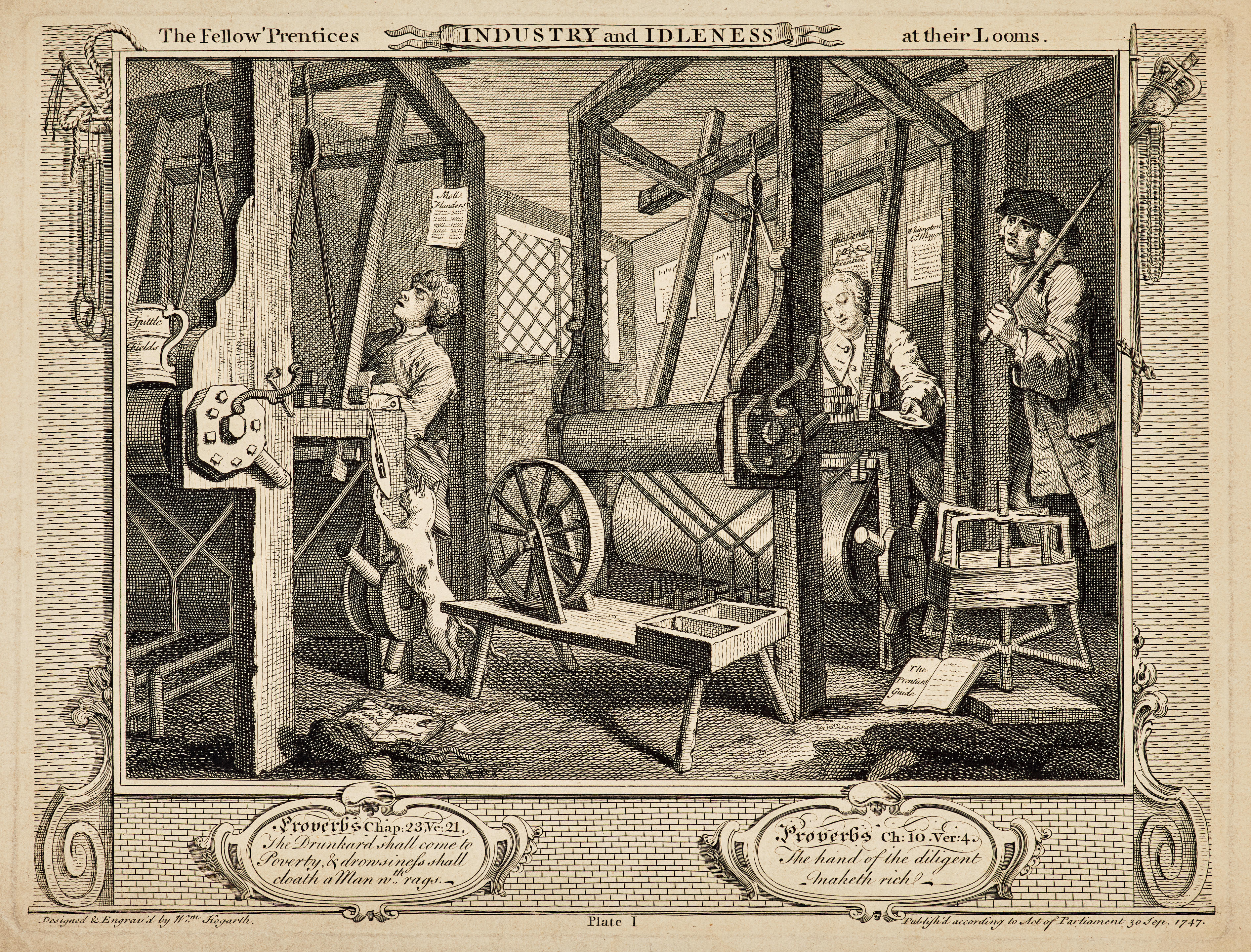
To solve this, society created a "Grand Bargain." Today, workers compensation insurance provides no-fault medical and wage replacement benefits to injured employees. You do not have to prove the boss was careless; you only have to prove the injury happened at work. In exchange, workers compensation serves as the exclusive remedy for an injured employee against an employer. The exclusive remedy provision prevents an employee from suing their employer for workplace injuries.
Under this framework, employers are strictly liable for employee injuries occurring in the course and scope of employment. It does not matter if the employee was slightly clumsy or if the employer did everything perfectly; if the injury arises out of the employment, the policy pays.
Regulatory Authority and Market Structure
Because local economies and industries vary, workers compensation is governed primarily by individual state statutes rather than federal law. Consequently, most states require employers to carry workers compensation insurance.
How an employer acquires this coverage depends entirely on the state's specific market design:
- Monopolistic State Funds: Some states operate a complete monopoly on workplace injury coverage. Monopolistic state funds require employers to purchase workers compensation insurance directly from a state-operated entity. In these jurisdictions, employers in monopolistic states cannot purchase workers compensation insurance from private insurance companies.
- Competitive State Funds: Competitive state funds allow employers to purchase workers compensation insurance from either the state or private insurers. The state acts as just another competitor in the open market.
- Assigned Risk Plans: What happens to a high-risk roofing company with a terrible track record of falls? Private insurers will reject them. To ensure these companies can legally operate, state assigned risk plans provide workers compensation coverage to employers unable to obtain policies in the voluntary market. Because these pools gather the most dangerous risks, assigned risk plan rates are typically higher than voluntary market rates due to adverse loss experience.
- Self-Insurance: The largest corporations (like major hospital networks or massive retail chains) may bypass the insurance market entirely. Employers may self-insure their workers compensation exposure upon meeting strict state financial requirements, proving they have the liquid capital to pay their own claims.
Exemptions and Adjudication
Not every worker falls under this umbrella. Certain classes of workers are often exempt from mandatory workers compensation coverage requirements. Most notably, farm laborers and domestic workers are commonly exempt from state workers compensation mandates, due to the informal or seasonal nature of their employment (though employers can often voluntarily add them).

When a disagreement arises—for instance, an insurer claims a back injury occurred during a weekend football game rather than on the loading dock—it does not go to a standard civil courtroom. Instead, state workers compensation boards or commissions adjudicate disputes between injured workers and employers.
The Problem of the Pre-Existing Condition
Imagine a business owner interviewing two candidates. One is perfectly healthy; the other previously lost an eye in a different job. If the one-eyed worker loses their remaining eye on the new job, the new employer's workers comp policy will be on the hook for permanent total disability, drastically raising the employer's future premiums. This creates a terrible financial incentive to discriminate against disabled workers.
To fix this, states created a brilliant mechanism. State Second Injury Funds encourage employers to hire workers with pre-existing conditions. If a worker with a prior disability suffers a new injury, the current employer's insurer pays the claim, but Second Injury Funds reimburse employers for additional compensation costs resulting from a subsequent workplace injury. This levels the playing field for disabled job seekers.
Even with robust policies in place, the power dynamic between a massive insurance conglomerate and a single policyholder is vastly asymmetrical. When an insurer delays a check for a burned-down business, the business owner faces bankruptcy while the insurer faces mere paperwork. To balance this scale, the state provides a rigorous set of consumer remedies.
The Department of Insurance (DOI)
The ultimate referee in your state is the Department of Insurance. Consumers can file formal grievances against insurers with the state Department of Insurance.
When a producer or client escalates a dispute, the state Department of Insurance investigates consumer complaints regarding delayed claim payouts, and similarly, the state Department of Insurance investigates consumer complaints regarding unfair claim denials.
But regulators do not just wait for the phone to ring; they actively hunt for bad behavior. State Departments of Insurance conduct regular market conduct examinations to ensure insurers treat consumers fairly. Unlike financial examinations (which look at a company's solvency), market conduct examinations review an insurer's claims handling processes to identify systemic consumer abuses. If an insurer is systematically lowballing roof claims by 20%, a market conduct exam is designed to uncover the pattern.
Unfair Claims Settlement Practices
To define exactly what constitutes "bad behavior," states have enacted standardized rules. Unfair Claims Settlement Practices regulations prohibit insurers from misrepresenting policy provisions to claimants. If a policy covers wind-driven rain, the adjuster cannot lie and tell the homeowner it is excluded. Furthermore, Unfair Claims Settlement Practices regulations require insurers to acknowledge claim communications promptly. An insurer cannot simply ghost a policyholder who has suffered a loss.
Litigation and Alternative Dispute Resolution
When regulatory complaints are not enough, policyholders have legal and contractual avenues to force an insurer's hand.
The Nuclear Option: Bad Faith If an insurer's conduct is particularly egregious, policyholders can pursue civil litigation against insurers for acting in bad faith during the claims process. Insurance contracts contain an invisible, legally binding promise. Bad faith lawsuits allege that an insurer unreasonably breached the implied covenant of good faith and fair dealing. If a jury finds an insurer acted in bad faith, the financial damages awarded to the consumer can vastly exceed the original policy limits.

Out-of-Court Dispute Resolution Litigation is expensive and slow. Therefore, policies are drafted with built-in mechanisms to resolve disputes efficiently:
- The Appraisal Clause (Valuation Disputes): Imagine an insurer agrees a customized classic car was destroyed, but offers $20,000 while the owner insists it is worth $50,000. Many property insurance policies include an appraisal clause to resolve disputes over the amount of a loss. Each side hires an appraiser, they select a neutral umpire, and an agreement by any two sets the binding value. The appraisal clause provides an out-of-court remedy for valuation disputes between a policyholder and an insurer.
- The Arbitration Clause (Coverage Disputes): What if the dispute isn't about how much to pay, but whether the policy covers the event at all? Arbitration clauses provide a mechanism to resolve disputes regarding coverage applicability without a formal lawsuit. This utilizes an arbitrator to hear arguments and make a legally binding decision on the interpretation of the contract.
Penalties and Due Process
When the Department of Insurance determines that an insurer or producer has violated the law, the hammer falls heavily.
If a company is acting improperly, an insurance commissioner can issue a cease and desist order to stop an insurer from engaging in unfair practices immediately. Beyond just stopping the behavior, state insurance commissioners hold the authority to levy financial penalties against insurers for unfair trade practices.
Producers are not immune to this oversight. For instance, consumers can seek administrative remedies through the Department of Insurance when a producer misappropriates premium funds. If you take a client's cash premium and use it to pay your own agency's rent, you will face swift administrative action, leading to the loss of your license and potential criminal prosecution.
In the most severe cases of corporate misconduct, an insurer's certificate of authority can be suspended or revoked by the state as a penalty for systemic consumer abuses. Stripping this certificate removes the insurer's legal right to operate in the state entirely—the regulatory equivalent of the death penalty.
Finally, regulators ensure that consumers themselves are afforded due process by the insurers. For example, consumers have the right to request a formal hearing if an insurer cancels a policy improperly. An insurer cannot simply drop a client mid-term without following strict statutory notification and justification guidelines.
Conclusion
As a producer, you are not merely filling out applications; you are the conduit to this vast regulatory framework. When you hand a client a policy, you are backed by the financial failsafe of the Guaranty Association, the statutory protections of the workers compensation system, and the stringent oversight of the Department of Insurance. Understanding these mechanisms transforms you from a mere salesperson into a true professional who comprehends the full weight of the promise you are selling.