Insurance Basics, Risk, and Insurable Interest
Not sure you’re ready?
Take the ~3-minute readiness diagnostic and see where you stand.
A physical structure, whether a single-family dwelling or a sprawling commercial warehouse, is constantly besieged by the physical world. A stray spark, a heavy snowpack, or a careless driver can instantaneously erase decades of accumulated wealth. To function within this reality, society requires a mathematical and legal framework to manage risk, which is defined precisely as the uncertainty or chance of a financial loss occurring.
Fundamentally, insurance is a mechanism for transferring financial risk from an individual or business to an insurance company. By pooling these uncertainties together, we transform individual chaos into collective predictability. As a Property & Casualty producer, your daily profession involves evaluating these risks, classifying them, and contractually shifting the burden of a potential catastrophe away from your client's shoulders.
To do this effectively, we must first understand the anatomy of a loss, the mechanics of statistical prediction, and the legal anchors that prevent an insurance policy from becoming a casino ticket.
Before an insurer can price a policy, we must clearly delineate what we are insuring against. In insurance, a loss is the reduction, decrease, or disappearance of value in an insured property. If a house burns down, its value decreases; a loss has occurred.
But what caused that loss? We separate the cause from the conditions.
A peril is the immediate and specific cause of a financial loss.
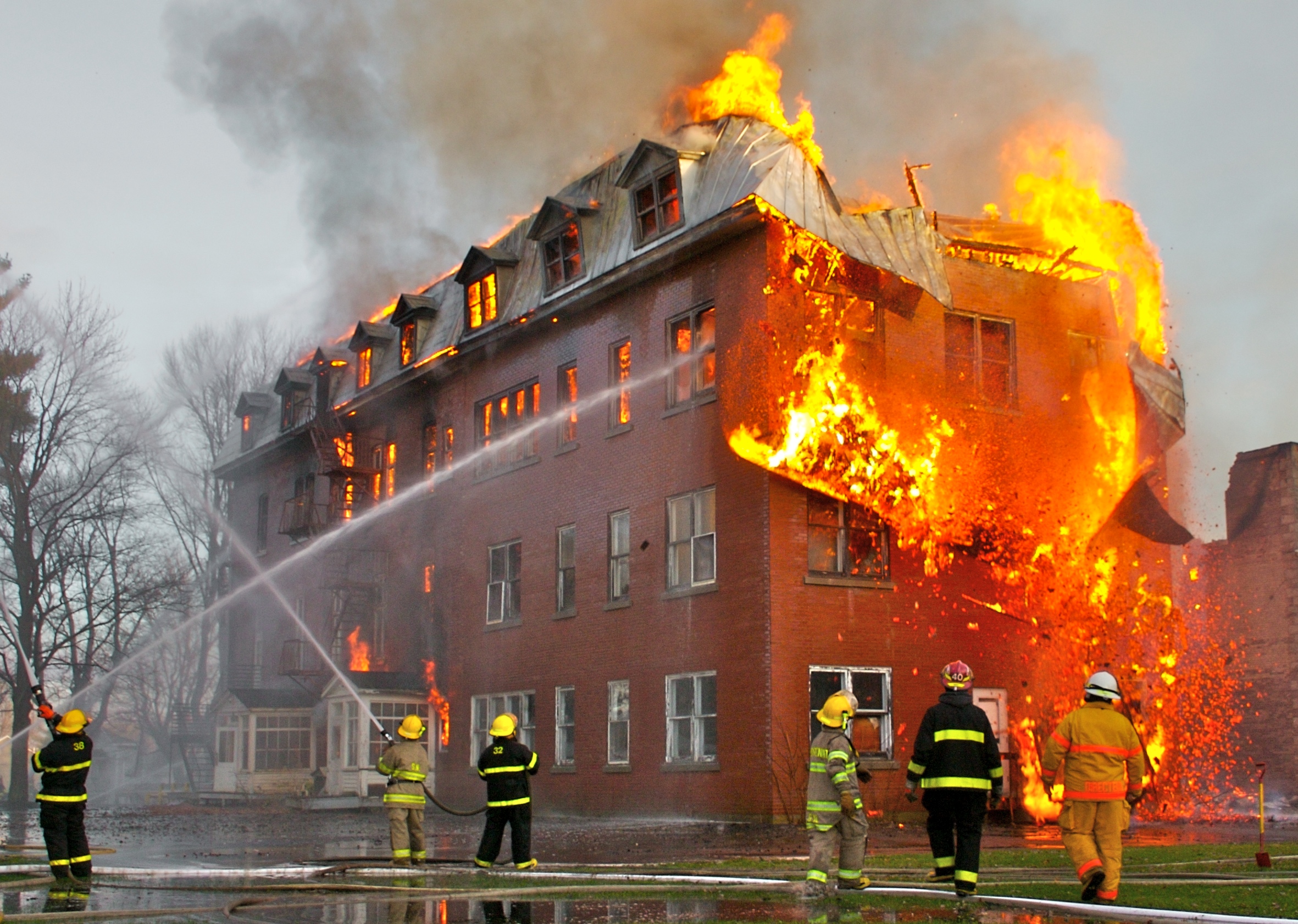
Fire is an example of a property insurance peril. Other common perils include windstorms, hail, and theft. The peril is the event that actually strikes the blow.
A hazard, on the other hand, is a condition or situation that increases the probability of a loss occurring. Hazards act as catalysts for perils. We categorize hazards into three distinct types:
- Physical hazard: A tangible characteristic of property that increases the chance of a loss. A dead tree leaning directly over a house's roof is a physical hazard. Bald tires on a commercial delivery van are physical hazards.
- Moral hazard: A behavioral characteristic that increases the chance of an intentional loss. If a business owner is secretly facing bankruptcy and exhibits a willingness to commit fraud, that is a moral hazard.
- Morale hazard: A state of mind demonstrating an attitude of carelessness or indifference to loss. A driver who leaves their keys in the ignition of an unlocked car because "I have theft insurance anyway" is exhibiting a morale hazard.
As a producer, identifying hazards is a core part of field underwriting. You cannot stop a lightning strike (a peril), but you can require a client to upgrade their ancient electrical wiring (a physical hazard) before issuing a policy.
Not all risk is insurable. In fact, the insurance industry rigidly divides risk into two categories and completely ignores one of them.
Pure risk involves only the possibility of experiencing a loss or experiencing no loss. Crucially, pure risk never offers an opportunity for financial gain. If you own a home, it might burn down (a loss), or it might not burn down (no loss). You do not magically make a profit simply because your house survived the year. Insurance policies are exclusively designed to cover pure risk.
Speculative risk involves the possibility of experiencing a loss, experiencing no loss, or achieving a financial gain.
- Gambling is an example of a speculative risk. You place $100 on a roulette table; you might lose it, keep it, or double it.
- Investing in the stock market is an example of a speculative risk. You buy shares hoping they appreciate in value, accepting the possibility they might plummet.
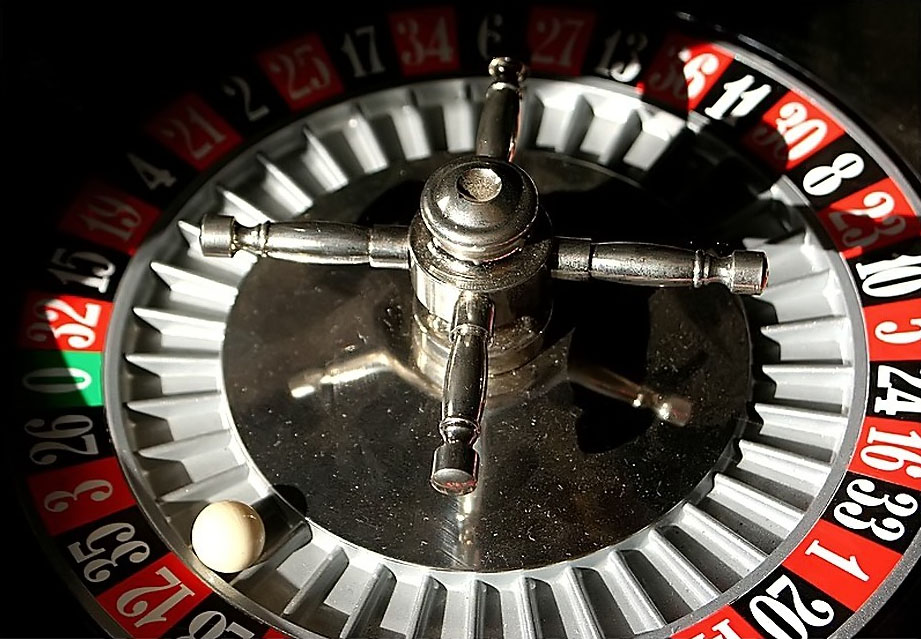
Insurance companies do not provide coverage for speculative risks. If a client asks you to underwrite a policy guaranteeing their new restaurant will be profitable, you must decline. Insurance exists to restore a policyholder to their pre-loss condition, not to guarantee their entrepreneurial success or stock portfolio.
| Feature | Pure Risk | Speculative Risk |
|---|---|---|
| Possible Outcomes | Loss, or No Loss | Loss, No Loss, or Financial Gain |
| Chance of Profit? | None | Yes |
| Examples | House fire, Auto collision | Gambling, Stock market investing |
| Is it Insurable? | Yes | No |
If risk is inherently uncertain, how can an insurance company confidently promise to pay out millions of dollars in claims while charging only a fraction of that in premium? The secret lies in a mathematical principle called the law of large numbers.
The law of large numbers states that a larger number of exposure units improves the predictability of future losses.
Imagine flipping a coin. If you flip it 10 times, you might get 8 heads and 2 tails—a highly unpredictable, skewed result. But if you flip that exact same coin 10,000 times, the actual results will be incredibly close to 5,000 heads and 5,000 tails. As the number of independent events increases, the actual results will more closely approach the expected results.
Insurers rely on the law of large numbers to calculate expected losses. They cannot predict if your specific client's house will catch fire this year. However, if they insure 500,000 similar houses across the state, they can predict with astonishing accuracy exactly how many of those homes will burn down.
Because accurate statistical prediction of future losses allows insurers to charge adequate premiums, the system remains solvent. They collect just enough premium from the 500,000 homeowners to pay for the handful of homes that suffer a loss, plus their operating expenses.
However, there is a catch. The law of large numbers requires a large pool of similar exposure units to function effectively. We cannot mathematically mix the risk of insuring a $50,000 compact car with a $50,000,000 high-rise office building. Similar exposure units are referred to as homogenous risks in the insurance industry. Actuaries must group homogenous risks together—wooden-frame single-family homes in one bucket, brick commercial warehouses in another—to ensure their predictions remain mathematically sound.
If insurance is restricted to pure risk, what stops me from buying a fire insurance policy on my neighbor's house? If their house burns down, I collect a massive check.
The legal barrier preventing this scenario is the doctrine of insurable interest.
Insurable interest is a financial or economic stake in the insured property. To legally buy a policy, a person has an insurable interest if the damage or destruction of the property would cause a direct financial loss to that person.
The requirement of insurable interest serves two vital functions in the industry:
- It prevents individuals from using insurance contracts as a form of gambling. Without this rule, you could "bet" on random buildings burning down.
- Insurable interest reduces moral hazard by removing the financial incentive to intentionally destroy property. If you don't own the building, but you hold a $1,000,000 policy on it, you have a massive financial incentive to strike a match.
Who Has Insurable Interest?
In the real world of property and casualty insurance, you will encounter insurable interest in three common forms:
- The Owner: A property owner always has an insurable interest in their owned property.
- The Lender: A bank holding a mortgage on a home has an insurable interest in that specific home. If the house is destroyed, the bank's collateral for their massive loan vanishes. This is why banks require themselves to be listed on the homeowner's policy.
- The Renter: A tenant has an insurable interest in the personal property kept inside a rented apartment. While the tenant has no insurable interest in the apartment building itself (they don't own the walls), they would suffer a direct financial loss if a fire destroyed their clothing, electronics, and furniture.
The Golden Rule: Time of Loss
In Property and Casualty insurance, there is a rigid, heavily tested rule regarding when this interest must exist:
In property and casualty insurance, insurable interest must exist at the exact time of the loss.
Imagine a client, Sarah, who sells her house on a Tuesday but forgets to cancel her homeowner's policy. On Wednesday, the house burns down. Even though Sarah paid her premiums all year, and even though she had insurable interest when she bought the policy, she has no insurable interest at the exact time of the loss. Therefore, her policy pays her nothing.
Furthermore, an insurance claim payout cannot exceed the financial value of the policyholder's insurable interest at the time of the loss. If a client owns a 50% stake in a $400,000 commercial building, and it burns to the ground, their maximum insurable interest is $200,000. They cannot profit from the disaster. They can only be restored to exactly where they stood financially a moment before the peril struck.
Connecting It All
As a producer, your job is built on these foundational laws. When you write a policy, you are executing a mechanism of risk transfer. You are confirming that the risk is pure, not speculative. You are verifying that the client possesses a genuine insurable interest to avoid moral hazards. And you are feeding a carefully vetted risk into the insurer's massive pool, allowing the law of large numbers to accurately price the premium. Mastering these concepts separates a mere order-taker from a true insurance professional.