Binders, Endorsements, and Blanket vs. Specific Coverage
Not sure you’re ready?
Take the ~3-minute readiness diagnostic and see where you stand.
An insurance policy is not a static monolith etched in stone; it is a highly adaptable financial instrument designed to bend, stretch, and immediately respond to the volatile realities of human commerce and property ownership. Before a printing press strikes paper, commerce requires immediate protection. Once a policy is issued, the hazards of life demand constant modification. And when valuing the property itself, the mathematical framework must either strictly isolate individual assets or cast a wide, flexible net over shifting inventories. Mastering the architecture of insurance requires understanding the precise mechanisms used to temporarily bind risk, permanently alter contract language, and structure the monetary limits of the coverage itself.
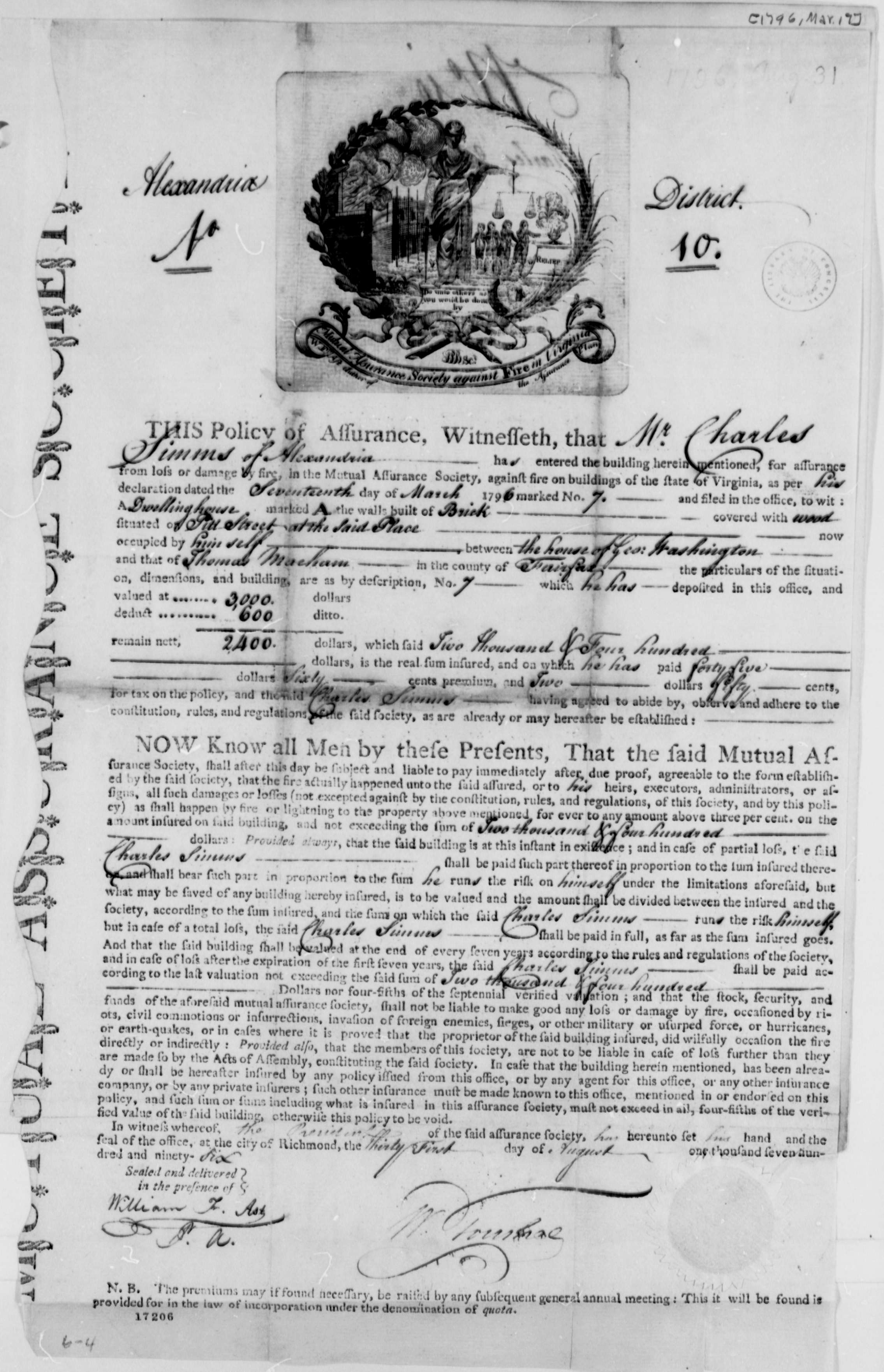
In the real world, commerce does not pause for underwriting review. A family closing on a home mortgage or a business taking delivery of a fleet of commercial trucks requires immediate, legally binding assurance that their assets are protected against loss. This gap between the need for instant coverage and the time it takes an insurer to underwrite and issue a formal policy is bridged by a binder.
An insurance binder is a legal agreement providing temporary insurance coverage. It serves as immediate proof of insurance until the formal policy is issued. To issue a valid binder, an insurance agent must possess explicit binding authority from the insurer—they are, in that moment, acting as the direct legal proxy of the insurance company.
Creation and Consideration
Binders can be issued orally by an authorized agent, such as over a phone call from an auto dealership. However, legal prudence and regulatory standards dictate that an oral binder must be followed by a written binder within a legally specified timeframe. Whether oral or written, a valid binder explicitly includes the name of the insurer providing the temporary coverage and specifies the exact limits of liability provided during this temporary period.

A common misconception is that coverage cannot begin until money changes hands. In contract law, a valid contract requires consideration—an exchange of value. However, a binder does not require the immediate payment of a premium to be legally valid. Instead, the promise to pay the premium by the insured serves as the legal consideration for an insurance binder.
Standard Terms and Expiration Triggers
While a binder is a short-term instrument, it is not a "lite" version of coverage. Binders are subject to all standard terms of the formal insurance policy being written, and they are subject to all standard conditions of the formal insurance policy being written. If a home burns down while under a binder, the claim is adjudicated exactly as if the final, printed homeowners policy were in effect.
However, a binder does not guarantee the final issuance of a formal insurance policy. Underwriting may uncover unacceptable hazards, leading the insurer to reject the risk. Therefore, temporary coverage must have clear terminal endpoints. A binder ceases to exist under three primary conditions:
- Formal Issuance: A binder expires immediately upon the issuance of the formal insurance policy. The temporary instrument is simply replaced by the permanent contract.
- Declination: A binder expires immediately if the insurance company officially declines the application for coverage.
- Time Expiry: A binder automatically expires after a specified number of days if no formal action is taken by the insurer. Standard insurance binders typically have a maximum duration of 30, 60, or 90 days depending on state law.
Regulatory Warning: Because a binder is a legally binding contract, an insurer cannot simply walk away from it mid-term without following due process. If an insurer wishes to terminate a binder before its expiration date or before issuing a declination, the insurer must provide formal notice of cancellation to the insured.
Once a formal policy is issued, the insured's life and business operations will inevitably change. A commercial client may open a new location; a homeowner may purchase a high-value painting; an auto insured may have a child who reaches driving age. Instead of canceling the existing policy and rewriting a new one from scratch, the insurance industry uses endorsements.
An endorsement is a written document attached to an insurance policy that alters the original terms or conditions of an insurance policy. In certain lines of insurance, such as life and health, endorsements are also known as riders.
Mechanisms of Modification
An endorsement must physically or electronically become part of the insurance contract to be legally binding. It can be attached to an insurance policy at the inception of the coverage (tailoring a standard form to a specific client on day one) or it can be added to an insurance policy during the active policy term.
To be valid, certain policy endorsements require the signature of an executive officer of the insurance company, ensuring that major alterations to the company's risk exposure are officially authorized.
Endorsements are powerful, surgical tools that can execute five primary functions:
- Expand: An endorsement can add specific coverages to an existing insurance policy (e.g., adding water backup coverage to a homeowners policy).
- Restrict: An endorsement can delete specific coverages from an existing insurance policy (e.g., excluding windstorm coverage for a coastal property).
- Adjust Limits: An endorsement can modify the limits of liability on an existing insurance policy (e.g., increasing a liability limit from $500,000 to $1,000,000).
- Update Entities: An endorsement can change the name of the insured on an active policy (e.g., due to a marriage or a corporate name change).
- Update Geography: An endorsement can update the location of the insured property on an active policy (e.g., when a business moves to a new warehouse).
The Rule of Precedence
When you attach a specific modification to a generic standard contract, conflicts in language inevitably arise. The foundational rule of policy interpretation is that a written endorsement takes precedence over the original standard policy language. If an endorsement conflicts with the original policy terms, the endorsement language dictates the coverage. It represents the most recent, specific intent of the two contracting parties.
Because endorsements can drastically alter the landscape of coverage, consumer protection laws heavily regulate their use—particularly when they restrict rights. While an insured is generally happy to accept an endorsement that adds coverage mid-term, an endorsement reducing coverage during the policy term typically requires the written consent of the named insured.
When writing commercial and residential property insurance, the producer and the underwriter must decide how to structure the limits of insurance over the physical assets. The mathematics of property valuation generally fall into two distinct architectures: Specific Coverage and Blanket Coverage.
Specific Coverage (Scheduled)
Specific coverage is also referred to as scheduled coverage. The fundamental characteristic of specific coverage is isolation. It insures a single item of property for a specific amount of insurance.
While specific coverage can insure multiple items of property, it assigns a separate specific limit of insurance to each individual scheduled item. For example, a business policy might require a dedicated limit of insurance for a covered building (e.g., $1,000,000 for Building A) and a separate dedicated limit of insurance for the contents of a covered building (e.g., $500,000 for the inventory inside Building A).
This rigid structure has immediate implications for the insured:
- Maximum Indemnification: Under specific coverage, the maximum payout for a damaged item is the exact specific limit assigned to that item. If the inventory inside Building A burns down and actually costs $600,000 to replace, the insured will only receive $500,000, suffering a $100,000 uninsured loss, even if the building itself sustained no damage.
- Administrative Burden: Specific coverage requires the insured to track the individual value of each scheduled property item continuously. If an asset appreciates, the insured must proactively request an endorsement to increase that specific limit.
Blanket Coverage (Unified Limit)
To solve the rigid limitations of specific coverage, particularly for dynamic commercial operations, insurers utilize blanket limits. Blanket coverage provides a single limit of insurance applying to multiple items of property.
Instead of building individual silos of coverage, a blanket limit throws a single, massive umbrella over a variety of risks. Blanket coverage can be structured in several ways:
- It can apply a single limit of insurance to multiple buildings located at a single premises.
- It can apply a single limit of insurance to a single type of property located across multiple different premises (e.g., all inventory across three separate retail stores).
- It can apply a single limit of insurance to multiple types of property across multiple different premises (e.g., all buildings and all business personal property across all locations owned by the insured).

The Mathematical Advantage of the Blanket
The primary advantage of blanket coverage is that it provides coverage flexibility if the value of inventory fluctuates among multiple covered locations. A blanket limit covers fluctuating property values across multiple locations without requiring daily limit adjustments.
Consider a retail enterprise with three locations. The total inventory across the enterprise is $1,500,000. Under specific coverage, the insured might schedule $500,000 at Store 1, $500,000 at Store 2, and $500,000 at Store 3. If a seasonal rush causes Store 1 to temporarily hold $800,000 in inventory just as a fire destroys it, specific coverage pays out a maximum of $500,000.
Under a blanket policy, the enterprise is insured for a single limit of $1,500,000 across all locations. Blanket coverage allows the entire single limit of insurance to be applied to a loss at any one of the covered locations. Therefore, the maximum payout in the event of a total loss at one location under blanket coverage is the full blanket limit. When Store 1 burns down with its $800,000 inventory, the policy easily absorbs the loss, as the full $1,500,000 blanket limit is available to respond to that single location.

Summary Comparison: Property Limit Structures
| Feature | Specific (Scheduled) Coverage | Blanket Coverage |
|---|---|---|
| Limit Structure | Separate, dedicated specific limits per item. | Single unified limit for multiple items/locations. |
| Coverage Scope | Building and contents require separate dedicated limits. | Can combine buildings, contents, and multiple premises under one limit. |
| Maximum Payout | The exact specific limit assigned to the damaged item. | The full blanket limit is available for a total loss at any one location. |
| Administrative Need | Requires insured to track individual value of each item. | Provides flexibility for fluctuating property values without daily adjustments. |
As an insurance producer, mastering these fundamentals dictates how effectively you protect a client's wealth. The ability to issue a temporary binder secures their business on day one; the strategic use of endorsements ensures their contract evolves alongside their life; and correctly deploying specific or blanket coverage ensures that when the disaster finally strikes, the mathematical limits are structured to make them whole.