North Carolina Insurance Code & Department of Insurance
Not sure you’re ready?
Take the ~3-minute readiness diagnostic and see where you stand.
Every state that licenses insurance producers needs a referee, and in North Carolina that referee is a single elected office sitting atop a body of law running to sixty-some articles. Chapter 58 of the North Carolina General Statutes is that law, and the North Carolina Department of Insurance (NCDOI), headquartered in Raleigh, is the agency built to enforce it. Understanding how this machine works — who runs it, what it can compel you to do, and what happens when someone breaks the rules — is not trivia for the licensing exam. It is the operating manual for your entire career as a producer in this state.
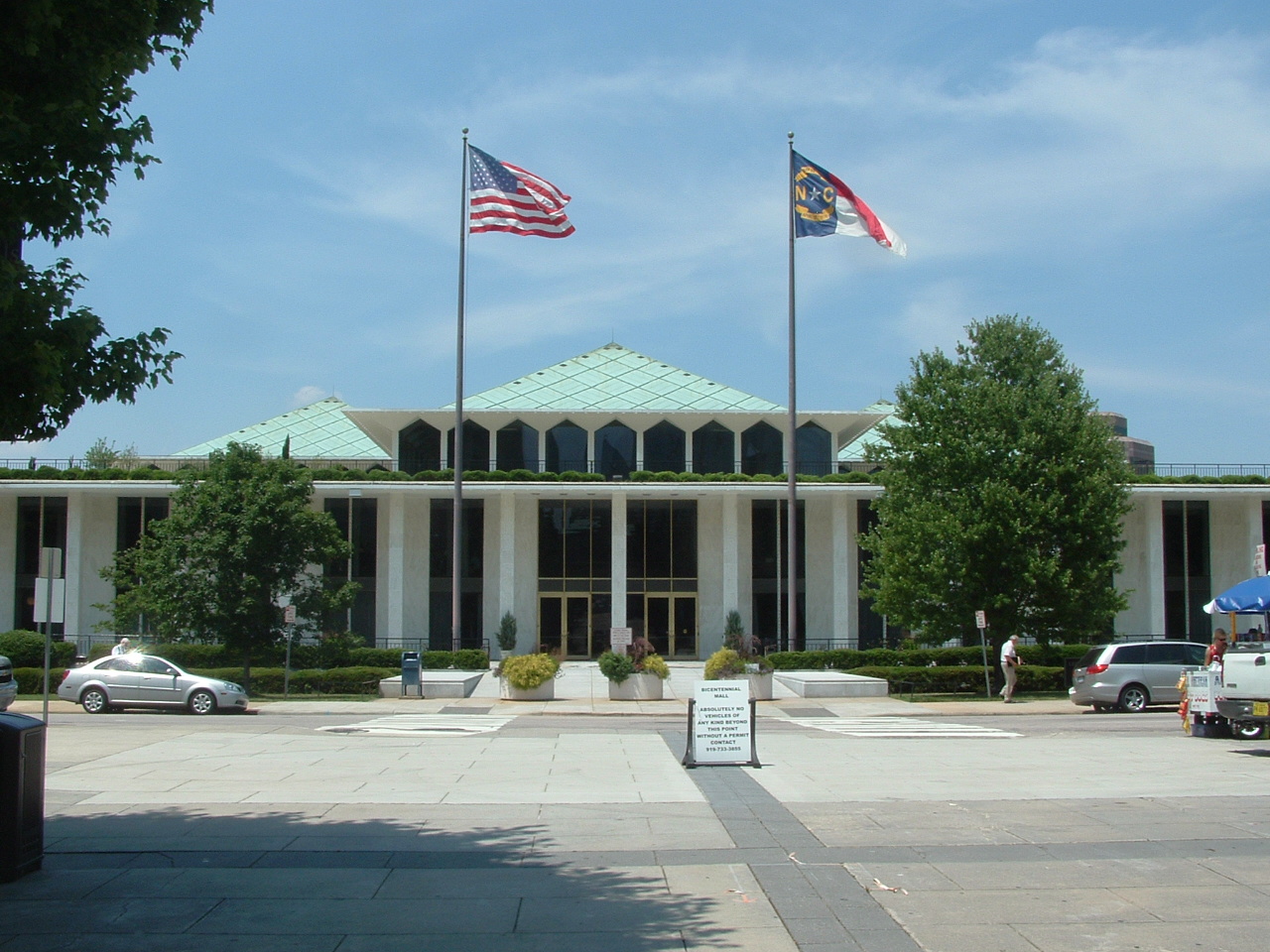
Most states let their governor appoint an insurance commissioner, the way a governor appoints a secretary of transportation or a budget director. North Carolina does something different: its Commissioner of Insurance is elected directly by the voters in a statewide race, the same way you'd elect a governor or attorney general. That single structural fact explains a lot about how the office behaves — the Commissioner answers to the electorate, not to the Governor's office, and sits as a member of the North Carolina Council of State, the group of independently elected executive officials who run state government alongside the Governor.
The office is a constitutional one. Under Article III, Section 7 of the North Carolina Constitution, the Commissioner serves a four-year term. The current Commissioner, Mike Causey, has held the office since January 1, 2017, and was reelected in 2024 — a detail worth knowing not because the exam quizzes you on politics, but because it signals that this is a real, currently sitting office with actual regulatory teeth, not an abstraction.
Key fact: The Commissioner of Insurance is elected statewide for a four-year term (N.C. Const. art. III, § 7) and serves on the Council of State — unlike most states, where the top insurance regulator is a gubernatorial appointee.
What the Commissioner Actually Does
Think of the Commissioner's job in three layers, moving from broad to narrow.
Layer one: faithful execution of the law. Under N.C.G.S. § 58-2-40, the Commissioner's baseline duty is to "see that all laws of this State that the Commissioner is responsible for administering" — that is, all of Chapter 58 — "are faithfully executed." That single sentence is the legal foundation for everything else in this topic. It's the reason the Commissioner can examine your books, subpoena your records, or suspend your license: someone has to make sure the law on paper becomes the law in practice.
Layer two: rulemaking. Statutes can't anticipate every scheme a bad actor will invent, so the Commissioner is given authority — exercised through the rulemaking procedures of Chapter 150B (the North Carolina Administrative Procedure Act) — to adopt administrative rules that "enforce, carry out, and make effective" Chapter 58. Critically, this authority isn't limited to filling in technical gaps. The Commissioner may adopt rules to stop regulated persons from engaging in practices that harm the public even if no existing statute expressly forbids that specific practice. This is a deliberately broad grant: the legislature can't foresee every sales gimmick or claims-handling shortcut, so it gave the Commissioner standing authority to close loopholes as they appear.
Layer three: day-to-day oversight tools. The Commissioner prescribes the forms insurers, associations, orders, and bureaus must use for their required financial statements, and then must receive and thoroughly examine every financial statement filed under Articles 1 through 64 of Chapter 58. When that scrutiny turns up a violation, the Commissioner must report it to the North Carolina Attorney General, and may go further — instituting a civil action directly or referring the matter for criminal prosecution.
The Commissioner also has a consumer-facing side that a producer should never forget: on a citizen's request, the Commissioner must furnish a statement or synopsis of the provisions of an insurance contract offered or issued to that citizen, and the Department compiles and publishes rate and coverage comparison information for residential property and private passenger auto insurance. Why does a life and health producer need to know this? Because it tells you the culture of the regulator you work under — one built around consumer transparency, not just corporate compliance.
North Carolina consolidates its examination authority into a single, deliberately named block of statutes. N.C.G.S. §§ 58-2-131 through 58-2-134 are collectively known — and may be cited — as the Examination Law. Under it, the Commissioner may examine any regulated entity "whenever the Commissioner deems it prudent for the protection of policyholders or the public." Notice how low that bar is: it doesn't require a complaint, a red flag, or evidence of wrongdoing. Prudence alone is enough.
That said, examination isn't purely discretionary for domestic insurers — there's a floor. The Commissioner must conduct a financial examination of every domestic insurer no less frequently than once every five years. Five years is the outer limit, not the target; many insurers are examined more often depending on risk.
Rule to remember: Domestic insurers get a full financial examination at least once every five years — this is a statutory minimum frequency, not a suggestion.
What decides whether an insurer gets examined more frequently than the five-year floor? The statute lists concrete risk signals: financial-statement ratios, changes in management or ownership, and actuarial opinions, among others. And rather than leaving examiners to invent their own methodology, the Commissioner references the criteria set out in the NAIC Examiners' Handbook — the National Association of Insurance Commissioners' standardized playbook — when scheduling and conducting exams. This matters for the exam because it shows North Carolina's process is not idiosyncratic; it's coordinated with a national framework so that examinations translate across state lines.
Examinations have teeth. The Commissioner may issue subpoenas compelling witnesses to appear or documents to be produced whenever relevant to an examination or investigation — think of this as the legal lever that turns "please send your files" into "you are required to send your files." And who pays for all this scrutiny? As a rule, the entity being examined bears the reasonable costs of its own examination. If you are ever advising or running a company under NCDOI's microscope, budget for that.
Financial examinations ask "is this company solvent?" Market conduct examinations ask a different, more human question: "is this company treating its policyholders fairly?" That job belongs to NCDOI's Market Regulation Division, which monitors the market conduct of life, health, and property/casualty insurers doing business in the state.
Picture a market conduct exam as a four-part audit of the insurer's relationship with the public:
| Area reviewed | What examiners look for |
|---|---|
| Sales and marketing practices | Are producers and advertising materials representing policies accurately? |
| Underwriting and rating | Is the insurer applying its rating rules consistently and fairly? |
| Agent appointment and termination | Are producers appointed and terminated according to the rules, with proper records? |
| Claims handling and business administration | Are claims paid promptly and in good faith, with sound recordkeeping? |
For a producer, this is the exam category that touches your daily work most directly — your appointment status, your marketing materials, and how you handle a policyholder's claim inquiry can all become evidence in a market conduct review.
When an Examination Turns Into a Hearing
If a company disputes findings from an examination, the resulting hearing is not run like a courtroom trial. It is, by design, a nonadversarial, confidential investigatory proceeding — the goal is fact-finding, not spectacle. That doesn't mean it's informal: testimony must be given under oath and preserved for the record, exactly as it would be in litigation. But one procedural detail sets it apart — cross-examination of witnesses may be conducted only by the Commissioner. The parties don't get to cross-examine each other directly; that adversarial function is filtered entirely through the regulator.
Once the hearing concludes, the clock starts running: the Commissioner must enter an order within 20 days after the hearing ends. If the Commissioner chooses not to personally preside over a contested case, the matter can be handed off — the Commissioner may apply to the North Carolina Office of Administrative Hearings for an administrative law judge to hear it instead. Either way, these proceedings run under the umbrella of Chapter 150B, North Carolina's Administrative Procedure Act, which is the general rulebook for how state agencies conduct contested cases and adopt rules.
An examination is only as good as the records it can inspect, which is why Chapter 58 imposes a straightforward recordkeeping duty on producers: you must keep the usual and customary business records pertaining to transactions made under your license, and you must keep them at your principal place of business. That location requirement matters — it's not enough to have records somewhere; NCDOI needs to know where to find them.
The format is flexible by design. Records may be kept in paper, photographic, magnetic, mechanical, or other electronic media, provided the result is a record that is durable, legible, and complete. In practice, this means a scanned PDF or a properly maintained CRM export satisfies the law just as well as a filing cabinet — as long as it can still be read and hasn't been altered or corrupted.
This is the section of Chapter 58 where precision matters most, because North Carolina uses different penalty mechanisms for different kinds of violations — and conflating them is one of the most common exam traps.
Civil Penalties Under § 58-2-70
For a Chapter 58 violation that subjects a person's license or certification to suspension or revocation, N.C.G.S. § 58-2-70 gives the Commissioner authority to impose a civil penalty of not less than 100normorethan1,000 per violation. The Commissioner isn't limited to a single remedy here — a civil penalty, restitution, or both can be ordered in addition to, or instead of, suspending or revoking the license. If restitution is owed and needs court enforcement, the Commissioner may petition the Superior Court of Wake County for an order directing payment. Anyone appealing a civil-penalty order issued under § 58-2-70 does so under the companion statute, § 58-2-75.
Civil penalty range (§ 58-2-70): 100to1,000 per violation — this is the general-purpose civil penalty tool tied to license suspension/revocation grounds, not a criminal charge.
License Discipline Under § 58-33-46
Separately from civil penalties, N.C.G.S. § 58-33-46 lets the Commissioner place a producer's license on probation, suspend it, revoke it, or refuse to renew it for specified statutory causes. These grounds read like a checklist of the ways a producer can go wrong:
- Providing materially incorrect or misleading information on a license application
- Violating any insurance law, administrative rule, subpoena, or order of the Commissioner
- Obtaining a license through misrepresentation or fraud
- Improperly withholding, misappropriating, or converting client funds or property
- Conviction of a felony, or of a misdemeanor involving dishonesty, breach of trust, or moral turpitude
- Being found to have committed an insurance unfair trade practice or fraud
Notice that the Commissioner's reach doesn't evaporate just because a producer tries to walk away from the problem: authority to enforce Chapter 58 and impose penalties continues even if the person's license has since lapsed or been surrendered. Surrendering your license mid-investigation doesn't make the investigation disappear. Discipline proceedings under § 58-33-46 follow the contested-case hearing process of Article 3A of Chapter 150B — the same Administrative Procedure Act framework that governs examination hearings.
Criminal Liability for Unauthorized Insurance Under § 58-33-95
This is the statute where students most often get the penalty structure wrong, so isolate it carefully: N.C.G.S. § 58-33-95 is a purely criminal statute — it carries no monetary fine of its own. It creates two tiers of criminal liability for transacting insurance on behalf of an unauthorized insurer, and the tier depends entirely on the person's state of mind:
- Unknowing violation — the person doesn't know the insurer is unauthorized: Class 1 misdemeanor.
- Knowing violation — the person knew, or reasonably should have known, the insurer was unauthorized: Class H felony.
Each individual solicitation, negotiation, or sale made on behalf of the unauthorized insurer counts as a separate criminal offense — sell three unauthorized policies and you've committed three offenses, not one. And the criminal track doesn't preempt the civil track: a civil action or a license-revocation proceeding for the same unlicensed transacting can proceed regardless of whether a related criminal action or conviction ever occurs. The two tracks run independently.
The Cease-and-Desist Penalty Under § 58-63-50
Finally, there's a penalty specific to unfair trade practices. Under N.C.G.S. § 58-63-50, willfully violating the Commissioner's cease-and-desist order issued under the Unfair Trade Practices article carries a civil penalty of 1,000to5,000 per violation. This is the statute that actually carries that higher $1,000–$5,000 dollar figure — a detail worth pinning down precisely, because it's easy to mentally attach that number to the unauthorized-insurer statute above, which (as you now know) has no dollar penalty at all.
Putting the Penalty Framework Together
| Statute | Violation type | Penalty |
|---|---|---|
| § 58-2-70 | Chapter 58 violation tied to license suspension/revocation grounds | Civil penalty, $100–$1,000 per violation |
| § 58-33-46 | Producer license misconduct (fraud, dishonesty, misappropriation, etc.) | Probation, suspension, revocation, or non-renewal |
| § 58-33-95 | Transacting for an unauthorized insurer (unknowing) | Class 1 misdemeanor — no statutory fine |
| § 58-33-95 | Transacting for an unauthorized insurer (knowing) | Class H felony — no statutory fine |
| § 58-63-50 | Willful violation of a cease-and-desist order (unfair trade practices) | $1,000–$5,000 per violation |
The exam will often present you with a fact pattern and ask which statute — and which penalty — applies. The fastest way to sort it out is to ask two questions in sequence: first, is this about a license-related violation, an unauthorized-insurer transaction, or defiance of a cease-and-desist order? Second, if it's the unauthorized-insurer scenario, did the person know? Answer those two questions and the correct statute, and the correct consequence, follow directly.
Step back and the structure makes sense as a single, coherent system rather than a pile of unrelated rules. The Commissioner is given broad authority (§ 58-2-40) precisely so that the more specific tools — examinations, market conduct review, recordkeeping requirements, and the layered penalty scheme — have someone accountable to wield them. Every piece you've just learned, from the five-year examination floor to the difference between a Class 1 misdemeanor and a Class H felony, exists to answer the same underlying question a regulator always has to answer: how do we make sure the people selling insurance in this state are doing right by the people buying it? Knowing the mechanics cold is what lets you, as a producer, stay confidently on the right side of that line.