North Carolina Marketing, Replacement & Suitability Rules
Not sure you’re ready?
Take the ~3-minute readiness diagnostic and see where you stand.
A producer sitting across from a client with an old whole life policy in hand faces a decision problem that North Carolina has already solved for you, in rule form, before you ever open your mouth. Say too little about the new annuity's surrender schedule and you've committed an unfair trade practice. Let the client lapse a fifteen-year policy without a signed replacement notice and you've violated a Department of Insurance rule that exists specifically to catch that exact fact pattern. This topic is where the state's marketing, replacement, and suitability law converges on the single moment when a producer opens a sales conversation — and it rewards precision more than almost anything else on the exam, because the fact patterns are built to test exactly where your disclosure obligations begin and end.
Everything in this topic sits on top of one statute: North Carolina General Statutes Article 63, the Unfair Trade Practices Act. Article 63 prohibits unfair methods of competition and unfair or deceptive acts in the business of insurance — a broad umbrella that covers claims handling, rebating, and, critically for this topic, advertising. Within that Article, G.S. § 58-63-15 does the specific work of defining misrepresentation and false advertising of policy contracts as an unfair trade practice. Any advertisement that misstates a policy's terms, benefits, or dividend history, or that misrepresents an insurer's financial condition, falls under this section. Think of Article 63 as the constitution and § 58-63-15 as the specific criminal code provision a prosecutor would cite — the general prohibition needs a specific violation to attach to, and false advertising is one of the most common ones regulators charge.

Where the statute sets the principle, the North Carolina Administrative Code sets the mechanics. 11 NCAC 12 .0424 through .0433 is a dense, rule-by-rule advertising code specific to life insurance and annuities, and it rewards careful reading because the exam tests it at the level of individual clauses.
The scope rule (.0424) is broader than most producers expect: an "insurer" advertising a policy includes any legal entity engaged in advertising it, regardless of corporate form. A marketing affiliate, a third-party lead-generation firm, or a captive agency producing its own brochures is not exempt just because it isn't the underwriting carrier.
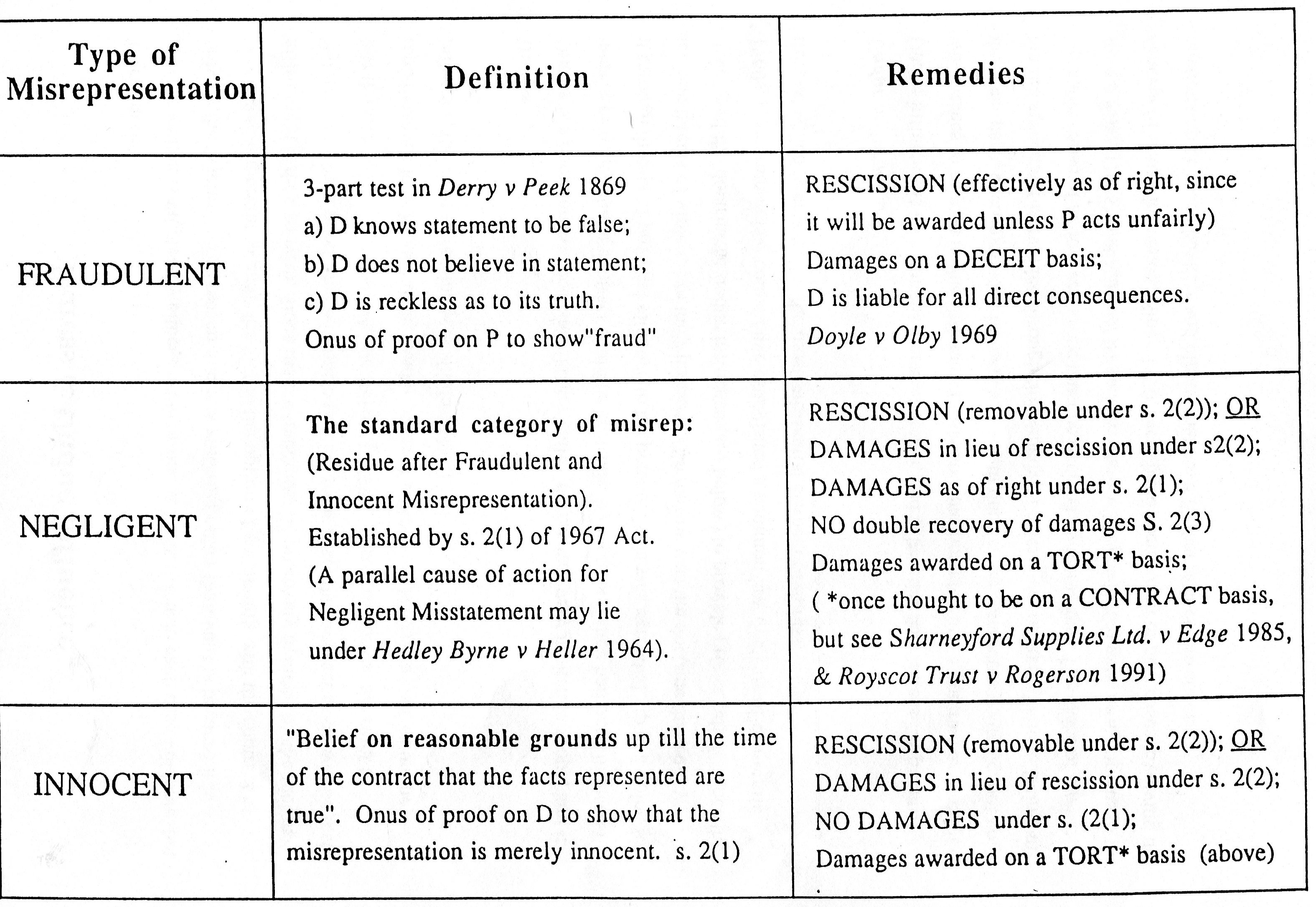
From there, the substantive prohibitions build a coherent picture of what "misleading" means in this context:
An advertisement may not omit material information if the omission has the capacity to mislead a purchaser about benefits, coverage, premiums, or tax consequences. Silence can be just as deceptive as a false statement.
Required disclosures may not be minimized, obscured, or buried. A disclosure printed in six-point gray font at the bottom of a glossy brochure technically "appears" in the ad — but North Carolina treats that as no disclosure at all, because the rule requires disclosures to be presented in a way a reasonable purchaser would actually notice.
The rules are especially strict about the line between guaranteed and nonguaranteed elements — dividends, excess interest crediting, non-guaranteed cost of insurance charges. An advertisement that shows nonguaranteed elements must show a comparable illustration of the guaranteed elements alongside them, and it is flatly prohibited from presenting a nonguaranteed number as though it were guaranteed. This is the single most commonly tested advertising fact on state exams, because it is the single most common way insurers historically oversold cash-value life insurance: showing a rosy projected dividend scale next to nothing, letting the client assume the projection is the promise.
Dividends draw a second-layer rule of their own: an advertisement cannot describe policy dividends as "tax free" without a full explanation of the applicable tax treatment. Dividends are generally treated as a return of premium and are typically not taxable as paid — but "generally not taxable" is a different, more defensible claim than the blanket assertion "tax free," which omits the conditions under which that treatment can change (for example, if cumulative dividends exceed cumulative premiums paid).
Testimonials get their own guardrail too: North Carolina prohibits unsubstantiated testimonials in life insurance advertising and requires disclosure of any financial interest an endorser holds in the insurer. If a satisfied policyholder appears in an ad and also happens to receive a commission override or a fee for the endorsement, that relationship must be disclosed — otherwise the "independent" testimonial is doing undisclosed marketing work.
And here is a rule that surprises almost every new producer: offering a free-look or refund period does not cure an otherwise misleading advertisement. It is tempting to reason that a client who gets duped by a slick ad can just cancel within the free-look window, so no harm done. North Carolina rejects that logic entirely. The free-look period protects a client's right to walk away from a policy they didn't want; it does nothing to excuse an insurer or producer who lied to get them to sign in the first place. The deception is the violation, independent of whether the client later exercised a cure right they may not even have known to use.
Health, accident, and hospitalization advertising has its own parallel requirement: any advertisement describing particular policy benefits must also reference major exceptions or clauses that limit or void liability. Advertise the $500-a-day hospital benefit, and the ad must also flag the pre-existing-condition waiting period or the exclusion for cosmetic procedures that would gut that benefit in practice.
Advertising rules govern printed and broadcast material. A separate, narrower set of rules governs the producer's own mouth in a face-to-face sales presentation, and it operates as a threshold disclosure — obligations that must be satisfied before the substantive sales pitch begins.
Under G.S. § 58-60-20, a producer must, before beginning a life insurance sales presentation, tell the prospective purchaser two things: that the producer is acting as a life insurance agent, and the full name of the insurance company the producer represents. Neither disclosure is optional or something that can be folded into paperwork signed later — it must happen at the start of the conversation, because its purpose is to let the consumer immediately calibrate how to weigh everything that follows. A client who doesn't realize they're talking to a commissioned agent representing a specific carrier evaluates the pitch very differently than one who does.
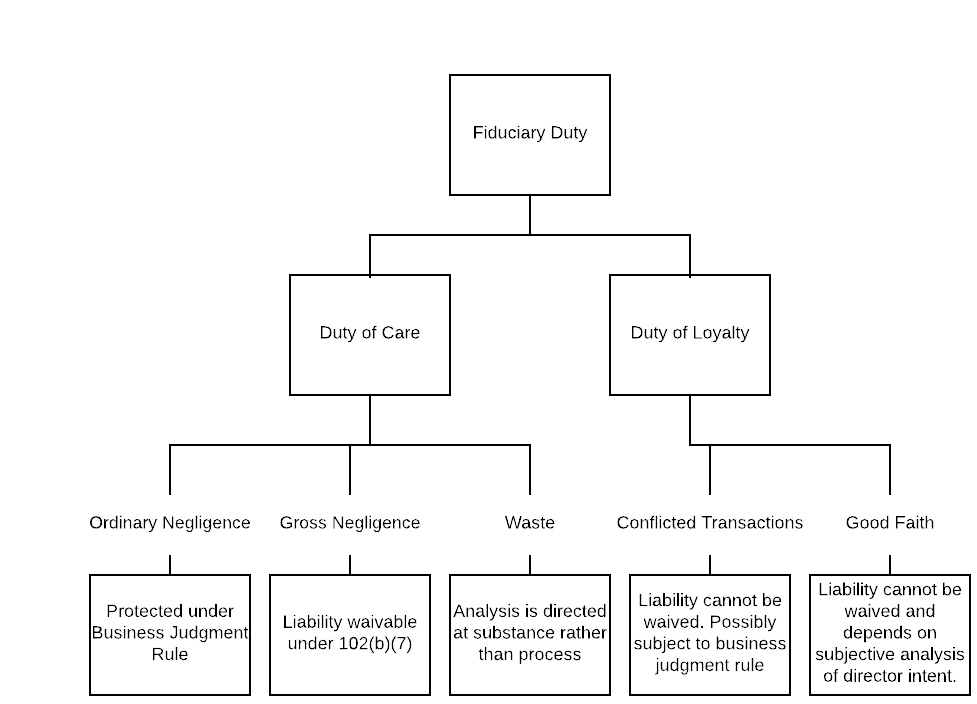
The same section addresses a related credential-integrity problem: a producer may not use titles like "financial planner" or "investment advisor" in a way that implies a fee-based advisory relationship unless that relationship genuinely exists. A commissioned life insurance producer calling themselves a "financial planner" on a business card, without actually holding an investment adviser registration or operating under a fee-only fiduciary arrangement, misleads the client about the nature of the relationship — precisely the kind of misrepresentation Article 63 exists to prevent, just enacted here through a specific statutory rule rather than the general prohibition.
Finally, § 58-60-20 requires that any reference to policy dividends in a sales presentation must include a statement that the dividends are not guaranteed. This mirrors the advertising rule against showing nonguaranteed elements as guaranteed, but it applies to the spoken pitch, not just the printed page — closing the obvious loophole where a producer verbally promises a dividend scale that the brochure, more carefully, does not.
North Carolina's Life Insurance Disclosure Act requires insurers to arm every prospective purchaser with two documents: a Buyer's Guide (a generic, NAIC-style explainer of how life insurance works and how to compare policies) and a Policy Summary (specific numbers for the actual policy being proposed — premiums, cash values, death benefit, and surrender charges).
Timing is where this Act earns its exam weight. Under G.S. § 58-60-15, the insurer must provide the Buyer's Guide and Policy Summary before accepting the applicant's initial premium deposit. The theory is straightforward: disclosure that arrives after the money changes hands is a courtesy, not a decision-making tool. There is one narrow exception worth memorizing precisely, because the exam loves testing the boundary of an exception: an insurer may deliver the Buyer's Guide and Policy Summary together with the policy itself, but only if the policy contains an unconditional refund provision of at least 10 days. In other words, delayed delivery is permitted only when the client is guaranteed a real do-over once the documents finally arrive.
The Act's reach also has firm edges. It does not apply to individual or group annuity contracts, credit life insurance, or variable life insurance — each of those product types is either covered by its own disclosure regime (annuities) or considered different enough in structure that the standard Buyer's Guide/Policy Summary framework doesn't map cleanly onto it.
Two more features round this out. First, the obligation isn't limited to people who actually buy: an insurer must provide the Buyer's Guide and Policy Summary to any prospective purchaser who requests them, whether or not a purchase is ever made — a shopper doing comparison research is entitled to the same information as someone ready to sign. Second, and this is the enforcement teeth of the whole Act: under G.S. § 58-60-30, an insurer's failure to provide a required Buyer's Guide or Policy Summary is treated as a misrepresentation of policy benefits under the Unfair Trade Practice Act. The disclosure failure isn't a separate, lesser paperwork violation — it collapses straight into the same Article 63 misrepresentation category as an outright lie about the policy's terms.
| Document | What it shows | Must be delivered |
|---|---|---|
| Buyer's Guide | Generic guidance on life insurance concepts and comparison shopping | Before initial premium accepted (or with policy, if 10-day unconditional refund applies) |
| Policy Summary | Specific premiums, cash values, and benefits for the proposed policy | Same timing as Buyer's Guide |
A companion statute narrows in on a specific market segment prone to abuse: burial and final-expense policies. North Carolina's Small Face Amount Life Insurance Disclosure Act applies to any life insurance policy or certificate with an initial face amount of $15,000 or less. These are exactly the policies most likely to be sold to price-sensitive, often elderly consumers who can least afford to be misled about what a small policy actually delivers — which is precisely why the legislature carved out a dedicated disclosure regime rather than relying solely on the general Life Insurance Disclosure Act.
Annuities get their own parallel disclosure statute, separate from the life insurance framework above, because annuities are a fundamentally different product — an accumulation and income vehicle rather than a pure death-benefit contract — with different things that need explaining.
North Carolina's Annuity Disclosure Act requires an insurer to give annuity purchasers a disclosure document and an annuity buyer's guide describing the contract's minimum features. The disclosure document itself must do real explanatory work: it must describe the contract's guaranteed, nonguaranteed, and determinable elements and explain how each one actually operates — not just list them as line items, but walk the purchaser through the mechanics (a fixed minimum interest rate is guaranteed; an index-linked crediting rate is nonguaranteed; a market-value-adjustment factor is determinable based on a formula tied to external rates).
Delivery timing branches on how the sale happens:
| Application context | Delivery deadline |
|---|---|
| Face-to-face meeting | At or before the time of application |
| Not face-to-face (mail, phone) | No later than 5 business days after the insurer receives the completed application |
| Internet application | Insurer takes reasonable steps to make the documents available for viewing and printing on its website |
If the disclosure document and buyer's guide are not provided at or before the time of application — most commonly because the sale happened remotely and the 5-business-day mailing hasn't caught up yet — the applicant must receive a free-look period of no less than 15 days to return the contract without penalty. This 15-day period is not a bonus stacked on top of the ordinary free-look right; it runs concurrently with any other free-look period the policy or state law otherwise provides. The logic mirrors the "free-look doesn't cure a misleading ad" rule from earlier, but in reverse: here, a late disclosure is repaired not by punishing the insurer further, but by giving the consumer a longer, better-informed window to exit — because unlike a misleading ad, a late-but-eventually-delivered disclosure document is a timing failure, not a truthfulness failure.
The Annuity Disclosure Act, like its life insurance counterpart, has carve-outs: it does not apply to registered variable annuities, structured settlement annuities, or charitable gift annuities — products either regulated primarily at the federal securities level (variable annuities) or structurally distinct enough (structured settlements, charitable gift annuities) that the standard fixed/indexed annuity disclosure framework doesn't fit.
Finally, disclosure isn't a one-time event at issue. Insurers must send annuity contract owners at least an annual report on contract status, including the current accumulation value and cash-surrender value — so a policyholder isn't left guessing what their contract is actually worth between the day they signed and the day they eventually surrender or annuitize it.
Replacement regulation exists because the single most profitable moment for a producer — convincing a client to buy something new — is also the single riskiest moment for that client, if what they're replacing was actually serving them well. North Carolina's replacement rules, codified at 11 NCAC 12 .0601 et seq., are built to slow that moment down just enough to force real disclosure.
11 NCAC 12 .0602 defines the trigger precisely: a replacement occurs when a new life insurance or annuity purchase causes an existing policy or contract to be lapsed, surrendered, forfeited, or otherwise materially changed. Note how broad "materially changed" is — a replacement doesn't require the old policy to disappear entirely. Reducing it to paid-up status, converting it to extended term insurance, or partially surrendering it to fund the new premium all count.
The rule's trigger for producer duties is a knowledge standard, not a bright-line checkbox: the replacement rules apply whenever a producer knows or reasonably should know that the proposed transaction will terminate, reduce, or otherwise affect an existing policy or contract. This is why the exam likes fact patterns where a producer claims ignorance — "the client never told me about the old policy" is not a defense if the surrounding facts (the client mentioned surrendering a whole life policy to afford the new premium, for instance) mean the producer should have known.
Given that standard, the rule builds in a paper trail at every step of the transaction:
- The producer must obtain a signed statement from the applicant indicating whether the applicant has an existing life insurance policy or annuity contract.
- If the applicant does have existing coverage, the producer must present and read a replacement notice to the applicant no later than the time the application is taken — not after, not "we'll send it with the policy."
- The producer must leave the applicant copies of all sales materials used, at the time the application is completed.
- The producer must submit copies of the replacement notice and sales materials to the insurer along with the application, so the home office has the same paper trail the client does.
That paper trail then triggers duties on the existing insurer's side. Under 11 NCAC 12 .0606, an existing insurer that receives a replacement notice must, upon request, provide the policy owner with requested policy values or an in-force illustration within 5 business days — fast enough that the client can make an apples-to-apples comparison before the old policy is gone. The existing insurer must then retain replacement notifications, indexed by replacing insurer, for at least 5 years or until its next regular Department of Insurance examination, whichever is later — a retention rule long enough to survive routine audit cycles.
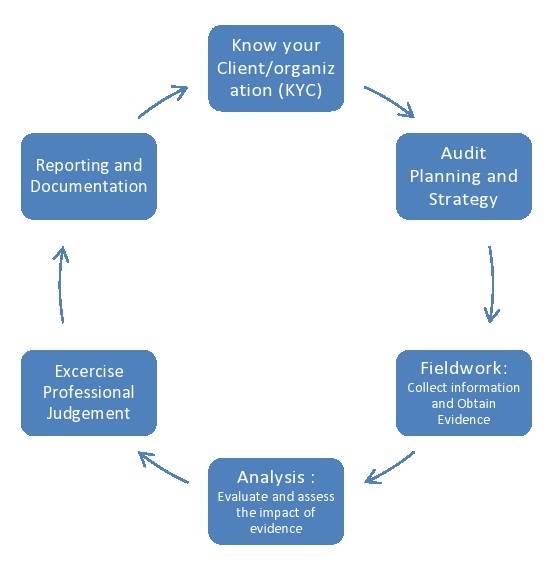
The replacing side has a parallel duty under 11 NCAC 12 .0612: a replacing insurer must notify any other affected existing insurer within 5 business days of receiving a completed application indicating replacement, so that insurer knows to expect the request described above.
Producer-level compliance isn't self-enforcing — it's supervised. Any insurer that uses producers must maintain a system to supervise replacement transactions, including monitoring each producer's replacement activity as a share of that producer's total sales. A producer whose book of business is unusually heavy on replacements is a compliance red flag the insurer is obligated to watch for, because a high replacement ratio is one of the clearest statistical signals of "churning" — replacing policies to generate new commissions rather than to genuinely benefit the client.
One more wrinkle rewards careful reading: when the replacing insurer and the existing insurer are the same company or affiliates, the replacing insurer must credit time already elapsed under the original policy's incontestability and suicide periods. A client who has already carried a policy through year one of its two-year contestability period doesn't restart that clock at zero just because their own insurer moved them into a new contract — that would let an insurer manufacture a fresh contestability window internally, defeating the purpose of the protection.
The newest and highest-stakes layer of this topic is North Carolina's current annuity suitability regime, 11 NCAC 12 .0462, which took effect January 1, 2023. The rule works by incorporation rather than from-scratch drafting: it incorporates by reference the NAIC Suitability in Annuity Transactions Model Regulation, as adopted at the NAIC's 2020 Spring National Meeting — the version that upgraded the old "suitability" standard to a genuine best-interest standard, modeled conceptually on the fiduciary-adjacent standards emerging in the broader financial-advice world.
Under this best-interest standard, a producer recommending an annuity must satisfy four distinct obligations:
| Obligation | What it requires |
|---|---|
| Care | A reasonable basis to believe the recommended annuity addresses the consumer's financial situation, insurance needs, and financial objectives |
| Disclosure | A reasonable basis to believe the consumer has been informed of key features, including surrender charges and potential tax penalties |
| Conflict of interest | Identify and avoid — or reasonably manage and disclose — material conflicts of interest |
| Documentation | Record in writing the basis for the recommendation actually made to the consumer |
Notice that three of the four obligations are framed as a "reasonable basis to believe," not a guarantee of outcome. The rule doesn't require the producer to be right in some objective sense about what's best for the client — it requires a documented, defensible process for getting there. That's exactly why the fourth obligation, documentation, matters so much: without a written record of the basis for the recommendation, a producer has no way to demonstrate that the reasonable-basis standard was actually met, no matter how good their instincts were in the room.
The rule also handles the awkward case of an uncooperative client: if a consumer refuses to provide the financial information needed to support a suitability recommendation, the producer must obtain a signed statement acknowledging that refusal. This protects the producer's ability to proceed with a sale the client insists on, while creating a record that the gap in information was the client's choice, not the producer's failure to ask.
Before any of this can happen, the producer has to clear a training gate: North Carolina requires a one-time, 4-credit-hour annuity suitability and best-interest standard training course before a producer may sell, solicit, or negotiate annuities at all. It's a one-time requirement, not an annual renewal — satisfy it once, and (absent a substantially different multi-state reciprocity issue) it carries forward.
Finally, a structural note that's easy to miss but genuinely testable: this entire best-interest framework now lives in administrative rule, not statute. North Carolina's former statutory annuity suitability provisions, G.S. §§ 58-60-150 through 58-60-180, were repealed effective January 1, 2023, with the substance of the suitability standard moved into 11 NCAC 12 .0462. The practical effect for a producer is small — the obligations feel continuous — but it matters for where you'd look up the authority: not in Article 60 of the General Statutes anymore, but in the Administrative Code.