Federal Health Law and Guaranty Associations
Not sure you’re ready?
Take the ~3-minute readiness diagnostic and see where you stand.
Imagine constructing a towering skyscraper. As an architect, you might spend most of your time obsessing over the visible elements—the glass façade, the lobby marble, the residential floor plans. But what actually keeps the building standing during a seismic event is the invisible, highly regulated steel framework hidden within the walls. In the insurance industry, the policies you sell—the premiums, riders, and benefit schedules—are the visible architecture. The structural framework keeping the entire system stable for the consumer consists of sweeping federal health laws and state-level safety nets. To advise clients effectively and pass your licensing exam, you must understand not just what a health policy covers, but how federal legislation reshapes risk, how employment transitions are protected, and how state associations provide a final, silent backstop against institutional failure.

Before the Affordable Care Act, health insurance underwriting operated on a strict principle of risk exclusion. If a client had a history of heart disease, insurers could either deny them coverage entirely or charge them exorbitant premiums. The ACA fundamentally changed the physics of health insurance by shifting the market to a guaranteed issue basis.
Guaranteed Issue: An insurance company must offer coverage to any applicant regardless of their health status.
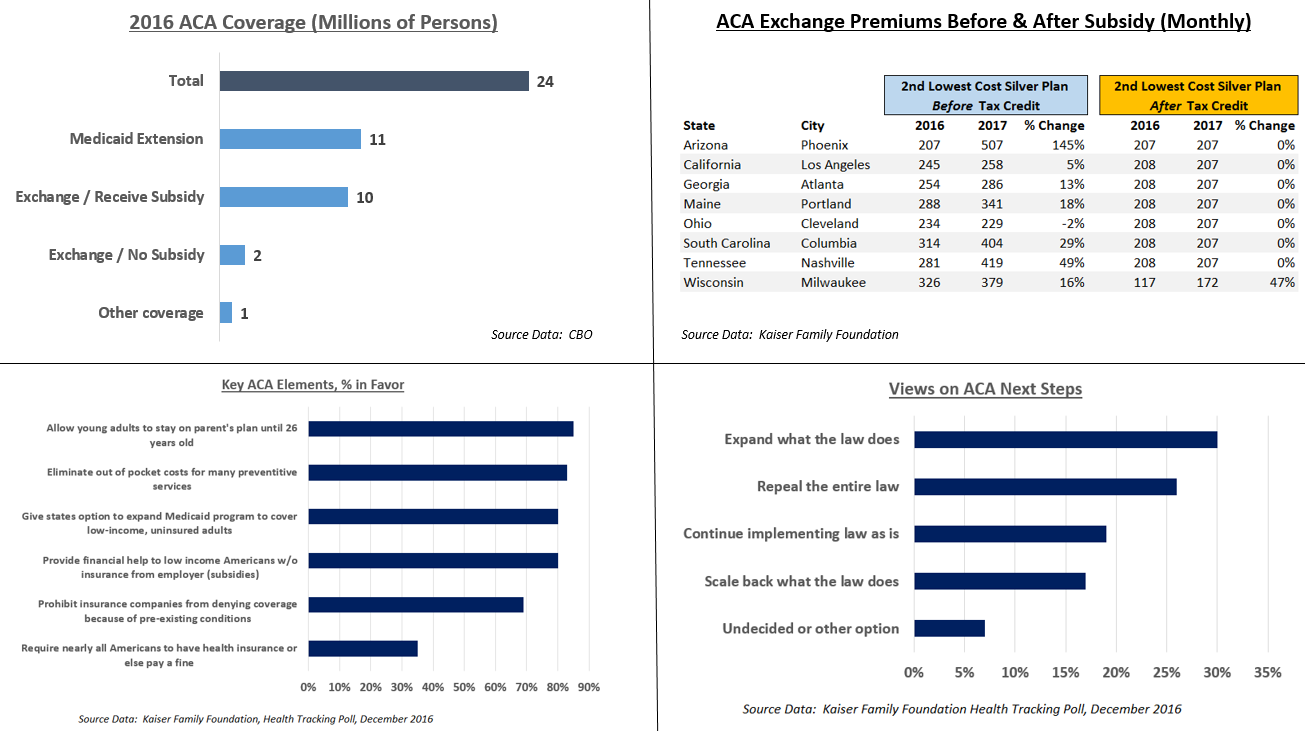
Because the Affordable Care Act requires insurers to issue health insurance policies on a guaranteed issue basis, it explicitly prohibits health insurance plans from denying coverage based on pre-existing conditions. Furthermore, the Affordable Care Act prohibits health insurance plans from charging individuals higher premiums based on pre-existing conditions. Age, geography, and tobacco use are factored into pricing, but medical history is no longer a barrier to entry.
Essential Benefits and Dependent Rules
The ACA also standardized what a health policy actually is. It mandates that health plans cover a specific set of services known as essential health benefits—a core list of items including emergency services, maternity care, and prescription drugs.
More importantly for everyday preventative health, the Affordable Care Act requires health plans to cover preventive healthcare services without charging copayments or deductibles. If your client goes in for an annual physical, a mammogram, or routine immunizations, they pay nothing out of pocket. The goal is to catch illnesses early when they are cheaper to treat.

For families, the ACA introduced a widely popular dependent rule: The Affordable Care Act allows young adults to remain covered as dependents on a parent's health insurance plan until age 26. This applies regardless of whether the young adult is married, living with their parents, in school, or financially independent.
The Metal Tiers: Measuring Actuarial Value
To help consumers compare policies apples-to-apples, the Affordable Care Act categorizes health plans into metal tiers based on the actuarial value of the coverage. Actuarial value is simply the percentage of total average costs for covered benefits that a plan will pay.
The four metal tiers established by the Affordable Care Act are Bronze, Silver, Gold, and Platinum. As the metal becomes more precious, the plan pays a higher percentage of costs, but the monthly premium increases.
| Metal Tier | Actuarial Value (Plan Pays) | Patient Pays (Out-of-Pocket) |
|---|---|---|
| Bronze | A Bronze plan under the Affordable Care Act covers approximately 60 percent of a population's anticipated healthcare costs. | 40% |
| Silver | A Silver plan under the Affordable Care Act covers approximately 70 percent of a population's anticipated healthcare costs. | 30% |
| Gold | A Gold plan under the Affordable Care Act covers approximately 80 percent of a population's anticipated healthcare costs. | 20% |
| Platinum | A Platinum plan under the Affordable Care Act covers approximately 90 percent of a population's anticipated healthcare costs. | 10% |
Most Americans get their health insurance through their employer. When they lose their job, they risk losing their healthcare. Enter the Consolidated Omnibus Budget Reconciliation Act (COBRA).
COBRA requires employers to offer temporary continuation of group health insurance coverage to covered employees following a qualifying event. However, it does not apply to small mom-and-pop shops; the Consolidated Omnibus Budget Reconciliation Act (COBRA) applies to employers with 20 or more employees.
Qualifying Events and Timelines
A "qualifying event" is simply a life change that triggers the right to keep your group health coverage. The length of time a person can keep this coverage depends strictly on the nature of the event.
18-Month Continuation Events (For the Employee):
- A qualifying event under COBRA includes the voluntary termination of employment (e.g., the employee quits).
- A qualifying event under COBRA includes the involuntary termination of employment for reasons other than gross misconduct (e.g., a massive corporate layoff).
- A qualifying event under COBRA includes a reduction in the employee's work hours resulting in a loss of group health eligibility.
In these scenarios, COBRA allows terminated employees to continue group health coverage for a maximum of 18 months. Similarly, COBRA allows covered employees to continue group health coverage for a maximum of 18 months following a reduction in work hours.
36-Month Continuation Events (For Dependents): Dependents face profound vulnerability if the primary employee dies, divorces them, or if a child ages out of the plan. COBRA extends longer protection here:
- COBRA allows dependents to continue group health coverage for up to 36 months following the death of the covered employee.
- COBRA allows dependents to continue group health coverage for up to 36 months following a divorce from the covered employee.
- COBRA allows a dependent child to continue group health coverage for up to 36 months after losing dependent status under the plan rules (for instance, turning 26).
The Mechanics of COBRA: Time and Money
An employee or dependent has 60 days to elect COBRA continuation coverage after receiving the official qualifying event notice.
But there is a major financial catch you must explain to your future clients: An individual electing COBRA continuation coverage must pay the entire health insurance premium out of pocket. When an employee is working, the employer usually subsidizes a large chunk of the premium. Under COBRA, that subsidy vanishes.
Furthermore, an individual electing COBRA continuation coverage may be charged up to 102 percent of the standard group premium rate. Why the surcharge? The extra 2 percent charged on a COBRA premium covers the employer's administrative costs for maintaining the continuation coverage.
While COBRA handles what happens when a worker leaves a job, another federal law governs how their benefits are managed while they are still working.
The Employee Retirement Income Security Act (ERISA) establishes minimum standards for private industry employer-sponsored health plans. If you are dealing with a private-sector client, their employer's plan operates under the shadow of ERISA.
Fundamentally, ERISA protects the interests of participants and beneficiaries enrolled in private-sector employee benefit plans. It does this by forcing transparency and accountability upon the people running the plans.
- Fiduciary Duty: ERISA imposes fiduciary responsibilities on individuals who manage the assets of employee benefit plans. This means the managers must act solely in the financial interest of the plan participants, not the corporation.
- Transparency: ERISA mandates strict reporting and disclosure requirements for the administrators of employee benefit plans.
- The SPD: Specifically, ERISA requires plan administrators to provide participants with a Summary Plan Description detailing health plan benefits and participant rights. The Summary Plan Description is the user manual for the employee's healthcare, detailing what is covered, how claims are filed, and how to appeal a denial.
Federal laws protect consumers from predatory underwriting and unexpected job losses. But what happens if the insurance company itself goes bankrupt? If an insurer becomes financially insolvent, the state steps in.
State Life and Health Insurance Guaranty Associations protect policyholders in the event of an insurance company's financial insolvency.
To ensure the safety net is funded, all admitted life and health insurers must belong to the state Guaranty Association as a mandatory condition of operating in that state. You cannot do business as a legal, admitted insurer in a state without paying into this system. Therefore, State Guaranty Associations are funded through assessments levied on participating member insurers. If Company A goes bankrupt, Companies B, C, and D are assessed fees by the state to cover Company A's outstanding claims.
The Limits of Protection
It is critical to understand that this is a rescue operation, not a total bailout.
- Statutory Limits: Guaranty Association financial protection limits are established by individual state statutes. These statutory coverage limitations mean a state Guaranty Association might not fully replace the entire benefit amount of an insolvent insurer's policy. (For example, a state might cap death benefit payouts at $300,000, even if the failed policy was for $1,000,000).
- Admitted Only: State Guaranty Associations do not provide protection to the policyholders of unauthorized or non-admitted insurance companies. If a client buys a policy from an unapproved, rogue entity, they are on their own.
The Cardinal Rule of Guaranty Associations
For an insurance producer sitting for their licensing exam, this is perhaps the most heavily tested concept regarding Guaranty Associations: You cannot talk about them to make a sale.
The Prohibited Act: It is an unfair trade practice for a producer to use the existence of a state Guaranty Association to market or sell an insurance policy.
An insurance producer is strictly prohibited from mentioning Guaranty Association protection as an inducement to persuade a client to purchase a policy.
Think about it logically: When you deposit money into a bank, you see a shiny "FDIC Insured" sticker on the door. Banks use federal backing as a selling feature. Insurance does not work this way. Regulators do not want producers selling policies for structurally weak insurance companies by whispering to the client, "Don't worry if they go broke, the state will bail you out." You are expected to sell policies based on the financial strength and merit of the insurer, not the reliability of the state's emergency backup plan.