Workers Compensation and Employers Liability
Not sure you’re ready?
Take the ~3-minute readiness diagnostic and see where you stand.
Before the industrial era, an injured worker had only one path to financial survival: suing their employer for negligence in a court of law. This system was catastrophic for everyone involved. Workers had to fund protracted legal battles while unable to earn a wage, often leaving them destitute, while employers faced the constant, unpredictable threat of ruinous litigation. The modern workers compensation system was born out of necessity as a radical legal compromise. Under this system, employers assume absolute liability for occupational injuries and diseases sustained by their employees. In practice, workers compensation operates as a no-fault insurance system for workplace injuries.
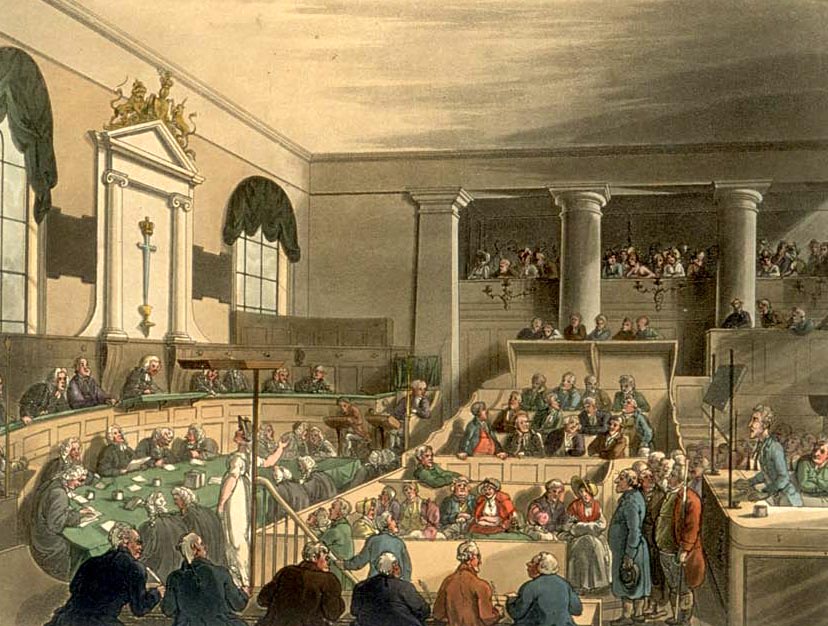
To understand how this functions, you must understand the cornerstone of the system: the exclusive remedy doctrine. This legal principle prevents an injured employee from suing an employer for a workplace injury. Instead, an employee relinquishes the right to sue the employer for negligence in exchange for guaranteed workers compensation statutory benefits. Because employees do not need to prove employer negligence to receive workers compensation benefits, those benefits serve as the sole recourse for an employee against an employer for an occupational injury.
Not every injury that happens at a workplace is automatically covered. To trigger the policy, the injury must satisfy two distinct legal standards:
- Arising out of employment: A covered workers compensation injury must arise out of the employee's employment. This means there must be a direct causal link between the job's duties and the injury.
- In the course of employment: A covered workers compensation injury must occur in the course of the employee's employment. This refers to the time, place, and circumstances—the employee must actually be doing their job when they get hurt.
The Professor's Note: If a roofer falls off a ladder while carrying shingles, the injury clearly meets both criteria. However, if that same roofer stays on the roof after hours to drink a six-pack of beer and then falls, the claim fails.
Even when an injury happens at work, the system places strict boundaries on human behavior. Workers compensation coverage is generally denied if the employee was intoxicated at the time of the injury. Furthermore, the system absolutely forbids moral hazard; therefore, workers compensation does not cover intentional self-inflicted injuries.
When you sell a workers compensation policy, you are selling a promise dictated not by the insurer, but by state legislatures. The law requires four mandatory benefit categories:
1. Medical Benefits
Workers compensation laws require the provision of medical benefits for workplace injuries. Unlike standard health insurance, medical benefits under workers compensation are provided without statutory dollar limits and without statutory time limits. If a worker requires multiple surgeries and a lifetime of specialized care for a crushed spine, the policy pays the bill until the worker is healed or passes away.
2. Disability Income Benefits
A worker cannot pay their mortgage with medical benefits alone. Workers compensation laws require the provision of disability income benefits. These benefits replace a portion of an employee's lost wages due to a work-related injury, typically paying around two-thirds of the worker's average weekly wage to ensure they remain solvent while they heal, without incentivizing them to stay home permanently.
3. Rehabilitation Benefits
The ultimate goal of the system is to restore the worker to a productive life. Therefore, workers compensation laws require the provision of rehabilitation benefits. Rehabilitation benefits cover vocational training and physical therapy to return the injured employee to work. If a carpenter loses a hand, rehabilitation benefits might retrain them to work as a drafting estimator.
4. Death Benefits
In the most tragic scenarios, workers compensation laws require the provision of death benefits for workplace fatalities. Workers compensation death benefits include a statutory burial allowance to cover funeral expenses. Crucially, workers compensation death benefits include income replacement for surviving dependents, providing a financial lifeline for the spouse and children left behind.
Employers have multiple avenues to comply with the law. While state regulations vary, employers can generally secure workers compensation coverage through private commercial insurance companies or by establishing a qualified self-insurance plan, assuming they have the massive financial reserves necessary to cover potential catastrophic claims.
Many states also intervene directly in the marketplace by offering state-operated insurance funds.
- A competitive state fund competes directly with private insurers in the state's workers compensation market, acting as an alternative or an insurer of last resort.
- A monopolistic state fund serves as the exclusive provider of workers compensation insurance in a specific state.
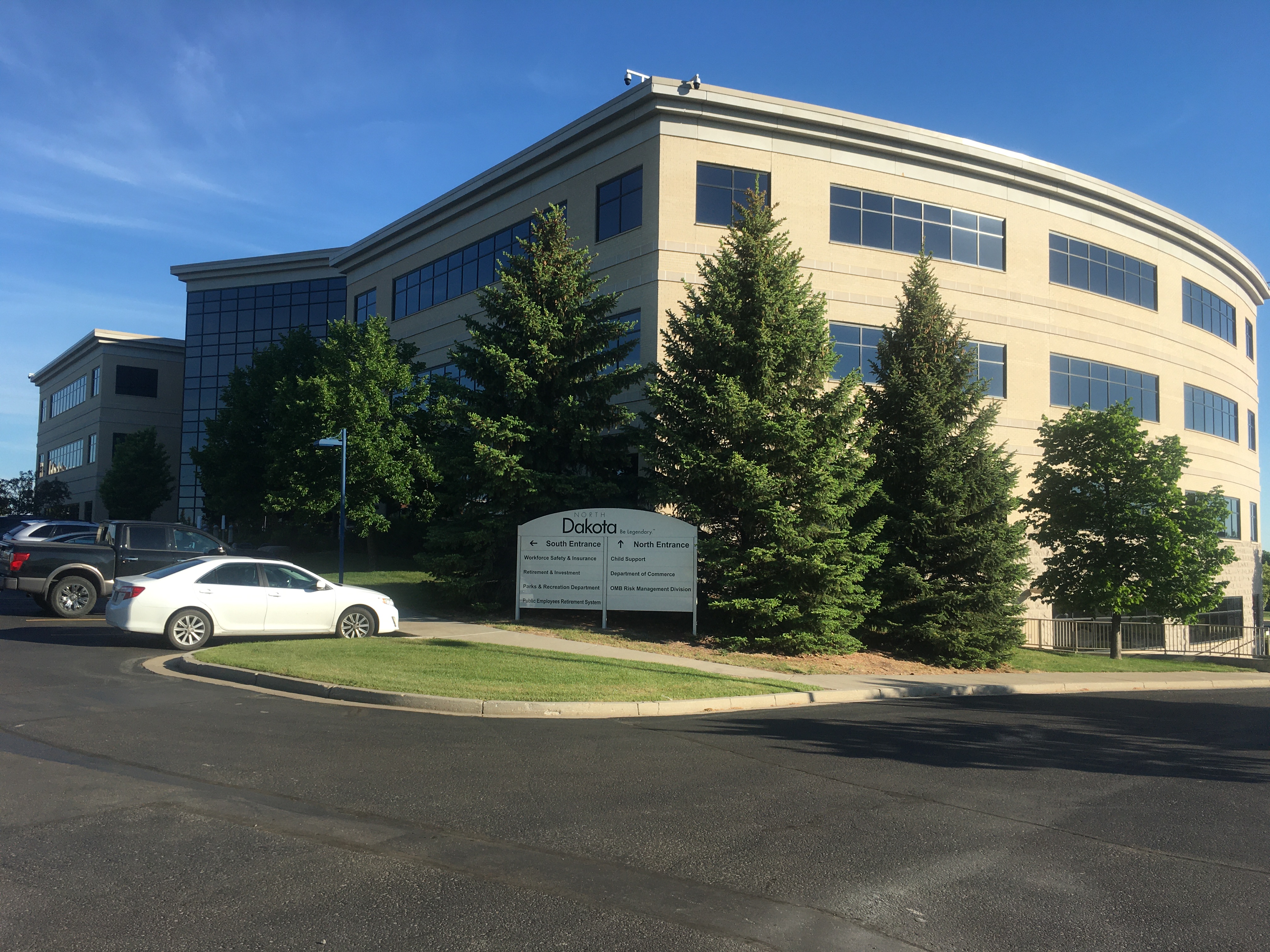
In a monopolistic state, the free market is shut out; private insurance companies are prohibited from writing workers compensation insurance in monopolistic fund states. As an insurance producer, you must memorize the four states that operate this way: North Dakota, Ohio, Washington, and Wyoming each operate a monopolistic workers compensation state fund.
Across the competitive marketplace, the standard National Council on Compensation Insurance (NCCI) policy form is used for workers compensation nationwide. It is cleanly divided into six highly specialized parts.
Part One: Workers Compensation Insurance
Part One of the standard NCCI policy covers Workers Compensation Insurance. Its insuring agreement is breathtakingly simple: Part One of the standard NCCI policy promises to pay the exact statutory benefits required by the state workers compensation law. Because the state legislature dictates the payout, Part One of the standard NCCI policy has no specific dollar limits stated in the policy declarations. Whether a claim costs $5,000 or $5,000,000, Part One simply pays what the law demands.
Part Two: Employers Liability Insurance
If Part One covers the expected statutory benefits, why do we need Part Two? Because the exclusive remedy doctrine is strong, but it is not impenetrable. Creative trial lawyers constantly look for ways to bypass workers compensation and sue employers directly.
Part Two of the standard NCCI policy covers Employers Liability Insurance. Employers Liability insurance protects employers against common law lawsuits from employees injured in the course of employment. When these lawsuits arise, Employers Liability coverage provides a legal defense for the employer if sued by an injured employee. Unlike Part One, Part Two of the standard NCCI policy contains specific dollar limits of liability per accident, as well as specific dollar limits of liability per disease.
Part Two steps in to defend against four specific types of exotic lawsuits that slip past the exclusive remedy shield:
- Third-Party Over Actions: Employers Liability coverage includes protection against third-party over actions. A third-party over action occurs when an injured employee sues a third party and that third party subsequently sues the employer for negligence. Example: A worker loses a finger in a stamping machine. The worker collects Part One benefits, but also sues the machine's manufacturer. The manufacturer then sues the employer, claiming the employer modified the machine and removed the safety guards.
- Loss of Consortium: Employers Liability coverage protects against loss of consortium claims brought by the spouse of an injured employee, seeking damages for the loss of companionship, affection, and household services.
- Dual Capacity Claims: Employers Liability coverage protects against dual capacity claims. A dual capacity claim occurs when an injured employee sues the employer in a legal capacity other than as an employer. Example: A worker for a ladder manufacturing company is injured when a ladder collapses under them. The worker sues the company not as their employer, but as the manufacturer of a defective product.
- Consequential Bodily Injury: Employers Liability coverage protects against consequential bodily injury claims. A consequential bodily injury claim occurs when a family member suffers an injury resulting from the employee's workplace injury. Example: A spouse is told of the employee's horrific workplace accident and suffers a heart attack from the shock.
Parts Three through Six: The Administrative Framework
- Part Three: Part Three of the standard NCCI policy covers Other States Insurance. Other States Insurance provides coverage for incidental exposures in states not listed in the primary policy declarations. However, it is not automatic; the insured must notify the insurer upon beginning work in an Other States Insurance location to secure coverage.
- Part Four: Part Four of the standard NCCI policy details the employer's duties if an employee injury occurs (such as providing immediate medical care, notifying the insurer, and cooperating with the investigation).
- Part Five: Part Five of the standard NCCI policy details workers compensation premium calculations and audits.
- Part Six: Part Six of the standard NCCI policy outlines the general policy conditions, including cancellation terms, subrogation rights, and inspection privileges.
As an insurance producer, you will spend a great deal of time working with the mechanics found in Part Five of the policy. Workers compensation is practically unique in how it handles pricing.
Initial workers compensation policy premiums are based on estimated employer payrolls for the policy period. Because businesses hire, fire, and authorize overtime unpredictably, the upfront premium is essentially a deposit. To reconcile the math, insurers conduct a premium audit at the end of the policy period to determine the final workers compensation premium based on actual payroll. If the employer's payroll expanded, they will owe additional premium; if it shrank, they receive a refund.
Beyond payroll, the most critical factor in pricing is how safely the employer operates. This is measured by an experience modification factor (often called an "e-mod" or "x-mod"). An experience modification factor adjusts the workers compensation premium based on the employer's past loss experience compared to average businesses in their exact industry.
- The Surcharge: An experience modification factor greater than 1.0 indicates higher than average losses and increases the employer's premium. If an employer has an e-mod of 1.25, they are paying a severe 25% penalty on their workers compensation costs due to a history of claims.
- The Discount: Conversely, an experience modification factor less than 1.0 indicates lower than average losses and decreases the employer's premium. An e-mod of 0.80 represents a 20% discount.
For the modern insurance professional, this metric is your ultimate value proposition. When you teach a client how to implement safety protocols and manage claims to drive their experience modification factor below 1.0, you aren't just selling them a policy—you are fundamentally increasing their company's profitability.