Ohio P&C Guaranty Association & Workers Compensation
Not sure you’re ready?
Take the ~3-minute readiness diagnostic and see where you stand.
Insurance, at its core, is the business of selling a promise. A client pays a premium today, and the insurer promises to make them whole if catastrophe strikes tomorrow. But what happens when the entity making the promise goes bankrupt? Or what happens when a worker is crushed by the machinery that provides their livelihood, and the employer cannot afford the catastrophic medical bills? A purely unregulated market would leave the policyholder facing financial ruin and the injured worker without recourse. To prevent this collapse of trust and economic stability, Ohio has engineered two massive, structural safety nets: the Ohio Insurance Guaranty Association to catch the fallout of insolvent insurers, and a monopolistic Workers' Compensation system to guarantee the grand bargain between labor and capital. Understanding these systems is not merely about passing a licensing exam; it is about grasping the foundational fail-safes that allow the Ohio economy to function without the constant threat of systemic ruin.
Imagine you are a producer who has just sold a commercial auto policy to a local plumbing fleet. Six months later, the insurance carrier goes completely bankrupt. They are liquidated. Your client’s vans are still on the road, and worse, one of them was just involved in a severe collision. Where does the money come from?
Enter the Ohio Insurance Guaranty Association (OIGA).
The OIGA is a non-profit unincorporated association of member insurers. It is not a government agency, nor is it a private corporation you can buy shares in. It is a collective safety net. If you want to do business in this state, you must participate in this net: all insurers licensed to write property and casualty insurance in Ohio must be members of the Ohio Insurance Guaranty Association.
The Core Purpose: The purpose of the Ohio Insurance Guaranty Association is to provide a mechanism to pay covered claims when an insurer becomes insolvent. By stepping into the shoes of the dead insurance company, the OIGA helps avoid excessive delay in claim payments due to insurer insolvency.
How the Safety Net is Funded
If the OIGA is paying out claims for a bankrupt company, where does it get the cash? It passes the hat among the survivors.
The Ohio Insurance Guaranty Association is funded by assessing member insurers based on the proportion of their net direct written premiums. Think of it like a market-share tax. If a solvent carrier writes 15% of all the commercial auto premium in Ohio, they will be tapped to pay 15% of the commercial auto assessment required to clean up the insolvent competitor's mess. This elegant mechanism ensures that the cost of insolvency is distributed proportionally across the healthy players in the market.
What Constitutes a "Covered Claim"?
The OIGA does not exist to pay every debt a bankrupt company left behind. They do not pay the bankrupt company's electric bill or office lease. They pay covered claims.
To qualify, a claim must meet very specific geographic and contractual criteria:
- The Origin: A covered claim under the Ohio Insurance Guaranty Association must arise from a policy issued by an insurer that later became insolvent.
- The Residency Rule: The claimant or insured must be an Ohio resident at the time of the insured event.
- The Location Rule: Alternatively, first-party claims for damage to property with a permanent location in Ohio are considered covered claims by the Ohio Insurance Guaranty Association, even if the owner lives out of state.
Coverage Limits and Exclusions
Because the OIGA is funded by assessing healthy insurers (who ultimately pass those costs to their healthy policyholders), the state places strict boundaries on how much the OIGA will pay out. It is a safety net, not a golden parachute.
- The Absolute Ceiling: The Ohio Insurance Guaranty Association covers valid claims up to a maximum statutory limit of $300,000 per claim.
- The Policy Constraint: Even if the damage is $200,000, the OIGA's obligation to pay a claim is capped at the face amount of the insolvent insurer's policy. If the bankrupt insurer only wrote a $50,000 policy, the OIGA will only pay $50,000. They step into the shoes of the insurer, but they do not enlarge the original promise.
- Unearned Premiums: What if your client paid $15,000 upfront for an annual policy, and the carrier folded in month one? The OIGA covers claims for unearned premium up to a maximum limit of $10,000. (Notice the shortfall—the client loses that $5,000 difference. This is why placing clients with financially sound carriers matters.)
- The Bad Faith Exclusion: If a court decided the bankrupt insurer acted maliciously and awarded punitive or exemplary damages, the OIGA steps away. The Ohio Insurance Guaranty Association does not pay claims for punitive or exemplary damages. Public and collective funds are used to restore actual losses, not to punish bad actors who are already bankrupt.
Exhaustion of Other Coverage
The OIGA is the payer of last resort. If your client has any other valid insurance that could apply to the loss, they must use it first.
Claimants must exhaust all other available insurance coverages before seeking claim payment from the Ohio Insurance Guaranty Association. Furthermore, any amount payable by the Ohio Insurance Guaranty Association is reduced by the amount recovered from other available insurance policies.
Example: Your client is hit by an at-fault driver whose liability insurer just went bankrupt. Your client has $50,000 in Uninsured Motorist (UM) coverage on their own policy. The total injury is $75,000. Your client must claim the $50,000 from their own UM policy first. The OIGA will then look at the remaining $25,000 and cover that difference.
Legal Duties and Timelines
When an insurer is liquidated, chaos ensues. The OIGA acts as the stabilizing force. Legally, the Ohio Insurance Guaranty Association assumes the duties of the insolvent insurer, which means they don't just write checks—they handle the legal heavy lifting. Crucially, the OIGA assumes the duty to defend the insured in court proceedings.
However, transitioning thousands of open files from a liquidated company to the OIGA takes time. You cannot simply hand over a warehouse of filing cabinets and expect court dates to be met the next day. Therefore, court proceedings against an insolvent insurer are automatically stayed for at least six months to allow the Ohio Insurance Guaranty Association to review claims.
Finally, there is a statute of limitations to close the books. The Ohio Insurance Guaranty Association will not pay claims filed after 18 months following the insurer's liquidation order. If a client waits two years to report a claim, they are entirely out of luck.
Now let us shift from failing insurers to injured workers. Before the 20th century, if a factory worker lost an arm in a machine, their only recourse was to sue their employer for negligence. This was a disaster. Lawsuits took years, workers starved, and unpredictable jury verdicts frequently bankrupted businesses.
Society needed a "Grand Bargain." That bargain is the concept of the exclusive remedy.
Exclusive Remedy: In Ohio, workers' compensation is an exclusive remedy. Under the exclusive remedy provision, injured employees generally cannot sue their employer for work-related injuries.
In exchange for giving up the right to sue for millions in tort court, the worker receives immediate, guaranteed, no-fault medical and wage benefits. The employer pays a predictable premium instead of facing unpredictable, bankrupting lawsuits.
The Monopolistic System
Here is where Ohio diverges dramatically from most of the country. Ohio operates as a monopolistic workers' compensation state.
What does this mean for you as a P&C producer? It means you generally cannot sell it to them. In a monopolistic state, employers must purchase workers' compensation insurance directly from a state-administered fund. Consequently, private insurance companies are not permitted to sell standard workers' compensation insurance in Ohio.
This massive state-administered fund is managed by the Ohio Bureau of Workers' Compensation (commonly known as the BWC).
How does the BWC decide what to charge a business? The Ohio Bureau of Workers' Compensation assesses employer premiums based on total payroll and industry classification codes. A roofing company pays a vastly higher rate per $100 of payroll than a bookkeeping firm, because gravity is far more hostile to roofers than to accountants.
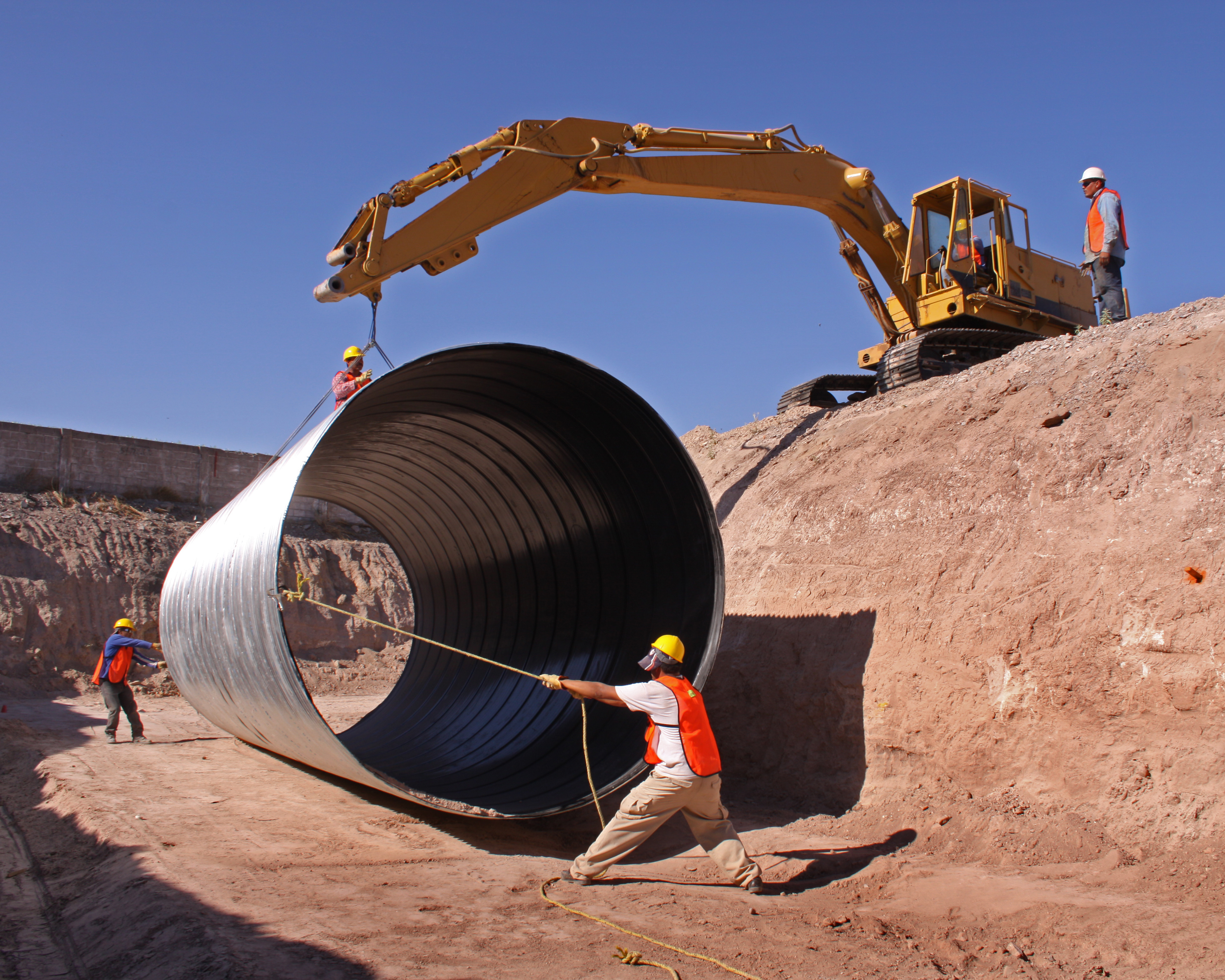
Exception to the Monopoly: There is one way around the BWC. Ohio employers who meet strict financial and administrative requirements may opt to self-insure their workers' compensation exposure. These are usually massive corporations (think Honda or Kroger) who have the liquid capital to pay their own claims entirely out of pocket while still obeying Ohio's regulatory framework.
The Mandate: Who Must Be Covered?
The rule in Ohio is incredibly strict and incredibly fast. Every Ohio employer with one or more employees is required to carry workers' compensation coverage. There is no "probationary period" or "wait until they are full-time." Ohio workers' compensation coverage must be in effect from the very first date an employee is hired.
But how does the law define who is an "employee" inside the complex structures of modern business? Let's break it down:
| Entity / Role | Coverage Status | Explanation |
|---|---|---|
| Standard Employees | Mandatory | Coverage must be active on day one of employment. |
| Corporate Officers | Mandatory | Corporate officers are considered employees under Ohio workers' compensation law and must be covered. Even if they are the CEO. |
| Sole Proprietors | Not Automatic / Elective | Sole proprietors are not automatically covered by Ohio workers' compensation. However, sole proprietors may purchase elective workers' compensation coverage to protect themselves. |
| Business Partners | Not Automatic / Elective | Business partners are not automatically covered by Ohio workers' compensation. But, like sole props, business partners may purchase elective workers' compensation coverage to protect themselves. |
| Ministers | Elective | Ordained ministers of a religious organization may purchase elective workers' compensation coverage for themselves. |
The Religious Exemption: Ohio law respects religious freedom. Employers may apply for a religious exemption from workers' compensation for employees of sects that object to insurance benefits (such as certain Amish communities). However, the business cannot use this as a blanket loophole to avoid premiums. If a business employs workers who do not qualify for a religious exemption, the business must pay workers' compensation premiums for those non-exempt workers.

Claim Triggers and Exclusions
For the BWC to pay a claim, two fundamental conditions must be met. The injury or illness must be tethered directly to the job. Specifically, Ohio workers' compensation covers injuries that arise out of and occur in the course of employment. Similarly, it covers occupational diseases that arise out of and occur in the course of employment.
- Arising out of means the job caused it (e.g., breathing silica dust at a glass factory).
- In the course of means it happened while doing the job (e.g., falling off a ladder during a shift).
Not every workplace injury is covered. The system removes fault, but it does not reward extreme misconduct. Benefits are absolutely denied if:
- The employee's injury was caused by intentional self-harm.
- The workplace injuries [were] caused by an employee being under the influence of alcohol.
- The workplace injuries [were] caused by an employee being under the influence of drugs.
(Note: The intoxication must be the proximate cause of the injury. If a worker is intoxicated but a meteor strikes the building and injures them, the intoxication didn't cause the injury. But if they drive a forklift into a wall because they are drunk, they are excluded).
The Anatomy of Benefits
When a valid claim occurs, what exactly does the BWC provide?
1. Medical Benefits
The most immediate need is fixing the physical damage. Workers' compensation medical benefits pay for the full cost of approved medical treatment related to a workplace injury or illness. There are no deductibles or co-pays for the injured worker.
2. Disability Classifications (Wage Replacement)
While the worker is healing or if they are permanently broken, they need income. Ohio classifies disability into four distinct buckets based on duration (Temporary vs. Permanent) and severity (Total vs. Partial).
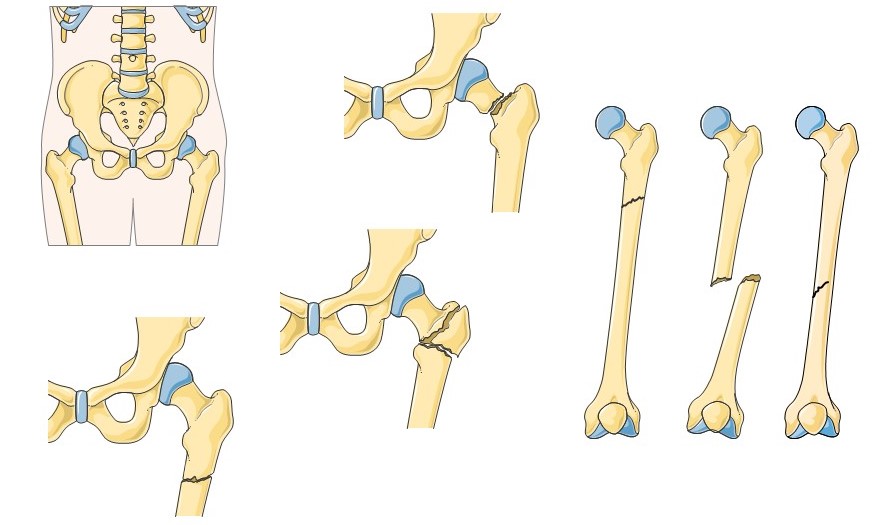
- Temporary Total (TT): This is the healing period. Temporary Total disability benefits compensate an injured worker who is completely unable to work for a limited, recoverable period. Think of a broken femur. The worker cannot work at all (Total), but they will eventually heal (Temporary).
- Permanent Partial (PP): This is the "new normal." Permanent Partial disability benefits compensate a worker who sustains permanent physical damage, yet workers receiving Permanent Partial disability benefits can often still perform some level of work. For example, a carpenter who loses two fingers. They will never get the fingers back (Permanent), but they are not entirely incapacitated (Partial). In these cases, Percentage of Permanent Partial disability benefits are awarded when a worker retains a permanent physical impairment (e.g., a doctor determines they have a 15% whole-person impairment, and they receive a corresponding financial award).
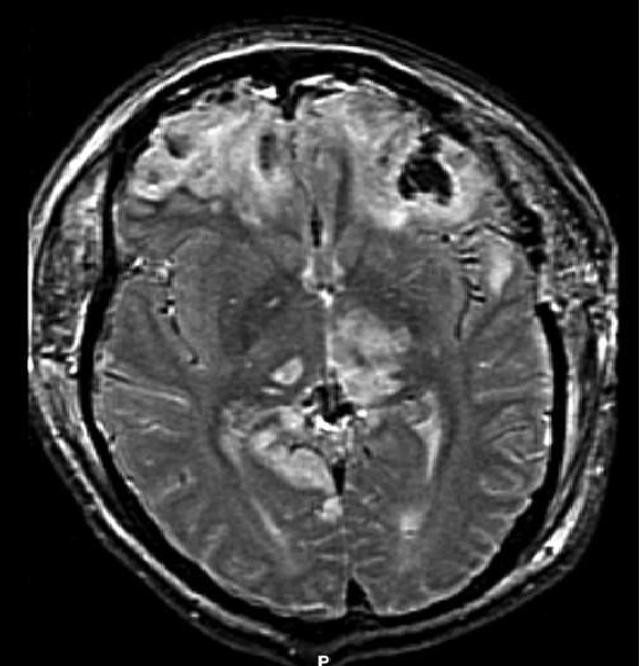
- Permanent Total (PT): The most devastating outcome. Permanent Total disability benefits are paid when a workplace injury leaves an employee permanently unable to ever return to work. (e.g., severe traumatic brain injury or paralysis).
3. Death Benefits
If the ultimate tragedy occurs, the system provides for the survivors. Ohio workers' compensation provides death benefits to the eligible dependents of a fatally injured worker. To ensure the family is not left destitute, these death benefits include compensation for lost income (usually paid out in bi-weekly installments) and also include coverage for funeral expenses.
4. Highly Specialized Awards
The BWC also recognizes specific, unique harms that require custom compensation:
- Facial Disfigurement: Ohio offers a one-time facial disfigurement award for severe damage to an injured worker's face. This recognizes the deep psychological and social impact of visible trauma that standard wage-replacement formulas might fail to capture.
- Change-of-Occupation: Sometimes the danger isn't an acute accident, but a slow poisoning. Ohio provides change-of-occupation benefits to certain workers diagnosed with specific respiratory diseases like asbestosis. If a worker discovers they have early-stage asbestosis, remaining in their current trade is a death sentence. This benefit pays them to step away from the toxic environment and transition to a safe career before the disease becomes totally disabling.
Conclusion
As a producer, you are the architect of your client's financial defense. When you look at an auto policy, you must understand the invisible backstop of the Ohio Insurance Guaranty Association waiting in the wings to cap the fallout of insolvency. When you look at a commercial client's payroll, you must see the strict, monopolistic mandates of the Bureau of Workers' Compensation protecting both the client's assets and the lives of the workers they employ. These are not just testable facts; they are the physical laws of the Ohio insurance market. Master them, and you master the craft.