Ohio Property Insurance Laws & Residual Markets
Not sure you’re ready?
Take the ~3-minute readiness diagnostic and see where you stand.
Insurance is fundamentally a promise to exchange current certainty for future security, bound by a contract that anticipates disaster. Yet, left purely to the open market, this mathematical balance can structurally disenfranchise property owners in high-risk areas or trap them in bureaucratic ambiguities during total losses. Ohio property insurance law introduces critical friction into this free market to ensure basic fairness. By regulating how insurers cancel policies, mandating how they value total destruction, and forcing the creation of residual markets for uninsurable properties, the state acts as a stabilizing counterweight. For the insurance professional, mastering these mechanisms is not just a matter of regulatory compliance; it is the fundamental mechanics of keeping promises in the exact moment a client's world collapses.
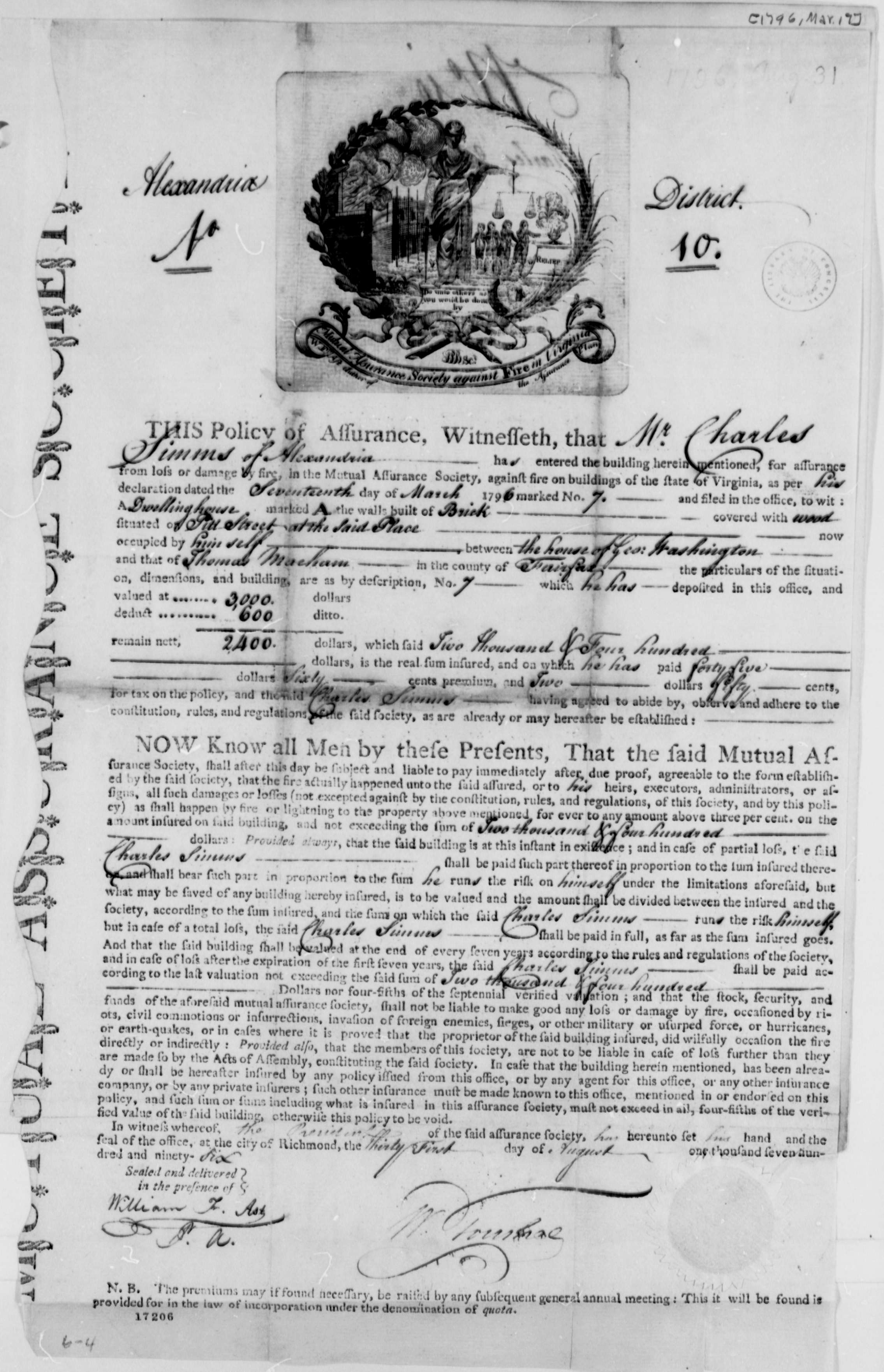
When an insurer decides to terminate coverage, they are effectively withdrawing a safety net. If they pull it away too quickly, the property owner is left exposed to catastrophic financial risk without time to secure alternative protection. To prevent this, Ohio law rigidly defines the notice an insurer must provide.
The baseline rule is simple: In Ohio, an insurance company must provide at least 30 days of advance written notice before cancelling a property insurance policy for general reasons.
However, timeframes adjust based on the behavior of the policyholder and the nature of the policy.
| Action | Notice Requirement | Rationale |
|---|---|---|
| Cancellation for Nonpayment | At least 10 days advance written notice. | If the client stops paying premiums, the insurer shouldn't be forced to carry the risk for a full month unpaid. |
| General Property Cancellation | At least 30 days advance written notice. | Gives the insured sufficient time to shop the standard market for a replacement policy. |
| Commercial Property Nonrenewal | At least 30 days advance written notice. | Businesses require longer runways to secure complex commercial underwriting. |
The Commercial Property 90-Day Rule
Commercial policies are complex beasts. Insurers need a brief window to underwrite and inspect the risk after binding. But once an Ohio commercial property policy has been in effect for more than 90 days, the window for arbitrary cancellation slams shut. After this 90-day mark, the insurer can only cancel the policy for statutorily justified reasons.
Think of this as a vesting period for trust. Once past 90 days, the insurer is locked in, unless the insured breaks the fundamentals of the contract. The statutorily justified reasons include:
- Nonpayment of premium. (The most basic breach of contract).
- Discovery of fraud or material misrepresentation. (The insured lied about a critical fact, fundamentally altering the math of the risk).
- Discovery of a moral hazard or a substantial increase in the hazard insured against. (The insured turned their quiet commercial warehouse into an unregulated fireworks factory).
If the insurer decides to nonrenew (rather than cancel mid-term) an Ohio commercial property or commercial fire insurance policy, they must hit that 30-day notice mark. If the insurer fumbles this—say, the nonrenewal notice is mailed less than 30 days before expiration—the state applies a strict mechanical penalty: coverage remains in effect until 30 days after the mailing date. Furthermore, to ensure professional oversight, a notice of nonrenewal for a commercial property policy must also be mailed to the insured's agent of record.
Imagine a client insures a heritage barn for $200,000. Years later, a fire burns it to ashes. The claims adjuster arrives and calculates that, due to depreciation of the old wood, the Actual Cash Value (ACV) of the barn is only $110,000. In a standard ACV contract, the insurer pays $110,000.
In Ohio, this post-loss depreciation arithmetic is illegal for total building losses.
The Ohio Valued Policy Law dictates how insurance companies must pay out claims when an insured structure is completely destroyed by a covered peril. Under this law, if a building is declared a total loss, the insurer must pay the full face value of the policy for that building.
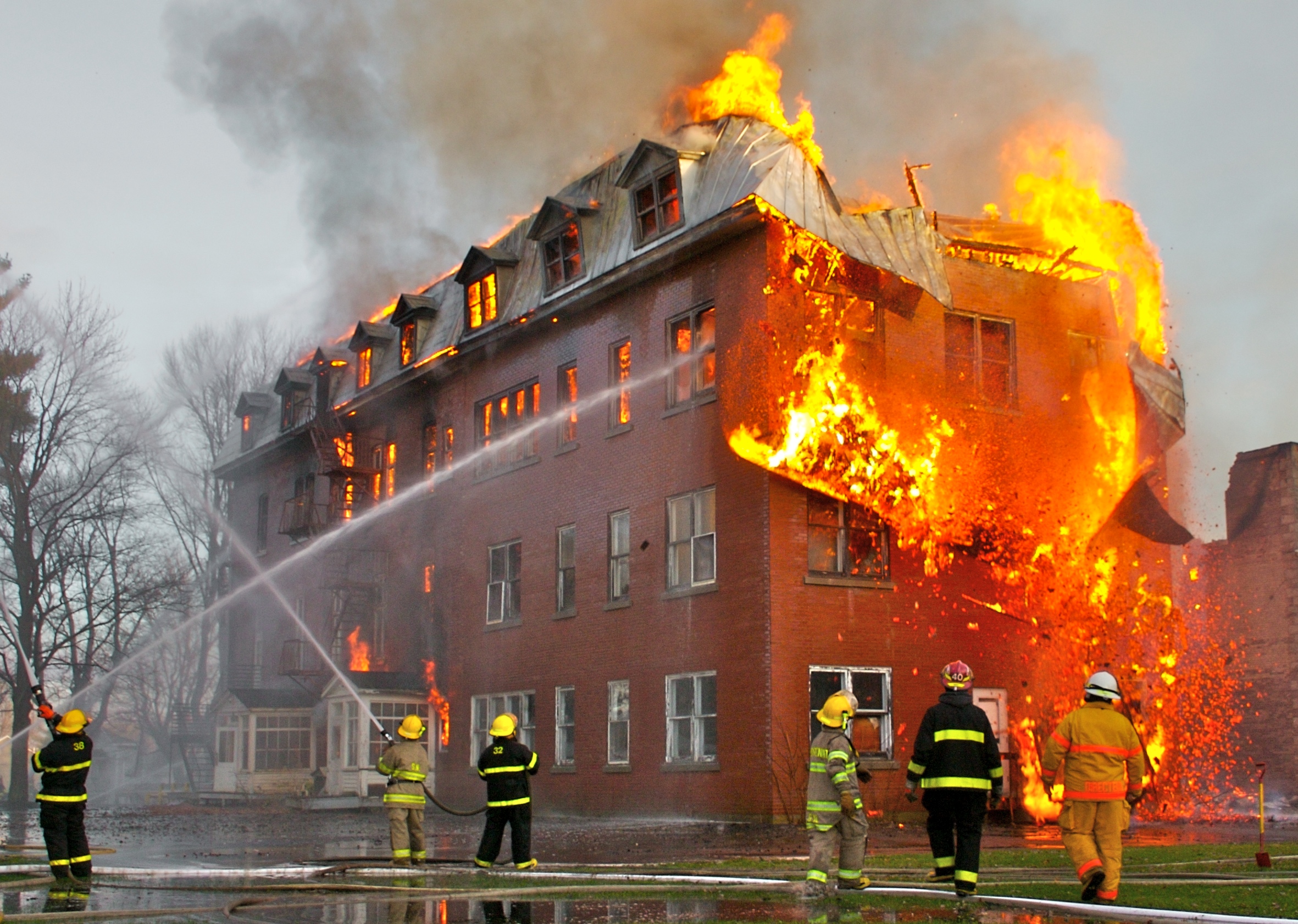
Crucial Rule: In a total loss situation under the Ohio Valued Policy Law, the insurer cannot reduce the payout based on the actual cash value of the structure being lower than the policy limit.
Why does the state mandate this? Because the insurer collected premiums based on that higher face value. If an insurer charged premiums for a $200,000 risk, they cannot suddenly decide the risk was only worth $110,000 after the worst actually happens.
However, precision matters here. You must know the exact boundaries of this law for your licensing exam and your practice:
- Buildings Only: The law applies strictly to covered structures and buildings.
- No Contents: The Ohio Valued Policy Law does not apply to personal property or contents. If the client's tractor inside the barn burns, the tractor is paid out according to the standard policy terms (usually Actual Cash Value), not under the Valued Policy Law.
The private insurance market relies on probability. When a property's probability of loss becomes too high—due to geography, history, or underlying geology—standard insurers will refuse to write the policy. But society requires property to be insured; without insurance, mortgages cannot be issued, and local economies stall.
To solve this, Ohio creates residual-market mechanisms: state-mandated pools that provide coverage when the standard market refuses.
The Ohio FAIR Plan Underwriting Association
The Ohio FAIR Plan (Fair Access to Insurance Requirements) provides basic property insurance to applicants who are unable to secure coverage in the standard insurance market. It was established specifically to ensure that property owners in high-risk or urban areas have access to essential property insurance.
Because standard insurers don't want these risks, the state forces them to share the burden. Every licensed property insurer operating in Ohio is required to be a member of the Ohio FAIR Plan Underwriting Association. These member insurers share in the plan's losses and expenses in direct proportion to each member's Ohio property insurance premium volume. (If Company A writes 10% of all property premiums in Ohio, they absorb 10% of the FAIR Plan's losses).
Client Eligibility and the Agent's Role: To be eligible for the FAIR Plan, an applicant must prove the standard market has rejected them. Specifically, they must have been declined property insurance coverage by at least two standard insurance companies authorized in Ohio.
As an agent, you are the bridge to this residual market. All Ohio-licensed property and casualty agents must assist consumers who need to apply for property coverage through the Ohio FAIR Plan. However, because these risks are high, insurance agents do not have the authority to bind coverage on behalf of the FAIR Plan. You submit the application; the Association decides if and when to bind.
Underwriting Standards: The FAIR Plan is a safety net, but it is not a blank check for derelict properties. Properties insured under the Ohio FAIR Plan must meet basic underwriting standards.
- They must not have uncorrected physical deficiencies or unresolved building code violations.
- The plan will outright deny coverage if there are outstanding taxes, assessments, or penalties constituting a lien on the property.
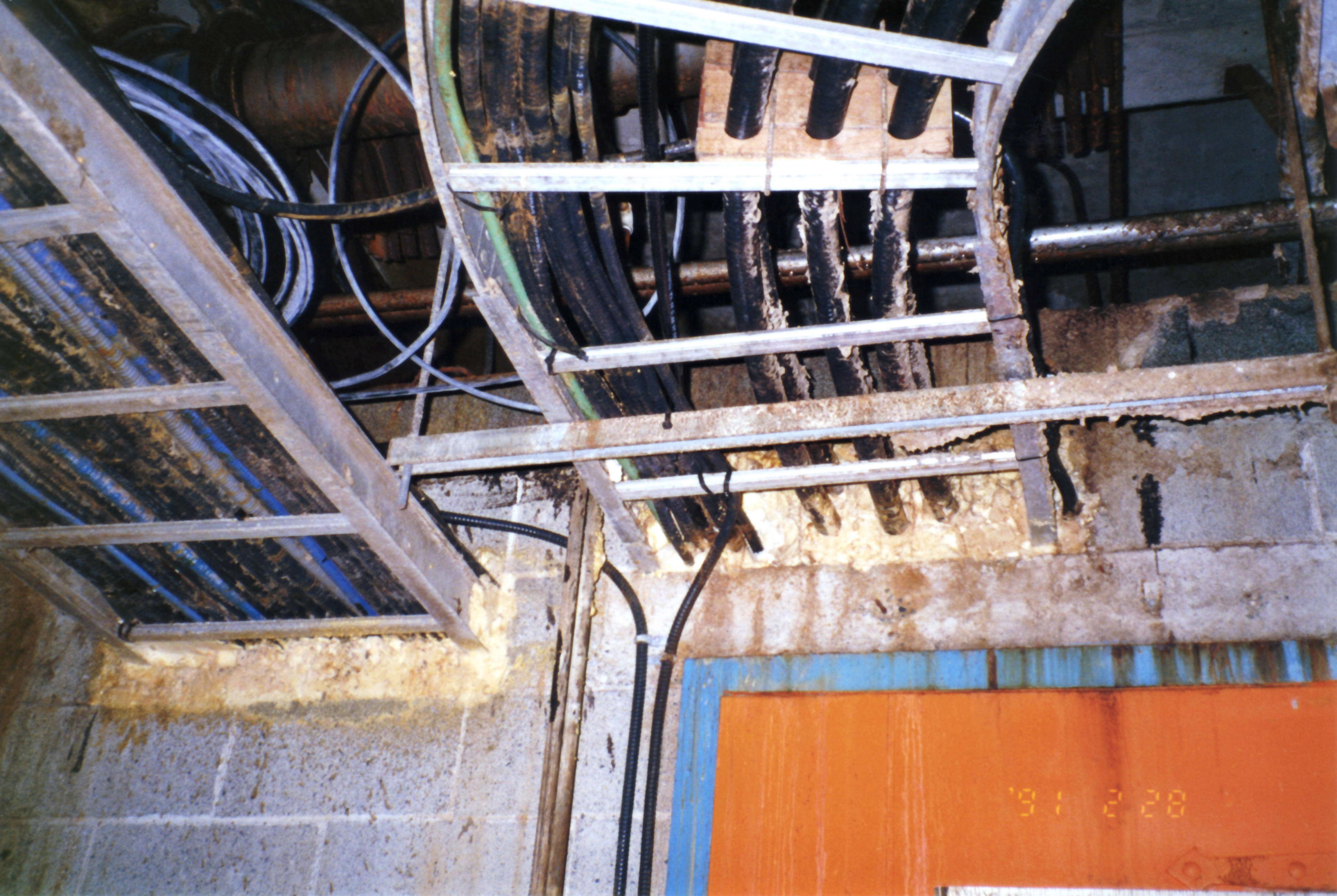
Interestingly, while the property owner is held strictly accountable for maintenance, the state offers grace for external factors. Properties with environmental hazards beyond the owner's control may still be eligible for Ohio FAIR Plan coverage if all other underwriting standards are met.
The FAIR Plan is versatile in its scope, providing coverage for residential dwellings, commercial properties, and even farms.
Ohio Mine Subsidence Insurance
Ohio's geological history includes extensive underground mining. Over time, the earth above these abandoned mines can cave in, swallowing foundations and collapsing homes. Standard property policies universally exclude earth movement.
Mine subsidence insurance bridges this gap, covering structural loss caused by the collapse or lateral or vertical movement of the ground from underground mines.
- Covered: Ohio mine subsidence insurance specifically covers damage from the collapse of underground coal, clay, limestone, and salt mines.
- Excluded: It explicitly excludes damage caused by earthquakes, landslides, volcanic eruptions, or the collapse of strip mines (which are surface-level, not underground).
The Mechanism of the Market: Like the FAIR Plan, this coverage is pooled. The Ohio Mine Subsidence Insurance Underwriting Association manages a fund to provide this coverage to eligible property owners. Again, every insurer writing basic property insurance in Ohio must be a member of this Association.
The rules of geographic distribution are precise:
- Mandatory: Insurers writing basic property insurance must offer mine subsidence coverage to all eligible applicants in designated counties. In fact, it is mandatory for basic property policies in 26 designated eastern and southern Ohio counties (where the vast majority of historical underground coal mining occurred).
- Optional: It is available as an optional coverage in 11 other designated Ohio counties.
Structure Eligibility: Not every building qualifies. To be eligible, the insured structure must be a one-to-four family dwelling. Furthermore, it must be lived in—the structure must have at least 50 percent of the total living area occupied. Finally, this coverage does not stand alone; Ohio mine subsidence coverage must attach to a valid underlying basic property, homeowners, farm owners, or mobile homeowners policy.
We have discussed what happens when the insured's property fails, but what happens when the insurance company fails? If a carrier becomes financially insolvent, policyholders with outstanding claims would normally be left with nothing but worthless paper.
The Ohio Insurance Guaranty Association (OIGA) protects policyholders and claimants if a member insurance company becomes financially insolvent. To fund this protection, all admitted property and casualty insurance carriers in Ohio are required to participate in the OIGA.
When a carrier collapses, the Association steps in and pays the covered claims of the insolvent member insurer up to statutory limits. It is the ultimate systemic safety net, preventing an insurer's bankruptcy from destroying the financial lives of thousands of innocent policyholders.
Because the OIGA acts as a taxpayer-and-industry-funded bailout mechanism, the state fiercely protects it from being used as a marketing gimmick.
Strict Prohibition: Ohio insurance agents are legally prohibited from using the existence of the Ohio Insurance Guaranty Association as an inducement to sell an insurance policy.
You cannot tell a client, "Don't worry about buying from this cheap, poorly-rated carrier, because the state Guaranty Association will bail you out if they go bankrupt." Doing so fundamentally undermines market discipline and violates Ohio insurance law.
Understanding these laws transforms you from a mere salesperson into a legal steward of your client's most valuable assets. You are operating the precise machinery that Ohio uses to keep chaos at bay.