Business Owners Policy (BOP), Builders Risk, and Cyber
Not sure you’re ready?
Take the ~3-minute readiness diagnostic and see where you stand.
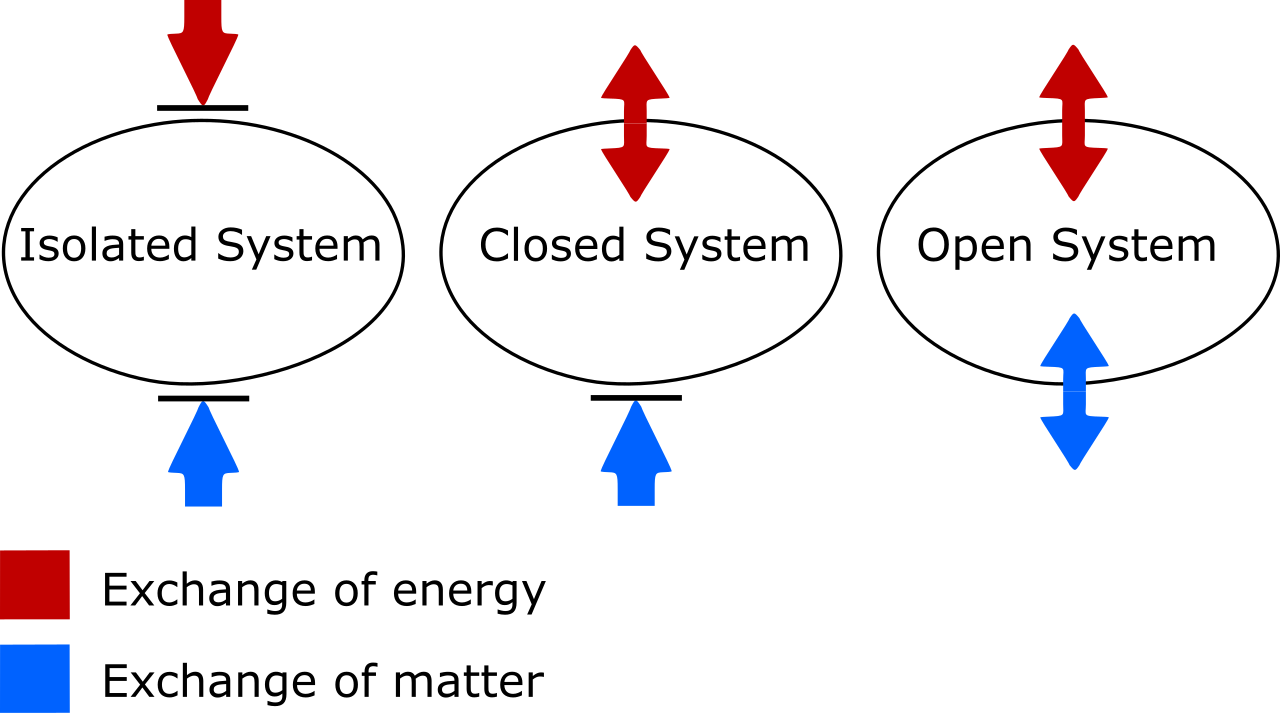
A commercial enterprise is a highly calibrated thermodynamic system. It requires physical structure to contain its operations, ongoing revenue to fuel its momentum, and digital networks to coordinate its parts. When you evaluate risk for a business, you are not merely insuring bricks, mortar, or hard drives; you are insuring the entirety of the mechanism required for its survival. To master commercial insurance, you must understand exactly how to shield this complex system at every stage of its lifecycle. We will examine three critical frameworks: the foundational package that protects established small enterprises, the specialized coverage that guards a building before it even exists, and the digital safety net required when a company's intangible assets are held hostage.
A Business Owners Policy is a commercial package policy designed specifically for small to medium-sized businesses. Think of a BOP as the "smartphone" of commercial insurance—it takes what used to be several distinct, bulky instruments and bundles them into one sleek, highly efficient device. Specifically, a Business Owners Policy combines commercial property and commercial general liability coverages into a single contract.

By bundling these coverages, insurers can offer a lower premium than if the business purchased the policies separately. However, because it is a pre-packaged product, a BOP requires highly predictable risks.
The Law of Averages: BOP Eligibility
The underwriting philosophy behind a BOP is simple: if a business is too large, too specialized, or inherently high-risk, it breaks the mathematical predictability required to offer a discounted bundle.
The BOP Golden Rule: To qualify, a business must have a localized footprint, standard liability hazards, and predictable foot traffic.
We measure this predictability through strict size and scope limits.
| Eligible Operations | Key Eligibility Limits |
|---|---|
| Office Buildings | Generally limited to no more than six stories in height and a maximum of 100,000 square feet. |
| Retail Operations | Generally must not exceed $3,000,000 in annual gross sales. |
| Apartment Buildings | Typically limited to six stories and up to sixty dwelling units. |
| Contractors | Trade contractors and artisan contractors (e.g., plumbers, residential carpenters) are generally eligible because their risk profiles are highly standardized. |
Conversely, operations that introduce complex liabilities, high severity of loss, or heavy foot traffic are strictly filtered out of the BOP program.
- Automobile repair shops are strictly ineligible for a standard Business Owners Policy due to the complex bailee exposures (custody of customers' expensive vehicles) and garage liability risks.
- Manufacturing firms are typically ineligible because their supply chain risks, heavy machinery, and product liability exposures are entirely unique from one factory to the next.
- Financial institutions and banks are generally ineligible due to their massive professional liability and crime exposures.
- Bars and pubs are typically excluded from eligibility because liquor liability and late-night security risks dramatically skew the expected claims frequency.
- Amusement parks and theaters are typically ineligible for a standard BOP because large, concentrated crowds create catastrophic liability potential.

Valuing the Property: The Coinsurance Engine
When a physical loss occurs, the fundamental question is: How much do we pay?
Property valuation under a standard Business Owners Policy defaults to Replacement Cost, meaning the policy pays to rebuild the property with new materials of like kind and quality, without subtracting for depreciation.
However, this generosity comes with a mathematical catch. A Business Owners Policy requires the insured to maintain insurance equal to at least eighty percent of the property replacement cost to avoid coinsurance penalties. If a business owner tries to save money by underinsuring their building, the insurer will penalize them during a claim, paying only a fraction of the partial loss based on the ratio of what they did insure versus what they should have insured.
Business Income: Protecting the System's Fuel
If a fire destroys a bakery, the physical damage to the ovens is only half the tragedy. The business is now bleeding cash—rent and payroll are still due, but no bread is being sold.
A Business Owners Policy provides business income and extra expense coverage automatically. Unlike stand-alone property policies where this must be added piecemeal, the BOP assumes that if a small business suffers a major structural loss, it will inherently suffer an income loss.
- Duration: Business income coverage in a Business Owners Policy typically applies for up to twelve consecutive months after a direct physical loss.
- Limit: In a standard BOP, this coverage does not have a specific dollar limit. It is designed to replace exactly what was lost, bounded by time rather than a monetary cap.
- Valuation: The coverage is provided on an actual loss sustained basis. The insurer relies on the company's historical financial records to determine what the business would have earned had the loss not occurred.
- The Deductible in Time: Business income coverage typically includes a seventy-two hour waiting period before coverage begins. Think of this as a time-based deductible. The first three days of lost income are absorbed by the business owner.
If a BOP covers the mature, operating business, how do we insure the business before it is even built?
A standard commercial property policy relies on alarms, sprinklers, and locked doors. A construction site has none of these. Builders Risk coverage is a type of commercial property insurance specifically designed for buildings under construction.
What is Covered?
Builders Risk policies cover the structure being built and the materials on site intended to become part of the finished structure. Because materials are constantly moving, Builders Risk coverage typically extends to building materials located within one hundred feet of the described premises.
It is crucial to note that a Builders Risk policy does not cover the land on which the structure is being constructed. Fire, wind, and hail do not destroy dirt; therefore, land holds no insurable risk of physical loss.
Funding the Coverage: Completed Value vs. Reporting
There are two primary ways to structure the coverage limits, depending on how the contractor wants to manage their premiums.
- The Completed Value Form is the most common method used to write Builders Risk coverage.
- How it works: It requires the policy limit to equal the full expected value of the finished building from day one.
- The catch: Because you are insuring the total expected value, a coinsurance penalty applies to partial losses if the Builders Risk policy limit is less than the full completed value of the building.
- The Builders Risk Reporting Form is an alternative for projects where cash flow or shifting scopes are a concern.
- How it works: It requires the policyholder to submit monthly reports of the actual property values at risk. Consequently, the coverage limit increases progressively as construction advances. You only pay premium for the value actually at risk in a given month.
The Lifecycle of Builders Risk: When Does Coverage Terminate?
Builders Risk is explicitly temporary. It is designed to evaporate the moment the structure transitions from a "project" into a "building." Coverage terminates automatically under several distinct triggers:
- Coverage ends automatically when the policy expires or is cancelled.
- Coverage ceases when the insured party's financial interest in the property ends (e.g., the general contractor gets fully paid and hands over the keys).
- Coverage ends automatically when the property is accepted by the purchaser.
- Coverage terminates when the building is abandoned with no intent to complete construction.
Furthermore, the policy strictly defines "completion." Builders Risk coverage ends:
- Ninety days after construction is complete.
- Sixty days after a building becomes occupied in whole or in part.
- The moment the building is put to its intended commercial or residential use.
Historically, physical damage was the primary threat to a business. Today, a localized ransomware attack can paralyze an enterprise faster than a fire.
First, we must establish a hard boundary: Commercial Property policies generally exclude losses caused by electronic data corruption or cyber attacks. You cannot claim a "fire" on a property policy just because your server's firewall was breached. To cover this gap, businesses must purchase dedicated Cyber Insurance.
For this exam, we are focusing purely on First-party cyber insurance, which covers the direct financial costs incurred by a business resulting from a cyber incident.
First-Party vs. Third-Party: First-party covers your direct losses (your data, your lost income, your ransom). Third-party covers your liability if someone else sues you because you lost their data. First-party cyber coverage explicitly excludes liability claims brought by third parties for failing to protect sensitive data.
Anatomy of First-Party Cyber Coverages
When a cyber incident occurs, a massive, synchronized response is required. First-party cyber coverage is designed to fund this exact triage process. It pays for:
- Forensic IT investigations to determine the cause and scope of a data breach. (You cannot stop a leak if you don't know where the pipes are broken).
- Data Restoration: It pays for the expenses to restore or recover corrupted electronic data.
- Cyber Extortion: It pays for cyber extortion demands such as ransomware payments, assuming the insurer and legal authorities agree it is the most viable path to recover the data.
- Business Interruption: Just as a fire stops a bakery, a server crash stops an e-commerce site. First-party cyber includes business interruption insurance for income lost during a network outage caused by a cyber attack.
- Public Relations & Crisis Management: It covers the costs of hiring crisis management and public relations firms following a cyber incident to mitigate reputational damage.
- Customer Notification: By law, you must tell your customers if you lose their data. First-party coverage pays for the costs to notify customers about a data breach.
- Customer Protection: It pays for the provision of credit monitoring services to affected customers following a data breach, helping to prevent identity theft.
The Physical Hardware Exclusion
While first-party cyber insurance is incredibly broad regarding digital assets, it respects the boundaries of traditional property insurance. Physical damage to computer hardware is typically excluded from cyber insurance policies.
If a hacker breaches your system, the Cyber policy pays to recover the software and data. But if a power surge fries your motherboard, or a thief steals your physical server rack, that is a physical property loss. The line is elegantly drawn: property policies cover the tangible machine, while cyber policies protect the intangible lifeblood flowing through it.