Mandatory and Optional Health Provisions
Not sure you’re ready?
Take the ~3-minute readiness diagnostic and see where you stand.
An insurance policy is, at its core, a mechanism of applied physics—specifically, the balancing of opposing forces. On one side, the policyholder requires absolute assurance that an economic safety net will deploy when disaster strikes. On the other side, the insurer requires precise mathematical boundaries to prevent systemic financial collapse. To prevent these two forces from destroying one another in perpetual litigation, the industry relies on a foundational legal framework: the Uniform Individual Accident and Sickness Policy Provisions Law.
This law establishes standard mandatory and optional provisions for individual health insurance policies. Rather than leaving the terms of a contract up to endless negotiation, the National Association of Insurance Commissioners (NAIC) model law requires twelve mandatory provisions in all individual health insurance policies.
These mandatory health policy provisions are primarily designed to protect the insured policyholder, guaranteeing them fair treatment, due process, and a reliable timeline for claims. Conversely, optional health policy provisions are generally designed to protect the financial interests of the insurance company. Insurers can only include optional health policy provisions if the optional clauses do not conflict with any mandatory state provisions.
As a future insurance producer, you will not just sell these contracts—you must be able to translate them. When a client suffers a massive heart attack or loses their job, they will not read the statute; they will call you. You must understand the precise mechanics of these provisions to protect your clients and maintain your professional integrity.
The twelve mandatory provisions exist to ensure that the insured is never blindsided by hidden traps or indefinite delays. Let us examine the mechanics of these rules.
Defining the Contractual Boundaries
To have a functional agreement, we must first define what the agreement actually is and who has the power to change it.
The Entire Contract provision dictates exactly what constitutes the binding agreement between the two parties. It states that the health insurance policy, its endorsements, and any attached papers (such as the original application) constitute the entire binding agreement. Why does this matter? It means the insurer cannot suddenly point to an obscure internal company manual to deny a claim. If it is not in the attached documents, it does not exist legally.
Furthermore, the law strictly limits who can alter this agreement. No changes to a health insurance policy are valid unless approved in writing by an executive officer of the insurance company. As an insurance agent, this is a critical reality check: an insurance agent lacks the legal authority to change health insurance policy provisions or waive any policy terms. If your client asks you to make an exception for a late payment, you must remember that your verbal promise has zero legal weight, but it creates a massive professional liability for you.
The Shield of Time
Health insurance involves evaluating an applicant's medical history, which creates the risk of misrepresentation. The Time Limit on Certain Defenses provision restricts the time an insurer can void a health policy or deny a claim for application misstatements.
Think of this as a statute of limitations on the insurer’s underwriting process. An insurer cannot deny a health insurance claim for pre-existing conditions after the policy has been in force for two years. If a policyholder genuinely forgets to mention a minor knee surgery from a decade ago, and two years pass, the insurer cannot use that innocent omission to void the contract.

The Fraud Exception: There is a distinct boundary here. While honest mistakes are forgiven after two years, fraudulent misstatements in a health insurance application can be used by the insurer to void a policy at any time regardless of the policy age. Fraud is a deliberate attempt to break the mathematical model of insurance, and the law does not protect it.
Grace Periods and Reinstatement
Life is messy. People miss premium payments. The Grace Period provision gives the insured additional time to pay the premium after the due date before the health policy lapses. Notice that the length of the grace period scales elegantly with the frequency of the premium payments.
| Premium Payment Frequency | Mandatory Grace Period |
|---|---|
| Weekly | 7 days |
| Monthly | 10 days |
| Annual, Semi-Annual, or Quarterly | 31 days |
If the grace period expires, the policy lapses. But a lapsed policy is not necessarily dead. The Reinstatement provision dictates the process for restoring a lapsed health insurance policy.
If a client sends in a late premium and the insurer cashes the check without asking questions, a health insurance policy is automatically reinstated if the insurer accepts a late premium without requiring a formal reinstatement application.
However, if the insurer does require an application to ensure the client’s health hasn't drastically changed, a timeline begins. If a reinstatement application is required, a health policy is automatically reinstated 45 days after application submission unless formally rejected.
Once reinstated, the policy applies a clever mechanism to prevent adverse selection (the tendency of people to only buy insurance when they know they need it). A reinstated health insurance policy immediately covers losses resulting from accidental injuries. However, a reinstated health insurance policy imposes a ten-day waiting period before covering losses resulting from illness. The logic is profoundly human: You cannot plan to get hit by a bus (an accident), but you can feel a sickness coming on, quickly pay your past-due premium, and rush to the hospital. The ten-day waiting period prevents this exact abuse.

The Anatomy of a Claim: The Critical Timelines
The most heavily tested area of the NAIC provisions involves the claims process. You must memorize the "20-15-90" rule.
- Notice of Claim (20 Days): The Notice of Claim provision requires the insured to formally notify the insurer of a covered loss within a specific timeframe. An insured must provide a notice of claim to the health insurance company within 20 days of the loss. If providing a notice of claim within 20 days is impossible (for example, the insured is in a coma), the insured must provide notice as soon as reasonably possible.
- Claim Forms (15 Days): Once the insurer is notified, the ball is in their court. The Claim Forms provision requires the insurer to supply standard paperwork for the insured to file a formal claim. An insurer must provide claim forms to the insured within 15 days of receiving a notice of claim. What if the insurer drops the ball? If an insurer fails to provide claim forms within 15 days, the insured can submit written proof of the loss in any format (even a handwritten note on a napkin attached to medical bills) to fulfill the claim requirement.
- Proof of Loss (90 Days): Finally, the Proof of Loss provision dictates the timeframe for the insured to submit detailed evidence of a covered medical event. An insured must submit a formal written proof of loss to the insurer within 90 days of the covered loss. If it takes longer to gather the paperwork, the absolute maximum time limit to submit a proof of loss is one year unless the insured is legally incapacitated.
Moving the Money
Once the loss is proven, we look to two distinct provisions: when the money is paid, and who gets it.
The Time of Payment of Claims provision specifies when the insurer must pay out benefits after receiving a valid proof of loss. Health insurance claims for specific one-time losses (like a broken arm or a hospital stay) must be paid immediately upon the insurer's receipt of written proof of loss. Conversely, periodic health insurance claim payments for ongoing conditions like disability must be distributed at least monthly.
The Payment of Claims provision designates the specific recipient of the health insurance benefit payments. For example, death benefits in a health insurance policy are paid directly to the designated beneficiary or the estate of the insured. However, in the real world, patients rarely want an insurance check mailed to their house while the hospital demands payment. Therefore, medical expense benefits can be paid directly to the medical provider if the insured authorizes a written assignment of benefits.
Investigations, Lawsuits, and Beneficiaries
To close out the mandatory provisions, we establish the insurer's right to investigate, the insured's right to sue, and the policyowner's right to manage their affairs.
- Physical Examination and Autopsy: This provision grants the insurer the right to physically examine the insured while a claim is pending. To ensure fairness, the insurance company must pay all costs for any physical examinations or autopsies required during the claims investigation process. Furthermore, an insurer can require an autopsy on a deceased insured to determine the cause of death unless explicitly forbidden by state law.
- Legal Actions: The Legal Actions provision restricts the timeframe in which an insured can sue an insurance company over a claim dispute. The law forces a cooling-off period: an insured cannot file a lawsuit against an insurer within 60 days of submitting a written proof of loss, giving the insurer time to investigate. Conversely, there is an expiration date: an insured cannot file a lawsuit against an insurer more than three years after the written proof of loss was originally required.
- Change of Beneficiary: The Change of Beneficiary provision grants the policyowner the right to alter the designated beneficiary at any time. The only exception is if the beneficiary was named irrevocably. A policyowner cannot change an irrevocable beneficiary designation without the explicit written consent of that specific beneficiary.
While the mandatory provisions build a wall around the policyholder, the optional provisions give the insurer tools to manage risk, adjust for changing variables, and prevent policyholders from profiting off of insurance.
Adjusting for Life Changes: Occupation and Age
Insurance premiums are meticulously calculated based on the precise risk profile of the applicant on the day the policy is issued. But people change.
The Change of Occupation provision allows the insurer to adjust policy benefits or premiums if the insured changes careers.
- If an insured switches to a more hazardous occupation (e.g., leaving an accounting job to become a commercial logger), the risk of injury skyrockets. Because the insured is now underpaying for their current risk, the insurer will reduce the policy benefits to what the premium would purchase for that higher risk level.
- Conversely, if an insured switches to a less hazardous occupation, the insurer will reduce the premium rate and refund any excess unearned premium.
Similarly, demographics drive mortality and morbidity data. The Misstatement of Age or Sex provision governs how insurers handle incorrect demographic information provided on an insurance application. If an insured misstates age on a health insurance application, the insurer will adjust the benefit amount to what the paid premium would have purchased at the correct age. Crucially, a misstatement of age or sex on a health insurance application does not give the insurer the right to void the insurance policy—it merely triggers a mathematical correction to ensure fairness.
Preventing Overinsurance
Insurance exists to make a person whole after a loss, a concept known as the principle of indemnity. It does not exist to make a person rich. If a client can buy five policies and make a profit by breaking their leg, the system collapses under moral hazard.
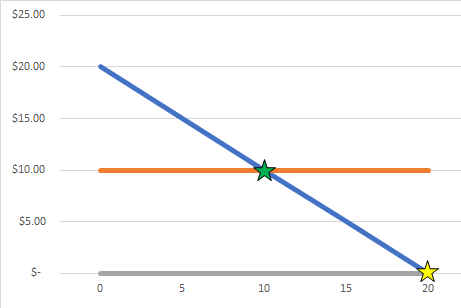
- The Other Insurance in This Insurer provision prevents overinsurance by capping total benefits when an individual holds multiple policies with the exact same insurance company.
- The Insurance with Other Insurers provision allows companies to prorate benefit payments if the insured has overlapping coverage with different carriers. If a client has two policies covering the exact same $10,000 hospital bill, the two insurers will communicate, split the bill proportionally, and refund the client the excess premiums they paid for the redundant coverage.
Accounting and Policy Control
Sometimes, an insured owes the insurer money. The Unpaid Premium provision allows an insurer to deduct any past-due premium amounts directly from a pending claim payment. If you owe $200 in past-due premiums and submit a claim for $1,000, the insurer simply cuts you a check for $800.
Insurers also need a mechanism to exit a contract. The Cancellation provision allows an insurer to terminate a health policy at any time by providing written notice to the insured. Under standard National Association of Insurance Commissioners provisions, an insurer must give the insured five days of written notice before canceling a health insurance policy.
When a policy is canceled mid-term, the handling of unearned premiums (money paid in advance for time not yet covered) depends on who initiates the breakup:
- If an insurer cancels a health insurance policy, unearned premiums must be refunded to the insured on a pro-rata basis (a perfect, exact proportional refund).
- If an insured policyowner cancels a health insurance policy, the insurer calculates the unearned premium refund on a short-rate basis (the insurer keeps a slight penalty fee to cover administrative costs).
Finally, because state laws constantly evolve, the Conformity with State Statutes provision automatically amends any policy terms that conflict with the minimum laws of the state where the insured resides. This saves insurers from having to constantly reissue paperwork every time a state legislature passes a new mandate.
Boundary Conditions: Illegal and Intoxicated Acts
Insurance is a pool of shared risk designed for the prudent and the unlucky, not the reckless.
The Illegal Occupation provision releases the insurer from liability if a loss occurs while the insured is committing a felony or engaging in an illegal occupation. If a client breaks their leg while robbing a bank, the insurance pool does not subsidize their medical care.

Similarly, the Intoxicants and Narcotics provision denies coverage if a loss is directly caused by the insured being voluntarily intoxicated or under the influence of non-prescribed narcotics. The key word here is voluntarily.
Understanding these provisions transforms you from a mere salesperson into a true fiduciary. You are not just pushing paper; you are administering the precise mathematical and legal boundaries of a financial safety net. Master these timelines, obligations, and rights, and you will navigate the regulatory landscape—and your state exam—with total confidence.