Security Terminology and Compliance
Not sure you’re ready?
Take the ~3-minute readiness diagnostic and see where you stand.
A well-engineered network is structurally identical to a submarine. When a submarine suffers a hull breach, the survival of the vessel depends entirely on a series of watertight bulkheads that seal off the flooded compartment, preserving the buoyancy of the rest of the ship. The modern enterprise network operates under the exact same physical and logical constraints. As a network administrator or NOC analyst, your primary objective is not merely to ensure that packets flow from point A to point B; it is to dictate, with mathematical precision, the boundaries within which those packets are permitted to exist. Without these boundaries, a single compromised thermostat can cascade into a catastrophic breach of financial databases.
_raise_an_external_hatch_to_perform_maintenance_on_the_watertight_gasket_and_moving_parts.jpg)
Before we can build bulkheads, we must define exactly what we are trying to protect. In information security, every control, policy, and firewall rule you implement traces back to a foundational information security model known as the CIA triad. This model consists of three distinct pillars: Confidentiality, Integrity, and Availability.
Think of the CIA triad as the fundamental laws of thermodynamics for data.
- Confidentiality ensures that sensitive information is accessed only by authorized individuals or systems. If an attacker intercepts a payload of user passwords, confidentiality has been breached.
- Integrity ensures that data is not altered or modified by unauthorized entities. If a malicious script changes a $10 transaction to a $10,000 transaction in transit, integrity has been lost.
- Availability ensures that network resources and data remain accessible to authorized users when needed. A system that is perfectly secure but entirely unreachable is functionally useless. A Distributed Denial of Service (DDoS) attack is a direct assault on availability.
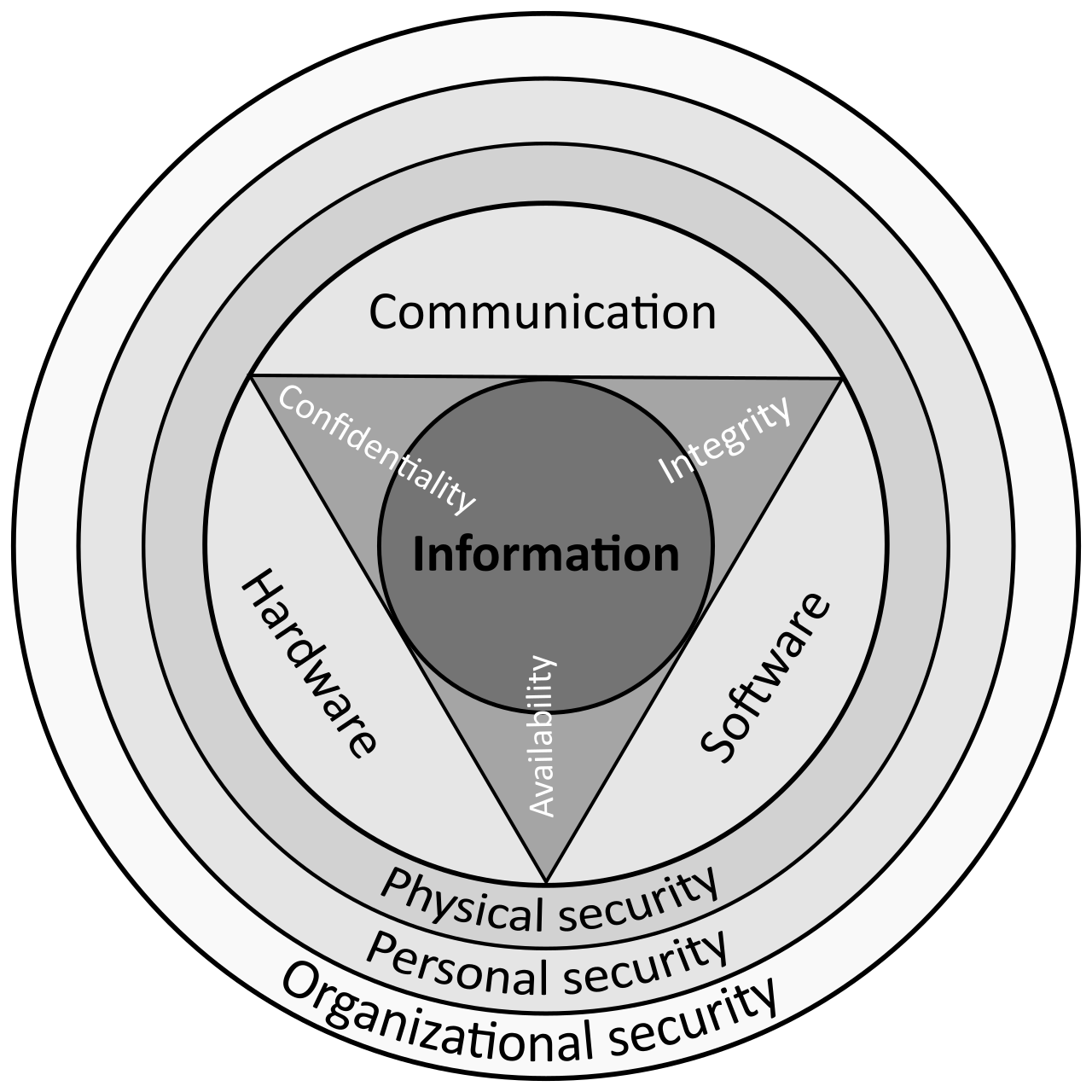
To defend this triad, you must speak the precise language of network risk. These terms are not interchangeable; they describe a specific chain of events:
The Mechanics of a Breach
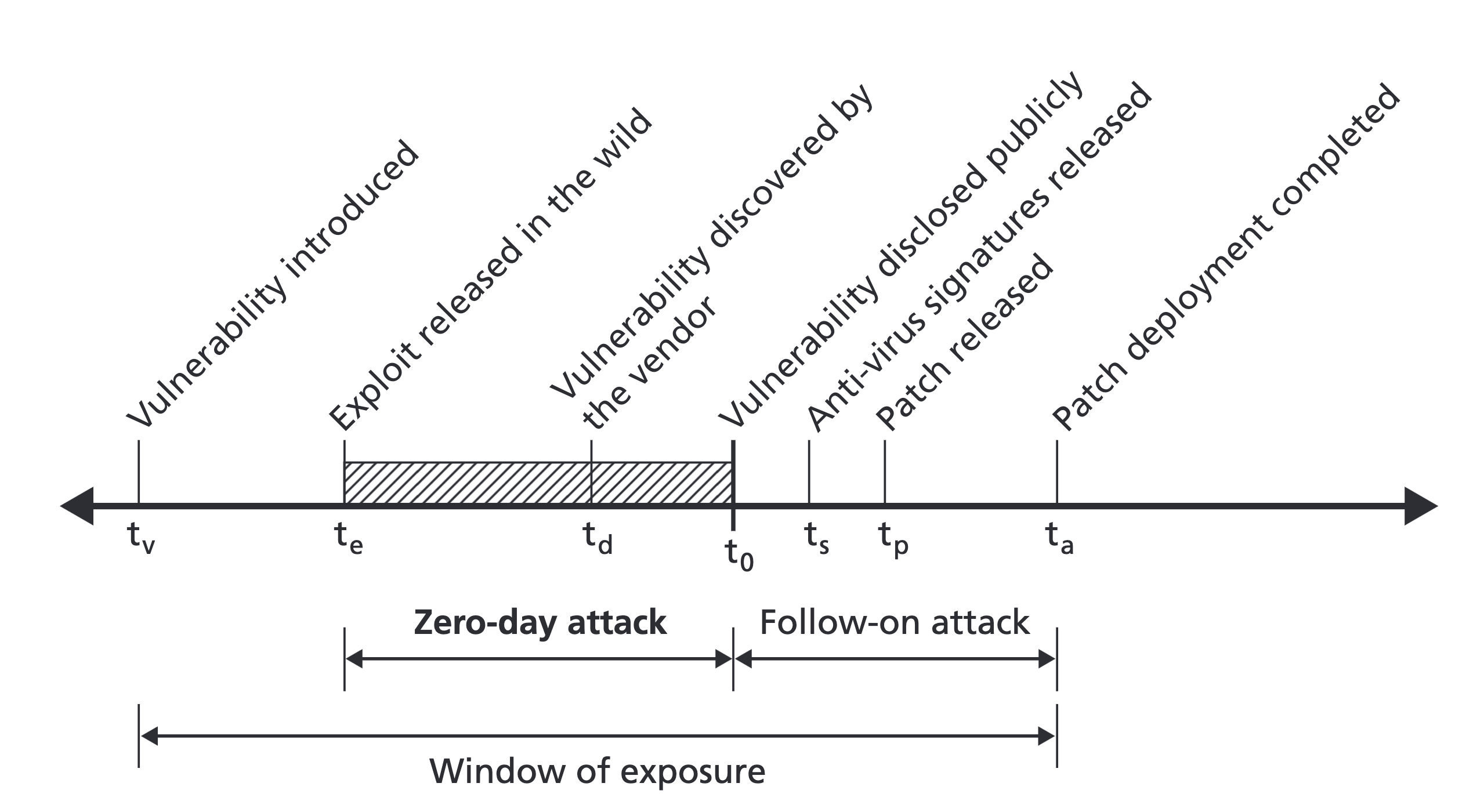
- A vulnerability is a flaw or weakness in a system, network, or application design. It is the unlocked window.
- A threat is any potential event or actor capable of causing harm to a system or organization. It is the rainstorm that might come through the window, or the burglar walking down the street.
- A threat actor is an individual or group responsible for executing a cyberattack.
- An exploit is a specific technique, code, or tool used to take advantage of a vulnerability. It is the crowbar the burglar uses. If a vulnerability is completely unknown to the public and the software vendor has not yet released a patch, an attack leveraging it is called a zero-day exploit.
- Risk represents the probability of a threat agent exploiting a vulnerability combined with the resulting business impact. We patch servers because reducing the vulnerability lowers the probability, thereby reducing the overall risk.
Networks do not exist in a vacuum; they exist within geopolitical boundaries. A packet routed through a server in Frankfurt is subject to completely different legal frameworks than a packet routed through Chicago. This brings us to the concepts of data geography.
Data locality mandates that digital information must be physically stored within a specific geographic boundary. A government might dictate that the health records of its citizens cannot leave its borders. Closely tied to this is data sovereignty, which dictates that digital information is subject to the laws of the country where the physical storage device resides. If you spin up a cloud server in Tokyo, the data on that hard drive is subject to Japanese jurisdiction.
Because of the massive risk associated with data breaches, regulatory bodies enforce strict rules on how networks are designed and audited.
GDPR (General Data Protection Regulation)
GDPR stands for General Data Protection Regulation. It is a legal framework establishing data privacy requirements for the European Union. However, its reach is not confined to Europe. The General Data Protection Regulation applies to any global organization processing the personal data of European Union residents. If your company is based in Texas but sells products to users in France, your network must comply with GDPR.
PCI DSS (Payment Card Industry Data Security Standard)
PCI DSS stands for Payment Card Industry Data Security Standard. If your company handles credit cards, you interact with this framework. PCI DSS outlines mandatory security controls for organizations processing credit card transactions. It dictates exactly how payment networks must be separated from general corporate traffic.
To ensure these rules aren't just empty promises, compliance frameworks often mandate regular network security audits to verify the implementation of required access controls. An auditor will literally sit down and ask you to prove that an employee in marketing cannot route traffic to the credit card processing server.
How do you prove to an auditor that marketing cannot reach the payment server? You build those submarine bulkheads.
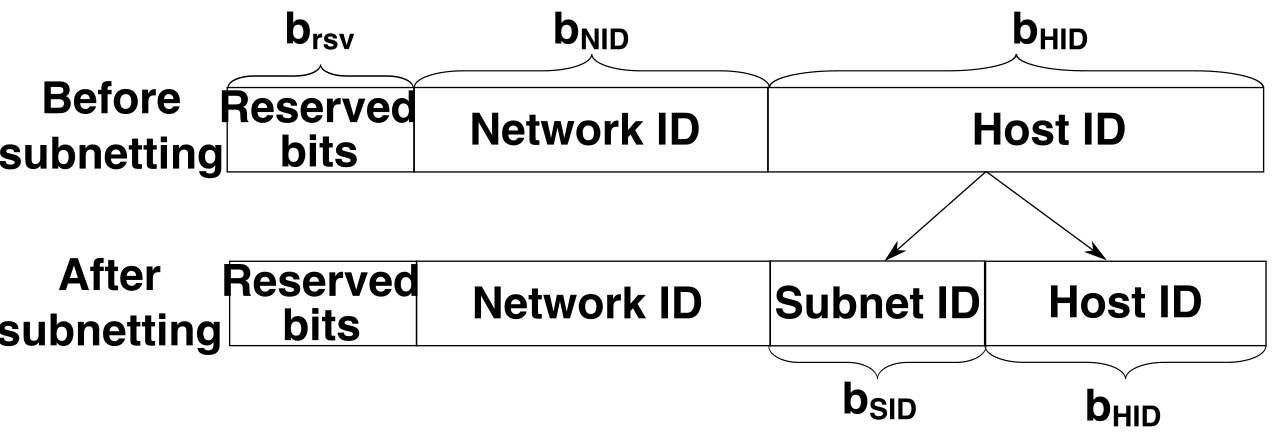
Network segmentation involves dividing a larger network into smaller isolated subnets to limit lateral movement during an attack. If a threat actor breaches a workstation, segmentation ensures they are trapped in that specific subnet.
The most common mechanism for achieving this is the VLAN. Virtual Local Area Networks (VLANs) are frequently used to implement logical network segmentation at Layer 2 of the OSI model. Rather than buying separate physical switches for every department, a network administrator configures the switch ports to logically isolate traffic. A computer on VLAN 10 cannot speak to a computer on VLAN 20 unless a router or Layer 3 switch explicitly permits it via an access control list (ACL).
Let us examine how this applies to the day-to-day realities of a network technician.
Protecting the Corporate Core: Guest Networks and BYOD
Walk into any modern corporate lobby, and you will see a sign offering free Wi-Fi. This is the guest network, which provides internet access to visitors. Because you have zero control over the security posture of a visitor's laptop, a guest network is logically isolated from internal corporate resources to prevent unauthorized access by external users. They get a direct pipe to the internet, and nothing else.
Similarly, we have BYOD, which stands for Bring Your Own Device. BYOD environments allow employees to connect personal smartphones and laptops to the corporate network. From a security perspective, personal devices are highly untrusted. Network administrators use VLANs and access control lists to isolate personal Bring Your Own Device hardware from sensitive corporate servers. To maintain control, Mobile Device Management (MDM) solutions are often combined with network segmentation to enforce corporate security policies on employee-owned devices—ensuring that if a user wants corporate email on their personal phone, the phone must have a passcode and remain encrypted.
Containing the Unpatchable: IoT
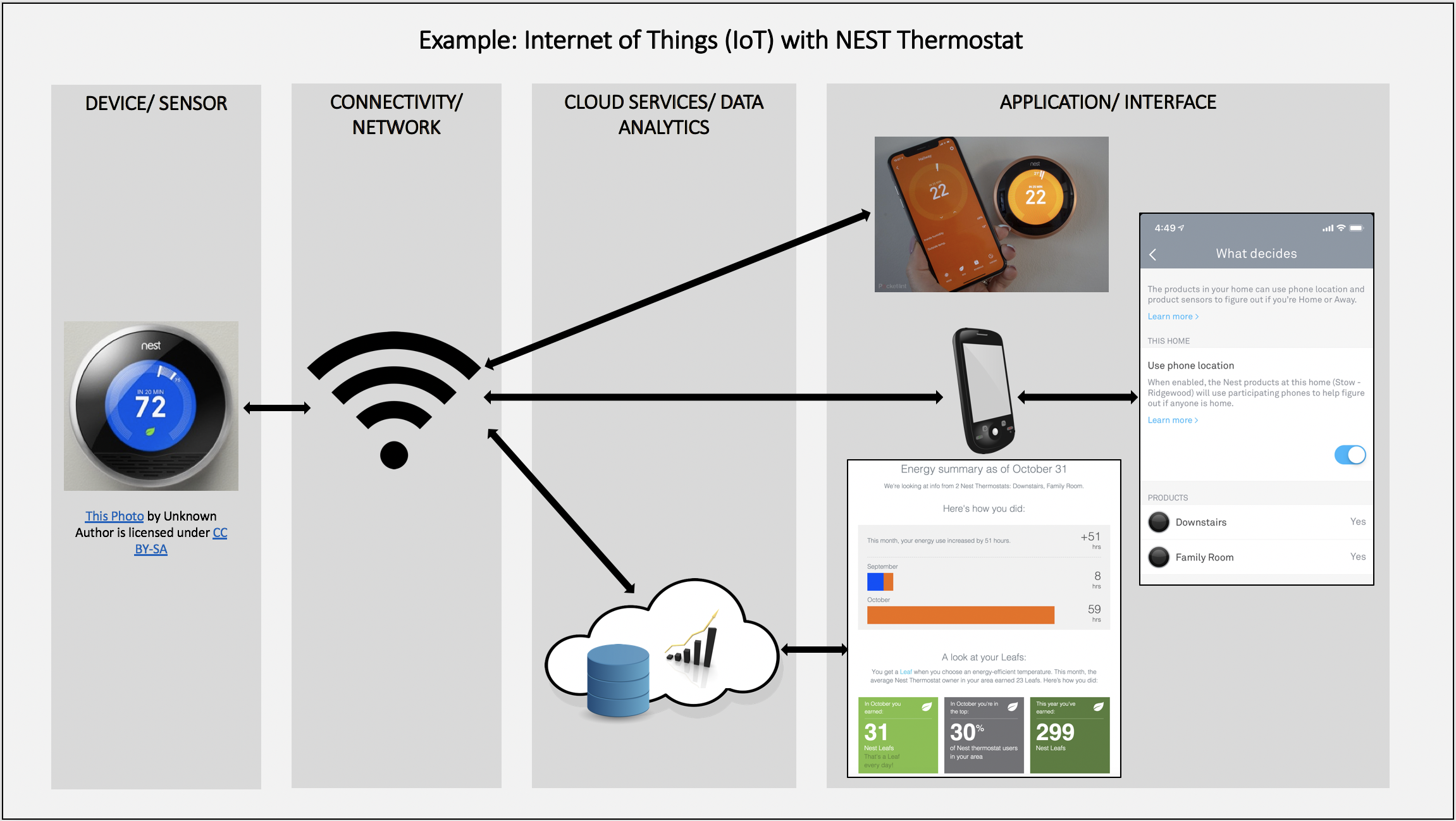
The Internet of Things (IoT) encompasses smart TVs, internet-connected security cameras, smart thermostats, and breakroom refrigerators. The reality of IoT devices is that they often lack robust built-in security features. They run stripped-down operating systems, are rarely patched by their manufacturers, and are notoriously easy to compromise.
Because you cannot install antivirus software on a smart lightbulb, network administrators place Internet of Things devices on dedicated network segments to prevent compromised smart devices from accessing corporate data. If a threat actor hacks the smart thermostat, they are trapped on the IoT VLAN, completely blind to the accounting servers.
The Kinetic Threat: IIoT, SCADA, and ICS
When we move from the office building to the factory floor, the stakes change from digital data loss to physical, real-world destruction.
The Industrial Internet of Things (IIoT) refers to network-connected devices used specifically in manufacturing and industrial environments. Managing these processes are SCADA (Supervisory Control and Data Acquisition) systems, which remotely monitor and control physical industrial processes like power generation, water treatment, and pipeline flow.
These systems fall under the broader umbrella of Industrial Control Systems (ICS). Because a breach here could cause a turbine to spin until it shatters or a chemical valve to open prematurely, Industrial Control Systems require strict segmentation from standard corporate networks to prevent catastrophic physical damage from cyberattacks.
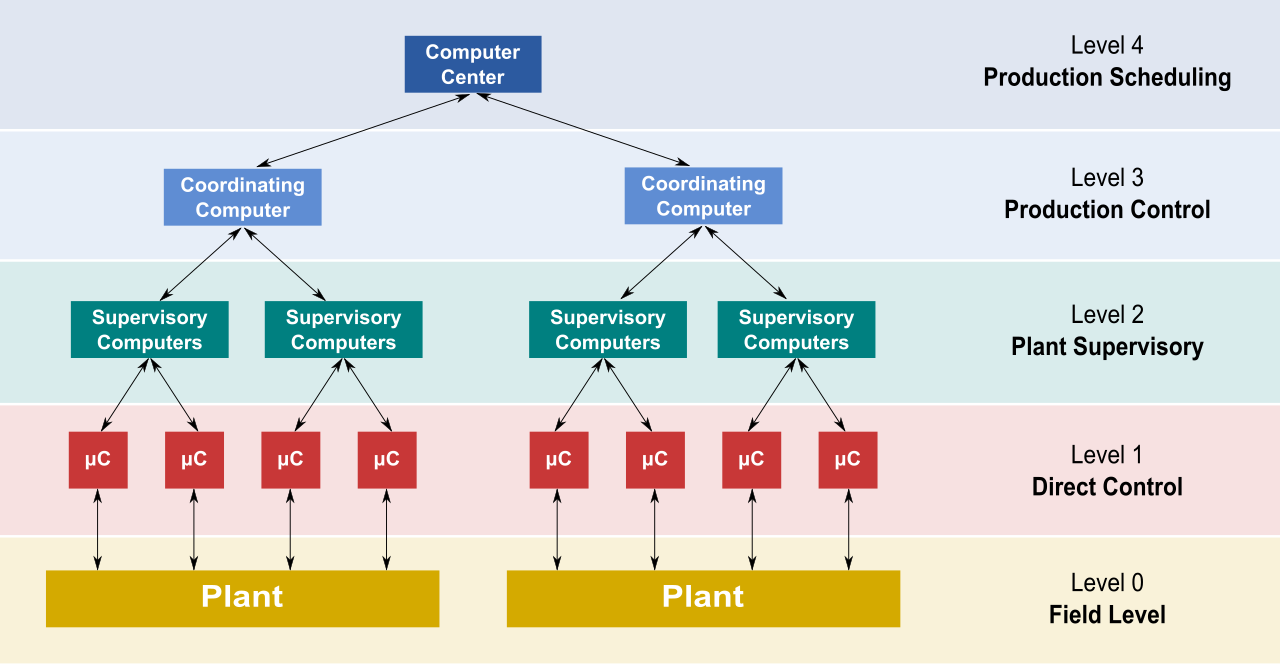
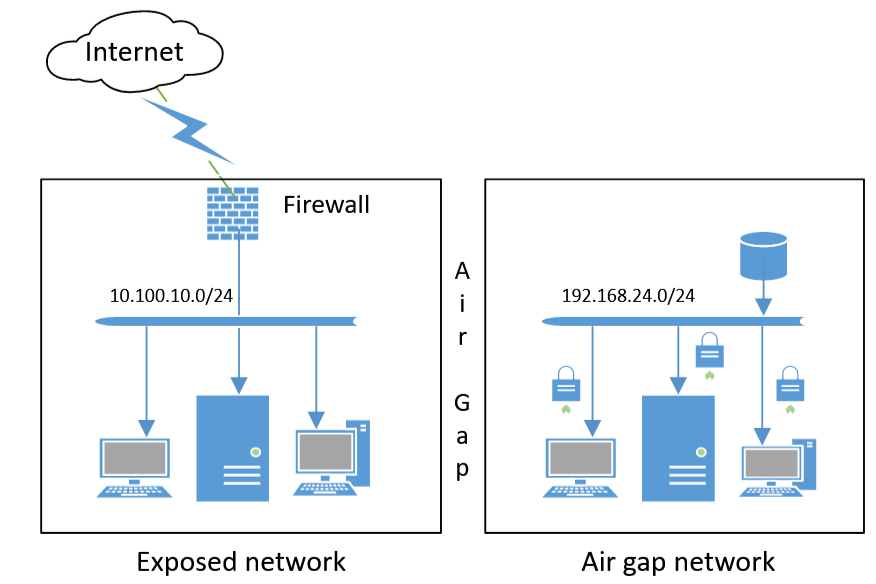
Often, logical VLANs are not enough for this level of risk. When protecting highly sensitive or dangerous infrastructure, administrators implement an air gap. An air gap is a security measure creating complete physical isolation between a secure network and unsecured networks. No cables connect them. No wireless signals bridge them. Data can only be transferred by a human physically walking a storage drive from one machine to another.
As you prepare to validate your networking skills, remember that securing a network is not about locking everything in a vault so that no one can use it. It is about understanding the delicate balance between Availability and Confidentiality. By mastering the vocabulary of risk, respecting the compliance frameworks that govern our data, and aggressively segmenting your network architectures, you transition from simply moving packets to engineering resilient, survivable digital ecosystems.