Business and Organisational Characteristics
A client walks into your office with an idea for a business and one question underneath all the others: "What should I actually set this up as?" Everything else — how much tax they pay, whether their house is at risk if a supplier sues, how much paperwork they must file, whether they can bring in outside investors — flows from the answer. This topic gives you the architecture for answering it: the four principal business media used in England and Wales, and the two concepts that do almost all of the analytical work in distinguishing them — separate legal personality and limited liability.
A sole trader is an individual who owns and runs a business alone, without forming any separate legal entity. This is the starting point for the whole topic because it is the medium that has none of the features the others are built around. The sole trader has no separate legal personality from the business: in law, the individual and the business are the same person. There is no corporate "it" standing between the trader and the world.
That fusion has a direct and unforgiving consequence: unlimited personal liability. Every debt the business incurs is legally the trader's own debt, so a creditor chasing an unpaid invoice can pursue the trader's house, savings, and car exactly as it could pursue any personal debt. There is no shield.
The upside is administrative weightlessness. Setting up as a sole trader requires only registering as self-employed with HMRC — no incorporation documents, no filing of accounts, nothing lodged at Companies House. It is the least formal business medium available, and the trader retains full control over every decision, since there are no partners or co-owners whose consent is needed. Tax follows the same "no separate entity" logic: profits are charged to income tax, plus Class 2 and Class 4 National Insurance contributions, rather than corporation tax — because in the eyes of the tax system, as in the eyes of company law, there is only one taxpayer here, not two.
Add a second person carrying on business together for profit, and — often without either of them intending it — a partnership may spring into existence. This is one of the more startling features of partnership law for a new solicitor: it does not require a partnership agreement, or even a conversation about being "partners." Under the Partnership Act 1890, a partnership arises purely from the facts on the ground.
Section 1(1), Partnership Act 1890: partnership is "the relation which subsists between persons carrying on a business in common with a view of profit."
If two people satisfy that definition through their conduct — sharing revenue, jointly running a market stall, splitting the proceeds of a joint venture — they are partners whether or not they ever signed anything or used the word "partnership." This is a favourite SQE1 trap: a client who insists "we never agreed to be partners" can still be one. Section 1(2) draws the boundary on the other side, excluding companies and other bodies incorporated under statute or royal charter from the definition — a company is never, itself, a "partnership" no matter how it is run internally.
Structurally, an ordinary partnership under the 1890 Act mirrors the sole trader's central weakness, just distributed across more people: it has no separate legal personality in England and Wales. (Contrast Scotland, where section 4(2) of the Act gives a firm legal personality distinct from the partners composing it — a genuine cross-border trap worth flagging to clients operating on both sides of the border.) Because the firm is not a separate person, partners are each other's agents. Section 5 makes every partner an agent of the firm and of the other partners for partnership business, so a partner acting in the usual way of the firm's business binds the firm — and therefore binds every other partner — even without actual authority, unless the third party knew the partner lacked it. That is a powerful, and dangerous, form of vicarious exposure: one partner's unauthorised deal can become every partner's debt.
Liability compounds this. Section 9 makes every partner jointly liable with the others for all debts and obligations incurred while a partner — again reaching personal assets, exactly as with a sole trader, just shared across the partnership. And that exposure doesn't vanish neatly on exit: a retiring partner remains liable for debts incurred before retirement unless released by agreement with the relevant creditors. Advising a retiring partner without addressing this is a classic way to leave a client exposed to liabilities from a business they no longer control.
Internally, section 24 supplies a set of default rules governing partners' rights and duties — defaults in the true sense: they apply only in the absence of a contrary agreement, and a well-drafted partnership agreement typically displaces most of them.
| Default rule (s.24, absent contrary agreement) | Effect |
|---|---|
| s.24(1) | Partners share equally in capital and profits, and contribute equally to losses |
| s.24(6) | No partner is entitled to remuneration for acting in the partnership business |
| s.24(7) | No new partner may be introduced without the consent of all existing partners |
| s.24(8) | Ordinary business decisions: majority vote; a change to the nature of the business: unanimous consent |
A partnership agreement can override almost all of this by express or implied agreement — which is precisely why so much SQE1 partnership advice is really contract advice dressed in statutory clothing: the 1890 Act is the fallback, not the destination. Formality and tax again track the "no separate entity" theme: an ordinary partnership requires no registration with Companies House and no filed public accounts, and profits are taxed as the individual income of the partners under the transparent tax treatment of partnerships — there is no corporation tax on the firm itself, because in law there is no "firm" separate from its partners to tax.
A limited partnership modifies the ordinary partnership model by splitting the partners into two categories: at least one general partner with unlimited liability, and at least one limited partner whose liability is capped at the amount they contributed. Limited partnerships in England and Wales are governed by their own statute, the Limited Partnerships Act 1907, a much narrower and older piece of legislation than the 1890 Act.
The limited partner's protection is conditional, not automatic — and this is the single most testable point on limited partnerships: a limited partner who takes part in managing the business loses limited liability protection and becomes liable as if they were a general partner. The bargain, in effect, is liability protection in exchange for staying out of the driving seat. To secure that protected status in the first place, the limited partnership must be registered with the registrar of companies. Despite that registration requirement, a limited partnership — unlike an LLP, below — has no separate legal personality distinct from its partners under the 1907 Act. Registration confers status for the limited partners; it does not create a new legal person.
The limited liability partnership (LLP) is the structure that solves the problem ordinary and limited partnerships leave open: how do you keep the internal flexibility of a partnership while giving every member limited liability? The LLP is a corporate structure engineered to do exactly that.
Section 1(2), Limited Liability Partnerships Act 2000: an LLP is "a body corporate (with legal personality separate from that of its members)."
That separate legal personality is the pivot on which everything else turns. Because the LLP itself is the legal person that owns the business, holds its assets, and incurs its debts, members are generally not personally liable for the LLP's debts beyond any capital contribution they have agreed to make. And because the LLP — not any individual member — is the entity that persists, it has perpetual succession: members can join and leave without the LLP itself coming to an end, unlike an ordinary partnership, which can be far more fragile when a partner departs. Section 1(3) reinforces the corporate character further, giving the LLP unlimited capacity to act — it can do anything a natural person, or indeed a company, could do, without the ultra vires-style capacity constraints that once dogged corporate bodies.

Getting that protection has a formal price: unlike an ordinary partnership, an LLP is formed by incorporation, requiring registration at Companies House. It must have at least two members at incorporation and on an ongoing basis, and at least two designated members, who carry additional statutory responsibilities such as filing accounts. Once incorporated, the LLP must file annual accounts and a confirmation statement at Companies House — public disclosure obligations that look much more like a company's than a traditional partnership's.
Internally, though, the LLP keeps partnership-style flexibility: members typically regulate their relationship through a private members' agreement, not public constitutional documents like a company's articles — so the internal deal can stay confidential even though the LLP's existence and accounts are public. Tax treatment splits the difference too: an LLP is taxed as if it were a partnership — profits taxed on the individual members, not the LLP itself — unless the LLP no longer trades with a view to profit, in which case that transparent treatment can fall away. The LLP, in short, is a genuine hybrid: the tax transparency of a partnership fused with the separate legal personality and limited liability of a corporate body.
A registered company is formed by incorporation under the Companies Act 2006 and represents the most complete separation between the business and the people behind it. The doctrine underpinning that separation is one of the most famous in all of company law.

Salomon v A Salomon & Co Ltd [1897] AC 22: a validly incorporated company is a separate legal person distinct from its shareholders and directors — even where, as in that case, one shareholder held almost all the shares and ran the business exactly as before incorporation.
Separate legal personality is not an abstraction; it does concrete legal work. It means the company — not its shareholders or directors — owns property, enters contracts, and sues and is sued in its own name. When a company buys a building, the shareholders do not become co-owners of that building; the company does. The corresponding protection for members is limited liability: a member's personal liability for the company's debts is capped at whatever remains unpaid on their shares (or on their guarantee, for a guarantee company). This is what shields a shareholder's house and savings from the company's creditors — a stark contrast with the sole trader or the general partner, both of whom stand fully exposed.
How Incorporation Actually Happens
Formation follows a defined statutory sequence under the Companies Act 2006:
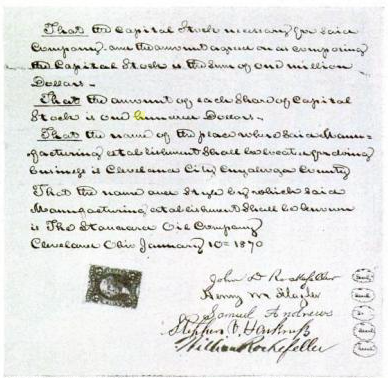
- Section 7: one or more persons may form a company by subscribing their names to a memorandum of association and complying with registration requirements. The memorandum is simply a statement by the subscribers confirming their intention to form the company and become members — a snapshot at the moment of formation, not an ongoing constitutional document.
- Section 16: on registration, the subscribers become a body corporate, capable of exercising all the functions of an incorporated company — separate legal personality attaches from the moment stated in the certificate of incorporation, not before.

Types of Company
Section 3 of the Companies Act 2006 classifies companies by how members' liability is fixed in the constitution:
| Type | Member's liability |
|---|---|
| Limited by shares | Limited to any amount unpaid on the shares held |
| Limited by guarantee | Limited to the amount the member agreed to contribute on winding up |
| Unlimited | No limit on liability for the company's debts (yet the company still has separate legal personality) |
The unlimited company is the sharpest illustration that separate legal personality and limited liability are two different concepts, not one: an unlimited company is still a distinct legal person under Salomon, it just happens not to give its members the liability cap that most companies are formed to obtain.
In practice, the private company limited by shares is the workhorse of UK business — the most common medium for small and medium-sized enterprises, because it delivers limited liability with comparatively light regulation. Set against a public company, which may offer shares to the public and seek admission to trading on a stock exchange, the private company is simpler on almost every axis that matters to a founder:
| Requirement | Private company | Public company |
|---|---|---|
| Minimum share capital | None | £50,000 (or prescribed euro equivalent) — s.763 |
| Trading before certificate | Not applicable | Prohibited until a trading certificate is obtained from the registrar — s.761 |
| Minimum directors | One (who may also be sole shareholder) | Two |
| Company secretary | Not required | Required (must be qualified) |
A public company that starts trading, or exercises its borrowing powers, before it obtains that trading certificate under section 761 is acting unlawfully — a compliance point worth flagging whenever a client is converting a private company to public status.
Ongoing Consequences of Incorporation
Once formed, a company behaves in ways neither a sole trader nor an ordinary partnership can. It has perpetual succession, continuing to exist regardless of changes in its shareholders or directors — the company that Mr Salomon incorporated does not end merely because Mr Salomon eventually sells his shares. It must file annual accounts and a confirmation statement at Companies House, making its financial position publicly accessible in a way a sole trader's or ordinary partner's finances never are. It can raise equity finance by issuing new shares to investors — an option simply unavailable to a sole trader or an ordinary partnership, which have no "shares" to sell. And its profits are taxed through corporation tax on the company itself, rather than the income tax borne personally by sole traders and partners.
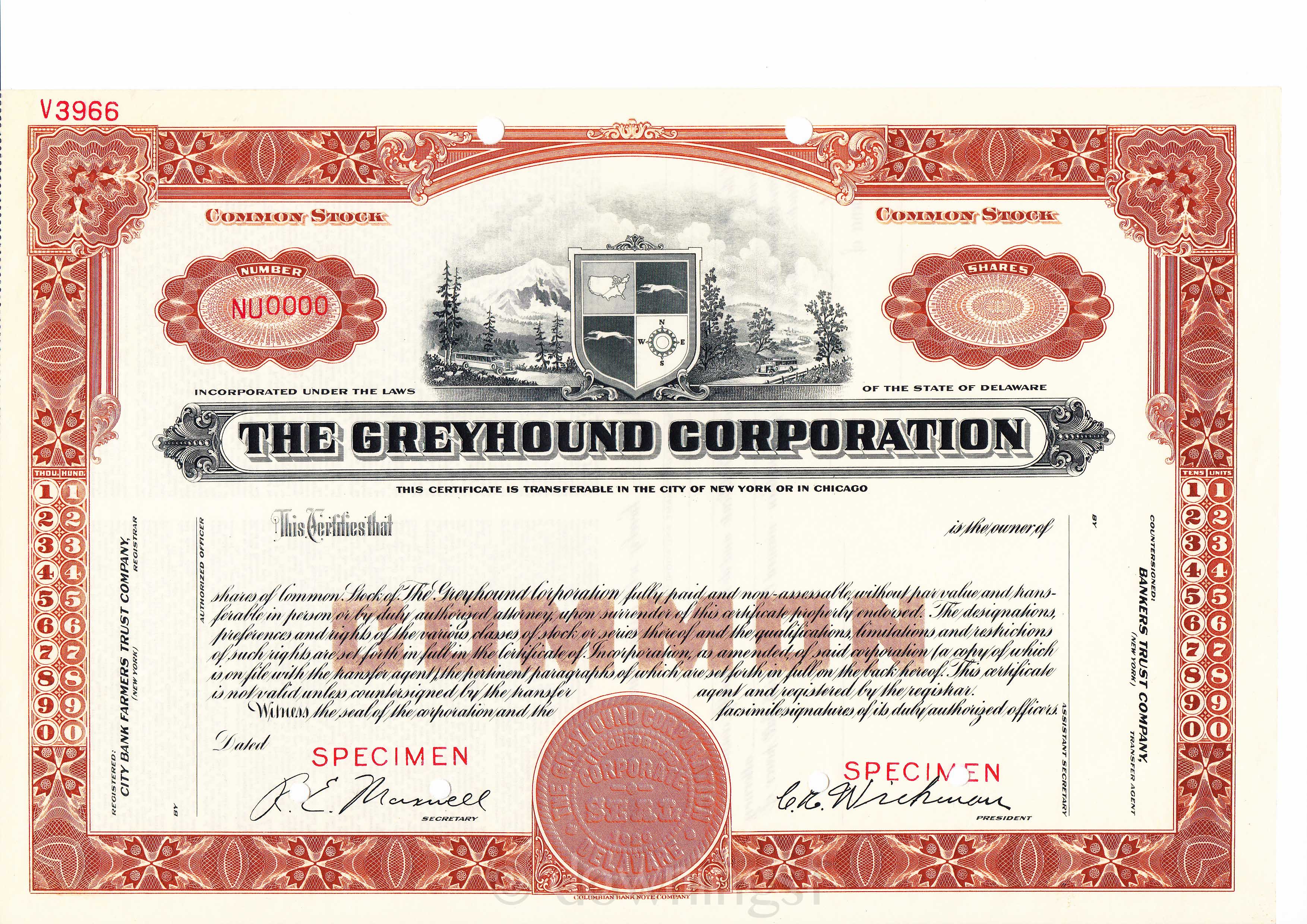
Shares in a private limited company are also typically harder to transfer than shares in a public company, because private company articles commonly restrict transfers — control over who becomes a member matters more when the company is small and closely held. The company's constitution — its articles of association, together with any resolutions and agreements affecting the constitution — is filed at Companies House and forms the rulebook for how the company is run; the directors who run it owe statutory duties to the company under the Companies Act 2006, a duty of loyalty to a legal person distinct from themselves, reflecting the very separation Salomon established.
Separate legal personality is powerful, but it is not absolute. The corporate veil is the metaphor lawyers use for the legal separation between a company and its members that ordinarily shields members from the company's liabilities — and courts may, in limited circumstances, pierce that veil, such as where a company is used as a façade to conceal wrongdoing or evade an existing legal obligation. These cases are rare and narrowly confined, but they matter to a solicitor because clients routinely (and wrongly) assume incorporation is an impenetrable shield in every circumstance.
Insolvency law adds two further, statute-based routes that reach individuals despite the corporate veil — both of them squarely aimed at directors:
Section 213, Insolvency Act 1986 (fraudulent trading): on a liquidator's application, a court may require a person who knowingly carried on the company's business to defraud creditors to contribute to the company's assets.
Section 214, Insolvency Act 1986 (wrongful trading): a court may require a director to contribute to the company's assets where the director knew, or ought to have known, that insolvent liquidation was unavoidable and failed to take steps to minimise creditor loss.
The crucial distinction between them is one of mental state: wrongful trading under section 214 requires no proof of dishonest intent — mere failure to act once insolvency became unavoidable is enough — whereas fraudulent trading under section 213 does require that dishonest intent, and is correspondingly harder to prove but more serious in character. A director can also lose the shelter of limited liability voluntarily, by giving a personal guarantee to a lender or supplier backing the company's obligations — a very common, and very avoidable, way that the protection of incorporation is quietly given away in practice.
Separately, transparency regulation has chipped away at the anonymity that once sat behind the corporate veil. Since the Small Business, Enterprise and Employment Act 2015, most UK companies must maintain a register of people with significant control (PSC) and file that information at Companies House. A person with significant control is, among other tests, an individual who holds more than 25% of a company's shares or voting rights — the point being that the public can now see through the corporate structure to the humans who actually control it, even though the company remains, legally, a separate person from them.
Everything above collapses into one practical skill you will actually use with clients: advising on the characteristics and choice of appropriate business medium. That advice always weighs the same handful of variables against each other.
| Factor | Sole trader | Ordinary partnership | LLP | Company |
|---|---|---|---|---|
| Separate legal personality | No | No (Scotland: yes) | Yes | Yes |
| Liability | Unlimited (individual) | Unlimited (joint, partners) | Limited to capital agreed | Limited to unpaid shares/guarantee |
| Formation formality | HMRC self-employment registration only | None required (can arise by conduct) | Incorporation at Companies House | Incorporation at Companies House |
| Public disclosure | None | None | Accounts + confirmation statement | Accounts + confirmation statement |
| Taxation | Income tax + Class 2/4 NIC | Income tax (transparent) | Income tax (transparent, if trading for profit) | Corporation tax |
The pattern to hold onto: limited liability is purchased with disclosure. Every medium offering limited liability — the LLP, the company — demands greater public transparency in exchange than the sole trader or ordinary partnership, which offer no liability protection but also owe the public nothing in the way of filed information. A solicitor advising on choice of medium is really asking the client to rank liability exposure, formation cost and formality, taxation, management structure, and disclosure obligations against their actual commercial objectives — there is no medium that is simply "best"; there is only the medium that best fits this client's risk appetite, growth plans, and tolerance for paperwork.
That advice is not only relevant at start-up. An existing sole trader or partnership business can be incorporated later — converting into a company by forming the new corporate entity and transferring the business's assets and liabilities into it — a common piece of work once a growing business outgrows the informality that suited it at the outset. And even the simplest medium is not permanent: a general partnership that is a partnership at will can be dissolved by any partner simply giving notice to the others, a fragility that stands in sharp contrast to a company's perpetual succession, which survives the exit of any shareholder untouched.