Financial Services Regulation
A solicitor who casually helps a client sell shares in the family business, or nudges them toward a particular insurance product during a conveyance, can commit a criminal offence without ever intending to. That is the strange gravity of UK financial services regulation: it does not merely license an industry, it draws a perimeter around an entire category of activity, and anyone who steps inside that perimeter without authorisation or exemption is in the dark, whether or not they meant to be a "financial adviser." For a solicitor, this is not abstract compliance theory. It is a live risk in mortgage advice on a conveyance, in advising on the sale of a family company, in administering an estate that includes shares, and in placing insurance for a client. Understanding exactly where the perimeter sits, and which doors let a solicitor cross it safely, is what this topic teaches.

The Financial Services and Markets Act 2000 (FSMA 2000) is the primary statute establishing the UK financial services regulatory perimeter. Everything in this topic radiates outward from one clause: section 19, the general prohibition.
Section 19 FSMA 2000 — the general prohibition: No person may carry on, or purport to carry on, a regulated activity in the United Kingdom unless that person is an authorised person or an exempt person.
Notice the word "purport." A breach of the general prohibition can arise even where no regulated activity is actually performed, if a person merely purports to carry one on — holding themselves out as doing so is enough. The drafting is deliberately wide, because the mischief being targeted is unauthorised firms presenting themselves as being in the business of financial services, not merely the mechanics of individual transactions.
But section 19 only bites if the activity in question is a "regulated activity" in the first place. That definition comes from section 22 FSMA 2000: an activity is a regulated activity only if it is a specified activity carried on in relation to a specified investment (or, in limited cases, relates to information about a person's financial standing). Two ingredients, both required — no specified investment, no regulation; no specified activity, no regulation either.
Section 22 is a skeleton. The flesh is in a piece of secondary legislation universally known by its acronym: the Financial Services and Markets Act 2000 (Regulated Activities) Order 2001, SI 2001/544 — the RAO. This is where the specified activities and specified investments are actually listed.
Specified investments under the RAO include deposits, contracts of insurance, shares, debentures, government and public securities, and units in a collective investment scheme. Against each of these, the RAO then specifies the activities that trigger regulation when carried on in relation to them. The five articles that matter most for solicitors' practice are:

| Article | Specified activity | Example trigger |
|---|---|---|
| Article 5 | Accepting deposits | Related to the specified investment of a deposit |
| Article 10 | Effecting a contract of insurance as principal | Underwriting insurance |
| Article 25 | Arranging deals in investments | Arranging for another person to buy, sell, subscribe for, or underwrite a particular investment |
| Article 37 | Managing investments | Managing another person's investments where the manager exercises discretion |
| Article 53 | Advising on investments | Advising a person, as an investor, on the merits of buying, selling, subscribing for, or underwriting a particular specified investment |
Article 25 is the one solicitors trip over most often, because "arranging" catches introducing or facilitating a deal even where the solicitor never handles the money or the investment itself. Article 53 has a sharper edge than it looks: generic commentary on markets is not "advice on investments" — the advice must relate to a particular specified investment and be given to the person in their capacity as an investor.
Crucially, none of this bites unless the activity is carried on by way of business. An isolated, one-off transaction — a friend helping a friend sell some shares, say — is not caught, however neatly it might otherwise fit Article 25 or 53. This gives you the analytical skeleton the SQE1 examiners build every financial services problem around, and it is worth memorising as a checklist:
The four-question RAO framework: (1) Is the activity carried on by way of business? (2) Does it relate to a specified investment? (3) Is the activity itself specified? (4) Does an exclusion or exemption apply?
Only if the answer to (1)–(3) is yes do you even need to reach question (4) — but question (4) is where a solicitor's practice usually gets rescued.
The RAO does not just specify activities; it also carves exclusions directly out of them. Two are especially relevant to solicitors.

Article 70 — sale of a body corporate. This exclusion removes dealing, arranging, and advising activities from regulation where they are carried on in connection with the sale of a body corporate. It has two alternative routes in: either the shares transferred consist of or include at least 50% of the voting shares in the body corporate, or — even below that threshold — the object of the transaction may reasonably be regarded as the acquisition of day-to-day control of the company's affairs. Picture a client selling the family engineering firm to a competitor: the solicitor drafting the share purchase agreement and advising on the commercial terms of that sale is not "arranging deals in investments" or "advising on investments" in the regulatory sense, provided the transaction meets Article 70's threshold. This is exactly the kind of scenario SQE1 loves to test, because it looks like textbook Article 25/53 territory until you spot the exclusion.
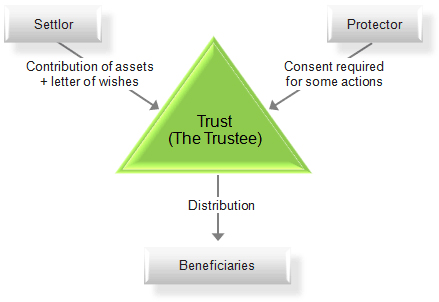
The trustee, nominee, and personal representative exclusion. Where a trustee, nominee, or personal representative manages or advises on investments held as part of the trust or estate, and receives no separate remuneration beyond their normal professional charges, the activity falls outside regulation. This matters immensely in private client work: a personal representative administering an estate that includes shares or other specified investments can typically rely on this exclusion rather than needing FCA authorisation, so long as the estate work is billed in the ordinary way and not as a separate investment-management fee.

Section 19 is not the only tripwire. Section 21 FSMA 2000 separately restricts the communication of a financial promotion — defined as an invitation or inducement to engage in investment activity, made in the course of business. A person who is not FCA-authorised must not communicate a financial promotion unless it is approved by an authorised person, or an exemption applies under the Financial Services and Markets Act 2000 (Financial Promotion) Order 2005, which sets out the relevant exemptions. This runs in parallel to the general prohibition: a firm could be perfectly entitled to carry on a regulated activity under an exemption, and still fall foul of section 21 if it communicates a promotional invitation without the right approval or a Financial Promotion Order exemption behind it.
Breach of the general prohibition is not a regulatory slap on the wrist — it is a criminal offence under section 23 FSMA 2000. On summary conviction, the maximum penalty is six months' imprisonment, a fine not exceeding the statutory maximum, or both; on conviction on indictment, up to two years' imprisonment, an unlimited fine, or both. There is a defence: it is open to the defendant to prove they exercised due diligence and took all reasonable precautions to avoid committing the offence — but the burden sits with the defendant to prove it, not with the prosecution to disprove it.
The civil consequences bite too, and independently of any prosecution. Under section 26 FSMA 2000, an agreement made in the course of carrying on a regulated activity in breach of the general prohibition is generally unenforceable against the other party — the client can walk away from the deal. That client can still recover any money paid or property transferred under the agreement, and claim compensation for any loss sustained as a result of having parted with it. Section 27 FSMA 2000 extends a parallel version of this logic to protect the same client where an authorised person's agreement becomes unenforceable because it results from an unauthorised third party's regulated activity — the taint of unauthorised involvement can travel further up the chain than the immediate wrongdoer.

None of this would be workable if every solicitor who touched anything financial needed separate FCA authorisation. Part 20 of FSMA 2000 solves this by allowing members of a designated professional body to carry on certain regulated activities without direct FCA authorisation, subject to statutory conditions. The Law Society, acting through the Solicitors Regulation Authority, is a designated professional body for solicitors under Part 20.
The operative exemption sits in section 327 FSMA 2000 — the professional firms exemption — which allows an exempt regulated firm to carry on exempt regulated activities without FCA authorisation. It is built from a chain of conditions, and a firm must clear every link:
- s.327(2): the firm must be a member of, or controlled or managed by members of, a profession regulated by a designated professional body.
- s.327(3): the firm must not receive any pecuniary reward or advantage from anyone other than its client, for which it does not account to the client.
- s.327(4): the manner of provision of the regulated activity must be incidental to the firm's provision of professional services to that particular client.
- s.327(5): the firm must not carry on, or hold itself out as carrying on, any other regulated activity beyond what the exemption or another exemption permits.
- s.327(6): the Treasury may specify, by order, descriptions of regulated activity that a professional firm can never carry on under the exemption — no amount of incidentality rescues these.
- s.327(9): the exemption does not apply to the carrying on of a regulated claims management activity in Great Britain.

The incidentality condition in s.327(4) is the one that does the most work in practice, and the one examiners probe hardest. A firm whose main business is a regulated financial activity — debt collecting is the standard example — cannot satisfy it: the regulated activity is the point of the business, not something incidental to something else. That firm needs its own FCA authorisation and cannot shelter under section 327 at all.
The s.327(6) power has been exercised to carve out activities a professional firm can never do under the exemption, however incidental they might seem — including creating, developing, designing, or underwriting a contract of insurance as principal. That is a full-stack insurance-underwriting business, and Parliament has decided no law firm gets there through the incidental back door.
Section 327 tells you whether a firm can rely on the exemption in principle; the SRA Financial Services (Scope) Rules tell you exactly what an SRA-authorised firm not otherwise regulated by the FCA may actually do under it. The Scope Rules also govern non-mainstream regulated activities — the narrower band of regulated work that a firm which is dually FCA-and-SRA-regulated may still carry on under SRA oversight rather than needing separate FCA permission for every activity. A firm that is FCA-authorised for its mainstream regulated activities cannot use section 327 for that FCA-regulated business, but it can still carry on non-mainstream regulated activities under the SRA's rules alongside it.
Once a firm is inside the exemption, the SRA Financial Services (Conduct of Business) Rules take over and impose disclosure duties. A firm carrying on exempt regulated activities must, in writing, disclose that it is not authorised by the FCA, disclose its regulatory status with the SRA and the nature of the regulated activities it carries on for that client, and give the client information about complaints handling and redress mechanisms available in relation to those exempt regulated activities. None of this is optional small print — it is the client-facing half of the exemption's bargain: light-touch regulation in exchange for transparent disclosure.
Insurance sits in its own sub-regime because of EU-derived insurance distribution rules that predate and now sit alongside FSMA. Insurance distribution activities include advising on, proposing, or carrying out work preparatory to concluding a contract of insurance, and assisting in the administration and performance of such a contract — particularly in relation to a claim. Think of a solicitor advising a commercial client on professional indemnity cover as part of a business sale, or helping a client pursue an insurance claim arising from a dispute the firm is already handling.
A solicitors' firm relying on the professional firms exemption for insurance work may only act as an ancillary insurance intermediary, never as a full insurance intermediary — the exemption buys access to insurance distribution work only insofar as it remains secondary to the firm's core legal services, never as a freestanding line of business. Firms doing this work face three further obligations: registration on the Financial Services Register maintained by the FCA; appointment of an individual as the firm's insurance distribution officer, responsible for compliance; and a prior notification to the SRA, in the SRA's prescribed form, of the firm's intention to carry on insurance distribution activities.
SQE1 scenarios rarely announce "this is a financial services question." They dress it as a conveyance, a business sale, or a probate matter, and expect you to spot the perimeter issue underneath. Three recurring fact patterns are worth internalising:
- Mortgage advice on a conveyance. A solicitor advising on a mortgage as an incidental part of a conveyancing transaction is generally within the professional firms exemption, provided the incidental and no-separate-reward conditions of s.327 are satisfied — the mortgage advice serves the conveyance, it is not a parallel mortgage-broking business.
- Sale of shares in a family business. A solicitor advising on this as part of a corporate transaction typically falls outside FSMA regulation altogether where the deal satisfies the Article 70 sale-of-a-body-corporate exclusion — no need to reach section 327 at all, because the activity was never "specified" in the relevant sense once the exclusion applies.
- Incidental consumer-credit work. Debt-adjusting linked to a client matter is regulated activity, but a solicitor carrying it out incidentally must still comply with the SRA Financial Services (Scope) Rules' incidental and disclosure conditions — this is section 327 exemption territory, not an Article 70-style total exclusion.
The examiner's real test, in each case, is whether you run the four-question framework in order: by way of business, specified investment, specified activity, then — and only then — exclusion or exemption. Solicitors who skip straight to "surely this is fine, I'm just a lawyer" are the ones who end up on the wrong side of section 23.