Homicide
Every homicide offence in English law answers the same underlying question: how culpable was this killing? Murder, voluntary manslaughter, and involuntary manslaughter are not three unrelated crimes but three points on a single scale of blameworthiness, all built on the same actus reus — an unlawful killing — with the mens rea and available defences doing all the work of sorting a death into the right box. Get the sorting wrong for a client and the consequences are stark: a mandatory life sentence for murder versus a discretionary one for manslaughter, and potentially the difference between a conviction and an acquittal.
Murder has never been defined by statute. It remains, uniquely among serious crimes, a common law offence, so its elements come from centuries of judicial pronouncement rather than an Act of Parliament — which is exactly why precise, settled wording matters so much when you apply it.
Actus reus of murder: the unlawful killing of a reasonable creature in being under the King's peace.
Each phrase in that definition is load-bearing:
- "Reasonable creature in being" excludes a foetus that has not achieved a life independent of its mother — an unborn child cannot be the victim of murder, however advanced the pregnancy, until it exists independently of the mother's body.
- "Under the King's peace" excludes killing an enemy combatant in the course of lawful warfare. That killing simply falls outside the actus reus altogether; it is not that a defence applies, it is that murder was never made out.
Mens rea of murder: an intention to kill, or an intention to cause grievous bodily harm (GBH).
Note that second limb carefully — a client convicted of murder need not have intended death at all. GBH here means "really serious harm," and intending to inflict that harm is enough if death results.
Direct and Oblique Intention
Intention comes in two forms, and only one of them is straightforward. Direct intention exists where causing death or GBH was the defendant's actual purpose — the paradigm case, requiring no special direction to a jury.
Oblique intention is the harder territory: it allows a jury to find intention even where death or GBH was not the defendant's purpose. The leading authority is R v Woollin [1999], where the House of Lords held that a jury may find intention where death or GBH was a virtual certainty of the defendant's actions and the defendant appreciated that this was the case. Woollin had thrown his three-month-old son across a room in frustration; he did not want the child to die, but death or serious harm was virtually certain to follow from what he did, and he knew it.
Two features of the Woollin test are easy to misstate and frequently tested:
- It is an evidential rule — it entitles the jury to find intention, but does not compel them to. Intention and virtual certainty are not defined as synonymous.
- Foresight of consequences is evidence from which intention may be inferred; it is not itself intention. Do not conflate "he foresaw it" with "he intended it" in your analysis — the jury still has to draw the inferential leap.
Causation
Every homicide offence requires the defendant's conduct to have caused death, and causation splits into two limbs that must both be satisfied.
Factual causation uses the "but for" test: would the death have occurred but for the defendant's act? If the victim would have died regardless, factual causation fails and the chain stops there.
Legal causation asks something more normative: was the defendant's act an operating and substantial cause of death? The defendant's contribution need not be the sole cause, but it must be more than a minimal one, and it must still be operating at the time of death.
A novus actus interveniens — an intervening act — can break this second limb, severing the chain of causation between the defendant's conduct and the death. Three recurring scenarios show how narrowly the courts draw this:
| Intervening event | Breaks the chain? |
|---|---|
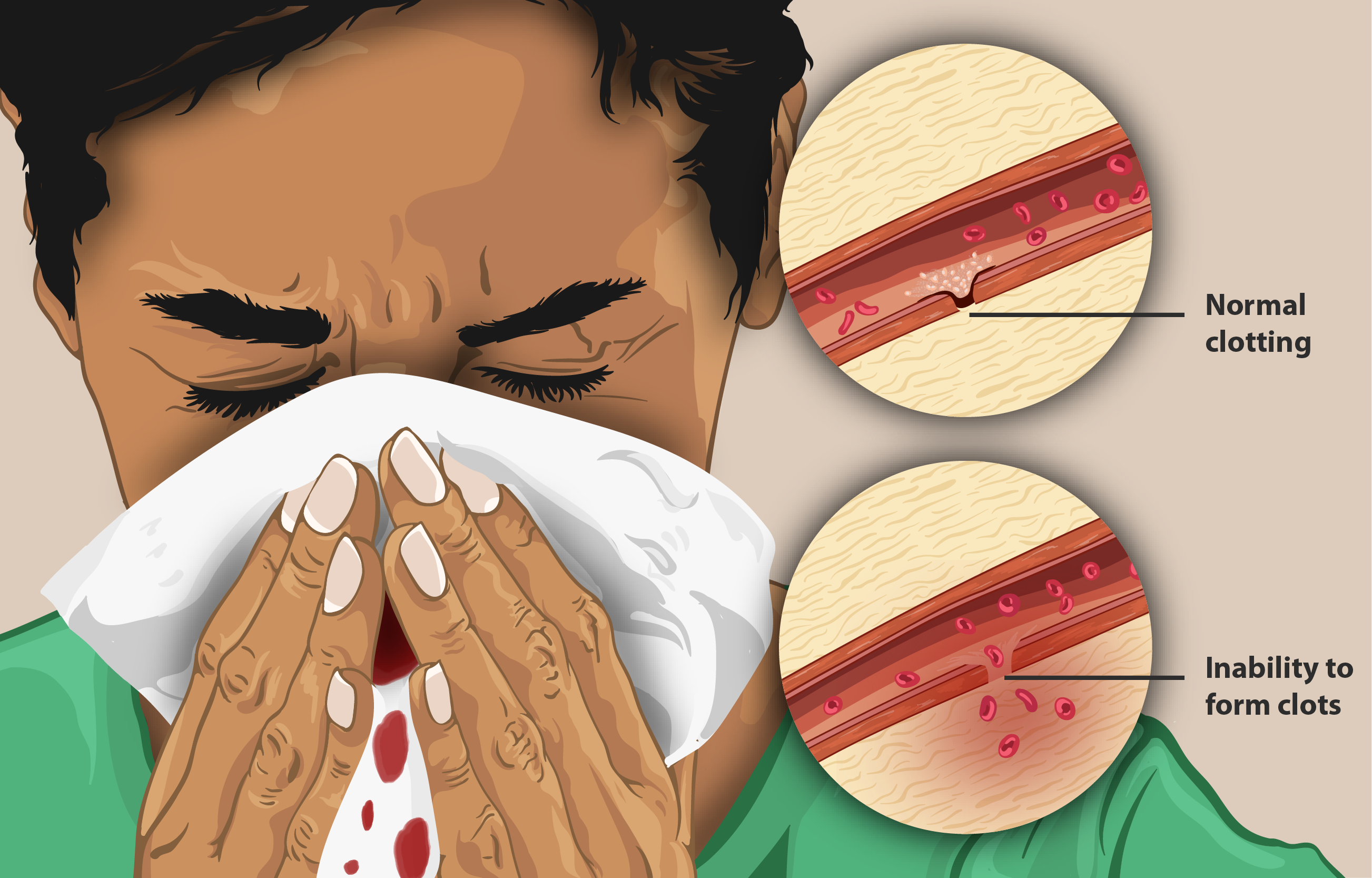
| Victim's own pre-existing characteristics (physical or religious) | No — the thin skull rule requires the defendant to take the victim as found, so an unusually vulnerable victim (e.g., a haemophiliac, or a Jehovah's Witness who refuses a blood transfusion) does not break causation. |
| Medical treatment of the injury | Only if the treatment is "so independent of the defendant's act and so potent in causing death that the original wound is merely the setting in which death occurs" — a very high bar, so negligent or even poor treatment rarely breaks the chain. |
| Victim's own escape or self-protective act | Only if that reaction was disproportionate to the threat or was not reasonably foreseeable — a victim who takes a reasonable, foreseeable escape route (even one that itself causes their death) does not break the chain. |

The thin skull rule is worth pausing on because it is one of the most client-relevant points in the whole topic: solicitors advising on a violent-offence charge cannot assume "I didn't know he had a heart condition" is any kind of answer to causation.

Sentencing and Procedure
Under section 1(1) of the Murder (Abolition of Death Penalty) Act 1965, a court convicting a defendant of murder must impose a mandatory sentence of life imprisonment — there is no judicial discretion on the headline sentence itself.
The discretion instead operates on the minimum term the offender must serve before being considered for release, which is fixed using the starting points in Schedule 21 of the Sentencing Act 2020. The schedule works as a tiered ladder based on the seriousness of the murder and the offender's age at the time of the offence:
- A whole life order is the starting point where seriousness is exceptionally high and the offender was 21 or over at the time of the offence (for example, multiple murders involving significant premeditation).
- A 30-year starting point applies where seriousness is particularly high and the offender was 18 or over.
- A 15-year starting point applies to other murders by an adult offender.
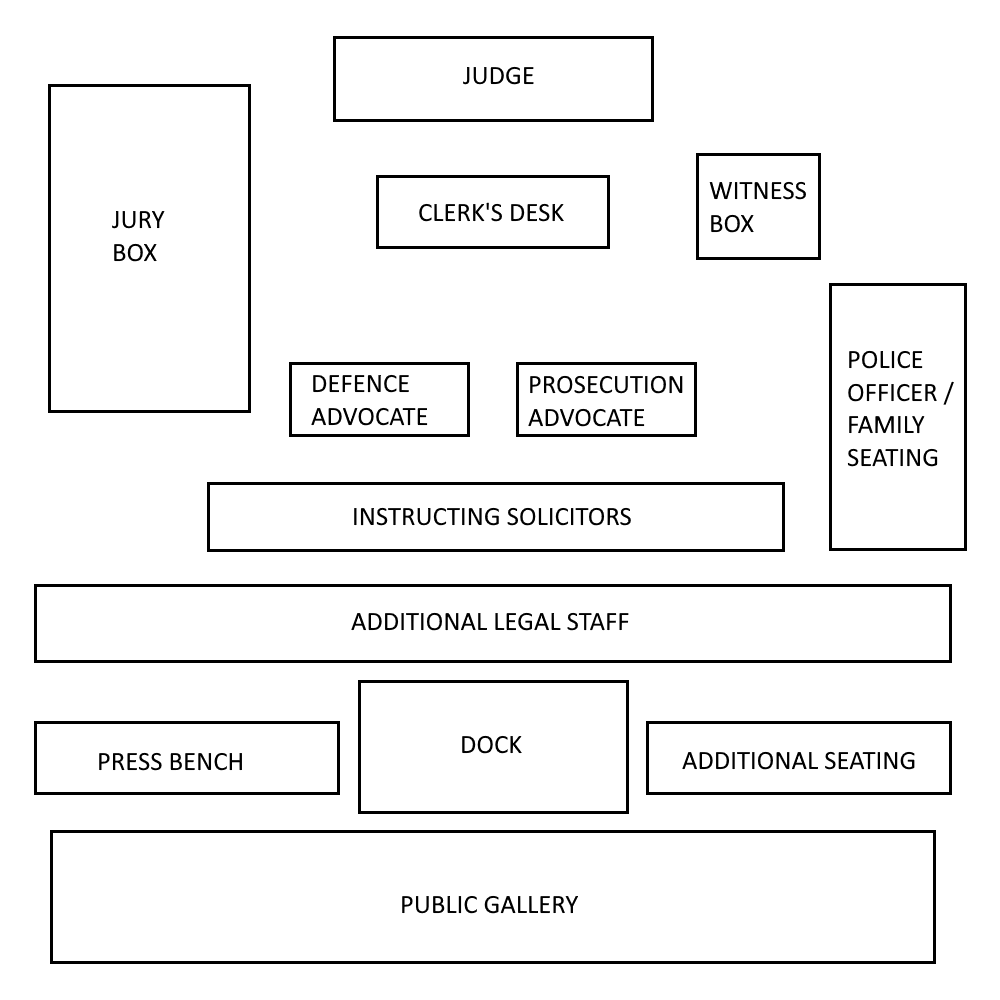
The judge then adjusts up or down for aggravating and mitigating factors not already reflected in the choice of starting point. Both murder and manslaughter are triable only on indictment, meaning every homicide case you encounter in practice will be a Crown Court matter — there is no summary-trial route, however weak the evidence.
One historical quirk to clear away: the old "year and a day rule", which required death to occur within a year and a day of the defendant's act for a homicide charge to be available at all, was abolished by the Law Reform (Year and a Day Rule) Act 1996. Modern causation analysis is not time-limited (subject to Attorney General consent for prosecutions where death occurs more than three years after the act, or where the defendant has already been convicted of a related offence).
Voluntary manslaughter is a deceptively named category — it does not describe a lesser form of killing but a killing where the defendant has the full actus reus and mens rea for murder, and would be convicted of murder, but for a partial defence that reduces the conviction to manslaughter. Two partial defences do this work: diminished responsibility and loss of control. Get either one right for a client and you convert a mandatory life sentence into a discretionary one.
Diminished Responsibility
Diminished responsibility is now governed by section 2 of the Homicide Act 1957, as substituted by section 52 of the Coroners and Justice Act 2009 — the 2009 Act modernised what had been a notoriously vague pre-2009 formula. To establish the defence, the defendant must show:
- An abnormality of mental functioning arising from a recognised medical condition;
- That the abnormality substantially impaired the defendant's ability to do at least one of: (a) understand the nature of their conduct, (b) form a rational judgement, or (c) exercise self-control; and
- That the abnormality provides an explanation for the defendant's acts or omissions in doing the killing.
Crucially, this is one of the rare defences where the burden of proof rests on the defendant, discharged on the balance of probabilities — the ordinary criminal standard is reversed here. This matters for exam scenarios: do not default to "prosecution must disprove beyond reasonable doubt" for diminished responsibility.
Loss of Control
Loss of control is governed by sections 54 to 56 of the Coroners and Justice Act 2009, which replaced the old common law defence of provocation entirely (section 56 formally abolishes provocation). The defence has three cumulative requirements:
- The defendant's acts resulted from a loss of self-control;
- The loss of self-control had a qualifying trigger; and
- A person of the defendant's sex and age, with a normal degree of tolerance and self-restraint, might have reacted in the same or a similar way.
That third limb is an objective test — it does not ask whether this defendant's characteristics explain the reaction, only whether an ordinary person sharing the defendant's sex and age would have reacted similarly in the same circumstances.
A few statutory details are frequently tested precisely because they correct old intuitions carried over from provocation:
Under section 54(2), the loss of self-control need not be sudden — a defendant who "snaps" after a slow-burn build-up is not automatically disqualified, unlike under the old law of provocation.
Under section 54(4), the defence is unavailable if the defendant acted in a considered desire for revenge — deliberation and revenge motive are fatal to the defence even where a genuine loss of control also occurred.
Two — and only two — qualifying triggers exist:
- Section 55(3): the defendant's fear of serious violence from the victim against the defendant or another identified person.
- Section 55(4): things done or said constituting circumstances of an extremely grave character, causing the defendant to have a justifiable sense of being seriously wronged.
Section 55(6)(c) carves out a specific exclusion: the fact that a thing done or said constituted sexual infidelity must be disregarded when deciding whether a qualifying trigger existed. Parliament deliberately closed off the "she cheated on me" trigger that had done real damage under the old provocation defence — though sexual infidelity can still form part of the factual background to a trigger that is otherwise established.
Once the defendant raises sufficient evidence of the defence, the burden shifts to the prosecution, who must disprove the defence beyond reasonable doubt — the opposite allocation from diminished responsibility, and a distinction worth drilling into memory precisely because the exam loves to test the two defences side by side.
| Diminished responsibility | Loss of control | |
|---|---|---|
| Burden of proof | On the defendant | On the prosecution, once raised |
| Standard | Balance of probabilities | Beyond reasonable doubt |
| Core requirement | Recognised medical condition impairing functioning | Loss of self-control + qualifying trigger + normal-person test |
| Revenge/desire relevant? | Not directly excluded | Excluded by s.54(4) if "considered desire for revenge" |
Suicide Pacts
A narrower voluntary manslaughter route exists under section 4 of the Homicide Act 1957: a party to a suicide pact who kills the other party is guilty of manslaughter, not murder — a distinct statutory reduction, separate from the two partial defences above.
Involuntary manslaughter covers killings where the defendant lacks the mens rea for murder altogether — there was never an intention to kill or cause GBH. It splits into two categories with quite different structures: unlawful act manslaughter (sometimes called constructive manslaughter) and gross negligence manslaughter.
Unlawful Act Manslaughter
The elements are: (1) an unlawful act, (2) that was objectively dangerous, and (3) that caused death. Three limiting rules police the boundaries of this offence carefully:
- The unlawful act must be criminal — a civil wrong alone (a breach of contract, a tort) cannot found the offence, however serious its consequences.
- The unlawful act cannot be an omission — it must be a positive act. A failure to act, however blameworthy, does not qualify (though it might support gross negligence manslaughter instead).
- The unlawful act must be directed at a person — an act that merely creates a general danger without being aimed at anyone does not suffice.
Dangerousness is assessed under the test from R v Church: an act is dangerous if all sober and reasonable people would recognise that it subjected the victim to the risk of at least some harm. This is a wholly objective test — what matters is not what the defendant personally foresaw, but what a reasonable bystander would have recognised as risky.
That objectivity produces the offence's most counter-intuitive feature: the defendant need not intend or even foresee any harm resulting from the unlawful act. The only mens rea required relates to the unlawful act itself — for example, the intent required for the underlying assault — and not to causing death or harm at all. Once the unlawful, dangerous act is established, ordinary rules of factual and legal causation (the "but for" test and operating-and-substantial-cause test covered above) determine whether it caused the death.
Gross Negligence Manslaughter
Where unlawful act manslaughter is built around a criminal act, gross negligence manslaughter is built around a civil law concept transplanted into criminal law: the duty of care. The governing test comes from R v Adomako, which requires:

- A duty of care owed by the defendant to the deceased;
- Breach of that duty;
- Causation of death by the breach; and
- A degree of negligence characterised as gross.
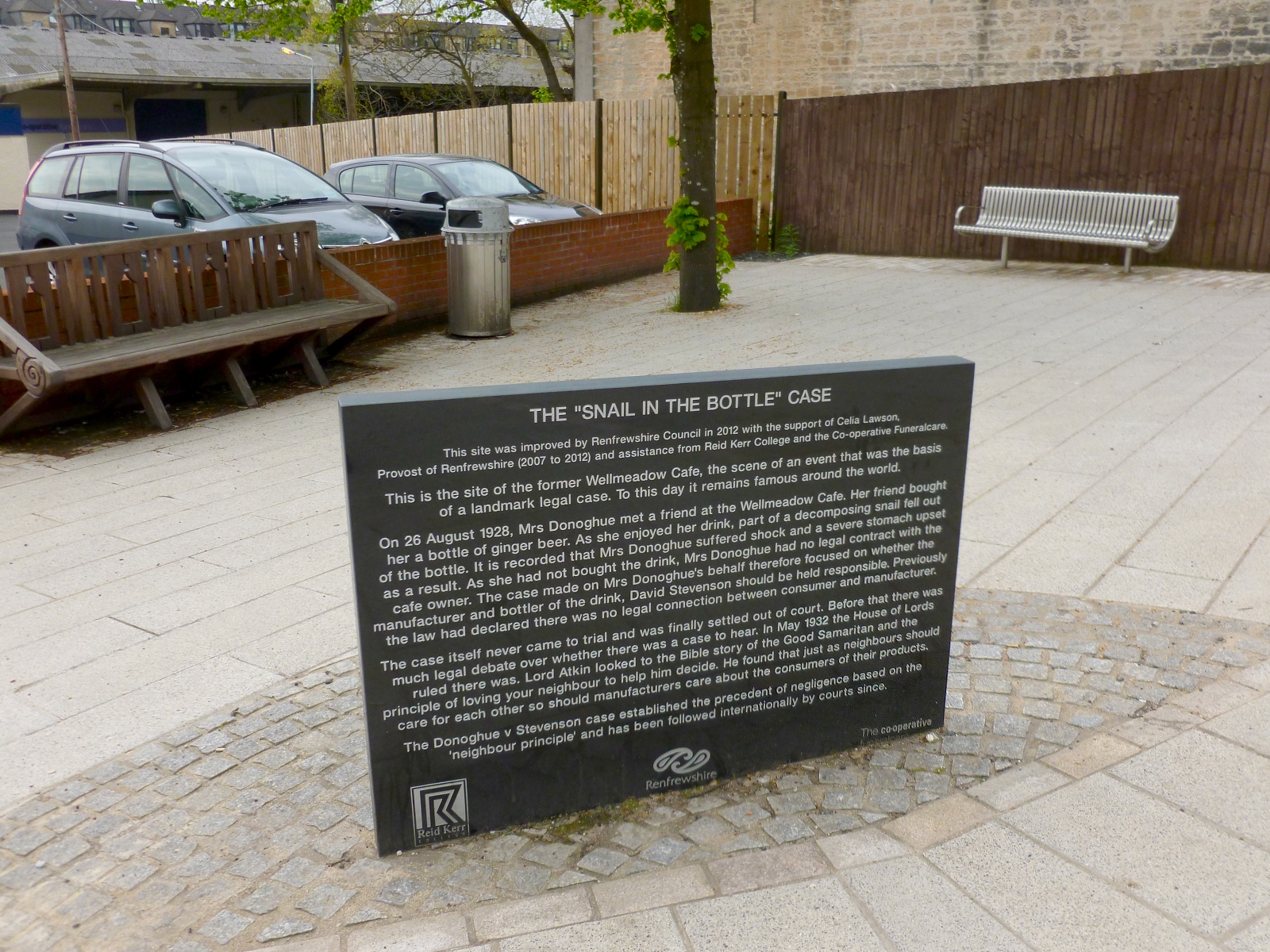
The existence of a duty of care is established by applying ordinary civil negligence principles — the same Donoghue v Stevenson-derived framework a tort lawyer would use, imported wholesale into a homicide charge.
R v Misra added a crucial gloss that prevents this offence from criminalising ordinary carelessness: a defendant cannot be convicted unless, at the time of the breach, there was a serious and obvious risk of death — not merely a risk of some harm, and not a risk only visible with hindsight. That risk must be reasonably foreseeable to a reasonable person in the defendant's position at the time of the breach — assessed prospectively, not retrospectively.
Whether the breach amounts to gross negligence is left to the jury, who must decide whether the conduct was "so bad in all the circumstances as to amount to a crime." Like dangerousness in unlawful act manslaughter, this grossness assessment is objective and does not turn on the defendant's own assessment of the risk they were running.
The parallel is worth holding onto: both branches of involuntary manslaughter ultimately hinge on an objective jury assessment — dangerousness for unlawful act manslaughter, grossness for gross negligence manslaughter — rather than on what the defendant subjectively believed or foresaw.
The single sharpest distinction across the whole topic is this: voluntary manslaughter requires the full mens rea for murder (a partial defence merely reduces the label), while involuntary manslaughter never had that mens rea in the first place. Sentencing mirrors that structural difference — murder alone carries the mandatory life sentence under the 1965 Act; manslaughter, whether voluntary or involuntary, carries only a discretionary maximum of life imprisonment, leaving the judge free to impose anything from a non-custodial sentence upward depending on culpability.
For a client-facing solicitor, that means the diagnostic sequence for any suspicious death is always the same: establish causation first (factual and legal), then test for murder's mens rea, then — only if that mens rea is present — search for a partial defence that might pull the case down to voluntary manslaughter; if the mens rea for murder was never there at all, ask whether an unlawful dangerous act or a grossly negligent breach of duty caused the death instead.