Project Life Cycles and Approaches
Not sure you’re ready?
Take the ~3-minute readiness diagnostic and see where you stand.
Every product you interact with—whether it is the smartphone in your pocket, a massive municipal bridge, or the software tracking a global supply chain—has a lifespan. A product life cycle represents the series of phases representing the evolution of a product from its initial concept through delivery, growth, maturity, and its eventual retirement. But the creation, subsequent updates, and final decommissioning of that product do not happen by spontaneous generation. They are engineered through targeted, temporary endeavors. Because a product can exist for decades, a single product life cycle can encompass multiple project life cycles. Understanding how we structure, govern, and execute these individual projects is the foundational vocabulary of project management.
As a project professional, your primary mechanism for organizing work is the project life cycle. A project life cycle is the series of phases that a project passes through from its start to its completion. How you structure these phases—and how you handle the unknowns within them—dictates whether your project succeeds or collapses under its own weight.
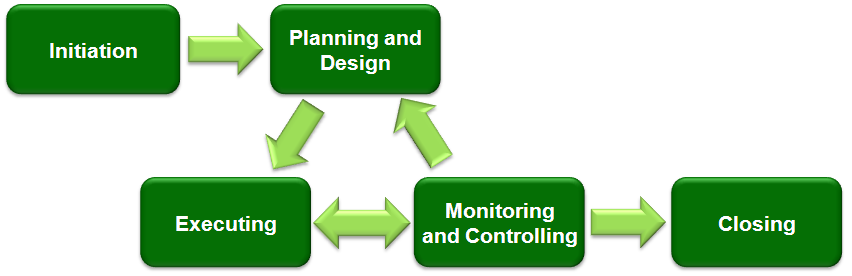
In the real world, work rarely happens in a single, uninterrupted burst. We break work down into phases to provide management control. The phases of a project life cycle can be sequential (one finishes before the next begins), iterative (repeating to refine the result), or overlapping (starting a subsequent phase before the previous one completes to compress the schedule).
Because projects consume resources—time, capital, and human effort—organizations cannot afford to blindly fund a project from beginning to end without periodic checks. This is where we introduce the concept of the phase gate.
A phase gate is a formal review at the end of a project phase to determine whether to continue, modify, or end the project or phase.
In practice and on your exam, you will see phase gates commonly referred to by several interchangeable terms: phase reviews, stage gates, or kill points. The term "kill point" is particularly illustrative. At these junctures, project sponsors and executives must be willing to terminate the endeavor if it no longer serves the organization. A phase gate decision is logically made by comparing the current project performance and progress against the initial business documents (such as the business case or benefits management plan). If the market has shifted or the project is drastically over budget, the gate acts as a protective barrier against throwing good money after bad.
One of the most critical decisions a project manager makes is selecting the development approach. This choice is driven by two variables: the clarity of the requirements and the level of environmental uncertainty.
Predictive Project Life Cycles
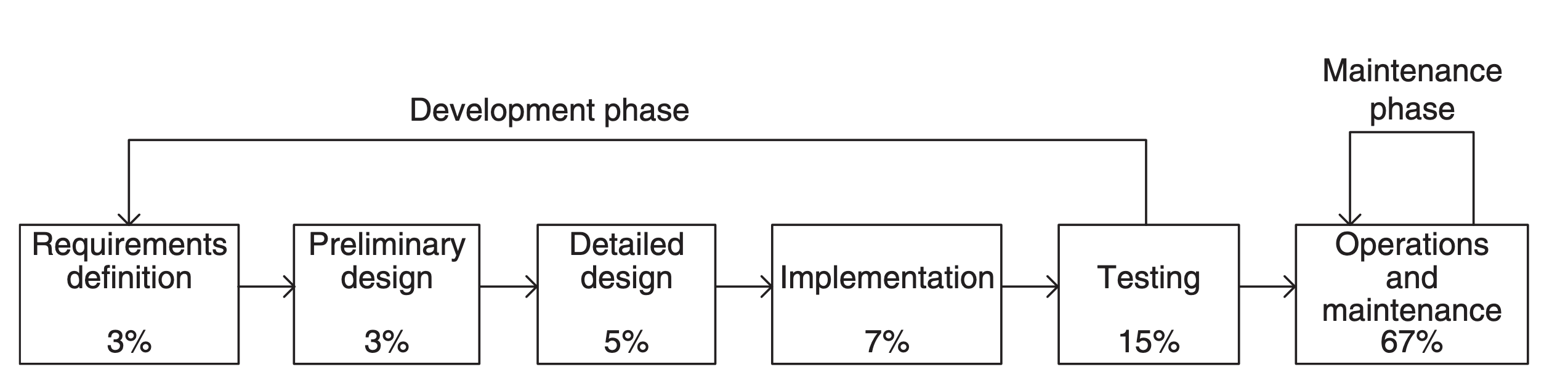
Predictive project life cycles are also known as waterfall or fully plan-driven life cycles. Imagine constructing a high-rise office building. You cannot pour the concrete foundation and later decide to move the elevator shafts. In a predictive project life cycle, the project scope, time, and cost are determined in the early phases of the project.
Because the plan is locked in early, predictive life cycles manage changes strictly through a formal change control process. You do not simply add a new floor to your blueprint because a stakeholder requested it mid-construction; you analyze the impact on structural integrity, cost, and schedule before seeking formal approval. Furthermore, predictive life cycles aim to deliver the final product, service, or result at the very end of the project. A half-built skyscraper is of no use to a tenant. Therefore, a predictive approach is best suited for projects with well-understood requirements and low levels of uncertainty.
Iterative and Incremental Project Life Cycles
When dealing with knowledge work, requirements are rarely perfectly understood on day one. To manage this, we utilize iterative and incremental approaches, which are distinct but highly complementary.
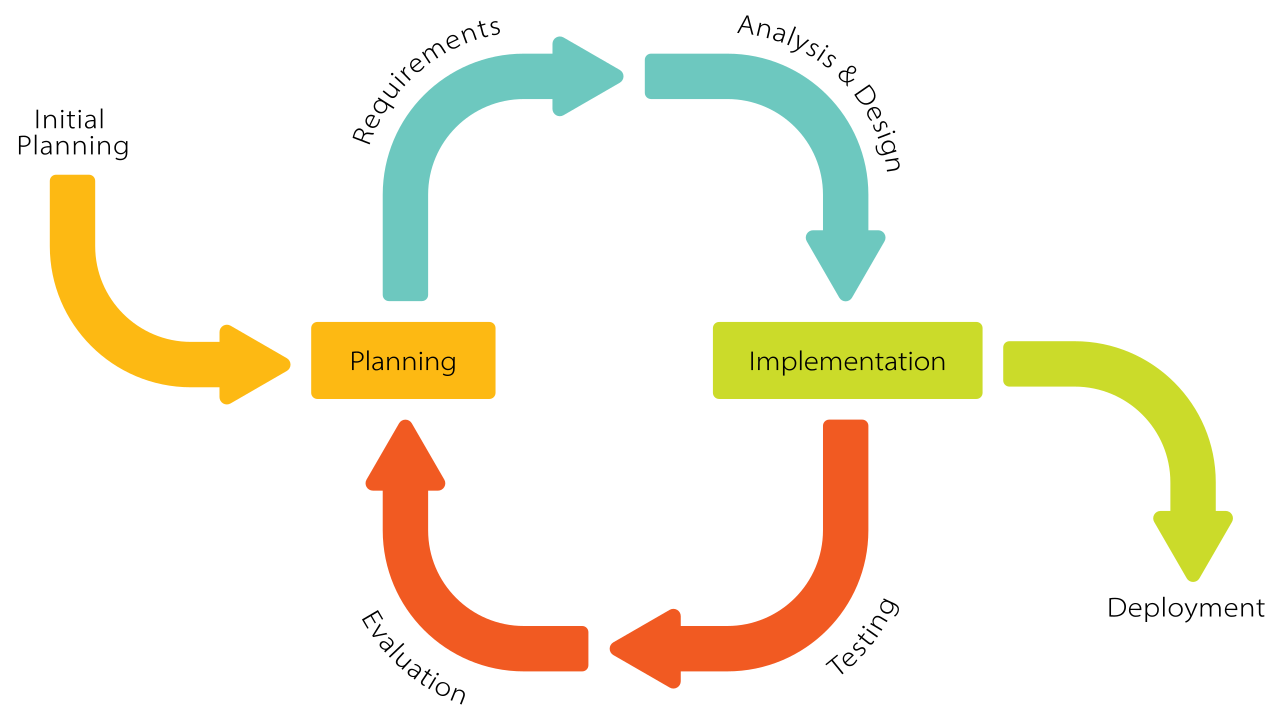
Iterative project life cycles are designed to foster learning. In this approach, you determine the project scope early in the project life cycle, but you modify time and cost estimates as the project team's understanding of the product increases. Iterative approaches develop the product through repeated cycles of activities to refine the solution.
- Analogy: Think of a novelist writing a book. They start with an outline (the scope), write a rough draft, and then pass it through multiple rounds of editing (cycles). An iterative approach is optimal when learning and discovering the correct solution are the primary goals of the project.
Incremental project life cycles, by contrast, focus on speed of usable delivery. They deliver the product through a series of functional additions. The defining characteristic here is that an incremental project life cycle produces a complete, usable deliverable at the end of each increment.
- Analogy: Imagine launching a streaming service. Increment one might be the ability to stream movies on a web browser. Increment two adds a mobile app. Increment three adds offline downloads. Each release is a fully functioning capability. An incremental approach is optimal when the customer requires rapid delivery of partial functional capabilities.
Adaptive Project Life Cycles
When we push the boundaries of uncertainty, we arrive at the agile domain. Adaptive project life cycles are also known as agile or change-driven life cycles. Mathematically speaking, adaptive life cycles combine the characteristics of both iterative and incremental life cycles.
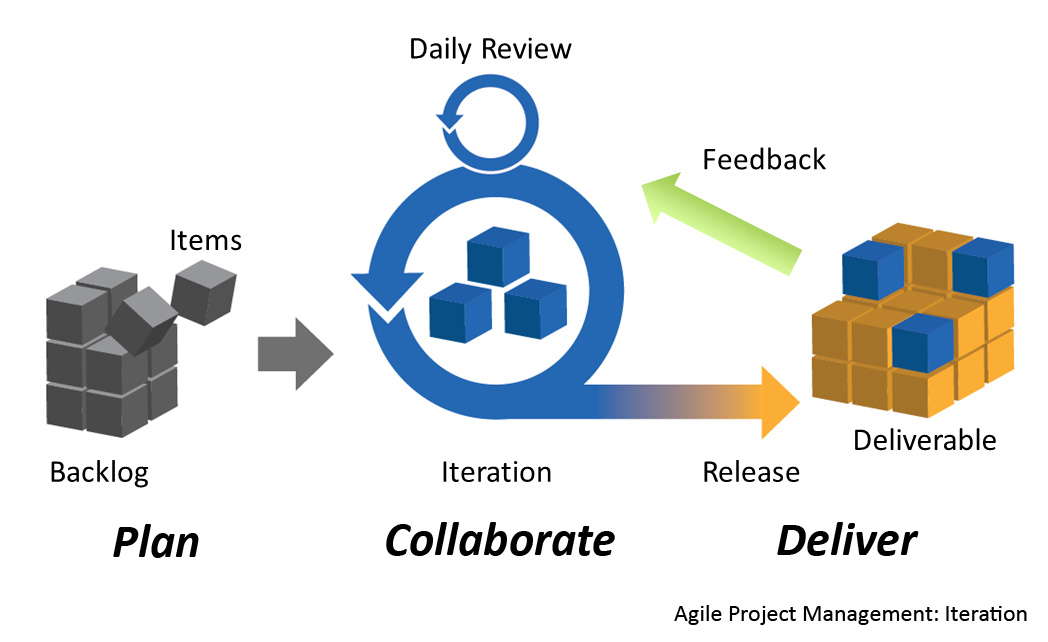
In an adaptive life cycle, the detailed project scope is defined and approved just before the start of each specific iteration (often called a sprint). Instead of dreading change, adaptive life cycles expect and accommodate a high degree of change throughout the project duration. Because the team is constantly adjusting course based on reality, adaptive life cycles require frequent stakeholder involvement to provide feedback on delivered increments. You show the customer the working software, gather their feedback, and feed that directly into the planning for the next iteration. Consequently, an adaptive approach is best suited for projects with high levels of uncertainty, complex requirements, or rapidly changing environments.
Hybrid Project Life Cycles
In the modern economy, projects are rarely purely physical or purely digital; they are complex fusions of both. A hybrid project life cycle combines elements of both predictive and adaptive project life cycles.
Consider the development of a smart, autonomous vehicle. The physical manufacturing of the chassis and engine involves immense capital and strict physics; thus, in a hybrid life cycle, well-known project elements follow a predictive approach. However, the autonomous driving software is highly complex and must adapt to continuous testing and new data. Therefore, the evolving or uncertain project elements follow an adaptive approach. By utilizing a hybrid model, project professionals apply the right tool to the right aspect of the work.

Comparing Development Approaches
| Feature | Predictive (Waterfall) | Iterative | Incremental | Adaptive (Agile) |
|---|---|---|---|---|
| Requirements | Fixed early | Refined through repeated cycles | Dynamic, prioritized per increment | Dynamic, defined just before iteration |
| Delivery | Single delivery at the very end | Single delivery at the end (after refinements) | Frequent, smaller usable deliveries | Frequent, small usable deliveries |
| Change Management | Formal change control | Accommodates refinement | Accommodates functional additions | Highly embraced, built into the process |
| Best Used For | Low uncertainty, well-understood scope | High need for learning/discovery | High need for rapid, partial capability | High uncertainty, complex requirements |
Even in highly predictive projects, you cannot know everything on day one. Project managers utilize a vital technique called progressive elaboration, which is the iterative process of increasing the level of detail in a project management plan as more information becomes available. You draft the broad strokes first, and as the project proceeds and reality sets in, you fill in the highly granular details.
A specific, powerful form of progressive elaboration is rolling wave planning. In rolling wave planning, near-term work is planned in detail and future work is planned at a higher level.
- Analogy: Imagine driving down a dark, winding highway at night. Your headlights illuminate the next 200 feet of road with perfect clarity (near-term detailed planning), while your GPS tells you that in 50 miles you will need to turn left (future high-level planning). As your car moves forward, the "wave" of your headlights rolls forward, illuminating what was previously in the dark.
Up to this point, we have discussed the life cycle of a project—the timeline and the approaches used to traverse it. Now we must examine the specific mechanical processes a project manager uses to do the actual work.
Project management processes are logically grouped into five categories called Process Groups. The five Project Management Process Groups are:
- Initiating
- Planning
- Executing
- Monitoring and Controlling
- Closing
CRITICAL EXAM DISTINCTION: Process Groups are not project phases.
This is the single most common point of failure for foundational project management students. A phase is a distinct block of time (e.g., "Design Phase" or "Construction Phase"). Process Groups are categories of activities. In reality, Process Groups interact and overlap continuously throughout the duration of a project or project phase. For example, you will be Executing work, Monitoring and Controlling that work, and occasionally going back into Planning if a change is approved—all within a single project phase.
Let us dissect the precise function of each group:
1. Initiating Process Group
Before you spend a single dollar of your organization's capital, the project must be officially born. The Initiating Process Group consists of processes performed to define a new project or a new phase of an existing project by obtaining authorization to start. This is where the Project Charter is developed and the initial stakeholders are identified. It grants the project manager the formal authority to apply organizational resources to project activities.
2. Planning Process Group
Once authorized, you cannot simply start swinging hammers or writing code. The Planning Process Group establishes the total scope of the effort, defines objectives, and develops the course of action required to attain those objectives. This group generates the Project Management Plan, a comprehensive document that dictates exactly how the project will be executed, monitored, and closed.
3. Executing Process Group
With the plan established, the team must build the product. The Executing Process Group consists of processes performed to complete the work defined in the project management plan to satisfy the project requirements. This is where the vast majority of the project's budget is spent. As a project manager, your role here is acquiring and managing the team, directing the work, and managing communications.
4. Monitoring and Controlling Process Group
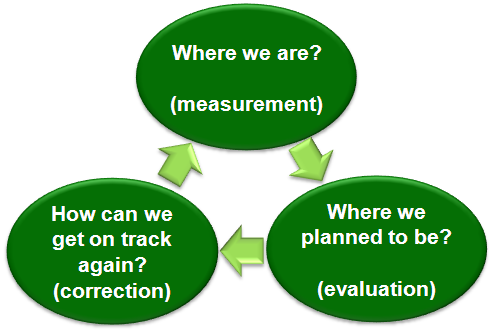
A plan is useless if you do not measure reality against it. The Monitoring and Controlling Process Group tracks, reviews, and regulates the progress and performance of the project. Think of this as the central nervous system of the project. If a variance is detected—for instance, the team is working slower than anticipated—this Process Group identifies any areas in which changes to the plan are required and initiates the corresponding changes. It ensures the project remains aligned with the initial business documents.
5. Closing Process Group
Finally, work must be formally concluded. The Closing Process Group consists of processes performed to formally complete or close a project, phase, or contract. This involves transitioning the final product to the operations team, archiving project documents, releasing project resources, and capturing lessons learned. A project is not over when the product is built; it is over when formal closure is achieved.
By mastering the precise distinction between how a product evolves, how a project is phased, and the execution models (predictive, iterative, incremental, adaptive, hybrid) available to you, you arm yourself with the strategic frameworks required to deliver value. When you step into a steering committee meeting, you will no longer guess whether a project requires rolling wave planning or formal change control. You will simply apply the correct physics to the problem at hand.