Define and Establish Project Governance
Not sure you’re ready?
Take the ~3-minute readiness diagnostic and see where you stand.
Consider a high-speed rail network. A locomotive moving at 300 miles per hour without centralized signal controls, standardized track gauges, or emergency braking protocols is not transportation; it is a catastrophe waiting to happen. In the realm of organizational execution, that system of tracks, signals, and brakes is project governance. It is the invisible scaffolding that ensures local actions align with enterprise strategy, resources are protected, and decision-making remains rational rather than reactive. Without it, project managers are left to navigate complex political landscapes and resource constraints purely on instinct, which is a fragile strategy for delivering consistent value.

To deliver anything of consequence, an organization must deliberately design how decisions are made. Project governance is the framework that guides project management activities to create a unique product, service, or result. It is not a constraint on the project team's creativity; rather, it is a boundary-spanning mechanism that frees the team to work confidently within known parameters.
Project Governance Defined The Project Management Institute defines project governance as the framework, functions, and processes that guide project management activities.
At its core, a project governance framework establishes the rules and procedures for defining project success. It dictates how power is distributed and how information flows. By clearly outlining these elements, project governance provides the structure for the project manager and project sponsors to make informed decisions.
The PMBOK Guide Seventh Edition incorporates these broad governance considerations directly within the System for Value Delivery. This modern framing recognizes that governance isn’t just about audits and checklists; it is about ensuring the project consistently delivers intended business value.
Crucially, while the project manager directs the day-to-day execution, the project sponsor holds the ultimate accountability for establishing and maintaining project governance. The sponsor acts as the bridge between the executive board’s strategic vision and the project manager’s operational reality.
When a project manager takes the helm of a new initiative, they do not invent the rules of governance from scratch. Instead, they rely heavily on Organizational Process Assets (OPAs). OPAs are the collective memory and standardized toolbox of the organization.
Organizational process assets supply historical information used for setting up new governance frameworks. Rather than guessing how a steering committee should be structured, a project manager can review past, successful projects to replicate what worked.
Among their many components, OPAs provide three critical pillars for project governance:
- Organizational governance policies: These high-level directives ensure projects comply with legal, financial, and strategic mandates.
- Reporting procedures: Organizational process assets include standard procedures for project status reporting, ensuring that a "Red" status means the exact same thing to a stakeholder in engineering as it does to a stakeholder in finance.
- Escalation tools: Organizational process assets contain existing organizational templates for issue escalation, completely removing the ambiguity of how and when to ask leadership for help.
Ethics in Governance
Governance policies incorporate organizational ethical standards into project execution. A governance framework is ultimately enforced by human beings, meaning it is only as strong as the integrity of those executing it.
Ethics in project governance are explicitly guided by the Project Management Institute Code of Ethics and Professional Conduct. This is not an optional philosophical exercise; it is an occupational mandate. The Project Management Institute Code of Ethics and Professional Conduct mandates the values of responsibility, respect, fairness, and honesty. When a project manager reports a true but highly unfavorable schedule variance to a sponsor, they are exercising honesty and responsibility, fulfilling the ethical mandate of their governance framework.
For a governance framework to function, authority must be clearly mapped. Governance structures dictate the formal reporting relationships among project stakeholders. It requires establishing clear roles and responsibilities for all project team members to prevent duplication of effort and political infighting.
This structure is formalized across three key project artifacts:
- The Project Charter: A project charter establishes the initial high-level governance structure for a newly authorized project. It officially names the sponsor, assigns the project manager, and outlines their initial authority.
- The Project Management Plan: Moving from high-level to tactical, a project management plan defines exactly how the project governance will be executed and monitored on a daily basis.
- The Communications Management Plan: Because governance relies entirely on the flow of truthful data, a communications management plan details the specific reporting procedures required by the project governance framework.
Defining Authority Limits and Governance Bodies
Governance structures define the specific limits of the project manager's authority over organizational resources. A project manager might have full authority to reassign tasks among dedicated team members, but zero authority to sign a $50,000 vendor contract without executive approval.
To manage decisions that exceed the project manager's authority, organizations rely on specific governance bodies:
- The Project Steering Committee: This is a governance body that provides strategic guidance and high-level decision-making for a project. If a project's business case fundamentally shifts due to market changes, the steering committee decides whether to pivot or cancel the initiative.
- Change Control Boards (CCB): Change control boards are formal governance bodies responsible for reviewing and approving scope changes. They protect the project's baselines from uncontrolled "scope creep" while allowing necessary, value-adding changes to proceed.
You cannot govern a project if you do not know what you are trying to achieve. Project success metrics quantify the specific criteria required for a project to be considered a success.
These metrics cannot exist in a vacuum; project success metrics must explicitly align with the strategic objectives of the performing organization. If the organization's strategic goal is long-term market capture, a project metric focused solely on cutting short-term development costs might actually harm the overarching objective.
Success metrics generally fall into financial and qualitative categories:
Financial Metrics
- Return on Investment (ROI): Return on investment is a financial project success metric used to evaluate project profitability. It answers the simple question: "For every dollar we spend on this project, how many dollars do we get back?"
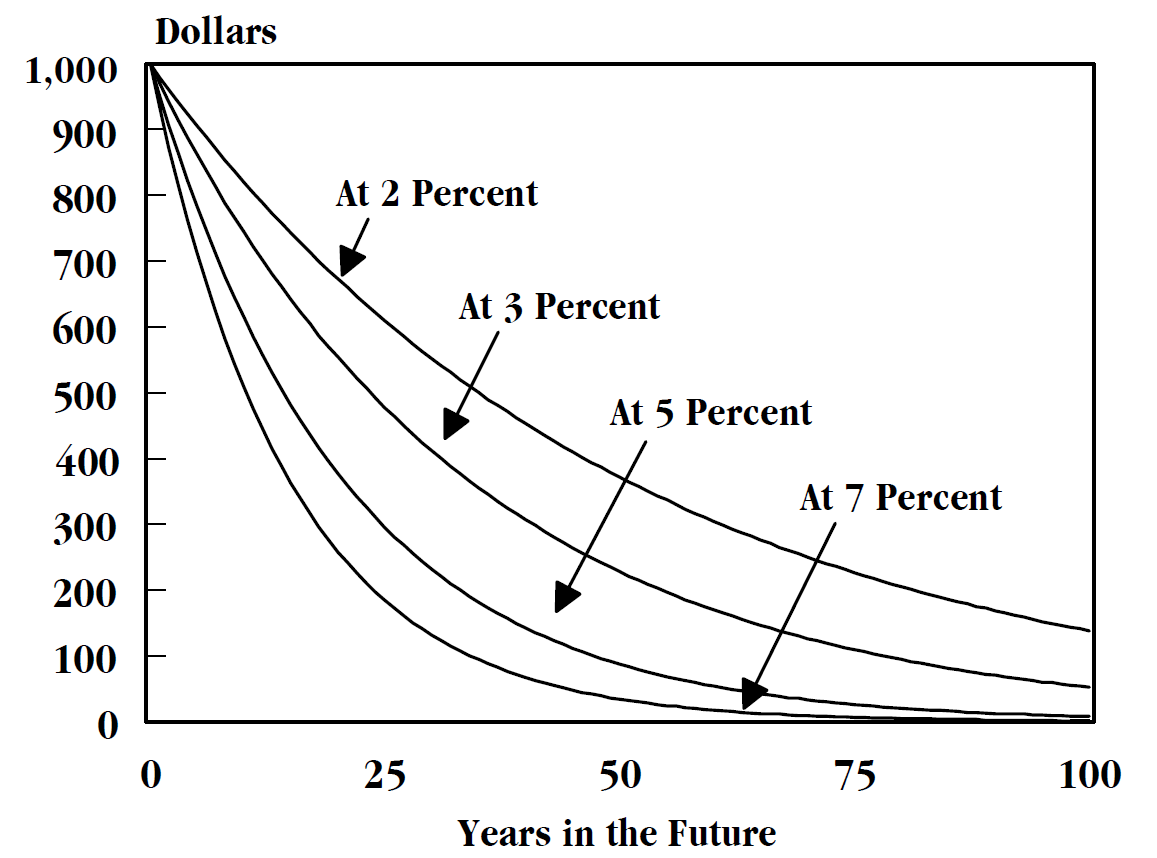
- Net Present Value (NPV): Net present value is a financial metric used to evaluate the long-term value delivered by a project. By discounting future cash flows back to today's value, NPV helps a steering committee understand the true financial worth of a multi-year project compared to alternative investments.
Qualitative Metrics
- Customer Satisfaction Scores: Not all value is instantly monetary. Customer satisfaction scores serve as qualitative project success metrics. A software deployment might finish perfectly on budget, but if the end-users despise the new interface, the project failed its qualitative governance tests.
One of the most profound misconceptions among novice project managers is that escalating a problem is a sign of failure. In reality, designed escalation is the hallmark of a mature project governance framework.
Governance establishes tolerance levels—these specify the allowable quantitative deviation from project baseline plans. For example, a project manager might have a cost tolerance of ±5%. If the project is running 3% over budget, the project manager uses their own contingency reserves and management strategies to fix it.
However, when deviations exceed these tolerance levels, predefined alarms must trigger.
Escalation Thresholds
Escalation thresholds are specific predefined limits that trigger the transfer of an issue to a higher authority level. They remove the emotional burden of deciding if to bother the boss.
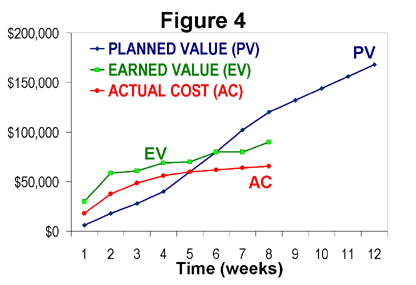
- Cost variance thresholds: These trigger financial escalation when a project exceeds its approved budget by a specified percentage. If a vendor suddenly raises material costs by 15%, and the cost variance threshold is 10%, the project manager is required by governance to escalate.
- Schedule variance thresholds: These dictate the specific delay duration that requires escalation to the project sponsor. If a critical-path permit is delayed by three weeks and the threshold is two weeks, the sponsor must be alerted.
Escalation Paths and The Issue Log
When a threshold is breached, who do you tell? Escalation paths define the exact hierarchy of personnel required to resolve issues exceeding the project manager's authority. An escalation path ensures that an IT server delay is escalated to the Chief Information Officer, while a legal compliance issue is escalated to the General Counsel, rather than sending every problem into a generic executive inbox.
Throughout this process, transparency is maintained via an issue log. An issue log documents escalated problems and tracks the ongoing resolution status of those problems. It acts as an audit trail, proving that the governance framework functioned as designed and that leadership was properly informed.
Governance is not a one-size-fits-all doctrine. The mechanics of governance must be tailored to the project's chosen development lifecycle. The fundamental requirement of governance—protecting business value—remains constant, but the cadence and location of decision-making shifts dramatically.
| Governance Model | Core Mechanism | Locus of Decision-Making |
|---|---|---|
| Predictive | Formal phase gates | Centralized (Sponsors, Steering Committees) |
| Agile | Iteration reviews | Decentralized (Team boundaries, Product Owner) |
| Hybrid | Mixed approach | Blended |
Predictive Project Governance
In traditional, plan-driven environments, the primary risk is spending millions of dollars building the wrong thing over a long timeframe. Therefore, predictive project governance relies heavily on formal phase gate reviews to approve continued project funding. At the end of the "Design" phase, the steering committee reviews the blueprints, evaluates the updated NPV, and makes a binary "Go/No-Go" decision before releasing funds for the "Build" phase.
Agile Project Governance
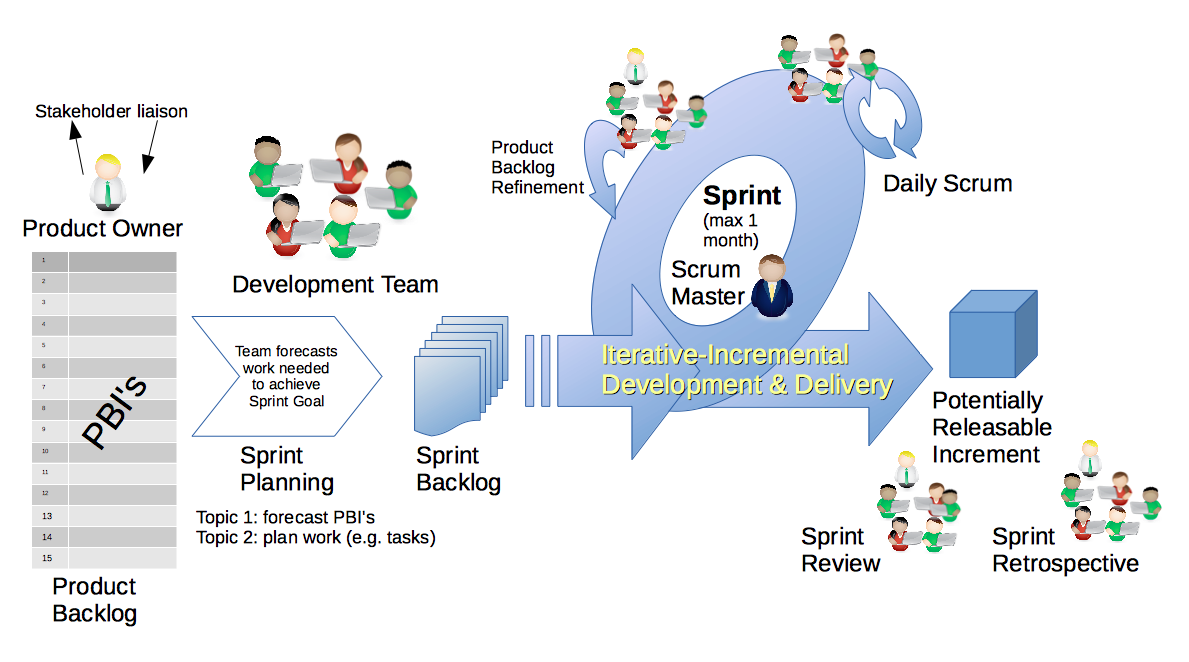
Agile environments operate in high-uncertainty spaces where phase gates are too slow. Instead, agile project governance relies on frequent iteration reviews to validate the continuous delivery of business value. Governance here is built into the sprint cadence; every two weeks, stakeholders touch and feel working software, ensuring constant alignment with strategic goals. Furthermore, agile project governance emphasizes decentralized decision-making within established project team boundaries. The team is trusted to make localized technical and scope-sequencing decisions without escalating to a change control board for every minor adjustment.
Hybrid Project Governance
Many modern enterprises operate complex projects that require physical hardware (predictive) paired with software development (agile). A hybrid project governance combines formal phase gate approvals with frequent agile iteration reviews. For example, the procurement of server mainframes might be governed by strict phase gates and cost variance thresholds, while the development of the user application running on those servers is governed by decentralized agile iteration reviews.

Ultimately, defining and establishing project governance is about engineering an environment where success is systemic rather than accidental. By mastering OPAs, defining rigid escalation thresholds, and tailoring the framework to the lifecycle, you ensure that the project machinery operates smoothly, ethically, and in perfect alignment with organizational goals.