Plan and Manage Communication: Reporting
Not sure you’re ready?
Take the ~3-minute readiness diagnostic and see where you stand.
A project, in its rawest form, is an engine that generates noise. Thousands of fragmented observations—hours logged, lines of code committed, concrete poured, dollars spent—swirl in a vortex of daily activity. Without a mechanism to capture and refine this noise, sponsors and stakeholders are flying blind, left to guess whether millions of dollars and months of effort are yielding value or marching toward a cliff. Reporting is the mechanism that transforms this chaotic friction into a clear, actionable signal.
To master project reporting, one must understand that a report is not merely a document; it is a vital organ in the anatomy of project governance. It dictates the flow of resources, triggers course corrections, and provides the mathematical justification for a project's survival.
Before we can distribute a report, we must understand how it is manufactured. Project reporting relies on a strict epistemological hierarchy—a journey from raw, unvarnished reality to executive decision-making.
- Work Performance Data: This represents the raw observations identified during project activities. Generated as an output of the Direct and Manage Project Work process, these are the unanalyzed facts: 400 bricks laid, $5,000 spent, 12 defects logged.
- Work Performance Information: Raw data is useless without context. Work Performance Information represents analyzed Work Performance Data. We take the 400 bricks laid and compare it to the project baseline, realizing we were scheduled to have 600 laid by today.
- Work Performance Reports: Executive sponsors do not want spreadsheets of raw metrics. Work Performance Reports are physical or electronic representations of Work Performance Information. Generated as an output of the Monitor and Control Project Work process, these reports are synthesized and generated to facilitate stakeholder decision-making.
To ensure a report is useful, we must establish the rules of engagement. Sponsor expectations for project reporting must be gathered and documented during the project initiation phase. In fact, the Project Charter contains the high-level reporting requirements from the project sponsor, setting the initial boundaries of what success looks like.
From there, the Stakeholder Register documents the initial communication requirements of individual project stakeholders. However, the true master blueprint is the Communications Management Plan, a subsidiary component of the Project Management Plan.
The Communications Management Plan acts as the project's central nervous system. It strictly dictates three fundamental elements of reporting: the frequency of project reports, the format of project reports, and the target audience for all project reports. Furthermore, it is where escalation procedures are documented, dictating precisely how critical issues are reported to the project sponsor when the team hits a roadblock they cannot resolve.
Governance and The PMO
Project governance establishes the decision-making framework for the project, and fundamentally, project governance establishes the reporting hierarchy for the project.
In many organizations, the Project Management Office (PMO) defines the governance frameworks that project managers must follow. To ensure consistency across the portfolio, the PMO often establishes standardized reporting templates for all projects within an organization. While the PMO sets the rules, the project manager is ultimately responsible for ensuring that all project reporting meets organizational governance standards.
A brilliant report sent to the wrong person, or at the wrong time, is a failed communication. Effective project reports must align directly with the key performance indicators established by the sponsor.
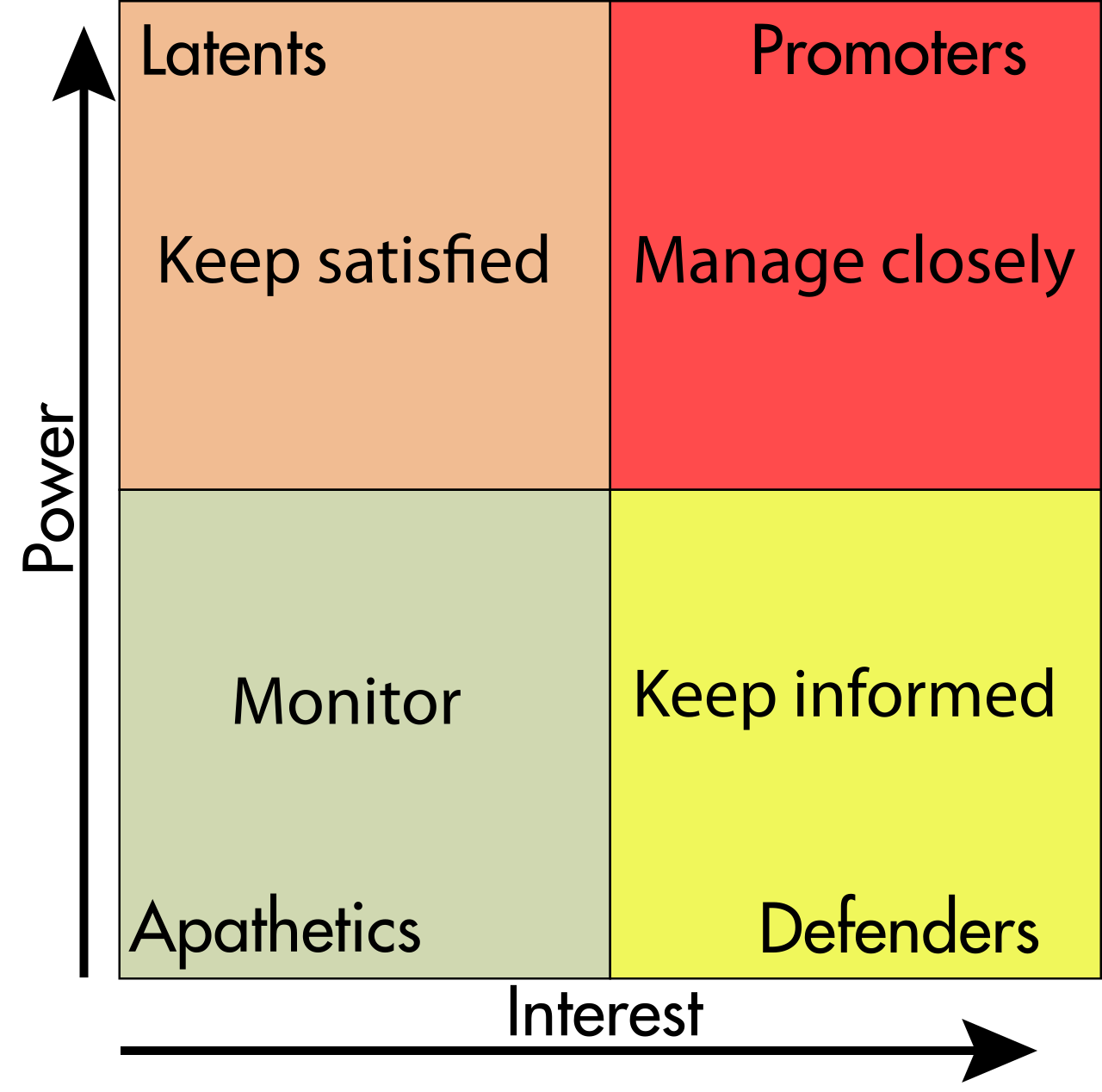
Through careful stakeholder analysis, a project manager identifies the specific reporting needs and the specific reporting expectations of project sponsors. Project managers must tailor the level of detail in a report based on the stakeholder's role and influence.
- The Power/Interest Rule: High-interest and high-power stakeholders require the most comprehensive reporting updates. Because their capital and reputation are on the line, high-interest and high-power stakeholders require the most frequent reporting updates.
- The Lifecycle Rule: Project managers must adjust reporting frequencies based on the current phase of the project lifecycle. (e.g., Daily updates during a critical rollout, monthly updates during a long procurement phase).
Methods of Delivery
How you deliver the report is just as important as what is in it:
- Push communication distributes reports to stakeholders who do not require immediate interaction (e.g., emailing a weekly PDF).
- Pull communication requires stakeholders to access project reports autonomously from a central repository (e.g., logging into a SharePoint dashboard).
- Interactive communication is the most effective method for resolving complex reporting discrepancies with stakeholders (e.g., holding a face-to-face meeting to discuss a budget overrun).
To protect the team's bandwidth, routine project reporting should be automated whenever possible to reduce administrative overhead. Additionally, mature organizations utilize management by exception, which requires generating reports only when project performance deviates significantly from the baseline, rather than interrupting executives with "all is well" noise.
In traditional, plan-driven (predictive) environments, the goal is to protect the baseline. Here, we rely heavily on objective mathematical analysis.
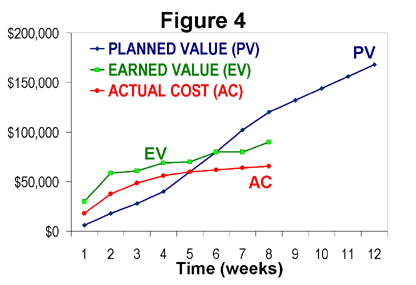
Earned Value Management (EVM) reports objectively measure project performance against the performance measurement baseline. Central to this is Earned Value, which is strictly defined as the measure of work performed expressed in terms of the authorized budget.
We classify predictive reports into specific temporal categories:
| Report Type | Temporal Focus | What it tells the stakeholder |
|---|---|---|
| Status Reports | The Present | Provide an update on the current state of the project at a specific point in time. |
| Progress Reports | The Past | Describe what the project team has accomplished since the previous reporting period. |
| Forecasting Reports | The Future | Predict future project performance based on current trends. |
To generate these insights, project managers use variance analysis reports, which compare actual project performance to the planned baseline (where are we vs. where did we say we would be?), and trend analysis reports, which forecast future project performance based on historical project data (if we keep burning money at this rate, when will we go bankrupt?).
If predictive reporting is about protecting the baseline, Agile reporting is about adapting to reality. Agile reporting emphasizes continuous transparency over scheduled periodic status reports. Instead of waiting for an end-of-month PDF, the data is always live.
Value delivery metrics are the primary focus of reporting in Agile project management environments, meaning Agile status reporting prioritizes working software metrics over traditional milestone documentation.
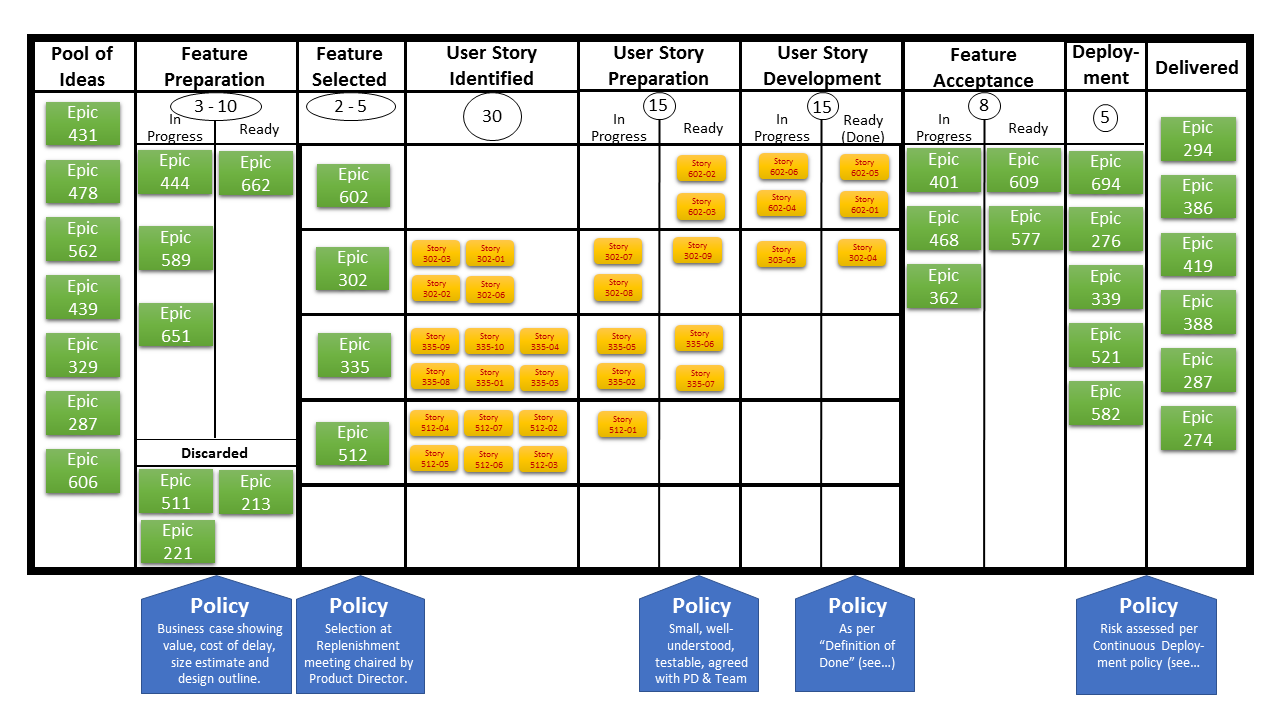
To achieve continuous transparency, Agile teams utilize information radiators, which provide real-time project status updates in Agile environments. Because information radiators are highly visible displays of project data, they are also known as big visible charts.
Key Agile reporting tools include:
- Kanban boards: Serve as a real-time visual report of project work-in-progress, and crucially, serve as a real-time visual report of project workflow bottlenecks.
- Burndown charts: Visually display the remaining work against the time available in an Agile iteration. (The line goes down as work is completed).
- Burnup charts: Display the accumulated completed work against the total project scope over time. (The line goes up, and can easily show scope creep if the total scope line rises as well).
In modern environments, you will rarely find a pure Agile or pure predictive approach. Hybrid project reporting combines predictive baseline metrics with agile iteration progress charts, allowing executives to see EVM cost projections alongside a sprint burndown chart.
Why go through all this effort? Because reports trigger organizational action.
At critical junctions, phase gate reviews require specific performance reports to determine project continuation. If a project fails to show viability at a gate, it is killed.
At the highest levels, a project steering committee reviews high-level performance reports to provide strategic direction. Ultimately, the sponsor uses project performance reports to justify continued funding for the project. If your report cannot articulate value, the sponsor's capital will flow elsewhere.
Finally, projects do not exist in a legal vacuum. Compliance reporting provides evidence that the project adheres to internal or external regulatory requirements. Whether you are building software subject to data privacy laws or physical infrastructure subject to environmental regulations, compliance reports ensure the organization is protected from legal liability.
Reporting is not paperwork. It is the language of project survival. Speak it fluently, tailor it precisely, and you will align your team's daily friction with the strategic velocity of the enterprise.