Arizona Agency Relationships & Disclosure
Not sure you’re ready?
Take the ~3-minute readiness diagnostic and see where you stand.
In the physical world, one person can only occupy one space, sign one document, and negotiate one conversation at a time. The law of agency bends this physical limitation. It allows a person—the principal—to project their legal will, authority, and presence across the state of Arizona through another person: the agent. When you hold a real estate license, you are not merely a facilitator of property transactions; you are a fiduciary entrusted with the legal and financial weight of another human being's largest asset. This profound transfer of power requires an equally rigorous framework of rules to prevent abuse, allocate liability, and ensure absolute loyalty.
To understand how agency works in Arizona, we must first correct a common misconception. When a seller signs a listing agreement with you, or a buyer asks you to represent them, they are not actually hiring you.
In Arizona, the employing broker holds the legal agency relationship directly with the principal in a real estate transaction.
You, the individual real estate salesperson, act entirely as a subagent to your employing broker. You possess no independent legal power to represent the public. Instead, an Arizona real estate salesperson derives their authority to represent clients exclusively through their employing broker. If your broker's license is suspended, your authority vanishes instantly, because you were only ever operating as an extension of the broker's legal existence.
Creating the Agency Relationship
How does this transfer of authority occur? An agency relationship does not spontaneously generate when someone walks into an open house. It must be created, and this happens in two primary ways:
- Express Agency: This is created by a clear written or oral agreement between the principal and the agent. The boundaries of the relationship are explicitly stated. "I will be your agent to help you buy a home in Scottsdale."
- Implied Agency: This is created by the actions and conduct of the parties rather than by a formal agreement. If you start negotiating a price on behalf of a buyer, advising them on inspection terms, and treating them like a client, the law will treat you as their agent, regardless of whether a contract was signed.
The Great Illusion: Compensation = Representation
One of the most dangerous traps for a new agent is assuming that whoever writes the check dictates the loyalty. In Arizona law, the payment of compensation does not determine the existence of an agency relationship.
A real estate principal can pay an agent's commission even if that agent exclusively represents the opposing party in the transaction. For example, a seller routinely pays the commission for the buyer's agent from the proceeds of the sale. The buyer's agent still owes absolute loyalty to the buyer, not the seller who funded the check.
Crucial Distinction for the Exam: While an oral agreement can technically create express agency, Arizona law requires that a real estate listing agreement must be in writing to be enforceable for a commission. You can be an agent without a written contract, but you cannot legally demand to be paid for it without one.

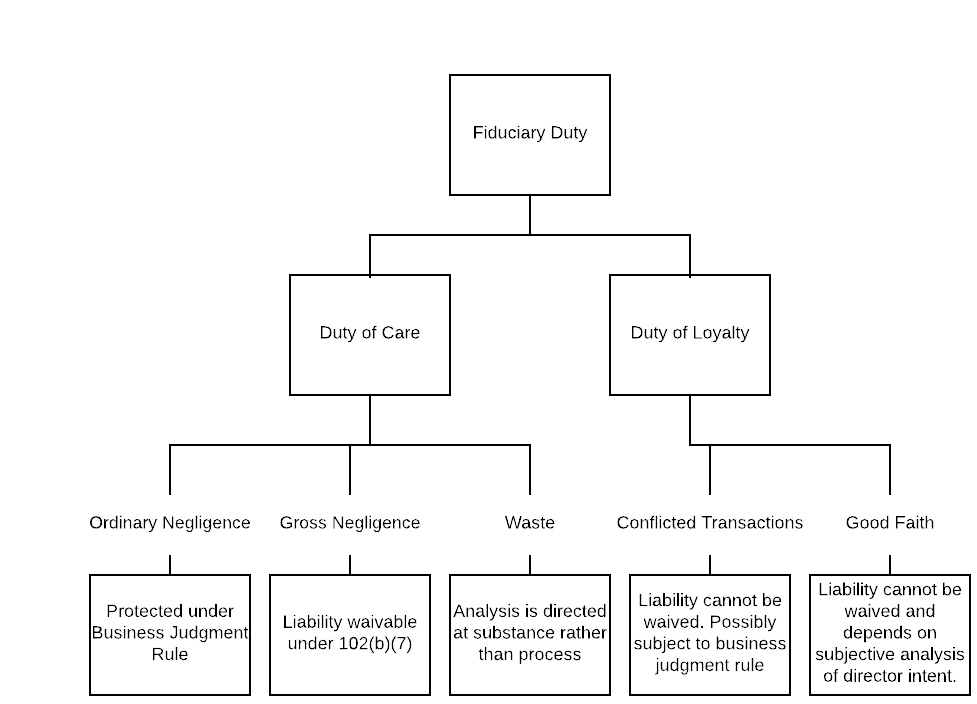
When you become an agent, you step into a fiduciary role. A fiduciary must subordinate their own self-interest to the interest of their principal. Arizona law breaks this standard down into six distinct fiduciary duties, easily remembered by the acronym OLD CAR:
- Obedience: An Arizona real estate agent owes the fiduciary duty of obedience to the principal. You must follow all lawful instructions. If your seller tells you to refuse all showings on Tuesdays, you obey. If they tell you to discriminate based on race, you refuse, as the instruction is unlawful.
- Loyalty: An Arizona real estate agent owes the fiduciary duty of loyalty to the principal. You must advance their interests above all others, including your own.
- Disclosure: An Arizona real estate agent owes the fiduciary duty of full disclosure to the principal. You must tell your client everything you learn that could affect their position, such as discovering the buyer is financially unstable.
- Confidentiality: An Arizona real estate agent owes the fiduciary duty of confidentiality to the principal. You cannot reveal the principal's motivations, financial distress, or bottom line.
- Accounting: An Arizona real estate agent owes the fiduciary duty of accounting to the principal. Every dollar must be tracked and safeguarded.
- Reasonable Care and Skill: An Arizona real estate agent owes the fiduciary duty of reasonable care and skill to the principal. You must properly price properties, discover foreseeable facts, and advise expertly within your scope of practice.
The Forever Duty: Most of these duties extinguish when the transaction closes. However, the fiduciary duty of confidentiality survives the termination of a real estate agency relationship in Arizona. You can never reveal the secrets you learned while representing a client, even twenty years after the closing.
The intersection of your duty of disclosure to your client and your duty of honesty to the public is where the law becomes highly specific.
Material Facts vs. Stigmatized Properties
The baseline rule is clear: Arizona real estate licensees must disclose all known material facts that could negatively impact a property's value. A leaking roof, a cracked foundation, or an unpermitted addition are material facts. You must disclose them to all parties, regardless of who you represent.

However, a property can be psychologically impacted—or "stigmatized"—without having physical defects. Arizona has strict statutory protections defining what you do not have to disclose, preventing you from breaching confidentiality or destroying property value over non-material issues:
| Event/Stigma | Arizona Disclosure Requirement |
|---|---|
| Natural Death | Arizona law does not require a real estate licensee to disclose that a property was the site of a natural death. |
| Suicide | Arizona law does not require a real estate licensee to disclose that a property was the site of a suicide. |
| Homicide / Felony | Arizona law does not require a real estate licensee to disclose that a property was the site of a homicide or other felony. |
| Registered Sex Offender | Arizona law does not require a real estate licensee to disclose the presence of a registered sex offender in the vicinity of a property. |
| HIV/AIDS | WARNING: Arizona law strictly prohibits a real estate licensee from disclosing that a property occupant was exposed to HIV or diagnosed with AIDS. (This is protected under fair housing handicap status). |
The Timing of Agency Disclosures
You cannot let the public operate under the assumption that you represent them when you do not.
- An Arizona real estate licensee must clearly disclose who they represent in a transaction before obtaining confidential information from a party. If an unrepresented buyer at your open house begins telling you about their divorce and financial limits, you must stop them and disclose that you represent the seller.
- Furthermore, an Arizona real estate licensee must provide a written agency disclosure to all parties before the execution of a purchase contract.
Personal Interest and Family Disclosures
When you blur the line between agent and principal, transparency must be absolute:
- An Arizona real estate licensee purchasing a property for themselves must disclose their licensed status in writing to the seller.
- An Arizona real estate licensee selling their own property must disclose their licensed status in writing to the buyer.
- An Arizona real estate licensee must disclose in writing to all parties if they represent an immediate family member in a transaction.
In a standard transaction, the buyer has an agent pulling for the lowest price, and the seller has an agent pulling for the highest price. But what happens when the same brokerage represents both sides?
Dual agency occurs when a single real estate brokerage represents both the buyer and the seller in the same transaction. Because you cannot perfectly fulfill the duty of absolute loyalty to two opposing parties, Arizona law permits dual agency only with the prior written informed consent of both the buyer and the seller.
By agreeing to this, the parties accept that the dual agent in Arizona owes a limited fiduciary duty to both the buyer and the seller. The agent becomes a neutral facilitator rather than a partisan advocate. Specifically:
- A dual agent in Arizona is prohibited from advocating for one party to the detriment of the other party.
- An Arizona dual agent must not disclose to the buyer that the seller will accept a price lower than the listing price without written permission.
- An Arizona dual agent must not disclose to the seller that the buyer will pay a price higher than the offered price without written permission.
The legal power to act on someone's behalf is fragile and can be severed through the acts of the parties or the operation of law.
Acts of the Parties
Because agency is a highly personal relationship based on trust, neither party can be forced to remain in it against their will.
- A real estate principal possesses the legal power to revoke an agency agreement at any time.
- A real estate agent possesses the legal power to renounce an agency agreement at any time. (Note: Having the legal power to terminate does not mean you have the legal right to do so without consequence. If either party breaks a valid contract early, they may be liable for damages, but the agency authority itself is nonetheless terminated).
Operation of Law
The universe occasionally steps in and makes the continuation of the agency impossible. The following events result in automatic termination:
- Death or mental incapacity: The death or mental incapacity of the principal automatically terminates a real estate agency relationship in Arizona. If the seller dies, the listing dies with them.
- Bankruptcy: The bankruptcy of the principal automatically terminates a real estate agency relationship in Arizona, as the courts take control of the principal's assets.
- Destruction of Property: The physical destruction of the subject property automatically terminates a real estate agency relationship in Arizona. If the house burns to the ground, the listing to sell that house is terminated.
We began by establishing that the employing broker is the true agent. With that legal ownership comes absolute responsibility.
Arizona real estate brokers must exercise reasonable supervision and control over the activities of their affiliated salespersons. They cannot simply hang your license on the wall and let you run wild. To enforce this, Arizona mandates stringent oversight and record-keeping mechanisms.
Oversight and Records
- The 10-Day Rule: An Arizona designated broker must review and initial all real estate contracts executed by their salespersons within ten business days of execution. This is how the state ensures the broker is actively monitoring the obligations their salespersons are creating.
- Transaction Retention: Arizona designated brokers must retain records of completed real estate transactions for a minimum of five years.
- Offer Retention: Arizona designated brokers must retain records of rejected real estate offers for a minimum of one year.
Vicarious Liability
Why does the state place such a heavy burden on the broker? Because of a legal doctrine called vicarious liability.
Vicarious liability holds a principal legally responsible for the actions or omissions of their authorized agent. If you, the salesperson, make a negligent error, your broker is vicariously liable for your actions.
Similarly, the seller who hired your brokerage is legally the principal, which historically meant the seller could be sued if their real estate agent lied to a buyer. However, Arizona law provides a specific shield to protect innocent consumers from the rogue actions of licensees: An Arizona property seller is shielded from vicarious liability for an agent's misrepresentations if the seller was completely unaware of the false statements. If an agent lies about the square footage to close the deal, and the seller had no knowledge of this deception, the buyer's legal recourse is against the agent and the broker—not the innocent seller.