Points, Commissions, Area, and Volume Calculations
Not sure you’re ready?
Take the ~3-minute readiness diagnostic and see where you stand.
At the core of every real estate transaction lies a profound act of translation. A sprawling hillside estate, a negotiated promise of professional representation, and the deferred burden of a thirty-year debt must all be converted into the universal language of mathematics before a single deed can change hands. As a real estate professional, you are not merely selling property; you are orchestrating the physics of a transaction. The numbers you calculate—from the cubic volume of an A-frame attic to the exact dollar amount your seller walks away with—form the structural integrity of the deal.
Before you can calculate compensation or model loan costs, you must master the fundamental machinery of percentages. The word "percent" literally translates from Latin as "per hundred." It is a fraction in disguise.
In the real world, your calculator demands decimals.
To convert a percentage to a decimal format, the percentage value must be divided by 100. (Move the decimal point two spaces to the left: 6% becomes 0.06). Conversely, to convert a decimal format to a percentage, the decimal value must be multiplied by 100. (Move the decimal point two spaces to the right: 0.045 becomes 4.5%).
The Flow of Compensation
There is no such thing as a "standard" real estate commission. By law and by practice, commission rates are fully negotiable between the principal real estate broker and the client. Once that rate is agreed upon and the property is sold, the gross commission is generated.
The gross commission formula is the final sales price multiplied by the agreed commission rate.
If you list a property that sells for $400,000 at a 6% commission rate, the gross commission is $400,000 × 0.06 = $24,000.
But this money does not flow into a single pocket. Real estate is highly collaborative. In a standard co-brokered transaction, a listing broker may share a portion of the total commission with a cooperating buyer's broker. If they agree to an equal split, that $24,000 is cleaved in half: $12,000 to the listing brokerage and $12,000 to the buyer's brokerage.
From there, the money trickles down to the people doing the legwork. An agent split dictates the exact percentage of the broker's commission that goes to the individual real estate salesperson. If your employment agreement dictates a 70/30 split (70% to you, 30% to the house), you will calculate your take-home pay by taking your brokerage’s $12,000 and multiplying it by 0.70 to yield $8,400.
When you sit across the kitchen table from a prospective seller, they rarely care about the gross sales price. They care about their walkaway money. Net to seller calculates the exact cash amount a seller receives from a transaction after all commissions and expenses are deducted from the sales price.
A common, fatal error novices make is trying to simply add the commission percentage to the seller's target net. If a seller wants to walk away with $100,000 after paying a 6% commission, you cannot simply add 6% to $100,000. Why? Because 6% of $106,000 is $6,360, which would leave the seller with $99,640—falling short of the target. You must approach it algebraically. You must find a sales price where 94% of that price equals the seller's goal.
Target Sales Price Formula: To calculate the required sales price to yield a specific net amount, divide the target net plus closing costs by 100 percent minus the commission rate.
Let’s apply this. The seller wants a net of $100,000. Closing costs are $3,400. The commission is 6%.
- Target Net + Closing Costs = $103,400
- 100% - 6% = 94% (or 0.94)
- $103,400 ÷ 0.94 = $110,000
The property must sell for exactly $110,000.
Measuring Success: Gross Profit
Investors will frequently ask you to measure their success on a flip. A gross profit percentage is calculated by dividing the profit amount by the original purchase price of the property. If an investor bought a parcel for $200,000 and sold it for $250,000, their profit is $50,000. Divide $50,000 by $200,000 to get 0.25, which converts to a 25% gross profit.
Most buyers do not purchase homes with cash; they leverage debt. Lenders charge fees for the creation of this debt, measured in "points."
Here is the most critical rule of loan mathematics: All loan points are calculated as a percentage of the total borrowed principal rather than the property purchase price.
If a buyer purchases a $500,000 house but puts down $100,000 in cash, their loan principal is $400,000. All points will be calculated based on that $400,000 loan.
There are two primary types of points you must understand:
- Loan Origination Fees: A lender charges a loan origination fee to cover the administrative costs of processing a new mortgage application. This pays for the underwriting, the paperwork, and the literal creation of the loan. One loan origination point equals one percent of the total mortgage loan amount. On our $400,000 loan, one origination point costs $4,000.
- Discount Points: These alter the behavior of the loan itself. Discount points allow a borrower to pay money upfront to a lender to secure a lower interest rate on a mortgage. Just like origination points, one discount point is equivalent to one percent of the total mortgage loan amount. However, its effect is specific: purchasing one discount point typically lowers the interest rate on a 30-year fixed mortgage by approximately one-eighth of one percent (0.125%).
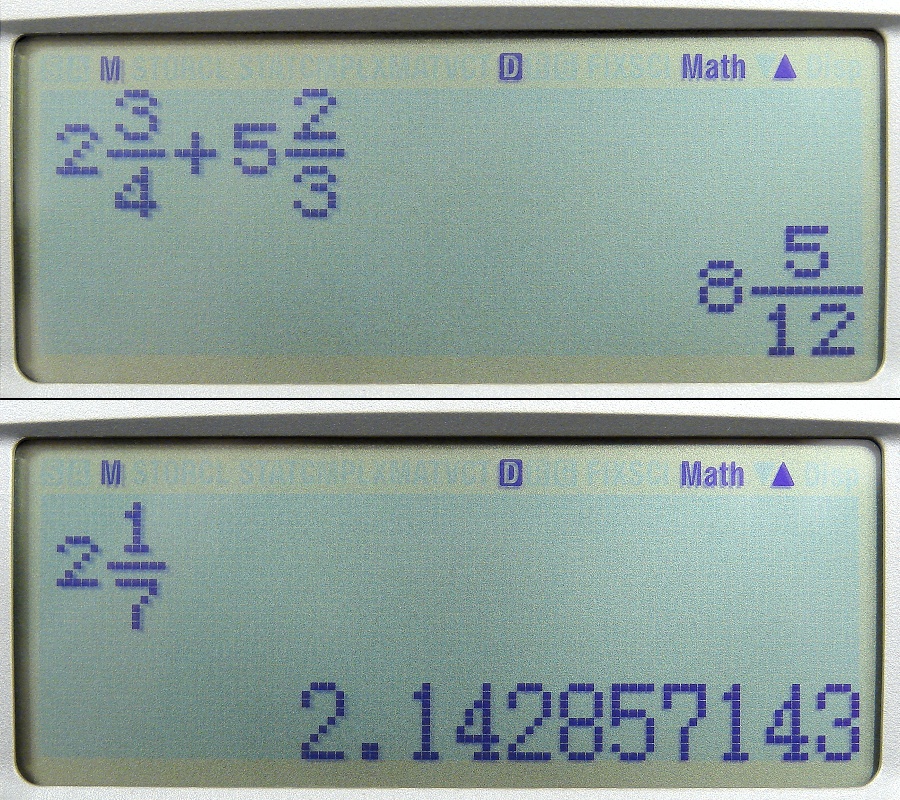
If your buyer wants to lower their interest rate from 6.0% to 5.5%, they need to drop the rate by 4/8 of a percent (since 5.5% is 4/8 less than 6.0%). This means they must buy 4 discount points. On a $400,000 loan, 4 points equals 4%, which comes out to $16,000 paid at the closing table to secure that lower rate for the next thirty years.
To value a property, you must be able to measure its physical dimensions. The world is built in two and three dimensions, and you will be tested on both.
Measuring Two-Dimensional Space (Area)
Area calculates the size of a two-dimensional surface, such as the footprint of a house or the boundaries of a vacant lot. Real estate area measurements are always expressed in square units (square feet, square yards, square miles).
The two foundational formulas you will use are the rectangle and the triangle:
Area of a Rectangle = Length × Width Area of a Triangle = One-half × Base × Height (or Base × Height ÷ 2)
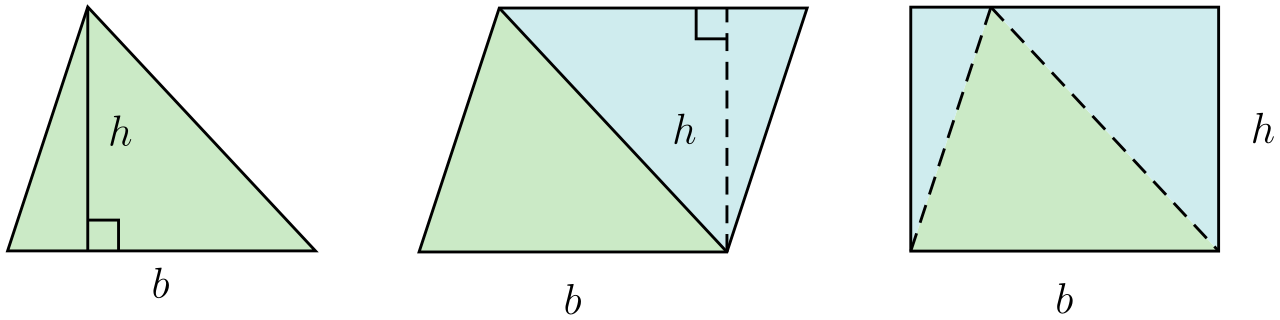
Parcels of land in the real world are rarely perfect squares. Calculating the area of an irregularly shaped lot requires dividing the lot into standard geometric shapes like rectangles and triangles. If you encounter an L-shaped lot, simply draw a line on the plat map to break it into two separate rectangles, calculate the area of each, and sum them together.
Measuring Three-Dimensional Space (Volume)
When you evaluate commercial warehouses, calculate the heating requirements of an industrial space, or appraise an attic, you move into the third dimension. Real estate volume calculations measure three-dimensional space and are always expressed in cubic units (cubic feet, cubic yards).
Volume of a Rectangular Structure = Length × Width × Height Volume of a Triangular Prism = One-half × Base × Height × Depth
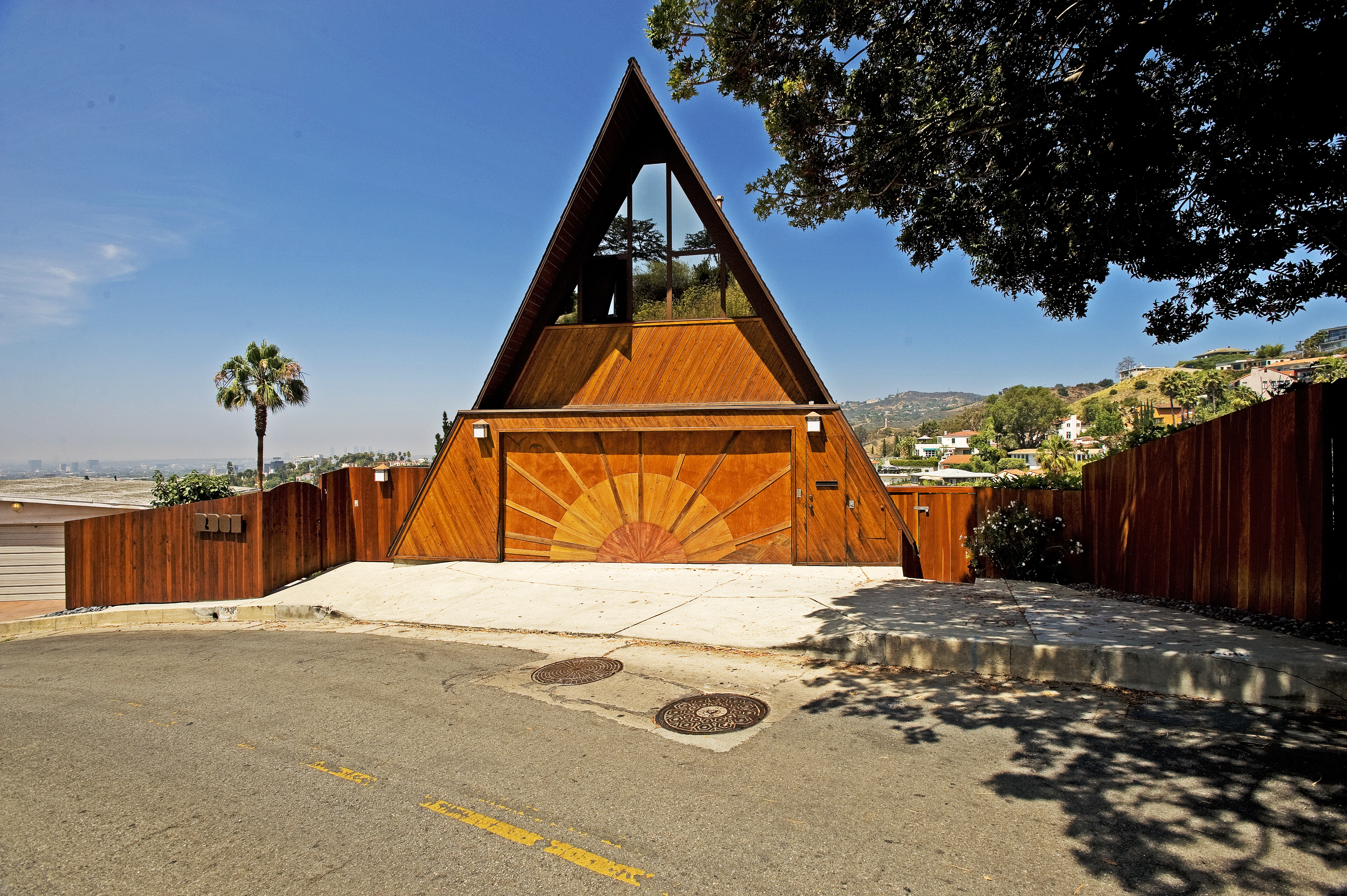
Think of a triangular prism as the pitched roof over a rectangular house. You find the area of the triangle facing you (the A-frame gable, which is 1/2 × Base × Height), and then you push that shape backward through space by multiplying it by the Depth of the house.
You must commit several spatial constants to memory. These numbers are the fixed gears of real estate valuation.
- One linear mile measures exactly 5,280 feet.
- One square yard contains exactly 9 square feet. (Visualize a grid: a yard is 3 feet long. A square yard is 3 feet by 3 feet, yielding 9 square feet).
- One cubic yard contains exactly 27 cubic feet. (Imagine a cube: 3 feet wide × 3 feet deep × 3 feet high = 27 cubic feet. You will use this when ordering concrete for a driveway).
- One acre of land contains exactly 43,560 square feet.
Crucially, an acre is a measure of quantity, not a measure of shape. An acre can exist in any physical shape as long as the total area equals exactly 43,560 square feet. It can be a perfect square, a long narrow rectangle, or a winding, irregular parcel hugging a riverbank.
Front Footage: The Premier Dimension
Not all square footage is valued equally. Commercial lots and waterfront properties live and die by their street or water access.
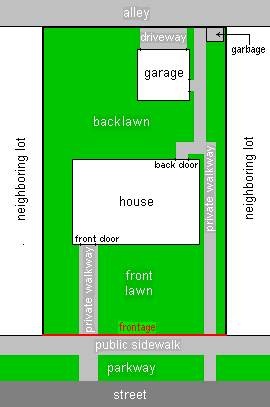
Front footage refers to the linear measurement of a property line that directly abuts a street, road, or body of water. Because it is so highly prized for visibility and access, the industry has standardized how it is reported. When dimensions of a parcel of land are given in a real estate listing, the first dimension listed is traditionally the front footage.
If you see a lot advertised as "50' × 150'", you immediately know the property has 50 feet of frontage along the street, and extends 150 feet backward into the block.
Because of its importance, you must frequently isolate the value of this specific dimension:
- Price per square foot is calculated by dividing the total property sales price by the total square footage of the property.
- Price per front foot is calculated by dividing the total property sales price by the total front footage.
A $100,000 lot measuring 50' × 150' has an area of 7,500 square feet. Its price per square foot is $100,000 ÷ 7,500 = $13.33/sq ft. Its price per front foot is $100,000 ÷ 50 = $2,000/front foot.
Finally, we zoom out to the macro level. The federal government mapped the American West using the Rectangular Survey System, dividing the wilderness into an invisible, standardized grid of townships and sections that still governs property descriptions today.
You must memorize the scale of this grid:
- A standard government survey township contains exactly 36 sections of land.
- One standard section of land measures exactly one square mile.
- One standard section of land contains exactly 640 acres.
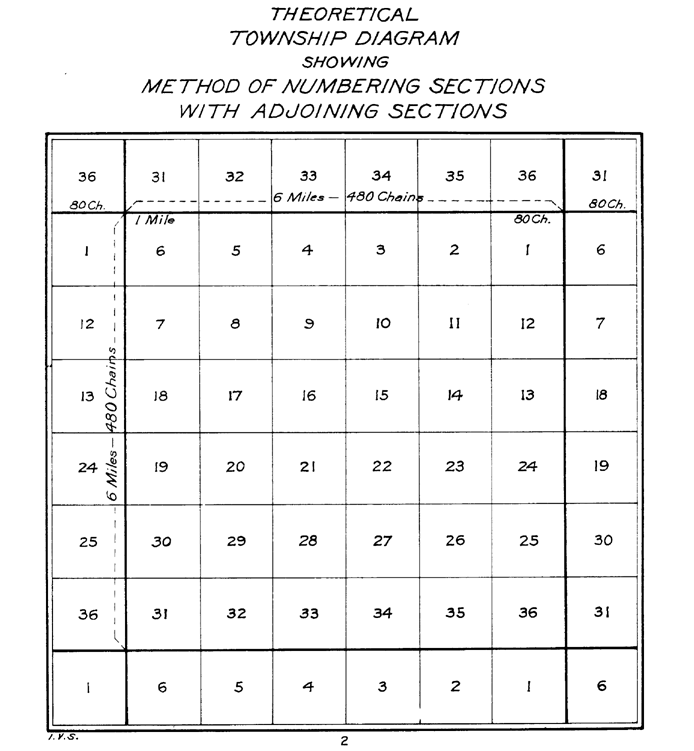
Understanding these scales allows you to decode legal descriptions instantaneously. If a farmer wants to sell "the Northeast quarter of Section 12," you know immediately that since a full section is 640 acres, a quarter of it is exactly 160 acres. You can then multiply 160 acres by 43,560 to find the square footage, calculate your commission based on the sales price, estimate the buyer's loan points, and guide the transaction across the finish line.
That is the power of real estate mathematics. It allows you to take vast swaths of the physical earth and translate them into a singular, executable contract.