Tenant Qualification, Fair Housing, and Setting Rents
Not sure you’re ready?
Take the ~3-minute readiness diagnostic and see where you stand.
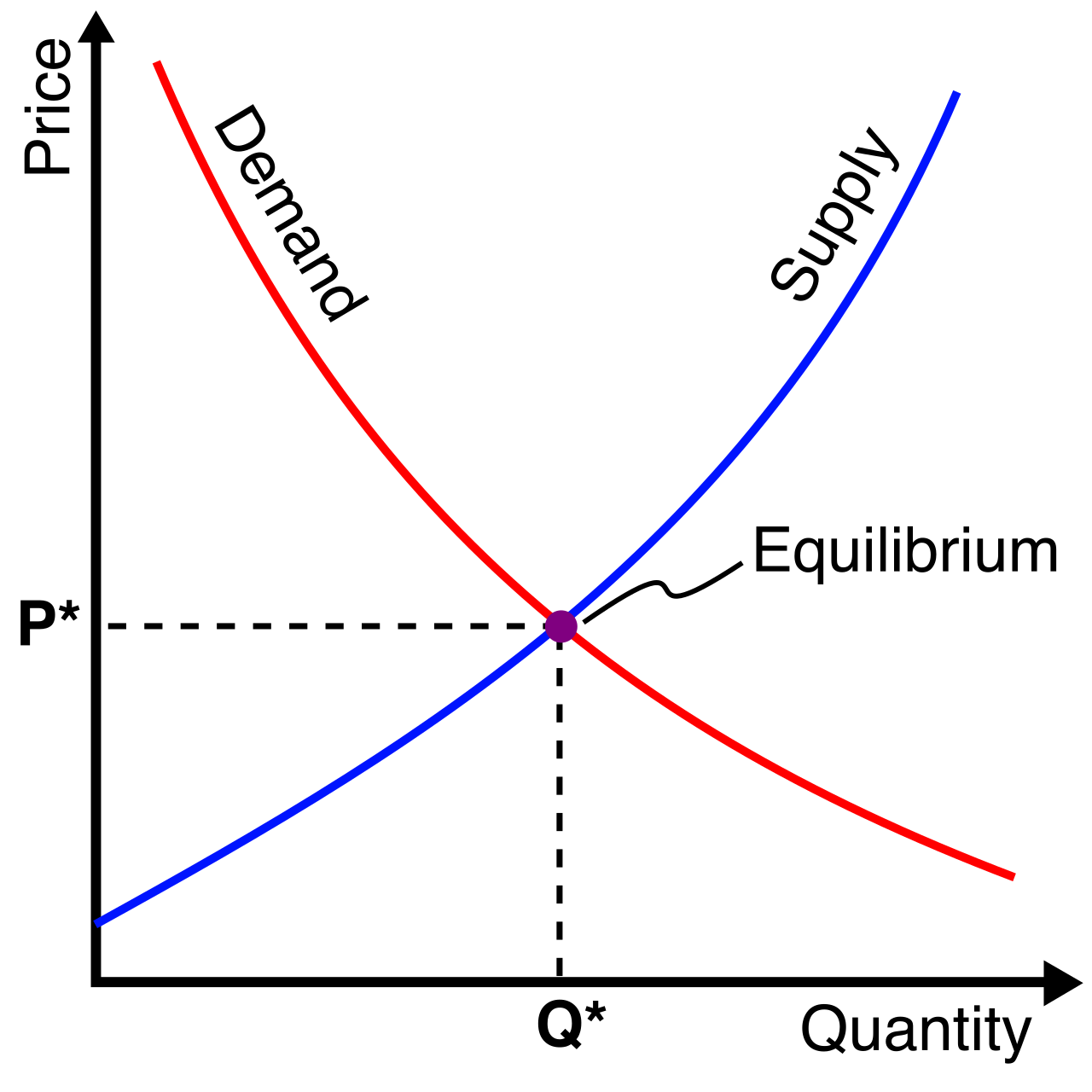
A rental property is an economic vessel that must find its equilibrium within a local market. Just as fluid dynamics dictate how water finds its level, local supply and demand establish the precise rate at which a property will successfully lease. But a real estate professional does more than simply read the economic thermometer of an area. They act as the legal and ethical gatekeeper to housing. The process of analyzing markets, procuring tenants, and managing properties operates under a strict, unyielding framework of federal law that ensures equal access to shelter.
Understanding this framework is not about memorizing arbitrary rules; it is about recognizing the boundaries within which the real estate market is legally permitted to operate. We will examine the forces that determine property pricing, the objective science of tenant selection, and the critical federal boundaries of Fair Housing and the Americans with Disabilities Act.
When a property manager sits down to price a vacant unit, they must separate the owner’s emotional and financial desires from the reality of the street. To find this reality, property managers use a rental market analysis to determine the most competitive rental rate for a property.
A rental market analysis compares the subject property to recently leased, similar rental properties in the same geographic area. Rental rates are primarily determined by local market supply and demand dynamics, entirely indifferent to the property owner's specific financial needs or debt service obligations.
Crucial Concept: Property operating expenses do not dictate the competitive market rental rate. If a landlord has a $2,500 monthly mortgage payment, but identical neighboring units rent for $1,800, the market rate remains $1,800. Rental rates are determined by external market conditions.
Interpreting Vacancy Rates as Market Signals
A property’s vacancy rate is an immediate feedback loop telling the manager whether their pricing matches market conditions.
- Near Zero Percent Vacancy: While landlords often celebrate a fully occupied building, a vacancy rate of near zero percent usually indicates that the current rental rates are set below current market value. If a property manager prices a unit $300 below market, it will lease overnight, but the landlord is leaving substantial yield on the table.
- Consistently High Vacancy: Conversely, a consistently high vacancy rate in a rental property may indicate that the current rental rates are set above current market value. Prospective tenants are simply finding better value elsewhere. However, price is not the only variable. A consistently high vacancy rate may also indicate poor physical condition or ineffective property management practices.
Quoting Commercial vs. Residential Rents
The mathematical language of pricing shifts depending on the asset class:
- Residential rental rates are typically calculated and quoted as a flat monthly rate per individual unit (e.g., $1,500 per month for an apartment).
- Commercial rental rates are frequently calculated and quoted on an annual price-per-square-foot basis.
Worked Example: You are leasing a 3,000-square-foot retail space. The market rate is quoted at "$30 per square foot."
- Annual Rent: 3,000 \times \30 = $90,000$ per year.
- Monthly Rent: \90,000 \div 12 = $7,500$ per month.
Procuring a tenant is a process of risk management. Landlords rely on property managers to place tenants who will pay consistently and respect the property. However, to avoid violating Fair Housing laws, landlords must apply tenant qualification criteria consistently to all applicants.
If you require a 650 credit score and 3x monthly income from one applicant, you must require the exact same threshold from every applicant. Property managers must keep accurate and consistent records of all applicant screenings to defend against potential discrimination claims.
Objective Grounds for Rejection
Property managers possess the legal right to protect their asset. It is entirely legal to reject a tenant applicant based on:
- Verifiable insufficient income: A landlord can legally request income verification from prospective tenants through documents such as recent pay stubs or tax returns.
- Documented poor credit history.
- A negative reference from a previous landlord.
Regulatory Compliance: Under the Fair Credit Reporting Act (FCRA), if a landlord denies a lease—or requires a higher security deposit—based on information found in a credit report, they must provide an adverse action notice to the applicant. This notice informs the applicant of the agency that provided the report and their right to dispute inaccuracies.
The U.S. housing market operates under strict federal anti-discrimination laws. The Department of Housing and Urban Development (HUD) enforces the federal Fair Housing Act.
The timeline of protected classes evolved across three major pieces of legislation:
| Year | Legislation | Protected Classes Added |
|---|---|---|
| 1968 | Fair Housing Act | Race, Color, Religion, National Origin |
| 1974 | Housing and Community Development Act | Sex |
| 1988 | Fair Housing Amendments Act | Disability, Familial Status |
Prohibited Discriminatory Practices
The law prevents agents from manipulating markets or clients based on protected classes. Two key violations you must understand are:
- Steering: This occurs when a property manager guides prospective tenants toward or away from specific neighborhoods (or specific buildings within a complex) based on the tenant's protected class status.
- Blockbusting: This occurs when individuals induce panic by claiming the entry of a protected class into a neighborhood will negatively impact property values, usually to prompt residents to sell cheaply.
Property managers must also avoid discriminatory language in all rental advertising. To visually communicate compliance, the Equal Housing Opportunity logo or slogan is commonly used in advertising to indicate a commitment to Fair Housing laws.
Added in 1988, familial status fundamentally reshaped property management. Familial status protections apply broadly: they cover families with children under the age of 18 living with parents or legal custodians. Furthermore, these protections extend to pregnant women, as well as individuals in the process of securing legal custody of any individual under the age of 18.
Avoiding Accidental Discrimination Against Families
Property managers often run afoul of familial status laws not out of malice, but through restrictive policies:
- Occupancy Limits: Landlords may violate familial status protections if they enforce overly restrictive occupancy limits that disproportionately exclude families with children. To clarify what is legally reasonable, HUD relies on the Keating Memorandum, which provides guidance stating that an occupancy standard of two persons per bedroom is generally considered reasonable under federal law.
- Unequal Financial Burden: Landlords cannot require higher security deposits from families with children compared to tenants without children. Wear-and-tear risks must be mitigated uniformly, not via a "child penalty."
- Segregation within a Property: Landlords cannot restrict families with children to specific floors or specific buildings within an apartment complex. Designating a "quiet, adults-only building" in a multi-family complex is illegal steering.
- Age Restrictions: Age restrictions in housing are legally permissible only if the property qualifies as "housing for older persons" under specific federal exemptions (such as 55+ or 62+ communities that meet strict HUD criteria).
When navigating disability in real estate, we must strictly differentiate between three mechanisms: Reasonable Accommodations, Reasonable Modifications, and the Americans with Disabilities Act (ADA).
1. Reasonable Accommodations (Changes to Policies)
A reasonable accommodation is an exception or adjustment to a rule, policy, practice, or service to assist a person with a disability.
The most heavily tested application of this concept involves assistance animals. An assistance animal (such as a guide dog or an emotional support animal) is legally viewed as a working tool, not a pet.
- Property managers must waive restrictive pet policies (such as breed or weight restrictions) as a reasonable accommodation for tenants who require legally recognized assistance animals.
- Property managers cannot charge pet rent, pet fees, or pet deposits for legally recognized assistance animals.

2. Reasonable Modifications (Changes to Physical Structures)
A reasonable modification is a structural or physical change made to existing premises to afford a person with a disability full enjoyment of the premises (e.g., installing grab bars, widening a doorway, building a ramp).
In a privately owned rental unit under the Fair Housing Act:
- A tenant with a disability must generally pay for their own reasonable modifications.
- A landlord can require a tenant to restore the interior of a modified rental unit to its original condition at the end of the lease at the tenant's expense.
3. The Americans with Disabilities Act (ADA)
While the Fair Housing Act governs residential living spaces, Title III of the Americans with Disabilities Act applies to places of public accommodation.
In property management, you must identify which parts of your property are "public" and which are "residential."
- The leasing office of a residential apartment complex is freely accessible to the general public. Therefore, it is considered a public accommodation subject to the ADA. Property managers must remove architectural barriers in public accommodation areas if the removal is readily achievable (e.g., installing a ramp over a curb to the leasing office door).
- Conversely, multi-family residential common areas designated for tenant use only (like a private resident pool or a locked tenant gym) are covered by the Fair Housing Act rather than the Americans with Disabilities Act.

By mastering these distinctions, you transcend memorization. You begin to see how the mathematical reality of market supply interacts with the strict legal boundaries of civil rights—equipping you not just to pass your exam, but to practice real estate with precision, legality, and elite competence.