Closing Process, Recordation, and Warranties
Not sure you’re ready?
Take the ~3-minute readiness diagnostic and see where you stand.
The exact moment property changes hands is not marked by a gavel strike, a handshake, or the clearing of a bank wire. The legal transfer of real property ownership occurs immediately upon the delivery and acceptance of a valid deed. Until that highly specific exchange takes place, the buyer holds only a contractual promise, and the seller retains absolute dominion over the land.
Understanding the mechanics of this transfer, how the public is notified of the change, and the rigorous financial accounting that accompanies it is the foundation of real estate practice. The settlement process bridges the gap between an abstract agreement and concrete, legally defensible property ownership.
To understand the transfer of real estate, consider the deed not merely as a receipt, but as a physical vehicle for title. A deed must be delivered by the grantor during the grantor's lifetime to effectively transfer property title. If a property owner signs a deed leaving their home to a relative but leaves it locked in a desk drawer until their death, no transfer has occurred. The legal act of delivery was never completed.

Furthermore, ownership cannot be forced upon someone. Acceptance of a deed by the grantee is a legal requirement to complete the transfer of property title. It takes two distinct acts: the intentional handing over of the right, and the willing receipt of it.
Crucial Concept: A deed is legally valid and binding between the grantor and the grantee even if the deed is never recorded. The moment the grantor hands the deed to the grantee and the grantee accepts it, the grantee owns the property.
If unrecorded deeds are perfectly valid between the two parties, why do we bother with the bureaucratic hurdle of the county courthouse? The answer lies in protecting that ownership from the rest of the world.
If you buy a parcel of land, pocket the deed, and never tell a soul, you are the legal owner. However, if the seller is dishonest and sells that same parcel to someone else the next day, chaos ensues. This is why the recording system exists.
Recording a deed places the transfer document into the official county public records. Before the county clerk will accept this document, however, authenticity must be verified. Therefore, a deed must typically be formally acknowledged by a notary public before the deed is eligible for public recordation. The notary acts as the state’s witness that the signature is genuine and voluntary.

By placing this document in the public record, you are utilizing the concept of legal notice. Notice comes in two primary forms, both of which serve to protect legal rights and establish priorities.
| Type of Notice | Definition | Real-World Application |
|---|---|---|
| Constructive Notice | The legal presumption that information is publicly available and can be obtained by an individual through diligent inquiry. | Recording a deed provides constructive notice to the public of a person's ownership interest in a specific parcel of real estate. Ignorance of the public record is not a valid legal defense. |
| Actual Notice | Occurs when an individual has direct, firsthand knowledge of a property's ownership status or physical condition. | A buyer walking through a property and seeing a tenant actively living there has actual notice of a leasehold interest, regardless of what the public record says. |
The Race to the Courthouse
When disputes arise, state recording acts establish the legal priority of conflicting property claims or liens. These laws act as the ultimate tiebreaker. While states have slight variations in their statutes (race, notice, and race-notice), the general rule of recording priority dictates that the first party to record a deed holds the superior legal claim to the property. This principle—often summarized as "first in time, first in right"—is what makes title insurance possible and gives buyers confidence that their ownership cannot be suddenly usurped by a secret, unrecorded prior transaction.
The closing process is the final settlement step in a real estate transaction where funds are distributed and title is formally transferred. Depending on regional customs, this climax takes one of two primary forms:
- Table Closing: This is a localized event. A table closing involves the buyer and seller meeting face-to-face to sign documents and exchange funds simultaneously, often at a title company or attorney's office.
- Escrow Closing: Common in western states, the parties rarely meet. In an escrow closing, a neutral third party holds all documents and funds until all contractual conditions are met. Once the conditions are satisfied, the escrow agent unilaterally records the deed and disperses the money.
In either scenario, a settlement agent facilitates the closing process by preparing legal documents, calculating prorations, and distributing transaction funds.
The Prerequisite: Marketable Title
The settlement agent cannot simply blindly transfer property. The property seller must produce clear evidence of a marketable title before the real estate closing can legally proceed. Marketable title means the ownership is reasonably free from doubt and the threat of litigation. To verify this, a title search examines historical public records to confirm the seller's legal ownership and to discover any outstanding liens, judgments, or encumbrances that must be cleared prior to or during settlement.
Because real estate transactions often involve massive sums of borrowed money, the federal government heavily regulates the settlement of financed properties. The Real Estate Settlement Procedures Act (RESPA) regulates closing procedures and disclosures for federally related residential mortgage loans. RESPA was designed to eliminate kickbacks and ensure buyers know exactly what they are paying for.
To enforce this transparency, the TILA-RESPA Integrated Disclosure (TRID) rule requires the mortgage lender to provide a Closing Disclosure document to the borrower.
The 3-Day Rule: The Closing Disclosure must be provided to the borrower at least three business days before the consummation of the mortgage loan. This mandatory waiting period gives the borrower time to review the numbers away from the high-pressure environment of the closing table.
The Closing Disclosure details the final mortgage loan terms, closing costs, and the exact cash amount required to close the transaction. To arrive at that final "cash to close" figure, the settlement agent utilizes a system of debits and credits.
- Debit: At a real estate closing, a debit represents a charge or an amount that a specific party owes and must pay. (e.g., the purchase price is a debit to the buyer).
- Credit: At a real estate closing, a credit represents an amount entered in a party's favor that has already been paid or is being reimbursed. (e.g., the earnest money deposit is a credit to the buyer).
Closing Prorations
Property ownership carries ongoing daily expenses that do not neatly align with a mid-month closing date. Closing prorations allocate ongoing property expenses like property taxes and homeowner association (HOA) dues between the buyer and the seller, ensuring each party only pays for the exact number of days they own the property.
Calculation Scenario: Assume a property's annual taxes are $3,650, paid in arrears (at the end of the year). The transaction closes on Day 100 of the 365-day year.
- Daily tax rate: $3,650 ÷ 365 days = $10 per day.
- The seller lived in the home for 100 days but hasn't paid the taxes yet because they are billed at the end of the year.
- Seller's share: 100 days × $10 = $1,000.
On the Closing Disclosure, there will be a Debit to the Seller for $1,000 (they owe this for their time in the home) and a corresponding Credit to the Buyer for $1,000 (they are receiving this money now so they can pay the full bill when it arrives in December).
Once the deed is recorded and funds are disbursed, the buyer is the unquestioned owner. However, ownership often brings immediate anxiety regarding the physical condition of the property. Real estate warranties exist to mitigate this post-closing financial risk, and they differ drastically depending on whether the home is existing or newly constructed.
Existing Properties: Home Warranties
For previously owned homes, buyers or sellers can purchase a home warranty during a real estate transaction to protect the buyer against unexpected repair costs.
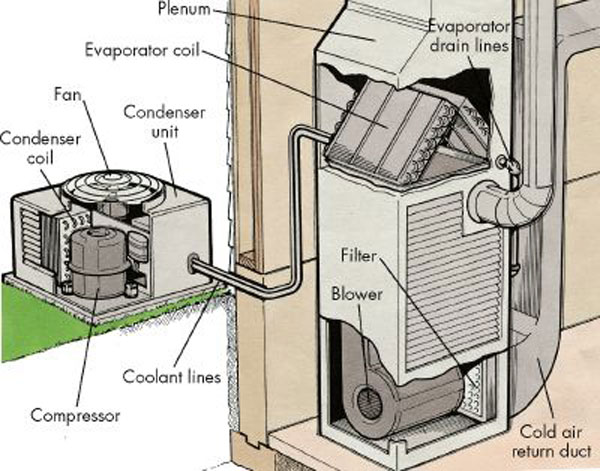
A home warranty is an annual service contract that covers the repair or replacement of major existing home systems and appliances (such as the water heater, dishwasher, or furnace). It is vital to manage client expectations regarding these policies: standard home warranties explicitly exclude coverage for any pre-existing conditions of the property's systems or appliances. If the HVAC unit was broken before the closing date, the home warranty will not cover its replacement.
New Construction Warranties
When purchasing a brand-new home directly from a developer, a different standard applies. A new construction warranty is provided by a builder to cover defects in materials and workmanship in a newly constructed home.
These warranties are typically tiered based on the lifespan of the components:
- Systems: New construction warranties typically cover plumbing, electrical, and HVAC systems for a shorter duration than major structural components, usually lasting one to two years.
- Structure: New construction warranties often provide coverage for major structural defects (such as the foundation or load-bearing walls) for a period of up to ten years.

Finally, underlying all specific, written builder warranties is a powerful legal doctrine. An implied warranty of habitability legally requires builders to ensure a newly constructed home is safe and suitable for human occupation. Even if a builder attempts to sell a new house "as-is", the courts have universally ruled that the builder fundamentally guarantees the home will not collapse, leak profusely, or possess defects that make it unlivable.