CO Closing & Settlement
Not sure you’re ready?
Take the ~3-minute readiness diagnostic and see where you stand.
Imagine a massive suspension bridge where two structural spans meet in the dead center over a river. If the engineering is off by a single millimeter, the connection fails. A Colorado real estate closing is the financial equivalent of this architectural feat. Years of savings, precise contractual promises, complex mortgage terms, and hundreds of days of property taxes all converge on a single afternoon. To orchestrate this, you cannot rely on intuition; you must master the rigid mechanics of the closing ledger. The settlement statement is where legal theory becomes physical reality, transforming a contract into a transfer of title.

To understand a closing, we must first understand the accounting instrument used to track the capital. A traditional Colorado settlement worksheet contains separate debit and credit columns for the buyer, separate debit and credit columns for the seller, and separate debit and credit columns for the broker or closing entity. This is a classic six-column, double-entry accounting ledger.
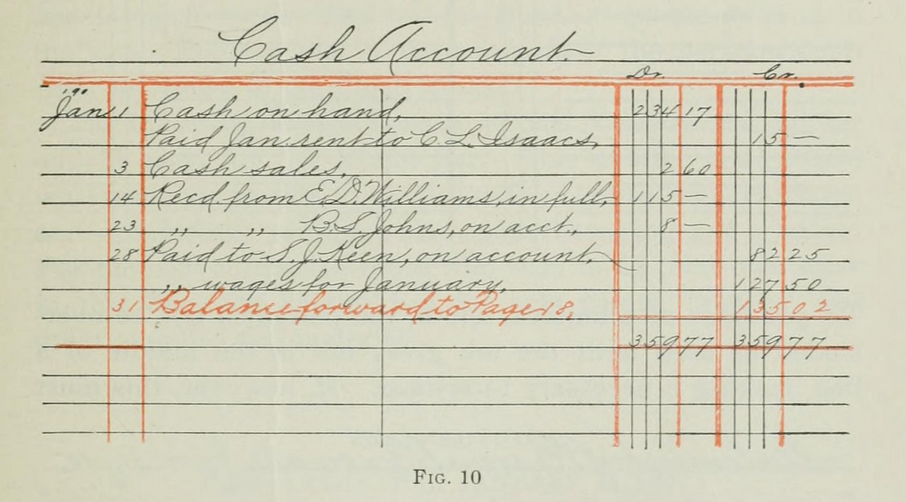
Every dollar moving through the transaction must be accounted for.
- A Debit is a charge. It is an amount a party owes or must pay.
- A Credit is an asset. It is an amount a party receives or an amount that reduces what they must bring to the table.
The Core Financials: Price and Earnest Money
The foundation of the ledger is the asset being transferred. The home purchase price is recorded on a settlement statement as a debit to the buyer (because the buyer owes this amount to acquire the property) and a credit to the seller (because the seller is receiving this value).
Before closing, the buyer has already put money on the line to secure the contract. A buyer's earnest money deposit appears as a credit to the buyer on the settlement statement, reducing the final cash they need to provide. Because the money is moving out of a trust account to fund the transaction, a buyer's earnest money deposit appears as a debit to the entity holding the funds on the settlement statement.
Mortgages: Assumed Debt
In some transactions, a buyer will take over the seller's existing loan. An assumed mortgage balance is recorded as a debit to the seller on the settlement statement. Why? Because the seller is using the buyer's assumption of that debt to "pay off" a portion of the purchase price; it reduces the seller's net cash. Conversely, an assumed mortgage balance is recorded as a credit to the buyer on the settlement statement, as it covers a massive chunk of their debit for the purchase price without requiring them to bring new cash.
A property generates continuous expenses and income, but the transaction halts the music on a specific date. To divide these costs fairly, we compute prorations.
The most fundamental rule of Colorado prorations is this: In Colorado real estate transactions, the buyer owns the property on the exact day of closing. Consequently, the seller of a real estate property is responsible for property expenses up to the day before closing.
To determine the daily rate for these expenses, annual property expense prorations in Colorado are calculated using the 365-day calendar method. If an annual expense is $3,650, the daily rate is exactly $10 per day.
Property Taxes: The Arrears Dilemma
Property taxes require special attention. Property taxes in Colorado are billed and paid in arrears in the year following the actual tax year. A homeowner living in a house in 2026 will not pay their 2026 property taxes until 2027.
When a property sells mid-year, the seller has lived in the house for months without paying that year's taxes. Therefore, a real estate closing statement records prorated property taxes for the current year as a debit to the seller (charging them for the days they lived there) and a credit to the buyer (giving the buyer the funds they will need to pay the full tax bill next year).
Because the exact tax bill for the current year isn't known until the end of the year, how do we prorate it? The Colorado Contract to Buy and Sell offers two distinct methods for estimation:
- The Contract allows parties to estimate current year taxes based on prior calendar year taxes.
- Alternatively, the Contract allows parties to estimate current year taxes based on the most recent mill levy and assessment.
Rents and Homeowner Association Dues
When dealing with rents and HOA dues, the cash flow usually operates in advance, not in arrears.
If a property has a tenant, rent is typically collected on the first of the month. If the closing is on the 15th, the seller has collected money for time they will no longer own the building. Therefore, a settlement statement records rent paid in advance by a tenant as a debit to the seller and a credit to the buyer.
Homeowner association (HOA) dues operate identically in reverse. Sellers usually pay their HOA dues on the first of the month. If the closing is on the 15th, the seller has pre-paid for the buyer's time in the property. Thus, a settlement statement records homeowner association dues paid in advance as a debit to the buyer and a credit to the seller.
A Note on Special Assessments: Municipalities or HOAs sometimes levy special assessments for major infrastructure projects (like paving roads or replacing a roof). Sellers are generally responsible for paying off special assessments in full prior to or at closing. Unlike standard property taxes or dues, special assessments are not prorated at closing unless the buyer explicitly agrees to assume the balance.
Once all prorations, fees, and prices are entered, the ledger must balance. We achieve this by calculating the final required cash transfers.
For the Buyer: The Balance Due from Buyer is the exact amount of cash the buyer must bring to closing. From an accounting perspective, the Balance Due from Buyer appears as a credit to the buyer on the settlement statement to balance the accounting ledger. (The buyer's debits outweighed their credits; adding this final cash as a credit perfectly balances their column).
For the Seller: The seller is usually walking away with equity. The seller's net proceeds appear as a debit to the seller on the settlement statement to balance the accounting ledger. (The seller's credits outweighed their debits; entering their payout as a debit zeros out their balance).
A mathematically perfect closing statement is useless if the legal prerequisites for transferring funds and title are ignored. Colorado enforces strict regulations on how money moves.
The Good Funds Law
You cannot buy a house with a personal check. Colorado's Good Funds law prohibits closing agents from disbursing funds until the money is collected and available for immediate withdrawal. This prevents a catastrophic chain reaction of bounced checks in interconnected property transactions.
Under Colorado real estate law, the following forms of payment qualify as Good Funds:
Personal checks do not qualify as Good Funds under Colorado real estate law, regardless of the buyer's wealth or creditworthiness.
Non-Resident Tax Withholding
When a seller leaves the state after liquidating real estate, the state loses leverage to collect income taxes on their capital gains. To prevent this, Colorado law requires a closing entity to withhold state income taxes for non-resident property sellers. The withholding tax amount for a non-resident seller is carefully capped: it is the lesser of two percent of the sales price or the seller's net proceeds.
Federal Timelines: The Closing Disclosure
If the buyer is using institutional financing, federal law intercepts the timeline. For federally related mortgage loans, a Closing Disclosure must be provided to the borrower at least three business days prior to consummation. This rule (part of the TRID framework) ensures consumers have time to read the true cost of their loan, preventing last-minute fee ambushes at the closing table.
A title company or closer does not invent the terms of the closing; they execute the will of the parties. A real estate closing statement must strictly adhere to the financial terms outlined in the Contract to Buy and Sell.
However, the closer needs explicit legal authority to act. A title company must receive written closing instructions executed by the parties before conducting a Colorado real estate closing. The Commission-approved Closing Instructions form engages a closing company to provide settlement services.
What happens if the two documents contradict one another? In the event of a conflict between the Contract to Buy and Sell and the Closing Instructions, the Closing Instructions control. This is because the Closing Instructions are the specific, often later-executed directives given directly to the settlement agent. Naturally, any modification to the written closing instructions must be documented in writing.
The Closing Instructions form does more than dictate the flow of money; it authorizes the closing company to prepare a bill of sale for personal property (such as a refrigerator or washer/dryer included in the deal). When preparing a bill of sale for personal property, the closing company acts solely as a scrivener—they are merely filling in the blanks as directed, not providing legal representation or warranting the property's condition.

The climax of the closing is the transfer of title. A real estate deed transfers legal title from the seller to the buyer. This transfer becomes legally effective because the real estate deed is formally delivered to the buyer at the closing table.
Filing this deed with the county involves state fees. The property buyer typically pays the Colorado documentary fee (amounting to 1 penny per $100 of consideration). The Colorado documentary fee is collected by the county clerk when the deed is recorded.
Concurrently, a Real Property Transfer Declaration (commonly known as the TD-1000) must be submitted to the county assessor after a Colorado property closing. This document provides the assessor with the vital details of the transaction—such as whether the sale was between family members or included a lot of personal property. The Real Property Transfer Declaration helps the county assessor ensure fair property tax assessments by filtering out skewed data from their valuation models.
In Colorado, the title company may perform the physical act of typing up the settlement statement, but the broker bears the ultimate professional liability.
A real estate broker must verify the accuracy of the settlement statement regardless of the preparer's identity. If the title company forgets to debit the buyer for an HOA transfer fee, the broker is held responsible by the Real Estate Commission for failing to catch the error.
To ensure accountability, a real estate licensee who attends a closing must sign the final settlement statement. Once signed, a real estate licensee attending a closing must immediately deliver a copy of the signed settlement statement to the employing broker so the brokerage can finalize its compliance review.
These requirements are anchored in strict Commission Rules:
- Commission Rule E-5 requires a real estate broker to provide a copy of the complete closing statement to the represented party.
- Commission Rule E-4 requires real estate brokers to immediately deliver a duplicate of any prepared original instrument to all executing parties.
All of these documents must be preserved. Colorado real estate brokers must maintain transaction records for a minimum of four years.
Finally, while most brokers rely on title companies, the law allows brokers to close their own transactions. However, a real estate broker who performs closing services and disburses funds legally functions as the Closing Company. Consequently, a broker functioning as a Closing Company must follow all state closing entity regulations, assuming the full mantle of regulatory and financial liability that a title company normally bears.
Understanding the Colorado closing process is not merely about passing a licensing exam; it is about recognizing your role as the guardian of the ledger. You are verifying that every penny promised in the contract is properly prorated, credited, and delivered, ensuring the bridge between seller and buyer holds firm.