CO Real Estate Commission & the Broker License Act
Not sure you’re ready?
Take the ~3-minute readiness diagnostic and see where you stand.
Imagine a complex physical system—a hydroelectric dam, for instance—where immense pressure must be carefully regulated, channeled, and monitored to produce power without catastrophic failure. In the Colorado real estate market, that immense pressure is the transfer of millions of dollars in property assets and the protection of consumer livelihoods every single day. The regulatory dam governing this flow is defined by the Colorado Real Estate Broker License Act, codified in Title 12, Article 10 of the Colorado Revised Statutes, and meticulously enforced through the rules found in Chapter 4 of the Code of Colorado Regulations, section 725-1 (4 CCR 725-1).

Understanding this framework is not an exercise in rote memorization; it is the fundamental blueprint for your professional survival. When you step into the real estate arena, you are granted immense legal authority to facilitate high-stakes transactions. With that authority comes an uncompromising system of oversight. Let us break down exactly who watches you, what rules you play by, and the precise mechanics of how Colorado licenses and disciplines its real estate brokers.
To understand the rules, you must first understand the rule-makers. State government operates in layers, much like nesting dolls, to distribute power.

At the very top, we have the Department of Regulatory Agencies (DORA), which serves as the umbrella administrative agency for professional licensing in the state. Beneath that umbrella is the Colorado Division of Real Estate. The Division is the bureaucratic machinery—the physical offices, the investigators, and the staff.
The Director of the Colorado Division of Real Estate functions as the chief administrative officer. The Director does not write the rules; rather, the Director executes the directives handed down by the brain of the operation: the Colorado Real Estate Commission.
The Colorado Real Estate Commission operates within the Division of Real Estate under DORA. It is an appointed body consisting of five members who serve three-year terms. They are appointed directly by the state Governor, ensuring they represent a cross-section of both industry expertise and public interest.
| Commission Seat | Professional Background | Specific Requirements |
|---|---|---|
| Broker Member 1 | Real Estate Broker | At least 5 years of experience in Colorado. |
| Broker Member 2 | Real Estate Broker | At least 5 years of experience in Colorado. |
| Broker Member 3 | Real Estate Broker | At least 5 years of experience, plus substantial experience in property management. |
| Public Member 1 | General Public | Representative of the public at large (unlicensed). |
| Public Member 2 | General Public | Representative of the public at large (unlicensed). |
The Scope and Limits of Commission Power
The Colorado Real Estate Commission regulates the licensing of real estate brokers and subdivision developers in Colorado. They are empowered to promulgate rules to enforce the provisions of the Colorado Real Estate Broker License Act.
However, it is equally important to understand what the Commission cannot do. The Commission is a statutory body, not a moral arbiter or a civil courtroom. Therefore:
- The Commission does not regulate or enforce ethical codes. Real estate ethical codes (such as the REALTOR® Code of Ethics) are voluntarily adopted by trade organizations rather than enforced by state law.
- The Commission does not settle commission or compensation disputes between real estate brokers. If you and another broker are fighting over a split, you take it to civil court, mediation, or your local board. The Commission does not care about your paycheck; they care about consumer protection.
To protect the public, the Commission is equipped with formidable investigatory tools. They are empowered to audit broker trust accounts routinely to ensure absolute compliance with state record-keeping rules. If they suspect foul play, the Commission has the power to issue subpoenas compelling the attendance of witnesses and the production of documents during an investigation.
If you speak to real estate professionals from other states, they will talk about being a "salesperson" or an "agent" who hopes to one day become a "broker." You must discard this terminology in Colorado.
Colorado operates as a single-license state. The state of Colorado officially abolished the real estate salesperson license in 1997. Today, Colorado recognizes only the broker license level for real estate practice.
However, just because everyone is a broker does not mean everyone has the same level of authority. Colorado structures broker licenses like a medical residency—you must prove your competency under supervision before you are allowed to practice independently. Furthermore, the Colorado Real Estate Commission requires all new broker applicants to submit fingerprints to the Colorado Bureau of Investigation for a criminal background check before stepping onto this ladder.
The Three Tiers of Broker Licensure
- Associate Broker: A newly licensed real estate professional in Colorado is initially classified as an Associate Broker. For the first two years of active licensure, an Associate Broker must be employed and supervised by an Employing Broker. You cannot strike out on your own.
- Independent Broker: A licensee may apply to upgrade to an Independent Broker license after completing two years of active experience as an Associate Broker. An Independent Broker may work as a self-employed sole proprietor. However, an Independent Broker is strictly prohibited from employing or supervising other licensed brokers.
- Employing Broker: To become an Employing Broker, a licensee must have two years of active broker experience and complete a specialized 24-hour Brokerage Administration course. Only an Employing Broker is authorized to employ and supervise Associate Brokers in a brokerage firm. To operate legally in Colorado, every real estate brokerage firm must designate an active Employing Broker.
What specifically triggers the requirement to hold a real estate license in Colorado? The legal threshold is remarkably clear.
The Licensing Threshold: Any person negotiating, selling, buying, or leasing real estate for another person for compensation must hold a Colorado real estate broker license. Furthermore, property management functions performed for another person for compensation require an active Colorado real estate broker license.
Practicing real estate for another person for compensation without an active broker license is not just a civil infraction; it is a misdemeanor criminal offense in Colorado.
Statutory Exemptions
Because the threshold is so broad, the law carves out highly specific exemptions. The following individuals do not need a real estate license:
- The "For-Sale-By-Owner": A person or entity selling or managing their own real estate is exempt. You do not need a license to sell your own property.
- Attorneys: An attorney-at-law is exempt from holding a real estate broker license when representing a client within the scope of standard legal duties.
- Court Appointees: A bankruptcy trustee, executor, or court-appointed receiver is exempt from real estate licensing requirements when performing official court duties.
- On-Site Managers: Salaried on-site apartment managers are exempt—but there is a massive caveat. The on-site apartment manager licensing exemption only applies if the manager performs no lease negotiation. If they are negotiating rent or lease terms, they need a license.
The Role of Unlicensed Assistants
In the modern real estate office, brokers rely heavily on administrative staff. Unlicensed real estate assistants may perform clerical and administrative duties for a brokerage (such as delivering paperwork, installing signs, or scheduling showings). However, unlicensed real estate assistants are strictly prohibited from performing any tasks requiring a real estate license (such as negotiating contract terms, explaining the legal meaning of a document to a client, or drafting agreements).
Once you are licensed, how do you interact with the public? Colorado has a unique approach to brokerage relationships designed to prevent accidental conflicts of interest.
The default brokerage relationship in Colorado is a transaction-broker relationship. A transaction-broker assists one or more parties throughout a real estate transaction without acting as an agent or advocate for any party. Think of a transaction-broker as a neutral referee. You facilitate the paperwork, you manage the deadlines, and you ensure the transaction reaches the closing table, but you do not advocate for the buyer to get a lower price, nor do you advocate for the seller to get a higher one.

If you wish to step out of this neutral role and actually advocate for your client, the law requires explicit documentation. A Colorado broker must obtain a written agency agreement to act as a single agent advocating for a buyer or seller. Why does this matter? Because a Colorado broker acting as a single agent without a written agency agreement is in direct violation of the transaction-broker default law. If it isn't in writing, you are a transaction-broker by default.
Dealing for Your Own Account
What happens when you, the licensed broker, decide to buy or sell your own property? Do you take off your "broker hat" and become a standard consumer? No. A licensed broker dealing in real estate for their own account as a principal remains subject to the Real Estate Broker License Act and Commission rules. You are held to a higher standard of disclosure and conduct because of your specialized knowledge, even when flipping your own investment property.
Mandatory Insurance
To protect the public from professional mistakes, Colorado real estate brokers must maintain mandatory Errors and Omissions (E&O) insurance to keep an active license. This isn't a suggestion; it is a mechanical requirement of the licensing system. Failing to renew Errors and Omissions insurance results in the immediate placement of a broker's license on inactive status. If your insurance lapses at midnight, your ability to legally practice real estate vanishes at exactly 12:01 AM.
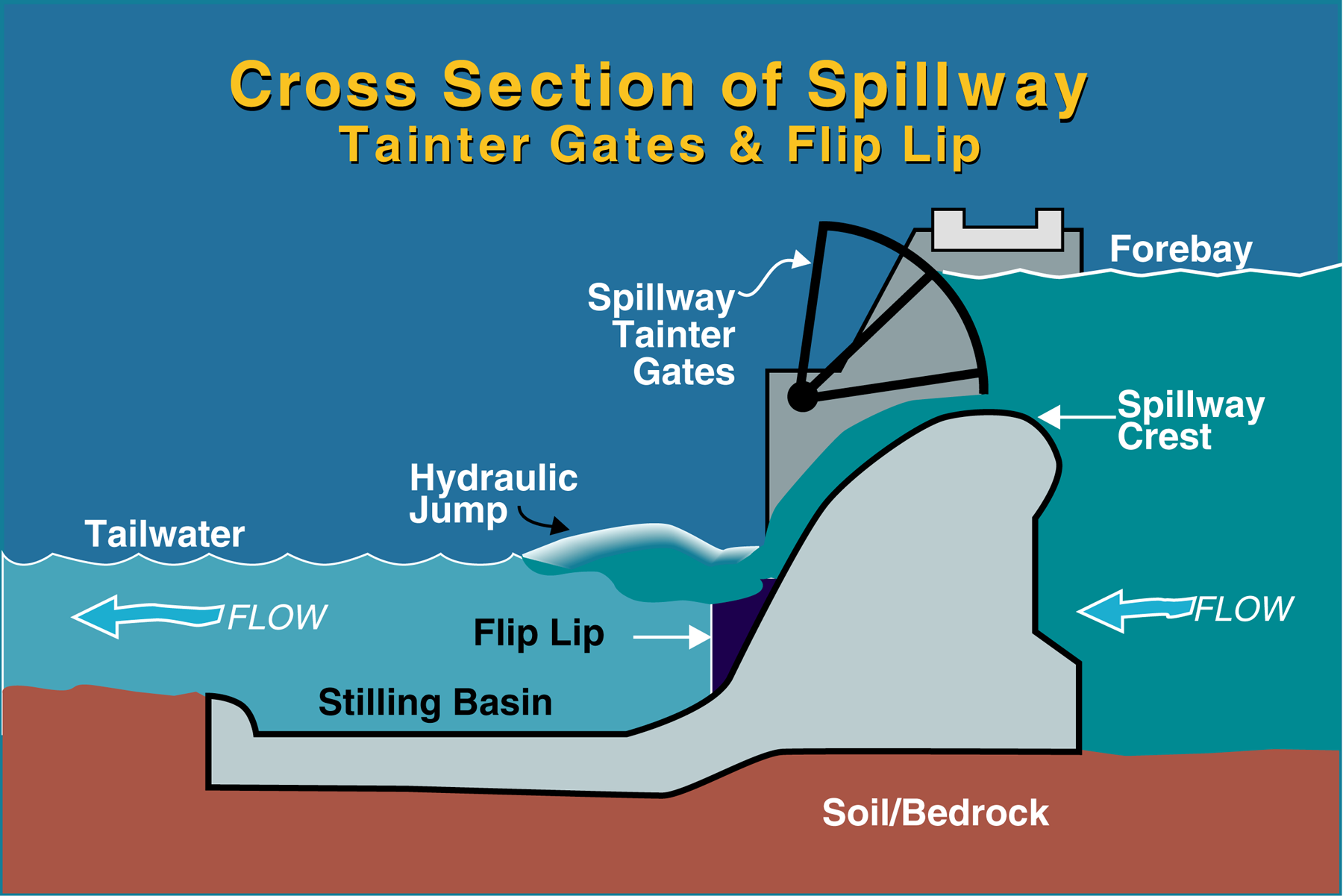
If the regulatory framework is the dam, the disciplinary process is the emergency spillway. When things go wrong, how does the state intervene?
1. The Trigger
The Colorado Real Estate Commission can initiate an investigation into a licensee in two ways:
- Upon receiving a written complaint from a consumer, another broker, or a third party.
- Upon its own motion without a public complaint (for example, if a trust account audit flags an anomaly).
Additionally, the state cares deeply about your legal standing outside of real estate. Licensed brokers must notify the Colorado Real Estate Commission of any felony conviction or specific misdemeanor convictions (like theft, fraud, or assault).
2. The Response (Commission Rule E-21)
When the Commission reaches out, silence is professionally lethal. Licensees must respond in writing to any complaint or inquiry from the Colorado Real Estate Commission pursuant to Commission Rule E-21. A broker who fails to respond to a formal Colorado Real Estate Commission inquiry or audit notification is subject to disciplinary action—even if the underlying complaint turns out to be entirely baseless. Ignoring the Commission is a discrete, punishable offense.
3. The Hearing
If an investigation uncovers sufficient evidence of a violation, the broker is not simply punished by fiat. A licensee facing disciplinary action from the Colorado Real Estate Commission is entitled to an administrative hearing.
To ensure due process, an Administrative Law Judge (ALJ) often presides over formal disciplinary hearings for the Colorado Real Estate Commission. The ALJ listens to evidence, hears from witnesses, and makes an initial legal determination based on the facts.
4. The Final Order
The ALJ does not have the final say. The Colorado Real Estate Commission reviews the initial decision of the Administrative Law Judge following a disciplinary hearing. After this review, the Colorado Real Estate Commission issues a Final Agency Order determining the actual penalty.
The Ladder of Penalties
When the Commission issues its Final Agency Order, it has a diverse arsenal of disciplinary actions at its disposal, scaling from warnings to career termination:
- Letter of Admonishment: A formal warning for minor licensee misconduct. It goes in your file but does not restrict your practice.
- Monetary Fines: The Commission has the statutory authority to assess monetary fines against licensees for violations of the license law.
- Public Censure: The Commission can publicly censure a licensee to create a permanent public disciplinary record, severely impacting the broker's professional reputation.
- Probation: The Commission can place a broker's license on probation. A license on probation requires the broker to fulfill specific terms and conditions (such as completing additional education or submitting to trust account monitoring) for a set period.
- Temporary Suspension: The Commission can temporarily suspend a broker's license to remove the ability to practice real estate for a defined duration.
- Permanent Revocation: For severe or repeated violations—such as commingling trust funds, blatant fraud, or gross negligence—the Commission can permanently revoke a broker's real estate license.
Understanding the Colorado Real Estate Commission and the Broker License Act is about mastering the boundaries of your profession. The rules codified in Title 12, Article 10 and 4 CCR 725-1 are not there to hinder your success; they are the structural framework that gives your license value. By mastering this regulatory architecture—from the default transaction-broker relationship to the absolute necessity of Rule E-21—you aren't just preparing to pass an exam; you are preparing to operate at the highest level of professional real estate practice.