IL Designated Agency & Agency Disclosure
Not sure you’re ready?
Take the ~3-minute readiness diagnostic and see where you stand.
Prior to the year 2000, real estate transactions in Illinois were entangled in the invisible, often contradictory webs of common-law agency. Under the old rules, if a buyer walked into a brokerage to look at a listing, the agent showing the home was legally considered a subagent of the seller—bound to fetch the highest price for the seller, even while smiling and shaking the buyer's hand. It was a labyrinth of implied loyalties that left consumers bewildered and brokers legally exposed.
The Illinois Real Estate License Act of 2000 incinerated this confusion. The Act completely replaces common-law agency with statutory rules under Article 15. The old concept of subagency is legally prohibited in Illinois. Instead, the law establishes a clean, precise, and highly individualized framework: you represent the person you are actually working with, and the rules of that relationship are etched directly into the statute.

In Illinois, designated agency is the default statutory agency relationship. To understand how this works, imagine a large hospital. When you are admitted, the hospital administrator doesn't personally treat you; rather, they assign a specific attending physician to your care.
Real estate in Illinois functions the exact same way. Under designated agency, a sponsoring broker assigns a specific sponsored licensee to act as the legal agent of a client. Because of this targeted assignment, a designated agent represents the client to the exclusion of all other licensees affiliated with the sponsoring broker.
This creates a brilliant firewall within the brokerage. It means that different affiliated licensees under the same sponsoring broker may represent the buyer and the seller in the exact same transaction. Because each agent is strictly designated to their respective client, a sponsoring broker is not considered a dual agent when different affiliated licensees represent the buyer and seller. The buyer gets their champion, the seller gets theirs, and the brokerage can facilitate the deal without compromising fiduciary duties.
To formalize this structure, Illinois law requires a sponsoring broker to have a written employment agreement with sponsored licensees. Among other things, this written employment agreement between a sponsoring broker and a sponsored licensee must detail the firm's designated agency policy.
Crucial Exam Distinction: The payment of compensation does not determine the agency relationship in Illinois. A buyer’s agent is absolutely dedicated to the buyer’s best interests, even if the seller is the one ultimately funding the commission at the closing table.
How exactly is this relationship triggered? Illinois law is fiercely protective of the consumer, so it relies on a simple default: an Illinois licensee is presumed to be the designated agent of the consumer the licensee is working with.
This presumption of designated agency applies universally, unless one of two conditions is met:
- There is a written agreement stating a different relationship.
- The licensee is performing only ministerial acts.
Understanding the boundary between an active agent and someone just performing ministerial acts is vital. A customer is a consumer who is not represented by a licensee. You can interact with a customer without accidentally becoming their agent, provided you limit your behavior to ministerial acts.
Ministerial acts are routine administrative tasks. Crucially, ministerial acts do not require the exercise of a licensee's professional judgment. Handing a consumer a flyer at an open house, pointing out the property lines, or answering basic questions about the listing price are routine tasks. The moment you offer professional judgment—such as advising that consumer on how much they should bid or suggesting negotiation strategies—you have crossed the threshold, and the statutory presumption of agency binds you to them.

What Illinois Explicitly Forbids
Because the law demands clarity in representation, Illinois law prohibits non-agency brokerage where the licensee acts as a mere facilitator without representing any party. By the exact same token, Illinois law prohibits transactional brokerage. You cannot be a neutral referee in Illinois; you must either represent a client or treat the consumer strictly as an unrepresented customer.
Under Article 15, the duties you owe depend entirely on whether the consumer is a client (whom you represent) or a customer (whom you do not).
Duties to a Customer
Even though you do not represent a customer, you are not absolved of basic professional ethics.
- An Illinois licensee owes a real estate customer the duty of honest dealing.
- An Illinois licensee must disclose known material adverse facts pertaining to the physical condition of the property to all customers. If you are representing the seller and you know the basement floods during heavy rain, you cannot hide that fact from an unrepresented buyer.

Duties to a Client
When a consumer is your client, you owe them a rigorous set of statutory duties designed to protect their financial and legal interests:
- Contractual Fidelity: An Illinois designated agent owes a statutory duty to perform the terms of the written brokerage agreement.
- Best Interests: You must promote the best interests of the agent's client. Promoting a client's best interests includes seeking a transaction at the price and terms acceptable to the client.
- Offer Presentation: An Illinois designated agent must present all offers in a timely manner. Furthermore, they must present all counteroffers in a timely manner. (Note: The statutory duty to present all offers in a timely manner can be waived in writing by the client, though this is rare in practice).
- Skill and Care: You owe the statutory duty of ordinary skill and care in performing brokerage services.
- Accounting: You must account in a timely manner for all money and property received in which the client has an interest.
- Transparency: An Illinois real estate licensee must disclose the licensee's agency status in writing to all other parties in a transaction.
The Eternity of Confidentiality
Perhaps the most sacred duty is confidentiality. An Illinois designated agent must keep confidential information received from a client confidential forever.
Furthermore, a real estate licensee's statutory duty to maintain client confidentiality continues after the termination of the brokerage agreement (just as the statutory duty to account for client funds continues after termination). If you represent a seller who is divorcing and desperate to sell, and the listing expires, you cannot approach a buyer a year later and say, "I know the seller is desperate; let's lowball them."
There are only three strict exceptions where a real estate agent may (or must) disclose confidential client information:
- If the client grants permission.
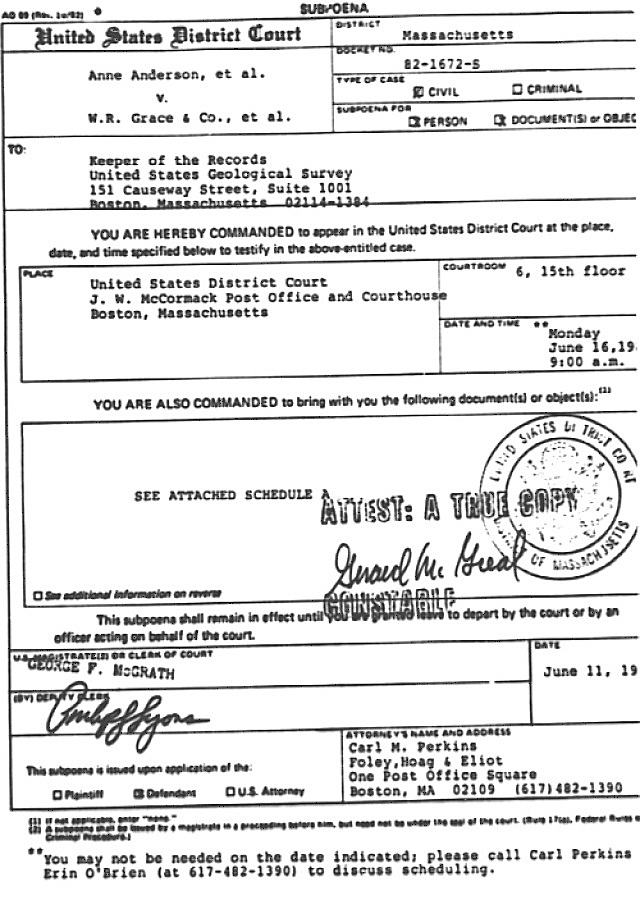
- If it is required by law (e.g., a court subpoena).
- If the information reveals a material defect in the property. (You cannot keep a crumbling foundation a "secret" just because your client asked you to; physical defects must be disclosed).
Because agency dictates loyalty, the consumer must know exactly who represents them before the stakes get too high.
A written disclosure of designated agency must be provided to a real estate consumer. This written agency disclosure provided to a consumer must include the name of the designated agent.
When must this happen? Timing is a critical testing point.
- A designated agent must disclose the agency relationship to the consumer before any confidential information is shared. If a buyer starts telling you their maximum budget or their desperate need to move by the 1st of the month, you must stop them and disclose who you represent.
- Statutorily, a licensee must disclose the licensee's designated agency relationship in writing to the consumer no later than entering into a brokerage agreement.
Dual agency occurs when a single licensee represents both the buyer and the seller in the same transaction.
Imagine trying to play chess for both the white pieces and the black pieces simultaneously. You are uniquely positioned to know both sides' vulnerabilities. Because of this inherent conflict of interest, the law heavily regulates the practice.
Disclosed dual agency is legal in Illinois. However, undisclosed dual agency is a violation of the Illinois Real Estate License Act.

The Two-Step Consent Process
Because a dual agent's loyalties are split, they must obtain informed written consent from the buyer to act as a dual agent, and they must obtain informed written consent from the seller to act as a dual agent.
Illinois law dictates a strict timeline for this consent:
- Initial Consent: The dual agency disclosure and consent form must be presented to the client at the time the brokerage agreement is entered into. A client may sign the dual agency consent form at the time the brokerage agreement is executed, or a client may sign the dual agency consent form at any time before the licensee actually acts as a dual agent.
- Confirmation: Because initial consent might happen months before a specific buyer wants to buy a specific seller's house, the law requires a second check. A dual agent must obtain a written confirmation of the dual agency consent from both parties no later than the time of executing a purchase contract.
The Five Prohibitions of Dual Agency
Once acting as a dual agent, you step into a neutralized role. You can facilitate the transaction, explain documents, and arrange inspections, but you are stripped of your ability to actively advocate.
By law, a dual agent is prohibited from:
- Disclosing the highest price a buyer is willing to pay.
- Disclosing the lowest price a seller is willing to accept.
- Disclosing the motivation of the buyer.
- Disclosing the motivation of the seller.
- Advocating on behalf of one client to the detriment of another client.
Finally, let's look at a scenario that tests the limits of client loyalty: Contemporaneous offers.
Contemporaneous offers occur when a designated agent represents two or more buyers submitting offers on the same property. In a hot market, you might have two distinct buyer clients who tour the same listing on a Saturday and both tell you, "Write up an offer!"
This involves multiple buyers submitting offers on the same property at the same time, using the same agent. You are now holding the confidential bidding strategies of two competing clients.
To resolve this ethically, the law mandates transparency: a designated agent must provide written disclosure to all buyer clients when making contemporaneous offers on the same property. This alerts the buyers that their agent is simultaneously submitting competing paperwork, allowing them to decide if they wish to proceed, seek different representation for this specific transaction, or ask the sponsoring broker to assign a different designated agent to one of them.
Summary for the Aspiring Broker
When you sit for the PSI/ILREP exam, remember the core philosophy of Article 15: Clarity, Loyalty, and Transparency. Illinois rejected the murky waters of common-law subagency and replaced it with a system where every consumer knows exactly whose side you are on. Whether you are distinguishing a client from a customer, safeguarding confidences, or navigating the rigid disclosures of dual agency, your statutory duty is to keep the lines of representation unmistakably clear.