IL Disclosures — Residential Real Property Disclosure Act & Material Defects
Not sure you’re ready?
Take the ~3-minute readiness diagnostic and see where you stand.
The fundamental problem in any real estate transaction is asymmetrical information. A seller who has lived in a property for decades intimately knows that the basement floods during heavy spring rains and that the electrical panel constantly trips, while a prospective buyer walks through for forty-five minutes and sees only fresh paint and perfectly staged furniture. To correct this market failure, Illinois real estate law enforces a strict regime of mandatory disclosures. As a licensed broker, your role is not just to market properties, but to navigate this complex web of statutory obligations to protect the public and shield yourself from liability.

Illinois law handles this information gap through three distinct channels: what the seller must tell the buyer, what you (the broker) must disclose regarding physical defects versus psychological stigmas, and how you present yourself truthfully to the public in your advertising. Mastering these rules is not merely about passing the Illinois broker exam; it is the daily, operational foundation of your career.
In Illinois, the principle of caveat emptor (let the buyer beware) has been significantly eroded by the Illinois Residential Real Property Disclosure Act. This statute shifts the burden of transparency onto the seller. It requires sellers of residential property to complete a standardized disclosure report revealing known material defects.
To understand how to apply this law, we must break it down into its scope, the precise legal standard it demands, and the severe penalties for failing to comply.
Scope: Who Must Disclose?
The Act is highly specific about which transactions require a disclosure report. It applies broadly to sellers of residential properties containing one to four dwelling units. This includes the sale of residential condominium units and cooperative units.
However, the law recognizes that certain transactions do not fit the typical seller-buyer dynamic. Therefore, several specific transfers are completely exempt from the Act:
| Exempt from the Act | Why they are exempt (The Intuition) |
|---|---|
| Newly constructed residential homes that have never been occupied | The home is brand new. Buyers rely on builder warranties and municipal occupancy permits rather than a previous occupant's historical knowledge. |
| Commercial properties | The Act explicitly protects residential consumers. Commercial buyers are presumed to have the sophistication and resources to conduct intensive due diligence. |
| Transfers between co-owners | The buyers already own the property and presumably know its condition just as well as the selling co-owner. |
| Transfers to a spouse or direct blood relative | Intra-family transfers are typically non-arm's-length transactions where strict statutory protections are deemed unnecessary. |
| Transfers by a fiduciary administering an estate or trust | An executor or trustee typically has never lived in the property and possesses no personal historical knowledge of its quirks or defects. |
| Transfers from a mortgagor to a mortgagee by deed in lieu of foreclosure | This is a distressed transfer back to the bank. The bank is taking the property "as-is" to avoid a lengthy foreclosure process. |
Critical Distinction on "New" Construction: Do not confuse a gut-rehab with a new build. Under the Act, rehabilitated properties do not qualify as newly constructed homes and are not exempt from the Act. Even if a flipper replaces the plumbing, electrical, and drywall, they must still provide a disclosure report.

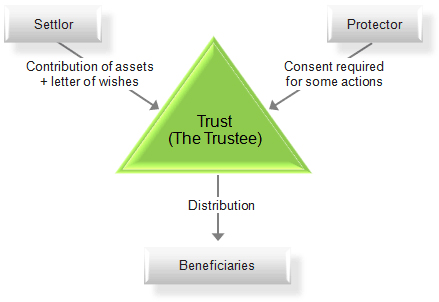
Furthermore, recognize the 2022 amendments to the Act regarding trusts. Historically, sellers hid behind land trusts to avoid disclosures. Today, the law requires a trust beneficiary to complete the disclosure report unless that beneficiary never occupied and never managed the property. If the beneficiary lived there or managed the leases, they hold actual knowledge of the property, and the state expects them to disclose it.
The Standard: Actual Knowledge of Material Defects
When a seller sits down with the Illinois Residential Real Property Disclosure Report, they are answering questions based entirely on their actual knowledge of the property condition.
The Act does not obligate sellers to perform any independent inspections to complete the report. If the seller legitimately does not know that there is a slow leak behind the master bathroom drywall, they are not legally expected to punch a hole in the wall to find out.
But what exactly are they disclosing? They are looking for material defects.
Material Defect Definition: Under Illinois law, a material defect is a condition that substantially impairs the value of the property or significantly impairs the health or safety of future occupants.
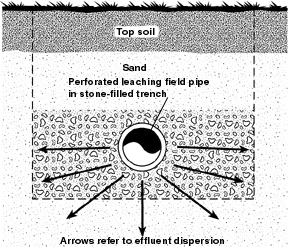
A squeaky floorboard or a loose cabinet hinge does not impair health, safety, or substantial value. Black mold in the HVAC system, a cracked structural foundation, or a non-functioning septic field absolutely does.
Timing, Delivery, and Penalties
The rhythm of the transaction dictates when this disclosure must occur. An Illinois property seller must deliver the completed disclosure report to a prospective buyer before the signing of a written binding contract.
When this timing is violated, the buyer is granted immense leverage:
- Late Delivery: If an Illinois seller delivers the initial property disclosure report after a contract is signed, the buyer has three business days upon receipt to terminate the contract.
- Complete Failure: If an Illinois seller completely fails to provide the required property disclosure report at any point, the buyer has the right to terminate the contract at any time before closing.
The seller's duty does not vanish the moment the contract is signed. Illinois property sellers have a continuing duty to supplement a property disclosure report in writing upon gaining actual knowledge of a new material defect before closing.
- Scenario: The seller accepts an offer in May for a late-June closing. In early June, a massive storm hits, and the basement floods for the first time in the seller's memory. The seller must provide a supplemental disclosure.
- Consequence: If a buyer receives a supplemental disclosure reporting a new material defect after signing the contract, the buyer may terminate the contract within three business days of receiving the report.
As the broker, you stand between the seller's disclosures and the buyer's expectations. Your legal obligations under the Illinois Real Estate License Act differ sharply depending on whether a property condition is physical or psychological.
Physical Material Defects and Licensee Liability
Illinois real estate licensees have a strict legal obligation to disclose any known material defects in a property to all prospective buyers. You cannot collude with a seller to hide a broken furnace. If you know about a physical defect, you must speak up.
However, the law does not expect you to be a human polygraph machine. An Illinois real estate licensee is not liable for false information provided by a seller on a property disclosure report if the licensee had no actual knowledge of the falsehood. If the seller confidently checks "No" regarding roof leaks, and you see no evidence of water damage, you are protected if the roof subsequently fails.
Stigmatized Property: The Mind vs. The Matter
Real estate is deeply emotional, and occasionally, a property is haunted—not literally, but psychologically.
Stigmatized Property: A stigmatized property is a real estate parcel that has been psychologically impacted by an event that has no direct physical effect on the property itself.
Common examples include a high-profile murder, a former drug den, an occupant's suicide, or alleged paranormal activity occurring on a property. Under Illinois law, these events do not constitute material physical defects.
Article 15 of the Illinois Real Estate License Act acts as a protective shield for brokers in these situations. It explicitly states that real estate agents are not legally obligated to disclose property stigmas lacking a physical impact on the real estate. Consequently, Illinois real estate agents have no legal obligation to volunteer information about a non-physical stigma to potential buyers. If a buyer moves in and later discovers the house was the site of a tragic suicide five years prior, they cannot sue you for failing to disclose it, because it is not a material defect.
HIV/AIDS: The Absolute Prohibition
There is one specific "stigma" that transcends real estate law and crosses directly into federal civil rights.
Federal Fair Housing laws and the Illinois Human Rights Act classify individuals infected with HIV or AIDS as having a protected disability. Because it is illegal to discriminate against individuals with disabilities, it is strictly illegal for an Illinois real estate licensee to disclose to a buyer that a previous occupant of a property had HIV or AIDS.
This is not a matter of choice; it is an absolute prohibition. But what happens when a buyer directly corners you and asks, "Did the previous owner die of AIDS?"
You cannot say yes. You cannot say no (as denying it might imply you would tell them if it were true). Under Illinois law, if a prospective buyer asks an Illinois licensee if a previous occupant had HIV or AIDS, the licensee must explicitly state an inability to answer that question.
- Correct response: "It is illegal for me to answer that question, as it violates fair housing laws regarding protected classes."
How you present a property—and yourself—to the public is heavily regulated. The state wants to ensure consumers always know exactly who they are dealing with and that they are not being misled.
Section 10-30 of the Illinois Real Estate License Act governs advertising requirements for all licensed real estate brokers. You cannot escape these rules by changing your medium. Illinois real estate advertising regulations apply uniformly to print media, social media, websites, emails, and all digital forums used by a licensee.
Truthfulness and Digital Integrity
The bedrock rule is straightforward: Illinois real estate law strictly prohibits any advertising that is fraudulent, deceptive, or inherently misleading to the ordinary consumer.
In the digital age, deception often happens invisibly. Therefore, Illinois real estate licensees using electronic advertising are strictly prohibited from using deceptive metatags or keywords to divert internet traffic. You cannot embed "Re/Max Top Agent" in the hidden HTML metatags of your website if you are sponsored by Coldwell Banker, just to siphon off search engine traffic.
Sponsorship Visibility and Blind Ads
The core philosophy of Illinois advertising law is that the consumer must always know which brokerage is ultimately responsible for the transaction. A sponsored real estate licensee in Illinois may not advertise real estate services strictly under their own name. Furthermore, all advertising placed by a sponsored real estate licensee must be under the direct supervision of a sponsoring or managing broker.
This leads to the prohibition of the blind advertisement.
Blind Advertisement: A real estate advertisement that fails to include the sponsoring broker's business name.
Illinois real estate licensees are strictly prohibited from using blind advertisements in any form of media. If you post a beautiful listing on Instagram with just your cell phone number and "Call me to buy!", you have violated state law.
To prevent brokerages from burying their names in microscopic print at the bottom of a billboard, Illinois enforces a strict sizing rule: In all Illinois real estate advertising, the sponsoring broker's business name must be at least equal in size or larger than the team name or the individual broker's name.
Team Names and Managing Brokers
Real estate teams are incredibly popular, but their names are heavily restricted to prevent consumers from mistaking a "team" for an independent brokerage.
- Team Name Rule: Illinois real estate team names cannot include misleading corporate terms such as "Company," "Realty," "Real Estate," "Agency," or "Associates." You can be "The Smith Group," but you cannot be "Smith Real Estate."
For managing brokers, transparency goes one step further. Designated managing brokers in Illinois must indicate their designated managing broker status on all marketing and advertising materials containing their name (e.g., business cards, email signatures, websites).
- The One Exception: Designated managing brokers are exempt from indicating their specific managing status on physical yard signs placed on real property. (The state recognizes that re-printing expensive aluminum yard signs every time a managing broker changes is an undue burden).
Licensee-Owned Property: The "Broker Owned" Rules
What happens when you, the licensed expert, sell your own house? The state assumes you possess an unfair informational advantage over an unrepresented buyer. Therefore, you must aggressively disclose your licensed status.
Scenario A: Selling "By Owner" (Outside the Brokerage) A sponsored real estate licensee in Illinois selling a solely owned property without utilizing brokerage services may advertise the property as "By Owner." However, the advertisement must explicitly include the term "broker owned" or "agent owned" to disclose the seller's licensee status.
Scenario B: Selling Through Your Brokerage If you list your personal home on the MLS through your sponsoring brokerage, the rules shift slightly based on the medium:
- The Yard Sign: If an Illinois licensee uses a sponsoring broker's yard sign to sell a personally owned property, the words "broker owned" or "agent owned" are not required on the physical yard sign. The presence of the brokerage sign itself implies professional representation.
- The Data Sheet/MLS: However, ownership status must be indicated as "broker owned" or "agent owned" on any property data form accessible to consumers (like MLS printouts or digital flyers).
- Direct Inquiry: If an Illinois licensee sells a personally owned property through a brokerage, the licensee must disclose "broker owned" or "agent owned" to any person responding to an advertisement or yard sign.
Auction Advertising
Finally, if a property is being auctioned, the law requires absolute clarity on the professionals involved. Any advertising for an Illinois real estate auction must contain the name and address of the licensed real estate broker AND the licensed auctioneer.

By mastering these frameworks—the rigorous property disclosures of the RRPDA, the sharp distinction between physical defects and non-physical stigmas, and the strict transparency of Section 10-30 advertising rules—you equip yourself with the professional armor required to practice in Illinois. You protect the consumer from deception, and just as importantly, you protect your own license.