IL Human Rights Act & Fair Housing
Not sure you’re ready?
Take the ~3-minute readiness diagnostic and see where you stand.
The architecture of real estate law rests on a fundamental premise: access to shelter and commercial space is a basic economic right, governed by strict parameters of equality. When a broker facilitates a transaction, they are not merely opening doors to a physical structure; they are serving as the gatekeeper to a community and an economy. The federal Fair Housing Act establishes the baseline of this equality, but in Illinois, the standard is significantly higher. The Illinois Human Rights Act (IHRA) expands the perimeter of protection, criminalizing biases that federal law ignores and demanding that real estate professionals actively dismantle discriminatory barriers. Understanding this framework is not an exercise in memorizing bureaucratic red tape—it is the mastery of the ethical geometry that keeps the modern real estate market functioning, fair, and legal.
To understand Illinois real estate law, you must first understand the federal foundation it builds upon. The federal Fair Housing Act prohibits discrimination based on race, color, religion, sex, national origin, familial status, and disability.
However, the Illinois Human Rights Act expands upon the federal Fair Housing Act by protecting additional classes of individuals in residential and commercial real estate transactions. That last point is a crucial distinction for your daily practice: while the federal Fair Housing Act is primarily concerned with residential property, the Illinois Human Rights Act applies to commercial real estate transactions as well as residential transactions.
Illinois law recognizes that discrimination takes many forms beyond the federal list. To ensure equal access to real estate, the IHRA prohibits housing discrimination based on several additional fundamental human characteristics:
- Age: Specifically protecting individuals who are 40 years of age or older.
- Ancestry: Protecting individuals based on their family lineage or geographical origins.
- Marital status: Whether single, married, divorced, or widowed.
- Sexual orientation: A protection that explicitly includes gender identity.
- Pregnancy: This protection encompasses pregnancy itself, childbirth, and any related medical conditions.
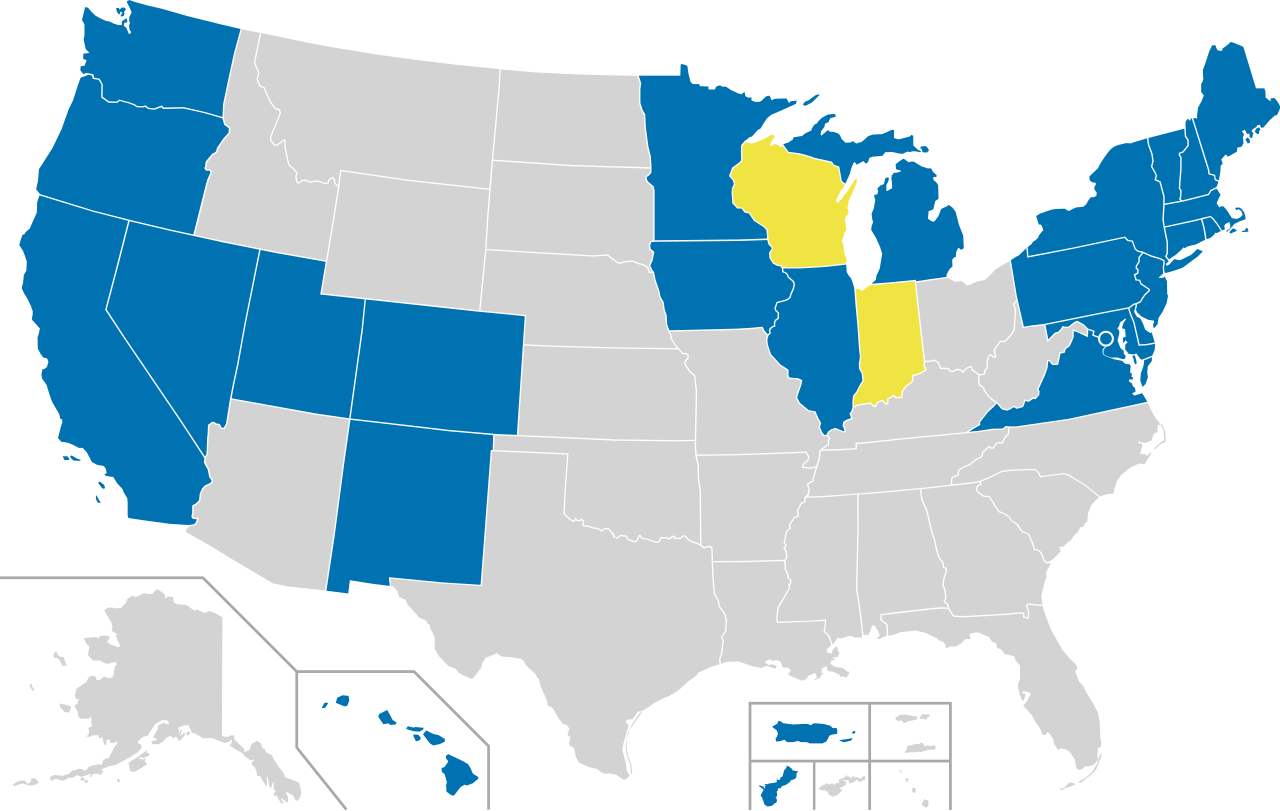
In addition to demographic characteristics, Illinois aggressively protects individuals whose specific life circumstances or legal statuses make them vulnerable to housing discrimination.
Military Service and Discharge
The Illinois Human Rights Act prohibits housing discrimination based on military status, protecting active-duty service members, reservists, and veterans. However, the law goes one step further into the nuances of military discharge.
The Illinois Human Rights Act prohibits housing discrimination based on an unfavorable military discharge. In the military, discharges exist on a spectrum. An "unfavorable" discharge might result from administrative issues or minor infractions that have absolutely no bearing on a person's viability as a tenant or buyer. But there is a firm boundary here: the unfavorable military discharge protected class under the Illinois Human Rights Act does not extend to individuals who received a dishonorable discharge. Dishonorable discharges are reserved for serious offenses (typically requiring a court-martial), and landlords are permitted to factor a dishonorable discharge into their housing decisions.

Legal and Judicial Protections
Housing is intimately tied to physical safety and the justice system. To that end, Illinois enforces two vital protections:
- Arrest Records: The Illinois Human Rights Act prohibits housing discrimination based on an arrest record. An arrest is an accusation, not a conviction. Denying housing based purely on the fact that someone was arrested violates their presumption of innocence in the housing market.
- Order of Protection Status: The IHRA prohibits housing discrimination based on a person's order of protection status. This safeguards individuals from housing discrimination if the individual is protected by a court order against domestic violence.
Why it matters: Imagine a survivor of domestic abuse trying to secure an apartment to escape their abuser. If landlords could deny applicants simply because they are involved in a turbulent legal situation, victims would be trapped. Order of protection status ensures they are not penalized in the housing market for seeking judicial safety.

Two of the most transformative updates to the Illinois Human Rights Act address the modern economic realities of the housing market.
Source of Income (Effective January 1, 2023)
Effective January 1, 2023, the Illinois Human Rights Act established source of income as a protected class in real estate transactions. These source of income protections prevent landlords and real estate licensees from refusing applicants solely because the applicant relies on lawful non-wage subsidies.
Under the IHRA, lawful sources of income include Housing Choice Vouchers, Section 8 subsidies, child support, alimony, and veteran benefits.
This fundamentally changes how a broker or landlord must evaluate applicants. Because source of income is protected, advertising a property with phrases like "No Section 8" violates the source of income protections under the Illinois Human Rights Act. Similarly, advertising a rental property with phrases like "must have proof of employment" violates the source of income protections, because it inherently excludes individuals who legally pay rent via alimony, veteran benefits, or housing vouchers.
This protection also requires a mathematical adjustment in the real estate office. Landlords commonly require a tenant's income to be three times the monthly rent. When evaluating a tenant with a housing voucher against a rent-to-income ratio requirement, the landlord must calculate the ratio using only the tenant's portion of the rent.
- Worked Example: Suppose rent is $1,500/month, and the landlord requires income to be 3x the rent. A tenant applies with a Section 8 voucher that covers $1,000 of the rent. The tenant is responsible only for the remaining $500. The landlord must apply their 3x multiplier only to the tenant's $500 portion. Therefore, the tenant only needs to prove a lawful income of $1,500/month, not $4,500/month.
Immigration Status (Effective January 1, 2024)
Effective January 1, 2024, the Illinois Human Rights Act established immigration status as a protected class in real estate transactions. These immigration status protections prohibit real estate discrimination based on an individual's actual or perceived citizenship or immigration status. A broker cannot refuse to show properties or require different application criteria based on an assumption about where a client was born or their current citizenship documentation.
The law does not merely prohibit the outright refusal to sell or rent; it targets the subtle, mechanical ways in which real estate transactions are manipulated to marginalize protected classes.
The Illinois Human Rights Act forbids altering the terms of a real estate transaction based on a protected class. For example, landlords violate the Illinois Human Rights Act if the landlord requires a higher security deposit from a tenant based on the tenant's membership in a protected class. You cannot impose a "risk premium" on a tenant because of their ancestry, age, or familial status.
Beyond transaction terms, the law prohibits three specific systemic abuses that have historically damaged neighborhoods:
| Practice | Definition & Mechanism |
|---|---|
| Blockbusting | The prohibited practice of inducing owners to sell properties by claiming that the entry of a protected class into the neighborhood will decrease property values. (Also known as panic peddling). |
| Steering | The prohibited practice of channeling prospective buyers or tenants toward or away from specific neighborhoods based on a protected class. A broker must act as a neutral mirror reflecting the market, not a filter restricting it. |
| Redlining | The prohibited practice where lenders refuse to make mortgage loans or impose stricter terms in specific geographic areas based on the area's demographics, regardless of the applicant's financial qualifications. |
Disability Rules: Modifications vs. Accommodations
When dealing with physical and psychiatric disabilities, the law distinguishes between structural changes and policy flexibility.
- Modifications (Physical): Housing providers must permit reasonable physical modifications to a property (like installing a wheelchair ramp or grab bars) for persons with disabilities at the expense of the person with the disability.
- Accommodations (Rules/Policies): Housing providers must make reasonable accommodations in rules and policies to afford persons with disabilities equal opportunity to use a dwelling. (For example, waiving a "no pets" policy for a guide dog, or assigning a prime, first-floor parking spot to a tenant with mobility issues). Accommodations are policy shifts and are generally done at the housing provider's expense.

Anti-discrimination law is not passive. As a licensed Illinois real estate professional, you are not merely required to avoid discrimination; you are required to actively enforce fair housing. Real estate licensees have an affirmative duty to present all available properties equally to all seekers regardless of the seeker's protected class.
Inevitably, a broker may encounter a seller or landlord who instructs them to discriminate—for instance, a seller who whispers, "I don't want to sell to those people." The broker's legal duty is absolute: they must refuse the instruction and, if necessary, terminate the agency relationship.
To ensure brokers are not penalized for following the law, the Illinois Human Rights Act protects real estate professionals from retaliation if the professional refuses to follow a client's instruction to discriminate against a prospective buyer or tenant. The law acts as a shield, protecting the licensee's business and legal standing when they do the right thing.
When civil rights are violated, the state enforces the law through a two-pronged administrative system: the IDHR handles the civil rights violation, and the IDFPR handles your license.
The Illinois Department of Human Rights (IDHR)
The Illinois Department of Human Rights is the state administrative agency responsible for investigating charges of housing discrimination.
Because evidence decays and memories fade, the law imposes strict timelines on the enforcement process:
- Filing the Charge: A person claiming a housing discrimination violation under the Illinois Human Rights Act must file a charge with the Illinois Department of Human Rights within one year of the alleged discriminatory act.
- The Investigation Limit: Once a charge is filed, the Illinois Department of Human Rights is required to conclude all proceedings and make a finding within 100 days of a housing discrimination charge being filed unless it is impracticable to do so.
If a violation is proven, the financial and judicial consequences are severe. Penalties for violating the Illinois Human Rights Act can include actual damages, civil penalties, attorney's fees, and cease-and-desist orders.
The Illinois Department of Financial and Professional Regulation (IDFPR)
While the IDHR levies civil penalties, the IDFPR governs your ability to practice real estate.
The Illinois Department of Financial and Professional Regulation has the authority to discipline a real estate licensee found guilty of a civil rights violation. If the IDHR concludes that you have violated the Human Rights Act, the IDFPR will take action against your license. A finding of a civil rights violation by the Illinois Department of Human Rights can result in the suspension or revocation of an Illinois real estate broker's license.
In Illinois, your license to operate as a broker is entirely contingent on your commitment to equal access. A violation of the Illinois Human Rights Act is not just a civil misstep; it is an existential threat to your career. Mastery of these rules ensures that you operate a compliant, ethical, and highly professional real estate business.