IL Licensing Requirements, License Categories & the Recovery Fund
Not sure you’re ready?
Take the ~3-minute readiness diagnostic and see where you stand.
A real estate transaction is a high-stakes transfer of immense physical capital and financial capital. To protect the public from the friction, incompetence, and outright fraud that can plague such transfers, the state constructs a strict regulatory apparatus. In Illinois, the architecture of this apparatus is defined by the Real Estate License Act of 2000 (225 ILCS 454), the primary statute governing real estate practice. The enforcement mechanism is the Illinois Department of Financial and Professional Regulation (IDFPR), the state agency that actively issues, regulates, and disciplines real estate licenses.

As a professional, understanding this regulatory framework is not merely an academic exercise to pass an exam; it is the operating manual for your career. Every action you take—from placing a sign in a yard to depositing an earnest money check—is tethered to the rules established by the IDFPR under this Act.
The law draws a definitive line between the general public and regulated professionals. The fundamental rule is straightforward: Any person who, for compensation, buys, sells, leases, manages, or auctions real estate for another must hold an active Illinois real estate license.
Notice the three required elements: compensation, a real estate activity, and doing it for another. Take away any one of these, and the license requirement vanishes. This logic produces several practical exemptions where individuals are legally permitted to transact real estate without IDFPR oversight:
- The Ownership Exemptions: Property owners are exempt when selling or leasing their own property. Furthermore, regular employees of property owners are exempt when acting on the employer's own property in the regular course of employment.
- The Legal Duty Exemptions: The law recognizes distinct legal authorities. Attorneys-in-fact acting under a valid power of attorney are exempt. Attorneys-at-law are also exempt, provided they are performing services strictly within the scope of their legal duties as an attorney.
- The On-Site Manager Exemption: Resident apartment managers who live on-site in their primary residence are exempt from licensing.
- The Court-Ordered Exemptions: Receivers, trustees, administrators, and executors acting under court order are exempt, as their authority stems directly from the judiciary rather than agency law.
Illinois modernized its licensing framework by acknowledging that the complexities of contemporary real estate demand a higher baseline of competency. Consequently, Illinois does not issue a salesperson license. Instead, the state relies on a three-tier licensing system.
| License Category | Authority & Scope | Age & Education Requirements |
|---|---|---|
| Broker | The entry-level license for general real estate practice in Illinois. Must be sponsored by a Sponsoring Broker to perform licensed activities. | 18 years old. High school diploma or equivalent. 75 hours of state-approved pre-license education. |
| Managing Broker | The supervisory tier. Allows the licensee to sponsor themselves, sponsor other licensees, and manage a real estate office. | 20 years old. Must have been licensed as a Broker for at least 2 of the preceding 3 years. 165 total hours (120 hours required for Brokers + 45 additional Managing Broker hours). |
| Residential Leasing Agent | Limits the licensee solely to residential leasing activities for which the agent is sponsored. | 18 years old. 15 hours of state-approved pre-license education. |
Note on Business Entities: The regulatory net also captures companies. A real estate brokerage operating as a corporation, LLC, or partnership must register the business entity with the IDFPR and have a designated managing broker.
Passing your state exam does not give you the immediate right to independently broker deals. Think of a real estate license like an electrical appliance: beautifully wired, but utterly powerless until plugged into a power source. An Illinois Broker must be sponsored by a licensed Sponsoring Broker to perform any licensed real estate activities.
Temporary Permits and Mobility
Because the administrative wheels of the state move slowly, the IDFPR provides mechanisms to let you start working immediately.
- The 45-Day Permit Sponsor Card: Upon a candidate passing the state exam and accepting sponsorship, the sponsoring broker issues this card. It serves as a temporary license that allows an individual to practice real estate immediately in Illinois. To formalize this, the sponsoring broker must submit a duplicate 45-Day Permit Sponsor Card to the IDFPR along with the required fee within 24 hours of issuance.
- The 120-Day Student Permit (Leasing Only): An aspiring Residential Leasing Agent can obtain a 120-day student permit to actually perform leasing activities before passing the state exam. This requires the applicant to be actively enrolled in a pre-license course and be sponsored by a licensed broker.
Severing the Sponsorship Tie
What happens when you leave your brokerage? The moment you terminate employment with a sponsoring broker, the sponsoring broker must immediately endorse your license to terminate the sponsorship.
WARNING: A signed real estate license automatically becomes inoperative when an Illinois licensee terminates employment with a sponsoring broker.
An inoperative real estate license explicitly prohibits the individual from engaging in any licensed real estate activities until a new sponsorship is established. To change a sponsoring broker, you must obtain a new 45-Day Permit Sponsor Card from the new sponsoring broker.
Furthermore, a real estate licensee whose license has fully expired may not legally engage in any licensed activities—nor can they collect referral fees. You must be active and properly sponsored at the time the licensed activity was performed to be compensated.
To keep practitioners updated on rapidly evolving laws (such as the Residential Real Property Disclosure Act and the Illinois Human Rights Act), Illinois mandates a strict renewal cycle based on your license category.
- Brokers: Licenses expire on April 30 of every even-numbered year.
- Managing Brokers: Licenses expire on April 30 of every odd-numbered year.
- Residential Leasing Agents: Licenses expire on July 31 of every even-numbered year.
Continuing Education (CE) Requirements
The state adjusts the educational burden based on your experience and license type. Importantly, all Illinois real estate licensees must complete one hour of Sexual Harassment Prevention Training as part of their Continuing Education requirements.
- The First-Renewal Broker Exception: An Illinois broker's first license renewal does not require the standard 12 hours of Continuing Education. Instead, an Illinois Broker completing their first renewal must complete 45 hours of Post-License Education before the renewal deadline.
- Subsequent Broker Renewals: After the first renewal cycle, an Illinois Broker must complete 12 hours of Continuing Education per two-year renewal period. This consists of a 4-hour Core CE course and 8 hours of elective CE.
- Managing Brokers: An experienced Managing Broker must complete 24 hours of Continuing Education per two-year renewal period. Because they are supervisors, this 24-hour block must include a 12-hour Broker Management CE course.
- Residential Leasing Agents: Must complete 8 hours of Continuing Education per two-year renewal period.

Out-of-State Licensees and Informational Updates
For agents crossing state lines, Illinois has reciprocity agreements with select states that allow active out-of-state licensees to bypass the national exam and standard pre-license education. However, there is no free pass on state law: most reciprocal real estate license applicants must still pass the Illinois-specific portion of the state exam to be licensed.
Additionally, maintaining your license requires precise communication with the state. Illinois real estate licensees must notify the IDFPR of any change in their name, address, email address, or telephone number within 14 days.
Top-producing agents rely heavily on personal assistants. The IDFPR closely monitors these roles to ensure unlicensed individuals do not accidentally step into regulated territory.
- Unlicensed Personal Assistants: An unlicensed personal assistant may perform strictly clerical and administrative duties. This includes answering phones, typing forms, and placing signs in yards. However, they are strictly prohibited from showing property, negotiating terms, or interpreting contract information for the public. If they explain a contingency clause to a buyer, they have crossed into unauthorized practice.
- Licensed Personal Assistants: If an assistant holds a real estate license, they can show property and negotiate. However, the law demands structural alignment: a licensed personal assistant must be sponsored by the same Sponsoring Broker as the real estate licensee the assistant serves. You cannot work for an agent at Brokerage A if your license is sponsored by Brokerage B.
Even with rigorous licensing, education, and oversight, some licensees will inevitably violate the Act, causing financial harm to consumers. To maintain public trust in the real estate market, Illinois maintains the Real Estate Recovery Fund.
The purpose of this fund is to compensate members of the public who suffer a direct financial loss due to a real estate licensee's violation of the Act. However, the state does not simply hand out checks upon receiving a complaint; the public must run a procedural gauntlet.
The Mechanism of a Claim
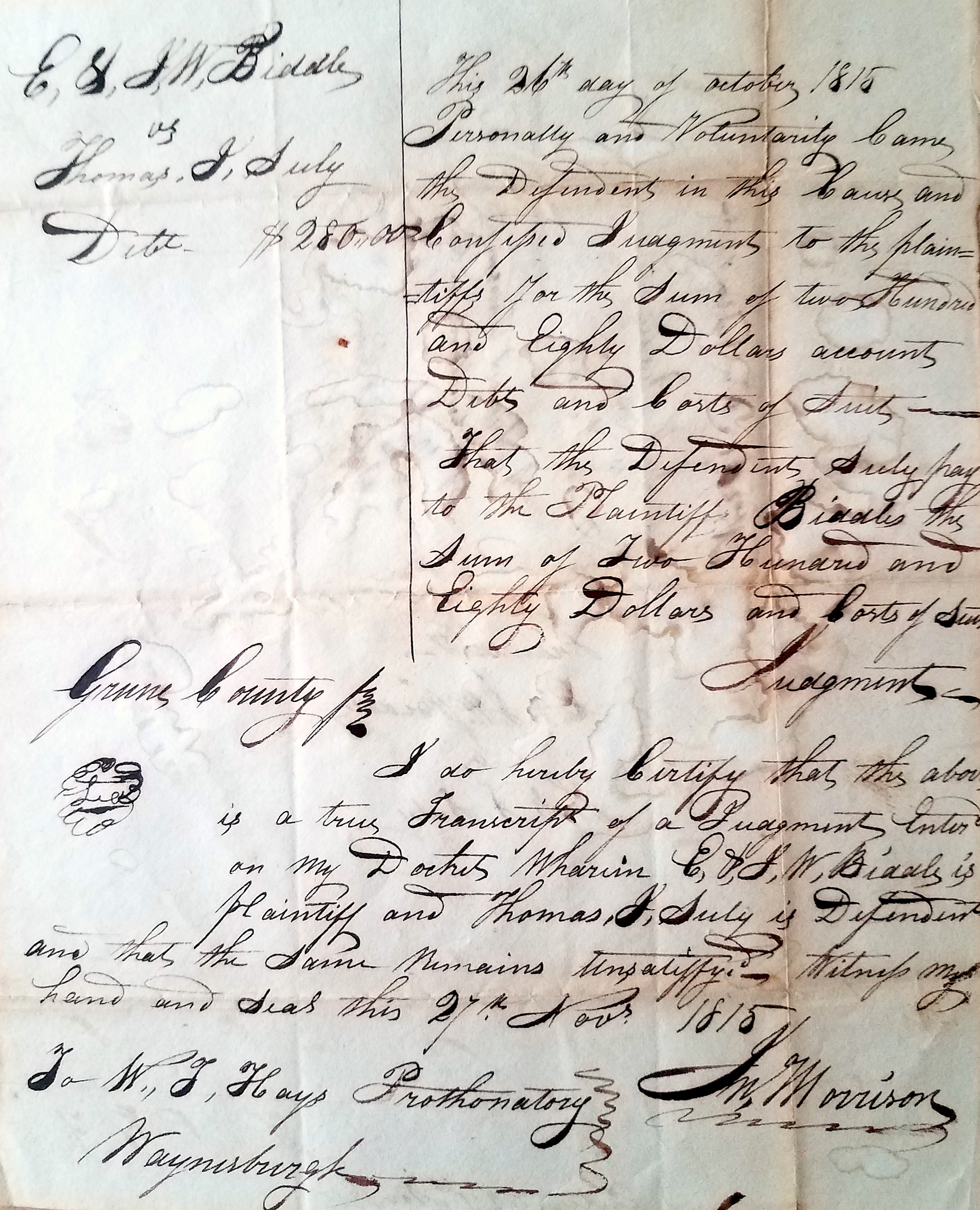
- Civil Judgment Required: A claim against the Real Estate Recovery Fund can only be made after the aggrieved party obtains a valid civil court judgment against the licensee.
- Naming Defendants: To collect from the Fund, the aggrieved party must specifically name the licensee and any responsible employees as defendants in the lawsuit.
- Statute of Limitations: Aggrieved persons must initiate a lawsuit within two years of the date the person knew or should have known of the acts giving rise to a Recovery Fund claim.
Fund Constraints and Capitalization
The Recovery Fund is not a blank check. The maximum liability limits for payouts from the Real Estate Recovery Fund—both per act and per licensee—are tightly established by IDFPR administrative rules. Furthermore, the Fund will not pay out claims for violations of the Illinois Real Estate Time-Share Act; those are handled separately.

How is this fund capitalized? Fines and penalties collected by the IDFPR under the Real Estate License Act may be deposited into the Real Estate Recovery Fund, functionally using the financial punishment of rogue agents to insure the public against future rogue agents.
In the rare event that multiple large claims drain the fund, the state has a contingency: If the Real Estate Recovery Fund lacks sufficient money to pay a claim, the IDFPR will satisfy unpaid claims in the exact order they were filed once new funds are deposited.