MA Agency & the Mandatory Licensee-Consumer Relationship Disclosure
Not sure you’re ready?
Take the ~3-minute readiness diagnostic and see where you stand.
In any market where the stakes are exceptionally high and the information is fundamentally asymmetric, the law demands a clear demarcation of loyalty. When a consumer purchases a television, the salesperson owes them nothing more than basic consumer protections. But when that same consumer enters the real estate market—where life savings are exchanged for property—the law imposes a strict framework of legal representation known as agency. In Massachusetts, the rules governing who you represent, what you owe them, and how you disclose this relationship form the bedrock of a real estate salesperson’s daily practice.

Massachusetts real estate agency rules, including the mandatory disclosure requirements, are legally governed by the Board of Registration of Real Estate Brokers and Salespersons under regulation 254 CMR 3.00. These regulations do not merely suggest best practices; they dictate the precise physics of your professional relationships.
Before you can understand the disclosures, you must understand the players. In Massachusetts real estate, every consumer you interact with falls into one of two distinct legal categories: a client or a customer.
- The Client: A client is a principal who has hired an agent to represent their interests through a formal agency agreement. Once hired, you become their fiduciary.
- The Customer: A customer is an unrepresented consumer who receives services from a licensee without establishing an agency representation relationship.
The distinction is not merely semantic; it dictates your legal obligations.
Fiduciary Duties to Clients: The "OLD CAR" Standard
When a consumer becomes your client, you owe them the highest standard of care recognized by law: fiduciary duties. To remember these, Massachusetts uses the acronym OLD CAR.
- Obedience: You must follow all lawful instructions provided by the represented client. If your seller tells you not to show the house on Tuesdays, you do not show it on Tuesdays.
- Loyalty: You must prioritize the client's interests above all others, including your own personal or financial interests. Your commission never supersedes their outcome.
- Disclosure: You must proactively inform the client of all material facts known to you that could affect the transaction.
- Confidentiality: You must keep the client's personal, financial, and negotiating information secret indefinitely. If your buyer tells you they are willing to pay up to $750,000, that information goes to your grave, even after the transaction closes.
- Accountability: You must meticulously track, protect, and document all funds belonging to the client, such as a $5,000 earnest money deposit.
- Reasonable Care: You must utilize professional skill, diligence, and competence when performing tasks for the client. Incompetence is a breach of fiduciary duty.
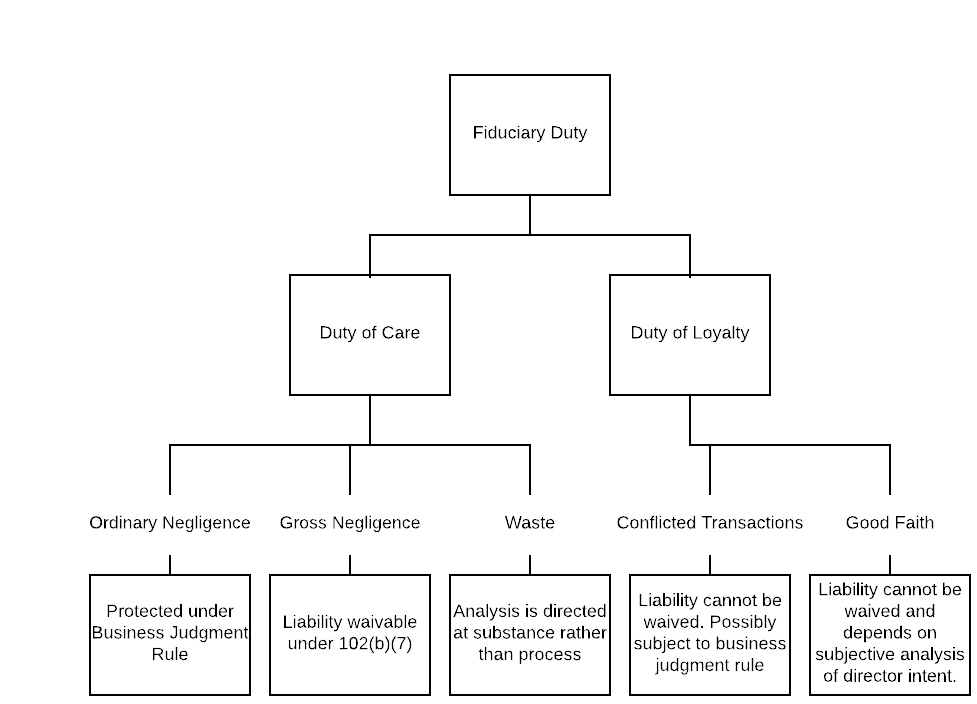
Duties to the Unrepresented Customer
Just because a consumer is unrepresented does not mean you can treat them ruthlessly. A Massachusetts real estate licensee owes the duties of honesty and fair dealing to all unrepresented customers in a transaction. You must accurately present the factual details of a property to them, and you must properly account for all funds received from an unrepresented customer.
However, you do not owe the fiduciary duties of obedience, loyalty, or confidentiality to an unrepresented customer. If an unrepresented buyer mentions to you (the seller's agent) that they are desperate to move by September, you are not bound to keep that confidential—in fact, your duty of disclosure to your client (the seller) dictates that you must tell the seller about the buyer's desperation.
The Paramount Exception: Material Defects A material defect is a significant issue with a real estate property that would objectively impact a reasonable buyer's decision to purchase the property (e.g., a cracked foundation or a history of flooding).
A Massachusetts real estate licensee must disclose all known material defects in a property to all prospective buyers, regardless of agency representation status. Crucially, this supersedes obedience: Massachusetts real estate licensees must disclose hidden material defects known to the licensee even if the seller expressly instructs the licensee to hide the defects. You cannot commit fraud on behalf of your client.

Because the legal gulf between a client and a customer is so vast, consumers must know exactly where they stand before they reveal sensitive information. This brings us to the Massachusetts Mandatory Licensee-Consumer Relationship Disclosure form. The requirement for this form applies strictly to transactions involving residential properties.
The Massachusetts Board of Registration of Real Estate Brokers and Salespersons creates and approves the mandatory language for this form. It is highly specific in its purpose and its limitations.
What the Disclosure Is (and Is Not)
The Mandatory Licensee-Consumer Relationship Disclosure form is strictly an informational notice. It is a roadmap explaining the consumer's options.
- It does not create a binding contractual agreement between the licensee and the consumer.
- It does not establish an agency representation relationship.
When to Provide It
Timing is everything. A Massachusetts real estate licensee must provide the form to a consumer at the first personal meeting to discuss a specific property.
If no personal meeting occurs, the form must be provided electronically or by other means before entering into a contract. Furthermore, if a licensee's relationship with a consumer changes during a transaction (for instance, a customer decides to hire you as their buyer's agent), the licensee must provide the consumer with a new Mandatory Licensee-Consumer Relationship Disclosure form reflecting the new relationship.
The Open House Exemption
Open houses are chaotic environments where dozens of people walk through a door in an hour. Does the law require you to ambush every attendee with paperwork? No.
Massachusetts regulations exempt real estate licensees from handing out the form to attendees at an open house simply for attending. However, there are strict caveats:
- Signage: At an open house, a real estate licensee must conspicuously post or distribute written materials disclosing the licensee's agency relationship with the seller.
- The Trigger: If an open house attendee steps out of the passive viewer role and discusses their specific real estate needs with the hosting licensee, the licensee must immediately provide the Mandatory Licensee-Consumer Relationship Disclosure form.
Handling Refusals and Record Keeping
Consumers are occasionally wary of signing documents they do not understand. What happens if you present the disclosure, explain that it isn't a contract, and the consumer still refuses to sign it?
The law anticipates this. If a consumer refuses to sign, you do not force them. Instead, you follow a strict protocol:
- The licensee must document the refusal by checking the designated refusal box on the form.
- The licensee must still sign and date the document themselves.
- The licensee must provide a copy of the unsigned form to the consumer.
Once completed (whether signed by the consumer or documented as a refusal), Massachusetts real estate brokers must retain copies of all provided Mandatory Licensee-Consumer Relationship Disclosure forms for exactly three years from the date the notice was given.
Massachusetts recognizes five distinct types of real estate relationships. Understanding how the fiduciary duties mutate across these five models is the key to mastering Massachusetts agency law.
| Relationship Type | Core Function |
|---|---|
| Seller's Agent | Represents solely the seller. Owes full OLD CAR duties to the seller. |
| Buyer's Agent | Represents solely the buyer. Owes full OLD CAR duties to the buyer. |
| Disclosed Dual Agent | Represents both buyer and seller in the same transaction. Fiduciary duties are heavily modified. |
| Designated Agent | Appointed by a broker to represent one specific party, while another agent in the firm represents the other. |
| Facilitator | A non-agent who assists the transaction without representing anyone. |
The Paradox of Disclosed Dual Agency
Disclosed dual agency occurs when a single Massachusetts real estate licensee or brokerage simultaneously represents both the buyer and the seller in the exact same transaction.
Imagine trying to be the defense attorney and the prosecutor in the same courtroom. You cannot simultaneously fight for the highest possible price for the seller and the lowest possible price for the buyer. Because you cannot advocate for one party over the other, a Massachusetts dual agent cannot satisfy the full fiduciary duty of loyalty to either party. Similarly, the agent cannot satisfy the full fiduciary duty of disclosure because providing full disclosure could harm the opposing party.
However, a Massachusetts dual agent still owes the strict fiduciary duty of confidentiality and the strict fiduciary duty of accounting for funds to both the buyer and the seller simultaneously.
Because dual agency inherently compromises the client's representation, undisclosed dual agency is illegal in Massachusetts and serves as grounds for license suspension or revocation. Consent to dual agency representation must be formally provided by both the buyer and the seller in writing before the dual representation begins.
Crucial Warning on Consent: A signed Massachusetts Mandatory Licensee-Consumer Relationship Disclosure form does not serve as valid written consent for dual agency. A consumer must sign a separate written consent document distinct from the relationship disclosure form to legally authorize it.
The Designated Agency Solution
To solve the inherent conflict of interest of dual agency within large brokerages, Massachusetts allows for Designated Agency.
Designated agency occurs when a broker appoints one specific agent to exclusively represent the seller and another specific agent to exclusively represent the buyer in the same transaction.
- In this transaction, the appointed designated agent owes full fiduciary duties strictly to their specifically assigned client.
- Because they only represent one side, a Massachusetts designated agent is not considered a dual agent in the transaction for which they are specifically appointed.
- However, the employing broker who appoints the designated agents acts as a dual agent for both the buyer and the seller, overseeing the transaction neutrally.
Like dual agency, establishing a designated agency relationship requires the formal written consent of the client being represented, and again, the initial Licensee-Consumer Relationship Disclosure form does not serve as this consent. A separate written consent document is required.
Facilitators: The Neutral Referees
Sometimes, parties don't want representation; they just want help with the paperwork and logistics. Enter the Facilitator.
A Massachusetts Facilitator, also known as a non-agent or transaction broker, assists one or both parties in a transaction without acting as a fiduciary agent for either party.
- A Facilitator does not owe the fiduciary duty of loyalty to either the buyer or the seller.
- A Facilitator does not owe the fiduciary duty of confidentiality to either the buyer or the seller.
They are an administrative referee. However, a Facilitator is still bound by standard ethical obligations: they must treat all parties honestly, disclose all known material defects in the subject property, and properly account for all funds received during the real estate transaction.
Subagency: The Delegation of Duty
Finally, there is the concept of Subagency. Subagency occurs when a primary real estate agent delegates a portion of their authority to another licensed agent (often from a different brokerage) to assist in representing the primary agent's client.
Creating a legally valid subagency relationship in Massachusetts requires the explicit, informed written consent of the principal client. Why must the client explicitly agree? Because of liability. In Massachusetts, a principal client can be held vicariously liable for the actions, errors, and statements of a properly appointed subagent. If a subagent lies about the property's boundaries, the buyer could sue the seller for the subagent's misrepresentation.
Mastering these rules is not simply about passing the PSI exam; it is about protecting the public and safeguarding your own license. Whenever you step into a property with a consumer, remember: the law requires you to know who you serve, and demands that the consumer knows it, too.