Forms of Ownership
Not sure you’re ready?
Take the ~3-minute readiness diagnostic and see where you stand.
When a property changes hands, the deed transfers more than just physical earth and timber; it transfers an invisible bundle of legal rights. How those rights are held—whether tightly grasped by a single pair of hands or interwoven among several—determines everything from who signs the listing agreement to who inherits the estate when an owner passes away. In New York real estate, the precise geometric structure of property ownership dictates your daily professional reality. Misunderstand the legal framework, and you might find yourself brokering a sale for an individual who lacks the unilateral authority to sell, or promising a buyer clear title that is actually entangled in a contentious probate process. To navigate these transactions, we must examine the architecture of title: how an estate is isolated from the rest of the world, how it is shared concurrently among multiple parties, and how the immutable forces of time, title, interest, and possession bind—or break—these relationships.
The simplest form of property ownership sounds paradoxical at first. We call it an estate in severalty. The word "severalty" often trips up new practitioners because it sounds like "several," implying multiple people. In law, however, its root is the verb to sever.
Estate in Severalty An estate in severalty occurs when property is owned by a single individual or when property is owned by a single legal entity such as a corporation.
The term severalty means that the property owner's interest is severed from the interests of all others. There is no sharing, no co-management, and no overlapping claims. If you represent an individual who holds title in severalty, that person has total, undivided authority to list, sell, or mortgage the property. Similarly, because the law treats a corporation as a single artificial person, a corporate-owned commercial space is held in severalty. When dealing with a corporation, your primary task is simply verifying which human being possesses the corporate authority to sign the listing agreement on its behalf.

Once property ownership extends beyond a single entity, the mathematics of real estate become infinitely more fascinating. Co-ownership exists when a single real estate property is owned by two or more individuals, or when a single real estate property is owned by two or more legal entities.
When you encounter co-ownership, your immediate professional instinct must be to ask, What kind of co-ownership? The specific form dictates how the property can be sold, how it is financed, and what happens when an owner dies. In New York, we categorize co-ownership into three primary models: tenancy in common, joint tenancy, and tenancy by the entirety.
Tenancy in Common: The Default Standard
If two friends buy a duplex together in Brooklyn, or three siblings inherit their parents' estate in Queens, how does the state assume they hold the title? Tenancy in common is the default form of co-ownership for unmarried individuals in New York. Unless a deed explicitly establishes a different framework, the law presumes a tenancy in common.
The defining characteristic of a tenancy in common is the concept of the undivided interest.
- Tenants in common hold an undivided fractional interest in the entire property.
- Each tenant in common possesses the right to occupy the entire property regardless of their fractional ownership share.
Think of an undivided interest like a glass of chocolate milk. You cannot point to the left side of the glass and say, "That is my milk," while pointing to the right side and saying, "That is your syrup." The ingredients are perfectly mixed. If an investor owns a 10% share of a warehouse and their partner owns 90%, the 10% owner does not merely own a dark corner in the back room. Both owners possess an equal, overlapping right to occupy and use the entire property.

However, while the physical right to use the property is equal, the financial stakes do not have to be. Tenants in common can hold unequal ownership shares in a single property (e.g., 60/40, or 25/25/50).
The Mechanics of Transfer and Death Because tenants in common are largely independent actors, a tenant in common can sell, mortgage, or transfer their specific interest without the consent of the other co-owners. If you are a licensee, this means you can theoretically list and sell a client's 30% interest in a property to a new buyer, even if the other owners object.
The most critical feature distinguishing this form of ownership relates to mortality. Tenancy in common does not include the right of survivorship. Upon the death of a tenant in common, their ownership interest passes to their heirs according to their will or state law. It does not automatically pass to the surviving co-owners.
Joint Tenancy: The Unities of Survivorship
Joint tenancy is a highly specific, tightly woven concurrent form of ownership that includes a powerful legal mechanism: the right of survivorship.
The right of survivorship means that a deceased joint tenant's interest automatically passes to the surviving joint tenants. It happens instantaneously upon death, bypassing the lengthy, expensive probate court process. Because of this immediate, automatic legal transfer, a joint tenant's property interest cannot be passed to heirs through a will. Even if an owner drafts a will leaving their share to their children, the joint tenancy contract overrides it; the surviving joint owners absorb the deceased's share seamlessly.
Because this overrides the standard inheritance laws, the State of New York requires absolute clarity to create it. In New York, a deed must explicitly state the intention to create a joint tenancy with the right of survivorship. If the deed merely says "To John and Mary," they are tenants in common. It must read, "To John and Mary, as joint tenants with right of survivorship."
The Four Unities (PITT) To engineer a valid joint tenancy, the law requires perfect symmetry. Creating a valid joint tenancy requires the four unities of time, title, interest, and possession. If even one unity is missing, a joint tenancy cannot exist.
- Unity of Possession: Requires that all joint tenants have an equal right to possess the entire property. (This is the one unity it shares with tenancy in common).
- Unity of Interest: Requires that all joint tenants hold equal ownership shares in the property. You cannot have a 60/40 split in a joint tenancy; two owners must be 50/50, three must be 33.3% each, and so forth.
- Unity of Time: Requires that all joint tenants acquire their ownership interest at the exact same moment.
- Unity of Title: Requires that all joint tenants acquire their interest from the exact same deed or legal document.
Severing the Unities: Termination of Joint Tenancy
What happens when a joint tenant wants out? Much like a tenant in common, a joint tenant can sell their individual ownership interest in the property without the consent of the other joint tenants. But selling this interest triggers a fascinating chain reaction in the title.
Remember the four unities. If owner A sells their interest to a new buyer, D, buyer D did not acquire title at the same time, nor on the same deed as the original owners. Therefore, selling a joint tenant's interest severs the unity of time and title for the new owner.
Because D lacks the unities of time and title, the buyer of a joint tenant's interest automatically becomes a tenant in common with the remaining joint tenants.
However, the legal architecture holding the original remaining owners together does not collapse. The remaining original joint tenants maintain their joint tenancy relationship with each other after another co-owner sells their share.
Practical Scenario: Alice, Bob, and Charlie own a brownstone as joint tenants (1/3 each). Charlie sells his share to Dave. Dave is now a tenant in common holding a 1/3 share. Alice and Bob remain joint tenants with each other regarding their combined 2/3 share. If Alice dies, her share automatically goes to Bob. Dave gets nothing. Bob now owns 2/3 as a tenant in common with Dave, who owns 1/3.

The Partition Suit Sometimes, co-owners cannot agree on how to use the property, or one owner wishes to liquidate the entire asset but the others refuse to sell. When the dispute is irreconcilable, the courts step in. A partition suit is a legal action used to force the division or sale of a co-owned property. Any joint tenant or tenant in common can file a partition suit to legally terminate the co-ownership. If the property cannot be physically divided (like a single-family home), the court will order the property sold and distribute the proceeds according to fractional shares.
Tenancy by the Entirety: The Marital Estate
Our final form of co-ownership elevates the property relationship to reflect the legal sanctity of marriage. Tenancy by the entirety is a specialized form of co-ownership available exclusively to legally married couples.
Under historical common law, a married couple was viewed as a single, indivisible legal entity. Therefore, they do not merely share the property; the marriage itself owns the property in entirely. In New York, property conveyed to a married couple automatically creates a tenancy by the entirety unless the deed specifies otherwise.
Like joint tenancy, tenancy by the entirety includes an automatic right of survivorship for the surviving spouse. When one spouse passes away, the other instantly absorbs the entire estate without the need for probate.
However, tenancy by the entirety adds an impenetrable layer of protection against unilateral actions:
- In a tenancy by the entirety, neither spouse can sell their property share without the explicit consent of the other spouse.
- In a tenancy by the entirety, neither spouse can partition the property without the explicit consent of the other spouse.
This protects the family home. One spouse cannot wake up angry, sell a 50% interest in the house to a stranger, and force the other spouse to live with a new tenant in common. To list and sell a property held in this manner, you must secure signatures from both spouses.
Terminating Tenancy by the Entirety Because this ownership form is exclusively predicated on the legal state of marriage, altering the marriage alters the title. A legal divorce automatically terminates a tenancy by the entirety. Upon the finalization of a divorce decree, the legal fiction of the "single marital entity" is broken. Following a divorce, former spouses who owned property as tenants by the entirety automatically become tenants in common. They now hold separate, undivided shares and can seek a partition suit if they wish to force a sale.
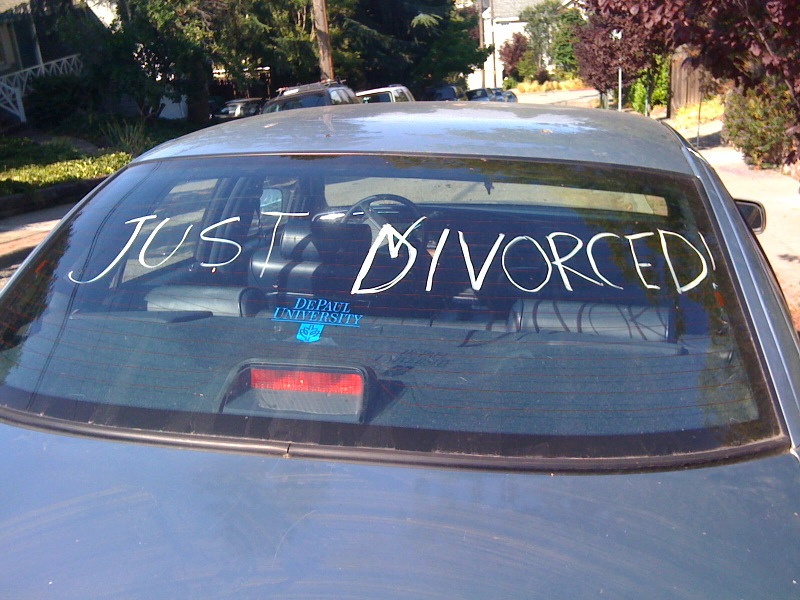
Alternatively, a divorce is not required to sever this estate. A married couple can mutually agree to terminate a tenancy by the entirety through a legally signed agreement, often to fulfill advanced estate planning goals or transfer the property into a trust.
Summary: Comparing Forms of Co-Ownership
To synthesize your understanding for the field and the exam, visualize the distinctions along the fault lines of survivorship, consent, and equality of shares:
| Feature | Tenancy in Common | Joint Tenancy | Tenancy by the Entirety |
|---|---|---|---|
| Default for: | Unmarried co-owners | Requires explicit deed language | Married couples |
| Right of Survivorship? | No (passes to heirs via will) | Yes (bypasses will entirely) | Yes (bypasses will entirely) |
| Unities Required: | Possession only | Time, Title, Interest, Possession | Legal Marriage + PITT |
| Unequal Shares? | Allowed | Strictly prohibited | N/A (Each owns 100% as an entity) |
| Sell w/o Consent? | Yes | Yes (but buyer becomes Tenant in Common) | No (Requires explicit consent) |
| Partition Suit? | Yes | Yes | No (Requires explicit consent) |
Mastering the nuances between a severed estate and the various geometries of co-ownership gives you the analytical foresight to solve title issues before they derail a closing. As a New York real estate professional, you are not merely transacting physical addresses; you are transacting these intricate bundles of human rights. Let the unities guide your practice.