A commercial lease is essentially a long-term economicphysics problem. When a landlord grants a tenant the right to occupy space for five, ten, or twenty years, the landlord is exposing themselves to the slow, relentless erosion of purchasing power. The cost to light the hallways, pay the property taxes, and maintain the elevators will inherently rise, while a static rent payment will buy less and less over time. To balance this equation, the market relies on the lease escalation clause, a contractual mechanism that allows a commercial landlord to increase the tenant's base rent over the duration of the lease term.
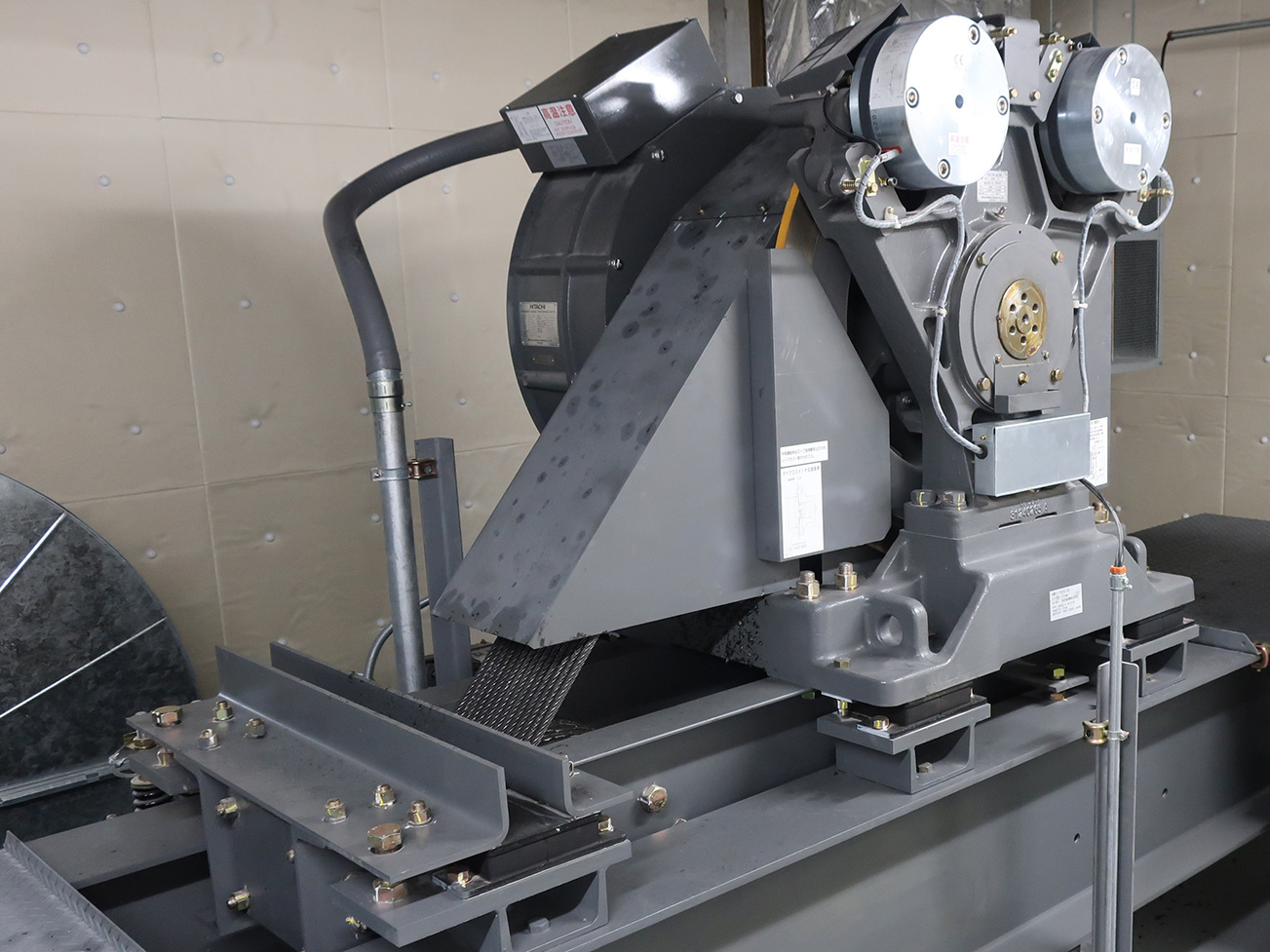
Maintaining heavy building infrastructure, such as elevator systems, represents a significant ongoing operating expense. Landlords use escalation clauses to protect themselves from absorbing the rising costs of this maintenance over the life of a lease.
For a New Yorkreal estate salesperson, understanding the mechanics of these clauses is what separates a mere space-shower from a trusted advisor. When you represent a retail client opening a storefront in Brooklyn or a tech startup leasing an office in Midtown, the base rent is only the beginning of the conversation. The escalation clause is where the true long-term cost of the lease is hidden.
In dense commercial hubs like Midtown Manhattan, a tenant's base rent is only the starting point. Elite real estate advisors must calculate the true long-term financial liabilities hidden within complex lease escalation clauses.
Before we can calculate how much expenses have increased, we must determine exactly who pays for what. If property taxes on a 100,000-square-foot office tower increase by $50,000, it makes no sense to bill the small corner bakery for the entire increase.
Instead, costs are distributed based on a proportionate share. A tenant's proportionate share is the percentage of a commercial building's total rentable area occupied by that specific tenant. If your client rents 10,000 square feet in that 100,000-square-foot building, their proportionate share is 10%.
The Golden Rule of Apportionment: Landlords use a tenant's proportionate share to calculate the tenant's exact portion of building operating expense increases. If the building's operating costs go up by $50,000, your client is responsible for exactly 10% of that increase, or $5,000.
To determine that an expense has "increased," we must have a starting line. Landlords use two primary methods to draw this line in the sand: Base Years and Stops.
The Base Year
A base year in a commercial lease serves as the financialbenchmark for calculating future increases in building operating expenses. The base year is typically defined as the first calendar year of the commercial lease term.
In a base year escalation clause, the tenant pays their proportionate share of expense increases that strictly exceed the base year's total expenses.
The Scenario: Your client signs a lease in 2024. The building's total operating expenses for 2024 (the base year) are $1,000,000.
The Escalation: In 2025, the building's expenses rise to $1,100,000. The increase is $100,000. If your client's proportionate share is 10%, they owe an additional $10,000 for that year.
Operating Stops (Expense Stops)
Alternatively, a landlord might use a fixed dollar amount rather than a calendar year's actual costs. An operating stop—which is also commonly referred to as an expense stop—is a fixed maximum dollar amount of building operating expenses that the landlord agrees to pay.
When actual building operating expenses exceed the operating stop amount, the tenant must pay the excess costs. If the lease states an operating stop of $12.00 per square foot, and actual costs hit $14.00 per square foot, the tenant pays their proportionate share of that $2.00 difference.
Tax Stops
Property taxes are uniquely volatile and heavily dependent on municipal whims. Because of this, real estate taxes are frequently billed to commercial tenants under a separate escalation clause distinct from general building operating expenses.
Similar to an operating stop, a tax stop is a lease provision limiting the landlord's financial responsibility for property tax increases up to a predetermined maximum amount. Consequently, tenants are financially responsible for property tax increases that exceed the designated tax stop. By separating taxes from operating expenses, landlords prevent highly efficient building management (which lowers operating costs) from masking a sudden spike in property taxes.
Property taxes represent a volatile liability dictated by municipal authorities. Tax stop clauses uniquely separate these costs from general building operations, ensuring landlords are protected from sudden, unpredictable tax spikes.
Escalation Benchmark
How It Works
Who Pays the Baseline?
Who Pays the Excess?
Base Year
Sets a specific calendar year's actual expenses as the threshold.
Landlord
Tenant (Proportionate Share)
Operating Stop
Sets a fixed dollar amount per square foot as the threshold.
Landlord
Tenant (Proportionate Share)
Tax Stop
Sets a fixed dollar amount specifically for property taxes.
Landlord
Tenant (Proportionate Share)
When you see a direct operating expense pass-through clause, this requires the tenant to pay their exact pro-rata share of actual increases in building maintenance costs as they occur.
However, you must be exceptionally careful here when advising a client. As an agent, you must ensure that your client is paying for the operation of the building, not the enhancement of the landlord's asset. Therefore, capital improvements are typically excluded from the operating expenses passed through to commercial tenants via escalation clauses.
If the landlord pays a cleaning crew to mop the lobby, that is an operating expense. If the landlord decides to rip out the lobby and install imported Italianmarble, that is a capital improvement. Your client's pass-through clause should explicitly prevent them from funding the landlord's marble aesthetic.
Beyond passing through building expenses, landlords also escalate the actual base rent to generate a return on their investment that outpaces inflation. There are several dominant formulas used to calculate this.
1. The Consumer Price Index (CPI) Clause
The Consumer Price Index escalation clause ties commercial rent increases to the official federal measure of economic inflation. The CPI tracks the cost of a basket of consumer goods over time. Under a Consumer Price Index escalation clause, base rent typically increases by the same percentage that the index increased over the previous year.
If inflation is hot and the CPI jumps 5%, the tenant's base rent jumps 5%. This perfectly hedges the landlord against macroeconomic inflation, but it transfers an unpredictable risk onto the tenant.
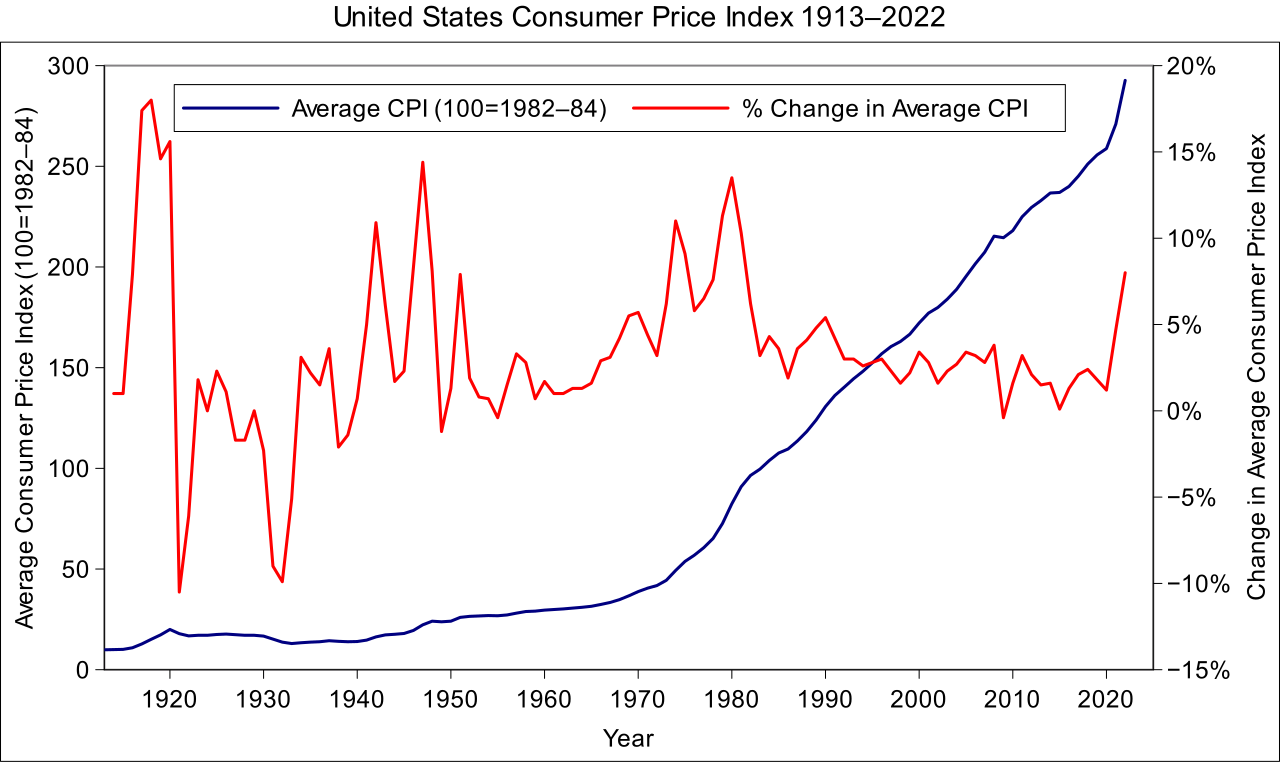
The Consumer Price Index (CPI) tracks inflation by measuring the changing costs of a standard basket of consumer goods over time. CPI escalation clauses automatically increase a tenant's base rent at the exact rate of this macroeconomic indicator.
Source: US Consumer Price Index Graph by Original image by donarreiskoffer , new SVG version made with Gnumeric (from BLS data; now covers 1913–2022), CC BY-SA 3.0.
2. Fixed Percentage Increases
Many tenants prefer certainty over market-tied volatility. A fixed percentage increase clause raises the commercial rent by a specific, pre-agreed percentage at regular annual intervals (for example, a flat 3% increase every year).
Why it matters: Fixed percentage increase clauses provide absolute mathematical certainty regarding future rent costs for both the commercial landlord and the tenant. You can sit down with your client on day one and map out their exact rent for the next decade on a spreadsheet.
3. Stepped Leases
Similar to fixed percentages, a stepped lease contains predetermined rent increases set at specific dollar amounts taking effect on specific dates. Instead of a percentage, the lease dictates raw numbers:
Years 1-3: $10,000 per month
Years 4-6: $12,000 per month
Years 7-10: $15,000 per month
Stepped leases are highly popular for retail startups. They allow a new business to pay lower rent while they build out their space and acquire a customer base base, with the rent stepping up only after the business has had time to mature.
4. The Porter's Wage Escalation (The New York Special)
We arrive finally at an escalation clause that is almost entirely unique to your operating environment. The Porter's Wage escalation method is primarily utilized within the New York City commercial real estate market.
Rather than using national inflation or actual building expenses, the Porter's Wage formula ties commercial rent increases directly to the hourly wage increases of unionized building cleaners and maintenance workers (the "porters," largely represented by the powerful 32BJ SEIU union).
A standard Porter's Wage formula increases annual rent by one penny per square foot for every one-cent per hour increase in the union porter's wage.
The Math: If the union successfully negotiates a wage increase of 50 cents per hour for the porters, the tenant's rent escalates by 50 cents per square foot. If your client leases 10,000 square feet, their rent goes up by $5,000 annually.
The Porter's Wage escalation formula utilizes a simple 1-to-1 ratio: for every one-cent hourly wage increase negotiated by the local maintenance union, the tenant's annual base rent increases by exactly one penny per square foot.
It is an elegant, albeit uniquely localized, proxy for inflation. Landlords love it because the math is indisputable—the union publishes the wage agreement, and the rent increases automatically. It saves the landlord from having to open their private operational books to the tenant to prove that expenses went up.
As a real estate salesperson, your value lies in translating these abstract clauses into tangible financial realities for your clients. When you review a lease, you must instantly identify the escalation engine. Is the base year set to the current year, or is the landlord trying to use a historical, lower-cost year to artificially inflate the tenant's share of increases? Are capital improvements properly excluded from the operating stop? Is a CPI escalation uncapped, exposing your client to runaway inflation?
By mastering these mechanisms—proportionate shares, base years, stops, and the precise formulas that govern rent bumps—you protect your clients from unforeseen liabilities and establish yourself as an elite practitioner in the New York commercial market.