Mortgage Contingency and Down Payment
Not sure you’re ready?
Take the ~3-minute readiness diagnostic and see where you stand.
A real estate contract is not merely a statement of intent; it is an intricately balanced mechanism of financial physics. When a buyer and seller sign a contract of sale in New York, they are linking two opposing forces: the buyer’s desire to secure the property and the seller’s demand for certainty. To stabilize this dynamic, the contract relies on an anchor—the down payment—and an escape hatch—the mortgage contingency. If we do not understand exactly how these two components interact, the entire transaction collapses. In New York, the rules governing how we handle the buyer’s money and the specific terms under which a buyer can walk away are rigid, precise, and entirely unforgiving of amateur mistakes.
At its core, a mortgage contingency clause allows a buyer to cancel a real estate contract without penalty if the buyer cannot obtain financing. But the law does not deal in vague intentions. A buyer cannot simply say, "I will try to find the money." To protect both parties, the contingency clause is a rigorously calibrated set of parameters.
A properly drafted mortgage contingency clause specifies three critical boundaries:
- The exact loan amount the buyer must attempt to secure.
- The maximum interest rate acceptable to the buyer.
- A specific deadline by which the buyer must secure a mortgage commitment.
When the buyer meets these parameters, they cross the finish line by obtaining a mortgage commitment letter—a formal document from a lender agreeing to provide the specified loan. Obtaining this formal mortgage commitment letter from a lender typically satisfies the mortgage contingency clause, binding the buyer to the purchase.
The Physics of "Good Faith"
Here is where many transactions derail. A buyer must act in good faith and apply for the specific type of mortgage described in the contingency clause.
If your client's contract states they are applying for a standard 30-year fixed-rate mortgage at 6%, they cannot quietly apply for an exotic adjustable-rate mortgage or a commercial loan instead. Doing so alters the risk profile of the deal. Therefore, applying for a different loan type than specified in the mortgage contingency may constitute a breach of contract.
The Notification Trap
Time is the ultimate constraint in a contract. The contingency clause outlines a specific deadline, and this deadline requires active, deliberate communication.
If a buyer fails to secure a mortgage commitment by the contingency deadline, the buyer must actively notify the seller to cancel the contract. The contract does not automatically dissolve just because the bank said no. If the buyer is silent as the deadline passes, the seller is legally entitled to assume the buyer has secured the financing. Consequently, failure to notify the seller of an unapproved mortgage by the contingency deadline can result in the buyer forfeiting their entire down payment.
Crucial Warning: Silence in a real estate contract is not neutral; it is an assertion of acceptance. An agent who forgets a contingency deadline is an agent who buys their client a property they cannot afford, or loses them a massive sum of money.
Not all money behaves the same way in a real estate transaction. The contract must reflect the specific flavor of financing the buyer intends to use, because different loans impose entirely different conditions on the property and the seller.
Traditional vs. Government-Backed Financing
A traditional mortgage contingency requires the buyer to apply for a conventional loan from an institutional lender (like a major national bank). These are straightforward: the bank assesses the buyer's credit and the property's market value.
However, when dealing with government-backed loans—specifically FHA (Federal Housing Administration) and VA (Department of Veterans Affairs) loans—the rules of physics change. FHA and VA loans have stricter minimum property condition requirements than traditional conventional mortgages. The government is not just looking at the value; they are looking at safety, soundness, and structural integrity. Chipping lead paint or a missing handrail might be ignored by a conventional lender, but it will bring an FHA loan to a grinding halt.

Because of these strict standards, a mortgage contingency for a VA or FHA loan often requires the seller to complete specific property repairs before closing.
Furthermore, government loans strictly protect the buyer from overpaying:
- FHA Amendatory Clause: An FHA mortgage contingency must include an FHA amendatory clause. This powerful stipulation allows the buyer to terminate the contract without penalty if the property appraises for less than the purchase price.
- VA Mortgage Contingency: Similarly, a VA mortgage contingency allows a veteran buyer to cancel the contract without penalty if the property fails to meet the appraised value.
Seller-Involved Financing
Sometimes, the institutional bank is removed from the equation entirely, or the existing bank debt is transferred.
| Financing Type | Mechanism | The Catch |
|---|---|---|
| Purchase Money Mortgage | A contingency outlining the terms under which the seller will provide financing directly to the buyer. | The seller takes on the risk of buyer default, acting as the bank. |
| Assumable Mortgage | The transaction is dependent on the buyer being approved to take over the seller's existing loan at its original terms. | The seller remains financially liable for the loan unless the lender grants a formal release of liability. Without this release, if the new buyer defaults, the bank will hunt down the original seller. |
If the mortgage contingency is the escape hatch, the down payment is the gravity holding the buyer to the earth. It represents the buyer's "skin in the game."
In New York, the timeline of this money is specific: the buyer typically pays the contract down payment at the time of signing the contract of sale. This is the moment the deal becomes real. But how much is required? While it varies, in downstate New York (such as New York City, Long Island, and Westchester), a customary down payment is ten percent (10%) of the agreed purchase price.
The Liquidated Damages Concept
Why $50,000 or $100,000 sitting in an account? Because a down payment serves as liquidated damages for the seller if the buyer unjustifiably breaches the contract.
Imagine a seller takes their home off the market for two months while waiting for the buyer to close. If the buyer simply changes their mind and walks away—an unjustifiable breach—the seller has lost two months of marketing time, incurred carrying costs, and missed other potential buyers. The law recognizes that calculating the exact dollar amount of this damage is nearly impossible. Therefore, the down payment acts as a pre-agreed penalty: the liquidated damages.
Conversely, if a buyer legally cancels a contract due to an unmet mortgage contingency (remember the active notification!), the contract has operated exactly as designed. In this scenario, the escrow agent must return the down payment to the buyer.
Now we arrive at the most vital professional mechanics for a New York real estate salesperson. Who actually holds this massive sum of money?
In many states, the real estate brokerage holds the down payment. Not in New York. New York real estate brokers generally do not hold down payments for residential sales contracts. Instead, in New York, it is customary for the seller's attorney to hold the contract down payment in an escrow account.
The Dual Loyalty of the Escrow Agent
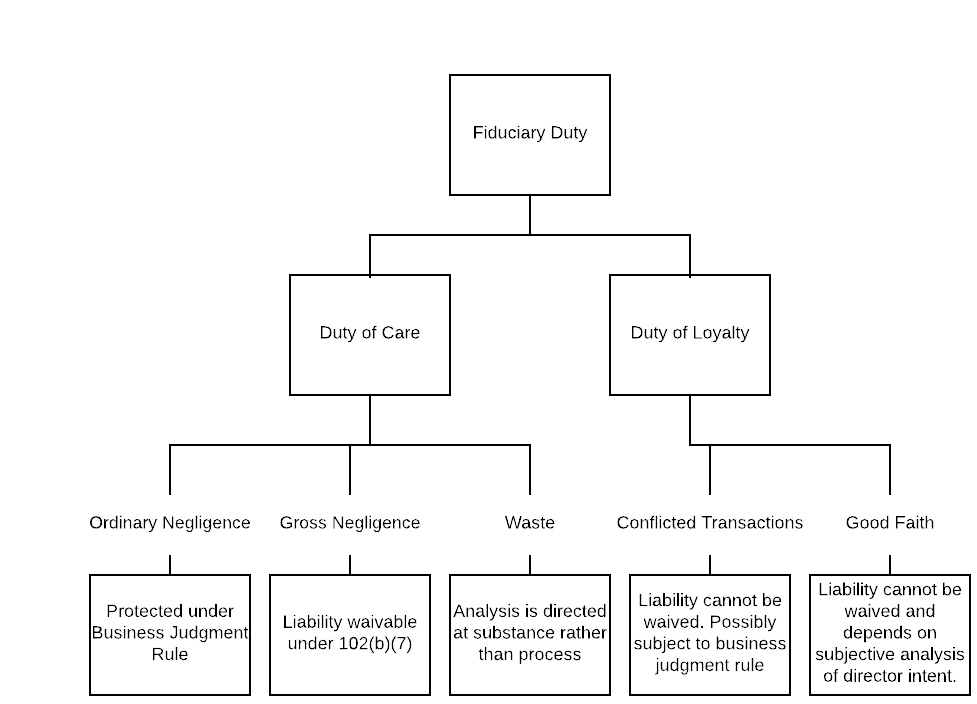
When the seller's attorney deposits that 10% down payment, they undergo a temporary transformation. They are no longer just the aggressive advocate for the seller. By taking possession of the funds, the escrow agent holding the down payment acts as a fiduciary to both the buyer and the seller. They must protect those funds with absolute neutrality, acting only in accordance with the written terms of the contract.
The IOLA Account: Systemic Brilliance
Where exactly does the money sit? The down payment is often held in a specialized escrow account called an Interest on Lawyer Account (IOLA).
If you put $100,000 in a standard bank account for two months, it generates interest. Who gets that interest? The buyer? The seller? The attorney? The State of New York solved this elegantly: interest earned on an Interest on Lawyer Account is paid directly to the New York State Lawyers Fund for Client Protection.
This is a beautiful systemic design. The interest generated by thousands of real estate transactions across the state is pooled to reimburse clients who have been defrauded by dishonest attorneys. The friction of the transaction funds the safety net of the industry.
The Cardinal Sin: Commingling
Because the escrow agent is a fiduciary holding other people's money, the physical segregation of those funds is paramount. Commingling occurs when an escrow agent mixes client down payment funds with the agent's personal or operating funds.
It does not matter if the attorney or broker keeps perfect track of the money on a spreadsheet. It does not matter if the operating account never drops below the required balance. The mere act of putting the client's money into the same bucket as the firm's payroll or the attorney's personal savings is a violation of fundamental trust. Therefore, New York law strictly prohibits attorneys and brokers from commingling down payment funds with personal funds. Doing so is the fastest way for a professional to lose their license and face criminal charges.
What happens when the system breaks down?
Suppose the buyer claims they could not get a mortgage and demands their down payment back, but the seller claims the buyer acted in bad faith and demands to keep it as liquidated damages.
Because the escrow agent is a fiduciary to both parties, they are completely paralyzed by this disagreement. If a down payment dispute arises between the buyer and seller, the escrow agent cannot distribute the funds. They cannot play judge. They cannot play jury.
An escrow agent must hold disputed down payment funds until receiving one of two things:
- A written agreement signed by both parties resolving the dispute.
- A definitive court order.
If the parties are entirely deadlocked and a down payment dispute remains unresolved, the escrow agent cannot simply hold the money indefinitely while the world turns. To relieve themselves of the fiduciary burden and step out of the crossfire, the escrow agent must deposit the disputed funds with the appropriate court. This legal maneuver, often executed via a process called an interpleader action, transfers the custody of the money to the state, forcing the buyer and seller to fight it out before a judge.
As a real estate professional, you are the navigator of this complex machinery. You must understand that a traditional mortgage differs fundamentally from an FHA loan with its mandatory amendatory clause. You must track your contingency deadlines with obsessive precision, knowing that silence forfeits the down payment. You must respect the sanctity of the IOLA escrow account, understanding that those funds are frozen in the event of a dispute.
By mastering the interplay between the mortgage contingency and the down payment, you elevate yourself from a mere salesperson to a true architect of the transaction, protecting your clients from the severe financial physics of a broken contract.