Residential Market Analysis and Highest Use
Not sure you’re ready?
Take the ~3-minute readiness diagnostic and see where you stand.
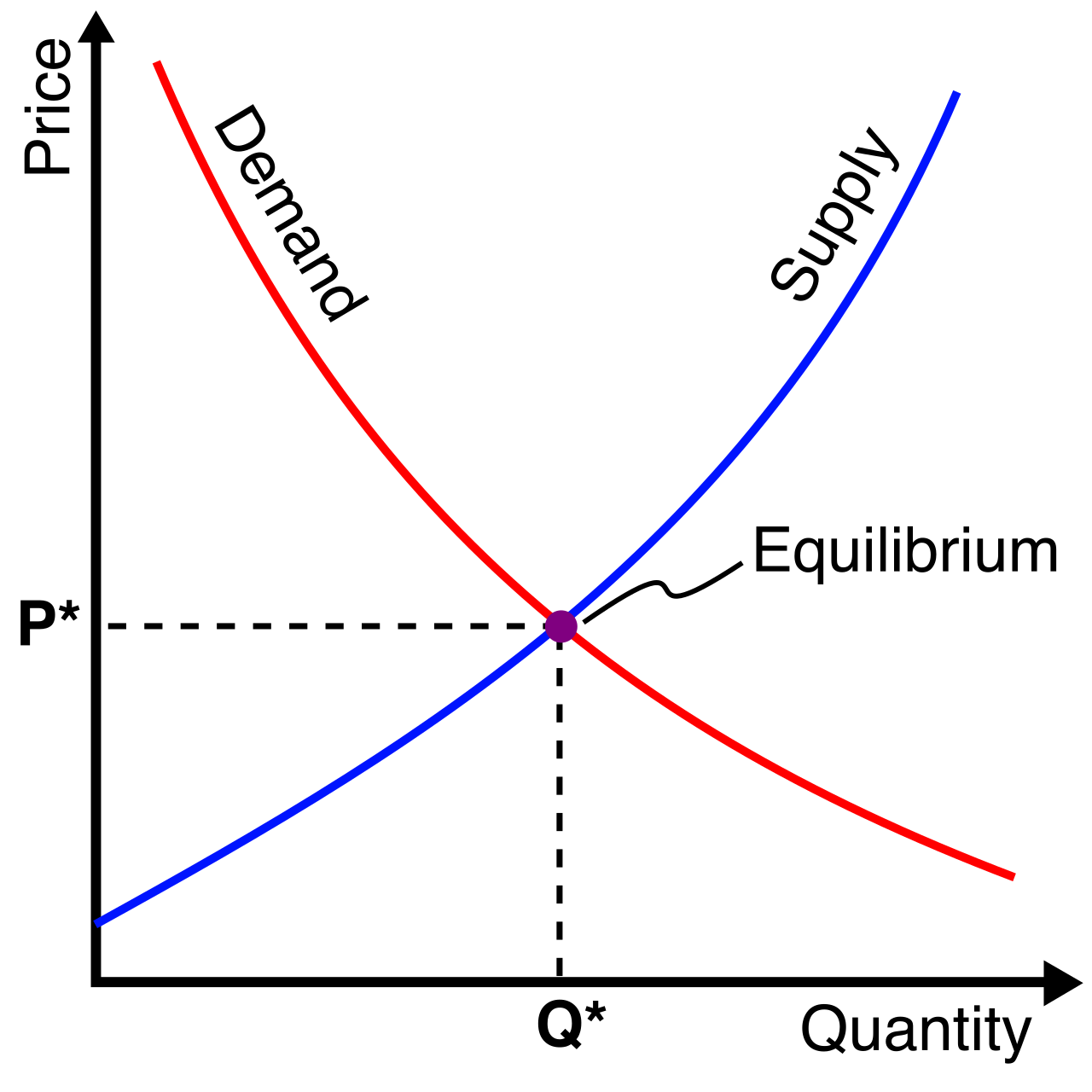
Value is not an intrinsic physical property baked into the brick and mortar of a Manhattan townhouse or a Queens duplex. It is an emergent property of human choice, driven by a simple, unavoidable economic reality: nobody wants to be the fool who paid too much. This behavioral truth is formally known as the principle of substitution. It states that a rational buyer will not pay more for a property than the cost of acquiring an equally desirable substitute. If two functionally identical condos are available on the same block, the cheaper one dictates the market. Therefore, a residential market analysis relies heavily on the economic principle of substitution to measure these alternatives, translating abstract market psychology into actionable numbers.

As a New York real estate professional, you are not paid simply to unlock doors; you are paid to understand market realities. To do this, real estate licensees perform Comparative Market Analyses (CMAs).
A Comparative Market Analysis evaluates similar recently sold homes to estimate a target property's market value. Unlike an appraisal, a Comparative Market Analysis is not an official appraisal; it is a specialized advisory tool utilized by agents on the ground. You will use it for two primary reasons:
- For Sellers: Real estate licensees perform Comparative Market Analyses to help clients set listing prices. If you price too high, the property stagnates. If you price too low, you leave your client's equity on the table.
- For Buyers: Real estate licensees perform Comparative Market Analyses to help buyers formulate competitive purchase offers. In a multi-offer scenario in Brooklyn, your buyer needs to know exactly where the ceiling of reason lies.
To build a CMA, you must interrogate three distinct categories of market data.
1. Recently Sold Properties (The Truth)
In any residential market analysis, recently sold properties provide the most reliable indicator of actual market value. A listing price is just a request; a sold price is an executed contract where a buyer and seller actually agreed. Real estate agents typically select comparable sold properties that closed within the past three to six months. Markets are dynamic—a price from eighteen months ago is ancient history and mathematically useless today.
2. Active Listings (The Competition)
Active listings represent current market supply. They do not tell you what a home will sell for, but they demonstrate the competition a subject property will face in the marketplace. Because these properties remain unsold, active listings generally indicate the upper limit of value a seller can expect to achieve. If the house down the street is listed at $850,000 and isn't selling, your client cannot expect $900,000 for an identical home.
3. Expired Listings (The Cautionary Tale)
When a listing agreement ends without a sale, the property becomes an expired listing. Expired listings demonstrate price points that current buyers are unwilling to pay. They serve as a harsh reality check for overly optimistic sellers.
| Data Type | What It Represents | How to Use It in Practice |
|---|---|---|
| Sold Properties | The Market Truth (Past 3-6 months) | Use to establish the baseline estimated value. |
| Active Listings | The Current Supply | Use to understand competition and establish an upper pricing limit. |
| Expired Listings | The Rejected Reality | Use to show sellers what price points the market has demonstrably refused. |
Understanding Market Velocity: Days on Market
To contextualize these numbers, we look at Days on Market (DOM), which measures the number of days a property is actively listed before going under contract. DOM acts as the market's pulse.
- A low average Days on Market across a neighborhood typically indicates a seller's market (demand outpaces supply).
- A high average Days on Market across a neighborhood typically indicates a buyer's market (supply outpaces demand).
No two properties are perfectly identical. You will inevitably compare your client's property (the subject property) to a sold property (the comparable or comp) that has an extra bathroom, or lacks a finished basement. To make them equivalent, we must make mathematical adjustments.
There is one cardinal rule in real estate math:
The Golden Rule of Adjustments: In a Comparative Market Analysis, adjustments are applied exclusively to the comparable properties. Adjustments are never applied to the subject property.
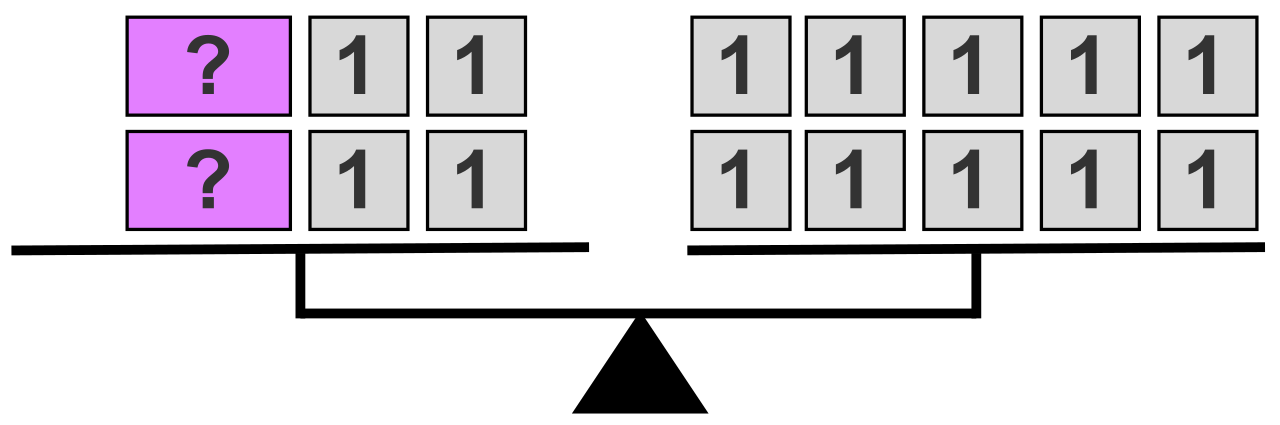
Why? Think of it like basic algebra. Your subject property is the unknown variable (X). You cannot alter the unknown variable. Instead, you manipulate the known variables (the comparables) until they perfectly mirror the subject. You are asking: "If this comparable property were exactly identical to my subject property, what would it have sold for?"
- Subtracting Value: An agent must subtract value from a comparable property if the comparable property possesses a desirable feature the subject property lacks. For example, if the comp sold for $900,000 and had a highly coveted garage, but your subject property has no garage, you must subtract the estimated value of a garage (e.g., $50,000) from the comp's sold price. The adjusted comp value is now $850,000.
- Adding Value: An agent must add value to a comparable property if the comparable property lacks a desirable feature the subject property possesses. If the comp lacks central air conditioning, but your subject has it, you add the value of central air to the comp's sold price to simulate what it would have sold for if it had AC.
While agents perform CMAs, licensed appraisers perform official appraisals. Appraisers determine the highest and best use of a property before selecting comparable properties for the sales comparison approach.
Why before? Because you cannot compare properties until you know what they are fundamentally supposed to be.
Highest and best use is defined as the property use that yields the highest present value for a parcel of real estate. The highest and best use analysis is a foundational step in formal real estate appraisals because it prevents absurd comparisons. You cannot compare a single-family home on a massive lot zoned for a high-rise to a single-family home on a lot zoned strictly for single-family use. Their fundamental economic destinies are entirely different.

To determine this, the highest and best use analysis must satisfy four sequential criteria. An appraiser acts like a detective, passing the property through four strict filters:
1. Legally Permissible
The first highest and best use test requires the proposed property use to be legally permissible. A use cannot be highest and best if it violates the law. Specifically:
- A legally permissible property use must comply with local zoning ordinances.
- A legally permissible property use must comply with local building codes.
- A legally permissible property use must comply with existing deed restrictions. (If a deed explicitly forbids commercial use, a coffee shop cannot be the highest and best use, no matter how profitable it might be).
2. Physically Possible
If a use is legally allowed, the second highest and best use test requires the proposed property use to be physically possible.
- A physically possible property use must be supported by the site's specific parcel size (you cannot fit a 50,000-square-foot warehouse on a 5,000-square-foot lot).
- A physically possible property use must be supported by the site's topography (a steep cliffside may prohibit a sprawling ranch home).
- A physically possible property use must be supported by the site's soil conditions (swampy soil might not physically support the foundation of a heavy commercial structure).

3. Financially Feasible
Once we know what is legally and physically allowed, we look at the math. The third highest and best use test requires the proposed property use to be financially feasible.
- A financially feasible property use must generate adequate revenue to cover all operating costs.
- A financially feasible property use must generate a positive return on investment. If it costs $2 million to build an apartment complex, but the local rental market will only support revenues that cover a $1.5 million investment, the project is not financially feasible.
4. Maximally Productive
Many potential uses might pass the first three tests. The fourth highest and best use test requires the proposed property use to be maximally productive. Out of all the legal, possible, and profitable options, the maximally productive property use is the single financially feasible use that yields the highest net return. This is the ultimate "Highest and Best Use."
Highest and best use analysis handles raw dirt and existing structures very differently.
When looking at empty lots, the highest and best use analysis evaluates vacant land as if the land were completely empty, and evaluates vacant land as if the land were available for new development. The land is a blank canvas evaluated purely on its maximum potential under the four tests.
However, most properties you encounter in New York will already have a building on them. The highest and best use analysis of an improved property evaluates exactly what to do with that existing building. It poses three distinct choices:
- Maintain: Evaluates whether the existing structure should be maintained in its current state.
- Modify: Evaluates whether the existing structure should be modified or renovated (e.g., converting a massive Victorian single-family home into a multi-family duplex).
- Demolish: Evaluates whether the existing structure should be demolished.
The Teardown Scenario When is a structure completely obsolete? Demolition of a structure is financially justified if the value of the vacant land alone exceeds the value of the property with the existing improvements.
Imagine a dilapidated 1940s bungalow sitting on a massive, prime waterfront lot in Long Island. The bungalow is so decrepit that buyers view it as a liability, not an asset. If the property with the house is worth $800,000, but a developer would pay $1,000,000 for the dirt if the lot were empty, the structure has negative value. The highest and best use is to bring in the bulldozers.

As a New York real estate salesperson, internalizing these concepts separates the order-takers from the true advisors. Whether you are adjusting comparables to find the perfect listing price or recognizing that a client's property is actually a prime teardown candidate, your value lies in translating these profound economic principles into everyday market victories.