Comparative Market Analysis (CMA)
Not sure you’re ready?
Take the ~3-minute readiness diagnostic and see where you stand.
Pricing real estate is not an exercise in discovering a fundamental constant of the universe; it is an act of measuring human behavior in a specific marketplace at a specific moment in time. When we want to understand the value of a particular parcel of real estate, we do not weigh its bricks or measure the atomic density of its timber. Instead, we observe the decisions made by independent actors engaged in recent, similar economic exchanges. A Comparative Market Analysis (CMA) is the structured evaluation of similar recently sold homes used to determine a competitive market price for a subject property. It is the primary analytical framework you will rely on to translate raw market data into actionable financial advice for your clients.
Before we examine the mechanics of constructing a CMA, we must establish a rigid legal boundary. In the State of New York, words have highly specific statutory meanings.
An appraisal is a formal, objective estimate of a property's value performed strictly by a licensed or certified appraiser. It is an exacting discipline governed by strict federal and state guidelines. By contrast, a CMA is a marketing tool derived from market trends and recent sales data.
Crucial Distinction: New York State law explicitly prohibits a real estate licensee from referring to a Comparative Market Analysis as an appraisal. Only individuals licensed or certified under New York State Article 6-E may legally perform real estate appraisals.
If a client asks, "Is this an appraisal of my home?" your answer must be a definitive no. Misrepresenting a Comparative Market Analysis as an appraisal constitutes a direct violation of New York real estate license law, risking your license and your livelihood.
Interestingly, a real estate broker or salesperson may legally charge a fee for providing a Comparative Market Analysis in New York. However, this comes with a strict caveat: a licensee charging a fee for a CMA must provide clear written disclosure stating that the provided document is not an appraisal. The law demands total transparency regarding the nature of the service you are providing.
Why do we invest the time to build a CMA? We do it because real estate transactions are asymmetric; buyers and sellers enter the market with different motivations and different blind spots.

- For the Seller: A real estate salesperson prepares a CMA to help a seller establish a realistic listing price for a property. Left to their own devices, sellers price their homes based on emotion or what they "need" to net from the sale. A CMA grounds them in empirical reality.
- For the Buyer: Conversely, a real estate salesperson prepares a CMA to help a buyer formulate a competitive offer price for a property. In a highly competitive New York market, a buyer needs to know if the $850,000 asking price is a bargain, fair market value, or a severe overreach.
Constructing a highly accurate CMA is a process of systematic observation and adjustment. It requires moving from the specific (the property itself) to the general (the neighborhood), and back to the specific (the comparable adjustments).
Step 1: Data Collection at the Subject Property
You cannot price what you have not observed. The first step in preparing a CMA requires a thorough inspection of the subject property to gather data on property features. You are looking for the raw variables of the equation: square footage, bedroom and bathroom count, the condition of the roof, the age of the mechanical systems, and the quality of the finishes.
Step 2: Environmental Context
A beautiful house situated next to a noisy highway behaves differently in the market than an identical house located on a quiet cul-de-sac. Therefore, the second step in preparing a CMA involves analyzing the surrounding neighborhood to assess relevant local market trends. Are property values in this specific zip code rising or falling? Is there an influx of new commercial development? The property exists within a broader economic ecosystem.

Step 3: Sourcing the Data (The Comparables)
The third step in preparing a CMA involves selecting appropriate comparable properties from a multiple listing service (MLS). This is where your analytical judgment is tested. Ideal comparable properties in a CMA match the subject property closely in square footage, age, condition, and location.
However, a match is useless if the data is stale or corrupted. You must apply strict filters to your data selection:
- Temporal Proximity: Real estate professionals typically select comparable properties that have sold within the last three to six months. The market from two years ago is a different universe; it has no bearing on today's pricing.
- Market Reality: Comparable properties used in a CMA must reflect arm's-length transactions. An arm's-length transaction means both the buyer and seller acted independently and in their own self-interest. A father selling a brownstone to his daughter for $100,000 is not an arm's-length transaction; it is a gift disguised as a sale.
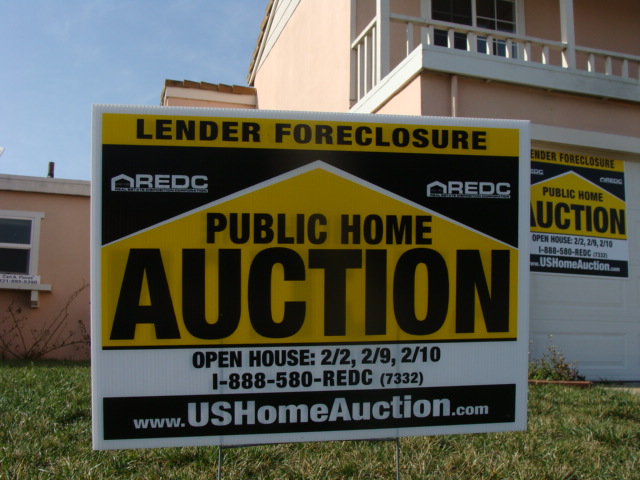
- Exclusion of Distressed Sales: Foreclosure sales are generally excluded from standard CMA comparable selections due to atypical market pressures on the sale price. A bank liquidating an asset at auction does not represent standard market value.
To give your client a complete three-dimensional view of the market, a comprehensive CMA must draw upon three distinct categories of listings:
| Listing Status | Purpose in the CMA |
|---|---|
| Active Listings | Included to show sellers the current competition in the local market. These are the alternatives a buyer will view alongside your subject property. |
| Expired Listings | Included to demonstrate prices at which similar properties failed to attract a buyer. This serves as a vital warning sign to sellers about the dangers of overpricing. |
| Recently Sold | Included to provide evidence of current market value based on actual closed transactions. This is the hardest, most reliable data in your analysis. |
Step 4: The Art of Adjustment
No two properties are perfectly identical. The fourth step in preparing a CMA involves adjusting the sale prices of the comparable properties. Price adjustments in a CMA account for specific physical or locational differences between the comparable properties and the subject property.
Here, we encounter the most critical mathematical rule of the CMA process:
The Golden Rule of Adjustments: When making price adjustments in a CMA, the licensee must never adjust the baseline value of the subject property itself.
Think of your subject property as your fixed anchor—the North Star. You do not move the North Star; you adjust your telescope. You alter the value of the comparable properties to make them hypothetically identical to your subject property.
- The Subtraction Principle: If a comparable property has a superior feature compared to the subject property, the comparable property's price is adjusted downward.
- Example: Your subject property has no garage. Comparable A sold for $600,000 and has a two-car garage. You must subtract the estimated market value of that garage from Comparable A's $600,000 sale price to see what it would have sold for if it looked exactly like your subject property.
- The Addition Principle: If a comparable property has an inferior feature compared to the subject property, the comparable property's price is adjusted upward.
- Example: Your subject property has an updated kitchen. Comparable B has a dilapidated kitchen. You must add the estimated value of the renovation to Comparable B's sale price to bring it up to the standard of your subject property.
00087_Rear_Gut_JUNE_1971(37507228366).jpg)
Step 5: Reconciliation
Once you have adjusted your three to five comparable properties, you will be left with a cluster of adjusted sale prices. They will rarely be identical.
The final step in preparing a CMA requires reconciling the adjusted comparable prices to establish a recommended price range. Because human behavior inherently contains variance, a Comparative Market Analysis yields a range of potential market values rather than a single definitive valuation number. You present the seller with this data—perhaps concluding the property will trade between $735,000 and $750,000—and together, grounded in empirical evidence, you finalize the strategy.