RESPA and Prorations
Not sure you’re ready?
Take the ~3-minute readiness diagnostic and see where you stand.
The real estate closing table is where abstract property rights crystallize into precise financial reality. Beneath the handshakes and the transfer of keys lies a rigorous, heavily regulated accounting process that balances the scales between buyer, seller, and lender. Two fundamental pillars support this process: the federal regulations that ensure transparency in the fees charged, and the mathematics of proration that allocate the ongoing costs of property ownership down to the exact hour of transfer. For a real estate professional, mastering these concepts is not merely about passing an examination; it is about protecting the consumer from financial exploitation and guaranteeing that neither party subsidizes the other's expenses.
Historically, the real estate settlement process was opaque. A homebuyer might arrive at the closing table only to discover exorbitant, unexplained fees tacked onto their final bill by a network of colluding service providers. To eliminate this hidden economy, the federal government enacted the Real Estate Settlement Procedures Act, commonly known by the acronym RESPA.
RESPA is a federal law created to protect consumers from abusive real estate settlement practices. Today, the Consumer Financial Protection Bureau (CFPB) strictly enforces RESPA regulations, ensuring that lenders, agents, and title companies operate in the daylight.
When Does RESPA Apply?
RESPA does not apply to every exchange of dirt and bricks. It is highly specific regarding jurisdiction. RESPA regulations govern one-to-four family residential property transactions, but only when the property is financed by a federally related mortgage loan.
Because its fundamental purpose is to regulate the lending and settlement ecosystem, RESPA ignores transactions where federal lending mechanics are absent. Therefore, RESPA regulations do not govern:
- All-cash real estate transactions (no mortgage lender is involved).
- Commercial property transactions (which operate under different risk assumptions).
- Vacant land purchases, generally speaking.
- The Exception: RESPA will cover vacant land if a one-to-four family home will be constructed on the land within one year.
The Core Prohibitions of RESPA
To understand RESPA, you must understand the financial behaviors it exists to destroy.
Section 8 of RESPA addresses the underground economy of referrals. It strictly prohibits real estate professionals from giving kickbacks for settlement services, just as it strictly prohibits receiving kickbacks for those same services. Furthermore, it prohibits real estate professionals from accepting "unearned fees" for settlement services. In practice, this means a real estate settlement service provider cannot legally pay a fee simply for a client referral under RESPA rules. If money changes hands, it must be for actual, quantifiable work performed.
Section 9 of RESPA protects the buyer's right to choose. It prohibits sellers from forcing buyers to use a specific title insurance company. The seller cannot say, "Buy my house, but only if you use my preferred title insurer."
Section 10 of RESPA governs the escrow account—the pool of money the lender holds to pay future taxes and insurance. Lenders naturally want a massive cushion of cash to mitigate their risk. Section 10 limits the required monetary cushion a lender can demand in a borrower's escrow account, preventing lenders from hoarding excessive consumer funds.
Affiliated Business Arrangements (ABAs)
RESPA recognizes that modern real estate brokerages often own stakes in mortgage or title companies. RESPA permits Affiliated Business Arrangements between distinct real estate service providers, but it demands absolute transparency.
Under RESPA rules, Affiliated Business Arrangements must be formally disclosed in writing to the consumer. Crucially, an Affiliated Business Arrangement disclosure must state that the consumer is not obligated to use the affiliated provider. You can offer the convenience of your in-house mortgage broker, but you cannot compel the client to use them.
TRID: The Paperwork of Transparency
The regulations of RESPA and the Truth in Lending Act (TILA) were historically documented on separate, confusing forms. To simplify this, regulators merged them into the TILA-RESPA Integrated Disclosure rule, commonly referred to by the acronym TRID.
TRID regulations mandate the mandatory use of two highly specific forms:
- The Loan Estimate: A mortgage lender must provide a Loan Estimate to the consumer within three business days of the loan application. This shows the consumer exactly what the loan will cost over time.
- The Closing Disclosure: A mortgage lender must provide a Closing Disclosure to the consumer at least three business days before loan consummation. (In real estate terminology, loan consummation generally refers to the real estate closing date on the Closing Disclosure).
This three-day cooling-off period is a brilliant piece of regulatory design. It ensures buyers are never pressured to sign documents they haven't had time to read. Additionally, mortgage lenders must provide the "Your Home Loan Toolkit" informational booklet to prospective borrowers. This booklet must be provided to the consumer within three days of a mortgage application.
Once the regulatory environment of RESPA has ensured a fair closing, the mathematics of the transaction take over.
Proration is the mathematical allocation of property expenses and income between the buyer and the seller at closing. If property taxes are billed annually, but the house changes hands on October 12th, who pays for October 12th? Who pays for October 13th?
The Rule of Custom: A real estate sales contract can override standard proration customs regarding closing day financial responsibility. However, if the contract is silent, New York real estate custom generally assigns financial responsibility for property expenses on the exact day of closing to the seller. The seller owns the closing day; the buyer owns tomorrow.
To calculate these allocations accurately, we categorize every dollar into one of two states: Accrued or Prepaid.
Accrued Expenses: Paying for the Past
An accrued expense is an expense that has been incurred by the seller during the seller's property ownership, but has not been paid by the seller prior to the closing date. Think of it as a financial shadow the seller casts upon the property.
Because the bill won't arrive until after the property changes hands, the buyer assumes the responsibility to pay the accrued expense after the real estate transaction closes. To make this mathematically fair, the buyer receives a financial credit at closing to compensate for taking on the seller's accrued expense, while the seller receives a financial debit at closing to pay for their portion.
Example: Property taxes paid in arrears by the buyer are a common example of an accrued expense. If taxes for the year are billed at the end of December, and the closing is in June, the buyer will eventually pay the whole bill. Therefore, at the June closing, the seller owes the buyer for January through June.

Prepaid Expenses: Selling the Future
A prepaid expense is the exact opposite. It is a property cost already paid in advance by the seller that covers a time period that extends beyond the real estate closing date.
Because the seller has funded a future they will not enjoy, the seller receives a financial credit at closing to recover the unused portion of a prepaid expense. Conversely, the buyer receives a financial debit at closing to reimburse the seller for that unused portion.
Examples:
- HOA Fees: Homeowners association fees paid by the seller at the beginning of the month are an example of a prepaid expense.
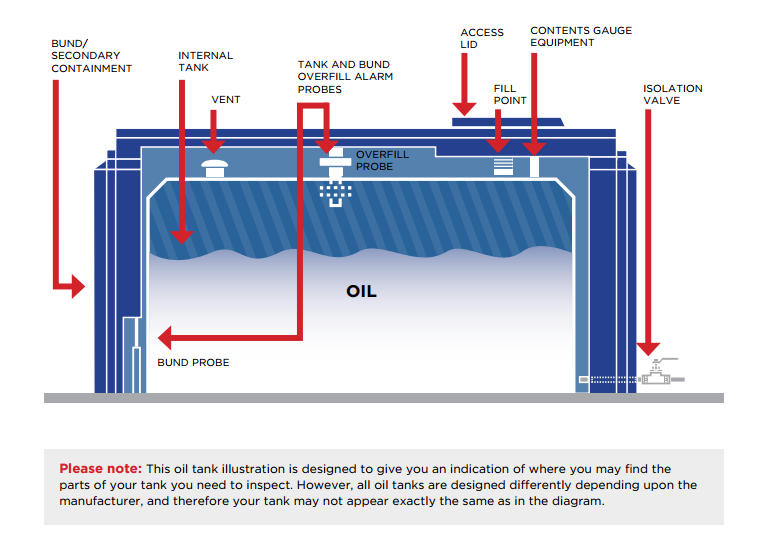
- Fuel: Heating oil left in a property's tank at closing is treated as a prepaid expense. You are physically transferring thermal energy the seller already bought.
- Insurance: Property insurance premiums are typically paid in advance for a full year. If the parties agree to keep the existing policy in place, a prepaid property insurance policy transferred to the buyer is treated as a prepaid expense at closing. The buyer reimburses the seller for the remaining days on a prepaid property insurance policy at closing.
| Expense Type | Paid By | Timeframe Addressed | Seller Statement | Buyer Statement |
|---|---|---|---|---|
| Accrued | Buyer (in future) | Time prior to closing | Debit | Credit |
| Prepaid | Seller (in past) | Time after closing | Credit | Debit |
The Calendars of Proration
To prorate an expense, you must divide a yearly or monthly cost into a daily rate. But how many days are in a year? In the era before computing, dividing by 365 was incredibly tedious, so the industry invented statutory shortcuts. Today, you must know three distinct methods:
- The Statutory Year Method: This calculates property expenses based on a 360-day calendar year. The statutory year method requires dividing the annual property expense by 360 to find the daily proration rate.
- The Statutory Month Method: This mathematically assumes exactly 30 days exist in every single calendar month. The statutory month method requires dividing the annual expense by 12 to find the monthly proration rate, and dividing the monthly expense by 30 to find the daily proration rate.
- The Exact Days Method: This calculates property expenses based on a true 365-day calendar year (and mathematically adjusts to use 366 days during a leap year). The exact days method requires dividing the annual property expense by 365 to find the daily proration rate.

To calculate the seller's share of property taxes under any method, you simply multiply the daily tax rate by the exact number of days the seller owned the property.
Special Cases at the Closing Table
Not everything on a property is divided by a calendar. Some items are governed by meters, specific advance agreements, or distinct banking rules.
Utilities
Utility bills based on specific meter consumption are generally not prorated between buyer and seller. A meter tracks exact physical usage, not abstract time. Final utility meter readings are typically taken on the exact day of closing. The seller then receives separate final utility bills based on the closing day meter readings.
However, water and sewer bills charged as flat fees in advance are prorated as prepaid expenses.

Rent and Security Deposits
When an investment property is sold, the seller has often collected rent for the closing month. Rent collected in advance by the seller is treated as a prorated income item at closing. The seller keeps the portion of advanced rent covering the days up to the closing date. Because the buyer owns the property for the remainder of the month, the buyer receives a financial credit for the portion of advanced rent covering the days after the closing date, and the seller receives a matching financial debit.
Security deposits are entirely different. They are not income; they belong to the tenant. Therefore, tenant security deposits held by the seller are not prorated at closing. The entire exact amount of a tenant security deposit is transferred directly to the buyer at closing.
Mortgage Interest
Mortgage interest behaves similarly to property taxes in that it is typically paid in arrears by the property owner. When you pay your mortgage on August 1st, you are actually paying the interest that accrued throughout July.
This creates two distinct scenarios at closing:
- Taking a New Loan: When prorating mortgage interest for a new loan, the buyer is charged interest from the day of closing to the end of the closing month. (This synchronizes the calendar so the buyer's first official mortgage payment begins squarely on the first of the following month).
- Assuming a Loan: When a buyer assumes a seller's existing mortgage, the accrued interest for the month of closing is prorated. Because the buyer will pay the full interest bill at the start of the next month, prorated assumed mortgage interest appears as a credit to the buyer and a debit to the seller on the closing statement.