Agency Relationships and Brokerage Contracts
Not sure you’re ready?
Take the ~3-minute readiness diagnostic and see where you stand.
In the complex machinery of real estate transactions, the engine that drives every deal is representation. Imagine walking into a courtroom without an attorney, attempting to navigate a maze of legal precedents, procedural rules, and strategic negotiations entirely on your own. Buying or selling real estate poses a similar, albeit financial, peril. To manage this risk, individuals rely on the legal doctrine of agency—a mechanism by which one person is legally authorized to act on behalf of another. At the heart of the national licensing exam lies the necessity to master who works for whom, the profound duties attached to those relationships, and the precise contracts that govern them. Without a foundational understanding of these concepts, a real estate professional is merely a spectator; with it, they become an essential, legally empowered advocate.

To understand the real estate business, we must first map the relationships between the people involved. These are not merely business handshakes; they are legally binding statuses that dictate your obligations and liabilities.
Agency is a fiduciary relationship in which one person represents another person in dealings with third parties. It is a relationship of deep trust and confidence. The principal is the individual who hires the agent and delegates the responsibility of representing the principal's interests. The agent is the individual authorized to represent the interests of another person.
In your daily reality as a real estate professional, you will interact with people who fall into one of two distinct categories: customers and clients. The difference between the two is a heavily tested concept because it determines the level of service you are legally required to provide.
- A customer is a third party with whom the real estate agent interacts without forming an agency relationship. If you are representing a seller, the buyer who walks into your open house is a customer. You do not represent them. However, you are not entirely free of obligation; a real estate agent owes duties of honesty and fair dealing to a customer. You cannot lie to them or conceal material defects, but you do not advocate for them.
- A client is a principal who has entered into a formal agency relationship with a real estate agent. When a person becomes a client, the dynamic shifts entirely. A real estate agent owes fiduciary duties exclusively to a client.
The Sacred Trust: Fiduciary Duties
When a principal becomes your client, common law imposes a strict set of obligations upon you. These are the common law fiduciary duties, easily remembered by the acronym OLD CAR:
- Obedience: You must follow all lawful instructions of your client.
- Loyalty: You must place your client's interests above all others, including your own.
- Disclosure: You must reveal all material facts that could influence your client's decisions.
- Confidentiality: You must keep your client's private information secret (e.g., their lowest acceptable price or their reason for moving). Crucially, the fiduciary duty of confidentiality extends indefinitely beyond the termination of an agency relationship. Long after a transaction closes, your client's secrets remain yours to keep.
- Accounting: You must accurately track and report all funds entrusted to you.
- Reasonable care and skill: You must perform your duties with the competence expected of a licensed professional.
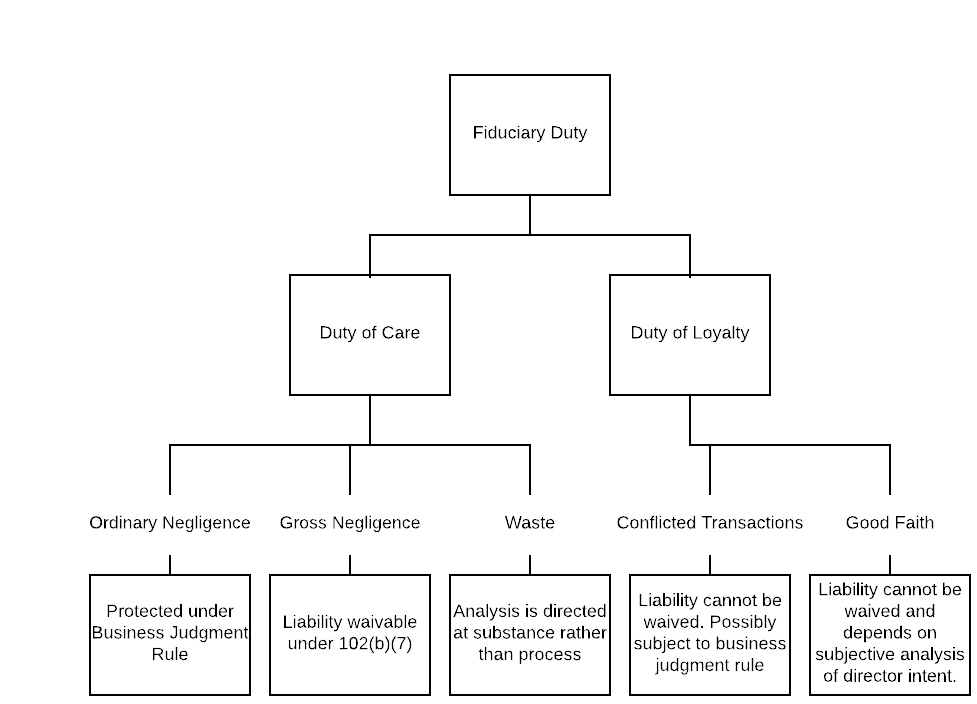
Agency is not a one-size-fits-all concept. The scope of an agent's power depends entirely on what the principal has authorized them to do. The law categorizes agents into three types based on their level of authority.
1. The Special Agent A special agent is authorized to represent the principal in one specific act or business transaction. Under strict legal definitions, a real estate broker typically acts as a special agent for a buyer or seller. You are hired to find a ready, willing, and able buyer for a specific property, or to find a specific home for a buyer. Once that single transaction is complete, your authority ends. You cannot bind the principal to a contract; you can only advise and negotiate.
2. The General Agent A general agent is authorized to represent the principal in a broad range of matters related to a particular business or activity. Unlike the one-off transaction of a special agent, a property manager typically acts as a general agent for a property owner. They have the ongoing authority to sign leases, hire maintenance crews, and collect rent on behalf of the owner.
3. The Universal Agent A universal agent is authorized to act on behalf of the principal in all matters that can be lawfully delegated. They can essentially step into the shoes of the principal. Because this grants immense power, a universal agency relationship is typically created by a written power of attorney.

An agency relationship does not magically appear simply because you hand someone a business card. It must be created through specific actions or agreements.

The most robust and desirable form is express agency, which is created by an explicit agreement between the principal and the agent. This leaves no room for ambiguity. An express agency agreement can be formed through spoken words or a written contract, though written agreements are universally preferred to prevent disputes.
However, the law also recognizes that agency can be formed without a formal declaration:
- Implied agency is created when the actions of the parties indicate mutual consent to an agency relationship. If you repeatedly show a buyer properties, negotiate on their behalf, and advise them on pricing without ever signing a document or explicitly stating you are their agent, a court may rule that an implied agency was created by your behavior.
- Agency by ratification occurs when a principal affirms an unauthorized action taken by an agent after the action has occurred. Imagine an agent finds a buyer for a property they do not formally list. The agent presents the offer to the seller, and the seller accepts it. By accepting the benefits of the unauthorized act, the seller "ratifies" the agency relationship.
- Agency by estoppel occurs when a principal allows a third party to believe another person is the principal's agent. If a property owner stands by silently while you tell a prospective buyer that you represent the owner, the owner cannot later claim you were not their agent to avoid a contract. They are "estopped" (prevented) from denying the relationship.
Agency establishes the relationship; brokerage contracts establish the employment and compensation.
A listing agreement is an employment contract between a real estate broker and a property seller. It is vital to note that the contract is with the brokerage, not the individual salesperson who signs the paperwork. Listing agreements dictate the exact conditions under which the broker earns a commission.
| Type of Listing Contract | Who can sell the property? | Who earns the commission? |
|---|---|---|
| Exclusive Right-to-Sell | Broker or Seller | In an exclusive right-to-sell listing, the seller must pay the broker a commission regardless of who secures the buyer. This offers the broker the maximum protection and incentive to invest time and money into marketing. |
| Exclusive Agency | Broker or Seller | In an exclusive agency listing, the seller retains the right to sell the property directly to a buyer without paying a commission to the listing broker. However, the seller must pay the broker a commission if the broker or any cooperating broker procures the buyer. |
| Open Listing | Multiple Brokers or Seller | An open listing allows a property seller to employ multiple real estate brokers simultaneously. In an open listing, the seller only pays a commission to the specific broker who successfully procures the buyer. If the seller finds the buyer, no broker gets paid. |
The Danger of the Net Listing
There is a fourth type of listing that requires special attention due to its hazardous nature. A net listing specifies that the property seller will receive a guaranteed net amount of money from the sale. In a net listing, the broker retains any sale proceeds exceeding the seller's specified net amount as a commission.
Practical Scenario: A seller tells you, "I don't care how much you sell the house for, as long as I walk away with $300,000." If you list and sell the house for $400,000, you pocket a staggering $100,000 commission.
This creates a massive temptation for a broker to purposefully undervalue a property to a seller, allowing the broker to capture an enormous, undisclosed profit margin. Because of this profound breach of fiduciary loyalty and disclosure, net listings are illegal in many US states due to the potential for conflict of interest between the broker and the seller.
Brokerage contracts are not strictly for sellers. As the real estate industry evolved, buyers and tenants demanded equal fiduciary representation.
A buyer representation agreement is an employment contract between a real estate broker and a prospective homebuyer. Just as a seller signs an exclusive right-to-sell, a buyer can sign an exclusive agreement. An exclusive buyer representation agreement binds the buyer to compensate the broker upon the purchase of a property described in the contract, ensuring the broker is paid for the hours spent sourcing and showing properties.
Similarly, commercial and residential renters utilize representation. A tenant representation agreement is an employment contract between a real estate broker and a prospective tenant seeking a lease. In a tenant representation agreement, the broker advocates for the tenant to negotiate favorable lease terms with a landlord, which is exceptionally common in commercial real estate where leases dictate long-term business survival.

What happens when a buyer you represent wants to purchase a property your brokerage has listed? You now have two clients in the exact same transaction whose financial goals are diametrically opposed: the seller wants the highest price, and the buyer wants the lowest.
Dual agency occurs when a single real estate broker represents both the buyer and the seller in the exact same transaction. Because an agent cannot fully advocate for both sides simultaneously (you cannot negotiate the price up and down at the same time), dual agency requires the explicit, informed written consent of all parties to the transaction. The parties must understand that the broker's fiduciary duties—specifically full disclosure and undivided loyalty—are inherently compromised. Because of this insurmountable conflict, several US states prohibit dual agency in real estate transactions entirely by law.
To solve the dual agency dilemma, some states allow designated agency. Designated agency occurs when a broker appoints specific agents within the same brokerage to exclusively represent different clients in a single transaction. Agent A represents the seller, Agent B represents the buyer, and the broker acts as a neutral supervisor. This allows both clients to receive dedicated advocacy while keeping the transaction in-house.
Finally, what if a consumer refuses representation altogether but still needs help with the mechanics of a transaction? Non-agency occurs when a real estate professional assists one or both parties with transaction paperwork without representing either party's interests. In this scenario, you owe no fiduciary duties, only honesty and competence. A real estate non-agent is frequently referred to as a transactional broker or a facilitator.
Agency relationships are not indefinite. They can be terminated by the actions of the parties or by operation of law.
An agency agreement can be terminated by the mutual consent of the principal and the agent. If both parties agree the relationship isn't working, they can walk away. Similarly, the completion of the purpose for which the agency was created (e.g., the house successfully closes) naturally terminates the agency relationship. The expiration of the time period stated in the brokerage agreement automatically terminates the agency relationship as well.
If things turn hostile, a breach of contract by either the principal or the agent permits the non-breaching party to terminate the agency relationship. If a seller refuses to let the agent show the property, the agent can cancel the agreement due to the seller's breach.
Agency is also subject to the rigid facts of reality and law. Certain external events trigger immediate termination:
- The death of either the principal or the broker terminates the agency agreement automatically. (Note: It is the death of the broker, not the salesperson. If a salesperson dies, the listing remains with the brokerage).
- The destruction of the property subject to the listing agreement (e.g., it burns to the ground) terminates the agency relationship, as the subject matter no longer exists.
- The bankruptcy of the principal legally terminates an existing agency agreement, as the court seizes control of the principal's assets.

By mastering these rules of representation—how they begin, how they function, and how they end—you elevate yourself from a mere middleman to a fiduciary. You become the legal armor your client relies upon when navigating the most significant financial transactions of their lives.