Fair Housing Advertising and ADA Compliance
Not sure you’re ready?
Take the ~3-minute readiness diagnostic and see where you stand.
When a real estate professional lists a property, they are not casting a play or curating a private club. The marketplace must remain fundamentally open. Federal law draws a strict boundary around how properties are marketed and physically accessed, demanding that equal opportunity supersedes a property owner’s personal preferences. This mandate operates primarily through two distinct legislative frameworks: the federal Fair Housing Act, which dictates who can live in a residential property and how it is advertised, and the Americans with Disabilities Act (ADA), which governs public accessibility. Understanding where these laws overlap—and precisely where they diverge—is not merely an exercise in legal compliance; it is the structural foundation of every commercial and residential transaction in the United States.

To understand fair housing advertising, you must internalize one simple rule: Describe the property, not the people.
The federal Fair Housing Act prohibits making, printing, or publishing advertisements that indicate any preference, limitation, or discrimination based on a protected class. Real estate advertising cannot use language that explicitly excludes any protected class, nor can it use language that expresses a preference for a specific protected class.
The Seven Protected Classes under the Federal Fair Housing Act Race, Color, Religion, Sex, Disability, Familial Status, and National Origin.
Describing the property itself in an advertisement is legally permissible under the Fair Housing Act, whereas describing the ideal buyer or tenant is generally a violation. For example, terms like walk-in closet or master bedroom describe the property features and do not violate the Fair Housing Act. Even though "master" has historical connotations, federal courts and HUD have consistently ruled that it describes the layout of the real estate, not a demographic preference.
Conversely, terms like no children or adults only violate the Fair Housing Act prohibition against familial status discrimination. You are excluding a specific protected group. There is exactly one exception to this rule: housing legally qualifying as housing for older persons (such as legally defined 55+ or 62+ communities) is permitted to advertise age restrictions.

The Exemption Trap
Many students learn that there are limited exemptions to the Fair Housing Act (such as the Mrs. Murphy exemption for an owner-occupied fourplex). But here is the trap that catches many on the national exam: Even if a property owner is legally exempt from the Fair Housing Act, the owner cannot use discriminatory advertising.
The physical act of renting might be exempt in a highly specific, narrow scenario, but the megaphone of advertising is never exempt. The moment you print a discriminatory preference, you have broken federal law.
Discrimination in advertising isn't just about the words printed in the classifieds; it is also about where and how you broadcast those words.
Using selective media to advertise exclusively to one protected class while ignoring others is a violation of the Fair Housing Act. If you only advertise luxury condos in a magazine distributed exclusively to a specific religious congregation, you are effectively filtering the market. Similarly, targeting real estate advertising exclusively to specific neighborhoods to exclude certain demographic groups is a violation. You cannot use ZIP codes as a backdoor method for racial or ethnic steering.
The Paper Trail of Compliance
Because real estate professionals are the gatekeepers of the housing market, HUD requires visible proof of your commitment to these rules.
- The HUD Poster: The HUD Equal Housing Opportunity poster should be prominently displayed in every real estate brokerage office. Why does this matter? Because failure to display the HUD Equal Housing Opportunity poster is considered evidence of discriminatory practices if a complaint is filed against the brokerage.
- The Print Standard: All real estate print advertising should display the Equal Housing Opportunity logo, statement, or slogan. It signals to the public—and to federal auditors—that the brokerage operates an open market.
When dealing with disabilities in real estate, students frequently confuse the Americans with Disabilities Act (ADA) with the Fair Housing Act (FHA). Let us separate them clearly.
The Americans with Disabilities Act prohibits discrimination against individuals with disabilities in all areas of public life. More specifically, Title III of the Americans with Disabilities Act requires public accommodations and commercial facilities to be accessible to persons with disabilities.
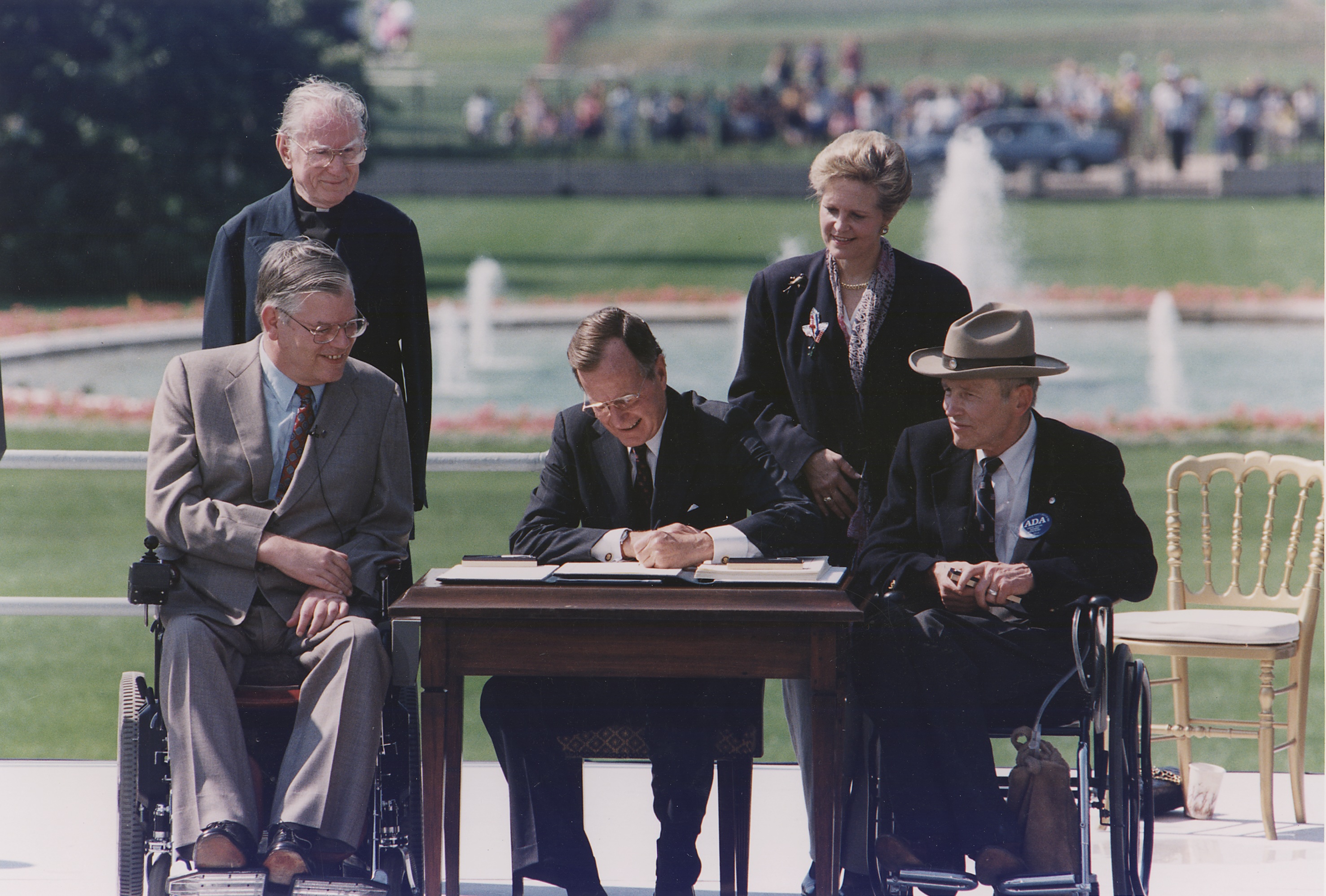
Crucially, the Americans with Disabilities Act applies primarily to commercial properties and public accommodations rather than residential housing.
Where does a real estate agent work? In a brokerage. Therefore, a real estate brokerage office is considered a public accommodation under the Americans with Disabilities Act. Real estate brokerages must make reasonable modifications to their physical offices to remove architectural barriers for disabled individuals (e.g., installing ramps or widening doors for clients in wheelchairs).
Conversely, the federal Fair Housing Act governs disability accessibility and accommodations in residential housing. If a client is buying a home or renting an apartment, the FHA, not the ADA, dictates the accessibility rules.
Under the Fair Housing Act, a disability is defined as a physical or mental impairment that substantially limits one or more major life activities.
Note on substance abuse: The law draws a strict line regarding addiction. Current, illegal use of or addiction to a controlled substance is not considered a disability under the Fair Housing Act. However, individuals recovering from substance abuse programs are protected as disabled under the Fair Housing Act. Past addiction is a protected medical history; ongoing illegal use is a liability.
When a disabled tenant applies for residential housing, they have two primary tools at their disposal: Reasonable Accommodations and Reasonable Modifications. Think of accommodations as changing the software (the rules), and modifications as changing the hardware (the physical building).
Reasonable Accommodations (The Rules)
A reasonable accommodation under the Fair Housing Act is a change in rules, policies, practices, or services to afford a disabled person equal opportunity to use a dwelling.
- Examples: Waiving a no-pets policy for an assistance animal is an example of a reasonable accommodation. Providing a reserved parking space for a tenant with a mobility impairment is another example.
- Cost: A housing provider cannot charge an extra fee or increased deposit as a condition of granting a reasonable accommodation. (e.g., You cannot charge a "pet deposit" for a seeing-eye dog).
Reasonable Modifications (The Structure)
A reasonable modification under the Fair Housing Act is a structural change made to existing premises to afford a disabled person full enjoyment of the premises.
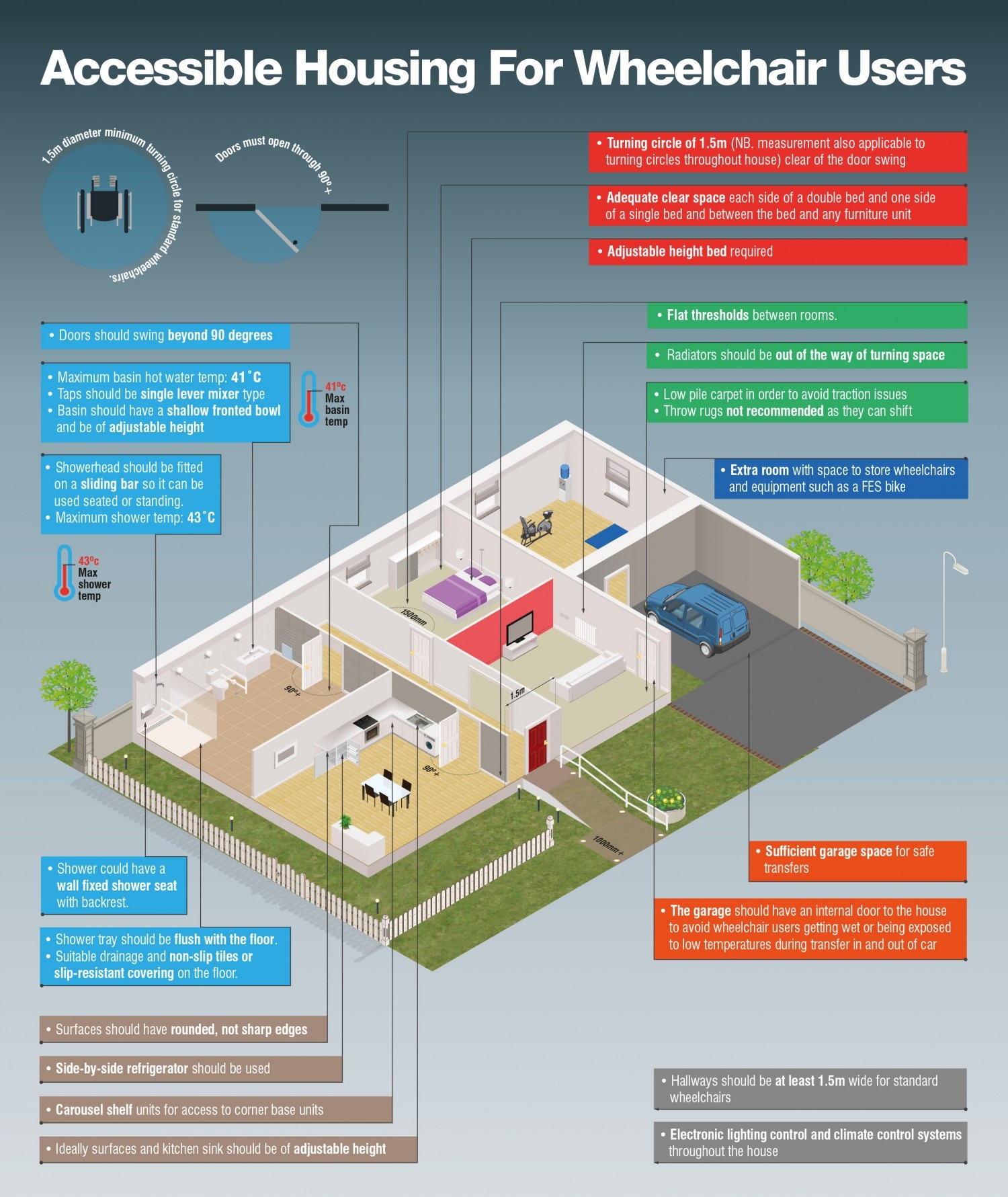
- Examples: Installing a wheelchair ramp at the entrance of a residential unit, or lowering kitchen cabinets for a tenant in a wheelchair, are examples of reasonable modifications.
- Cost: In privately funded residential housing, the tenant is generally responsible for paying the cost of a reasonable modification.
While the tenant pays, the landlord does not have the right to simply say "no." A housing provider must permit a disabled tenant to make reasonable modifications to the private living space at the tenant's expense. Furthermore, a landlord cannot refuse a reasonable modification strictly because the landlord prefers a different aesthetic.
The Rules of Restoration
Because modifications alter the physical property, landlords are afforded specific protections regarding the property's eventual return to the market.
| Location of Modification | Restoration Rule |
|---|---|
| Interior | A housing provider can require a tenant to restore the interior of the premises to the original condition at the end of the tenancy. To ensure this happens, the housing provider can require a tenant to pay into an interest-bearing escrow account to cover the eventual cost of restoring the interior. |
| Exterior | A housing provider cannot require a tenant to restore exterior reasonable modifications to the original condition upon move-out. If a tenant builds a wooden wheelchair ramp up to the front door, the landlord cannot force them to tear it down when they leave. |
The Fair Housing Act does not just mandate retrofitting; it mandates proactive design for new construction.
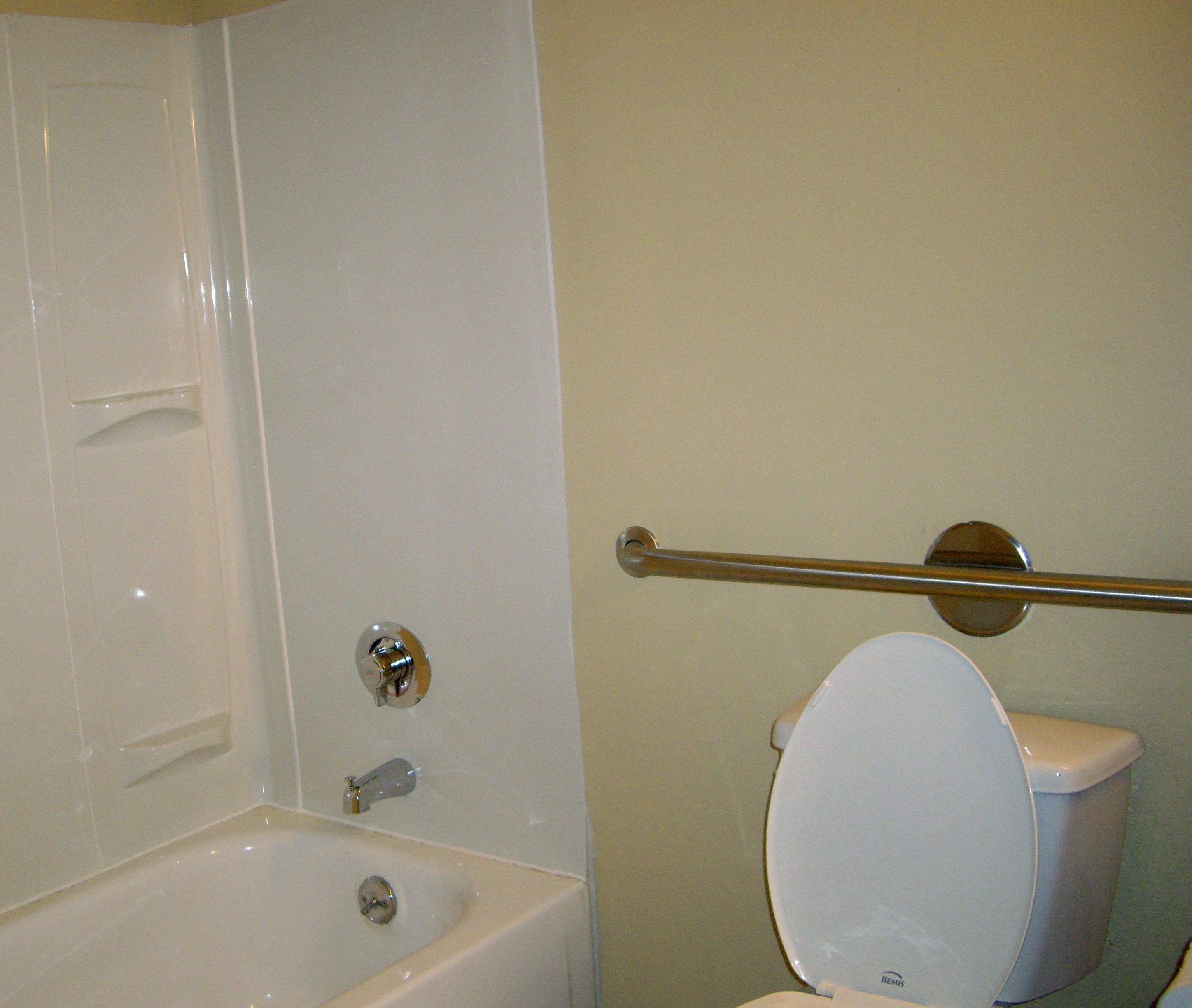
Federal law established a strict cutoff date: March 13, 1991. New multifamily residential buildings with four or more units ready for first occupancy after March 13, 1991, must comply with specific Fair Housing Act accessibility design standards (such as wider doorways, accessible light switches, and reinforced bathroom walls for future grab bars).
The scope of this requirement depends entirely on the presence of an elevator:
- With an Elevator: In buildings built after March 13, 1991, with four or more units and an elevator, all units must meet Fair Housing Act accessibility design standards.
- Without an Elevator: In buildings built after March 13, 1991, with four or more units and no elevator, only ground-floor units must meet Fair Housing Act accessibility design standards.