Contract Enforceability, Voidability, and Options
Not sure you’re ready?
Take the ~3-minute readiness diagnostic and see where you stand.
A real estate contract is an invisible architecture of promises, engineered to transfer the heaviest, most permanent asset most people will ever own. When land and capital change hands, society requires more than a handshake and a gentleman’s agreement; it requires rigid structural integrity. We achieve this integrity through the law of contracts. To understand real estate transactions, you must first understand the invisible forces that bind a buyer and seller together, the specific defects that can cause those bonds to shatter, and the precise moments when a court of law will step in to enforce a promise.

As a real estate professional, you are not merely filling in blanks on a form. You are facilitating the creation of legal gravity. Whether a contract binds your client to a million-dollar purchase, traps them in a flawed agreement, or dissolves entirely into thin air depends entirely on the principles of enforceability, mutuality, and consideration.
We often think of a contract as a binary state: it either exists, or it does not. In reality, contract law operates on a spectrum of enforceability. A court examines the formation and circumstances of an agreement and places it into one of four distinct categories: valid, void, voidable, or unenforceable.
The Valid Contract: Structural Perfection
A valid contract contains all essential legal elements required for formation: mutual consent (offer and acceptance), lawful object, capable parties, and consideration. Because it possesses structural perfection, a valid contract is legally binding on all involved parties.
Why does this matter? Because a valid contract is enforceable in a court of law. If a seller attempts to back out of a valid purchase agreement because they received a higher offer, the buyer can rely on the judicial system to compel the seller to honor the agreement. The valid contract is the gold standard of real estate transactions.
The Void Contract: The Legal Vacuum
If a valid contract is structurally perfect, a void contract is a legal illusion. A void contract lacks one or more essential legal elements. Because it is fundamentally defective from the moment of its inception, a void contract was never legally formed. It has no legal effect whatsoever.
You cannot fix a void contract, and a void contract cannot be enforced by either party. It is a nullity. Two highly tested scenarios trigger an automatic void status:
- Illegal Purpose: A real estate contract formed for an illegal purpose is automatically void. If two parties sign a meticulous, notarized agreement to use a residential property as a front for an illicit gambling syndicate, the court views the paper it is printed on as legally blank.
- Adjudicated Incompetence: A contract signed by a person previously adjudicated mentally incompetent by a court is void. The law has already definitively stripped this individual of the capacity to contract; therefore, any agreement they sign is stillborn.
The Voidable Contract: The Asymmetric Trapdoor
The voidable contract is perhaps the most fascinating state of enforceability. To an outside observer, a voidable contract appears legally valid on the surface. However, it contains a specific defect that allows one party to disaffirm the agreement.
Think of a voidable contract as a room with a one-way trapdoor. The disadvantaged party holds the only key. A voidable contract can be legally rescinded by the disadvantaged party, terminating the agreement without penalty. Alternatively, the disadvantaged party in a voidable contract retains the right to enforce the agreement if they choose to proceed. The other, "guilty" party is completely at their mercy and must perform if the disadvantaged party demands it.
Common defects that render a real estate contract voidable include:
- Age: A real estate contract signed by a minor is voidable by the minor. The adult is bound; the minor is not.
- Coercion: A contract signed under physical or economic duress is voidable by the coerced party.
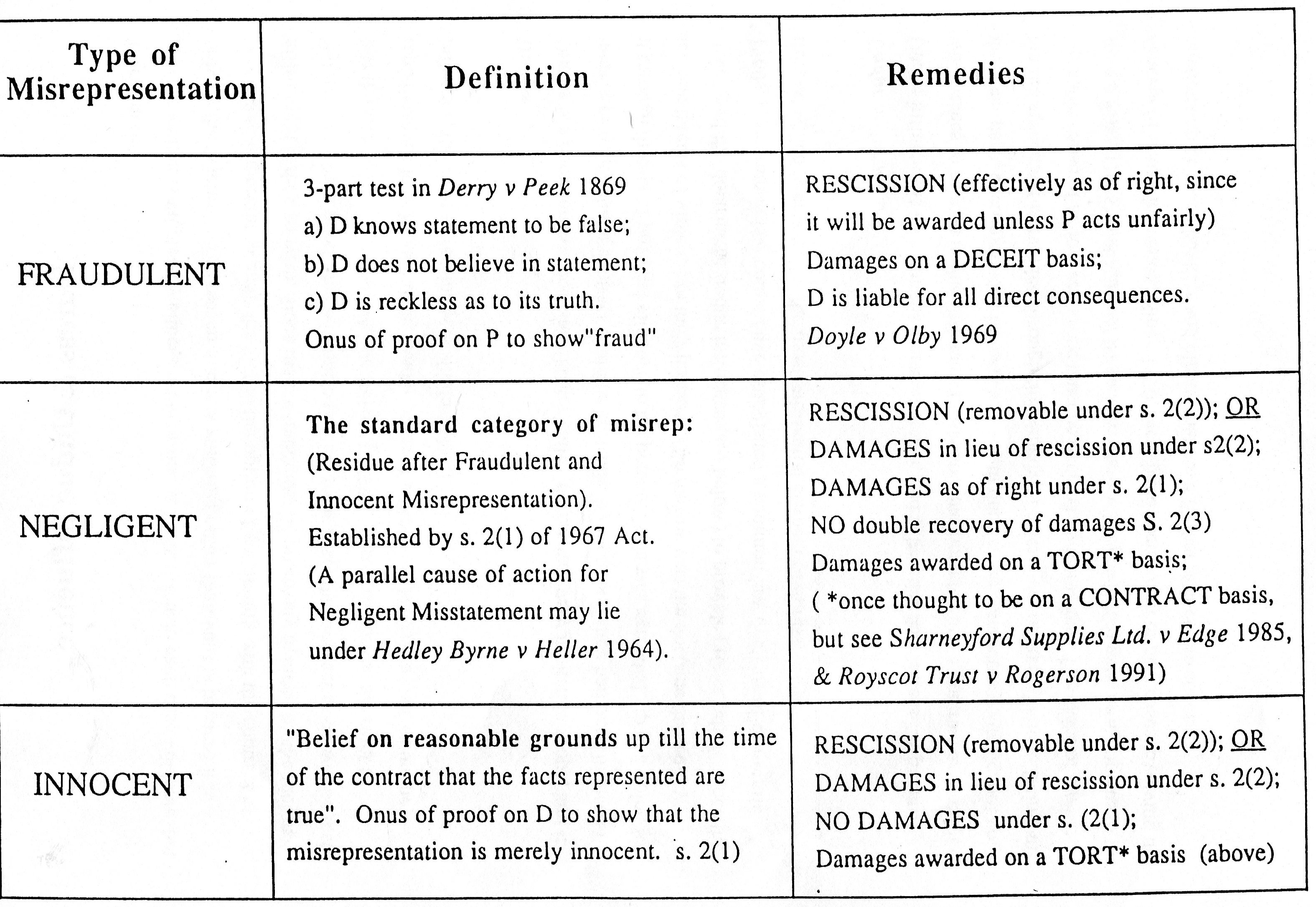
- Deception: A contract induced by intentional fraud is voidable by the defrauded party. Similarly, a contract induced by misrepresentation (even if accidental) is voidable by the misled party.
- Capacity: A contract signed by a heavily intoxicated person is voidable by that intoxicated person. If someone signs a listing agreement while entirely incapacitated by alcohol, they can disaffirm the contract once they sober up.
Crucial Distinction: Do not confuse void with voidable. A void contract cannot be saved; no one can enforce it. A voidable contract can be enforced, but only by the party who was wronged or incapacitated.
The Unenforceable Contract: The Rusted Engine
Finally, we have the unenforceable contract. An unenforceable contract appears to have all essential legal elements—capable parties, mutual agreement, consideration, and lawful purpose—but a court will not compel performance of an unenforceable contract. The engine is fully built, but the legal system refuses to turn the key.
This usually occurs because of external statutory rules or equitable doctrines:
- The Statute of Frauds: This ancient legal doctrine requires certain contracts to be in writing to prevent perjury. Under the Statute of Frauds, an oral real estate purchase agreement is unenforceable. Even if both parties admit they made a verbal deal to sell a parcel of land for $100,000, a judge will not force the sale without a written instrument.
- The Statute of Limitations: Time acts as a strict boundary on legal rights. The Statute of Limitations sets a specific legal deadline for filing a lawsuit to enforce a contract. A contract becomes unenforceable in court after the applicable Statute of Limitations period expires.
- The Doctrine of Laches: While the Statute of Limitations is a strict numerical deadline, the legal doctrine of laches is an equitable principle based on fairness. Laches can render a contract unenforceable due to an unreasonable delay in asserting a legal right, even if the statutory clock has not technically run out. If you wait five years to complain that a seller breached a minor covenant, a judge may rule that your prolonged silence makes the claim unenforceable.
Contracts are essentially vehicles for promises. To understand how these legal vehicles operate, we classify them by how those promises are exchanged.
The Bilateral Contract: The Two-Way Street
A bilateral contract is an agreement where both parties exchange mutual promises. Bi- means two; there is a two-way street of obligation. Because of this mutual exchange, both parties in a bilateral contract are legally bound to perform their respective promises.
When you think of standard real estate transactions, you are almost always thinking of bilateral agreements:
- A standard real estate purchase agreement is a bilateral contract. The buyer promises to pay $300,000, and the seller promises to transfer the deed.
- An exclusive right-to-sell listing agreement is a bilateral contract. The seller promises to pay a commission if a buyer is found, and the broker promises to apply diligent professional effort to market the property.
The Unilateral Contract: The One-Way Street
A unilateral contract involves a promise given strictly in exchange for performance. Uni- means one; only one party makes a binding promise. Consequently, only one party is legally bound to act in a unilateral contract. The receiving party in a unilateral contract has no legal obligation to perform the requested act.
In everyday life, a lost dog poster offering a $500 reward is a unilateral contract. You are not legally required to search for the dog. But if you find the dog and return it, the owner is legally bound to pay you the reward. In real estate, unilateral contracts show up in very specific, highly tested ways:
- An open listing agreement is a unilateral contract. The seller promises to pay a commission to whichever broker procures a buyer. The brokers are not legally bound to market the property, but if a broker does perform, the seller must pay.
- A real estate option agreement is a unilateral contract.
An option agreement is one of the most powerful and misunderstood tools in real estate. It essentially allows a buyer to purchase time.
By definition, an option agreement gives the optionee the absolute right to buy or lease property at a specific price. Let us clearly identify the players:
- The optionor is the property owner who grants the purchase right in an option agreement.
- The optionee is the prospective buyer or lessee who receives the purchase right in an option agreement.
The Absolute Obligation of the Optionor
During the life of the option, the optionor's hands are legally tied. The optionor is legally bound to hold the purchase offer open for the entire specified time period. Furthermore, the optionor cannot legally sell the property to another party during the active option period.
If a developer sees a piece of farmland and thinks it might be perfect for a subdivision, but needs six months to check zoning laws, they don't want to buy the land outright yet. Instead, they enter into an option agreement. The farmer (optionor) is frozen. He cannot sell to anyone else for those six months.
The Freedom of the Optionee
Conversely, the optionee possesses rights, but no obligations. The optionee has no legal obligation to purchase the property under an option agreement. If the developer discovers the zoning change will be denied, they can simply walk away. Furthermore, the optionee does not acquire legal title to the property during the active option period; they merely own an intangible right to purchase.
The Mechanics of Consideration: The Option Fee
Because the optionor is giving up their fundamental right to freely sell their property, the law requires compensation. The optionee must provide valuable consideration to make the option agreement legally binding on the optionor.
This consideration is known as the option fee. An option fee is the distinct consideration paid by the optionee to secure the option right. If the optionee does not pay this distinct fee (for instance, if they just promise to maybe buy the house later), the agreement lacks consideration and is merely an illusory promise, not a binding option.
Formation and Transformation
Because an option agreement restricts the transfer of real property, it is heavily regulated by law. An option agreement must contain all essential elements of a valid contract to be enforceable. Specifically:
- The Price: The exact agreed-upon purchase price must be explicitly stated within the real estate option agreement. You cannot have an option to buy "at fair market value to be determined later."
- The Clock: An option agreement must include a specific, defined time limit for the optionee to exercise the purchase right. It cannot last indefinitely.
- The Writing: A real estate option agreement must be in writing to be enforceable under the Statute of Frauds.
What happens when the optionee decides they actually want the property? They exercise the option. Exercising a real estate option converts the unilateral agreement into a binding bilateral purchase contract. The one-way street instantly becomes a two-way street. The optionee transitions from having the right to buy to having the obligation to buy, and the standard gears of a real estate transaction begin to turn.
Summary Table: Contract Types at a Glance
| Contract Status | Enforceable in Court? | Defining Characteristic | Real Estate Example |
|---|---|---|---|
| Valid | Yes | Contains all legal elements; binds all parties. | A properly executed standard purchase agreement. |
| Void | No | Lacks legal elements; never legally existed. | A contract to purchase a property for illegal drug manufacturing. |
| Voidable | By ONE party | Appears valid, but a defect allows disaffirmance. | A contract signed by a 16-year-old buyer. |
| Unenforceable | No | Has elements, but barred by statute/doctrine. | An oral agreement to sell a parcel of land. |
Mastering these definitions is not an exercise in memorizing legal trivia. It is the fundamental grammar of your profession. When you understand exactly when a contract is valid, why it becomes voidable, and how unilateral option agreements manipulate time and obligation, you elevate yourself from a mere salesperson to a true architect of real estate transactions.