TREC Promulgated Contracts, Forms & Seller Disclosure (Texas)
Not sure you’re ready?
Take the ~3-minute readiness diagnostic and see where you stand.
Imagine handing a scalpel to a layperson and instructing them to perform an appendectomy. The results would be physically and legally catastrophic. In Texas real estate, drafting a contract to transfer hundreds of thousands of dollars of real property without a law degree carries a similar capacity for disaster. To protect the public from well-meaning but legally unqualified sales agents, Texas has engineered a rigid, highly protective system of standardized forms and disclosures. This system is the mechanical foundation of every real estate transaction in the state, and mastering it is the primary duty of any aspiring license holder.
To understand the Texas real estate contract system, you must first understand the two distinct bodies that create it. They operate much like the legislative and executive branches of a government.
First, the Texas Real Estate Broker-Lawyer Committee drafts and revises standard real estate contract forms for use by licensees. They are the architects, composed of attorneys and brokers who hash out the precise legal phrasing required to protect buyers and sellers.
However, this committee has no authority to enforce the use of these forms. That power rests with the Texas Real Estate Commission (TREC). TREC takes the drafted forms and promulgates them—a formal term meaning they publish the forms and make their use absolutely mandatory for Texas licensees.
The Mandatory Use Rule and Its Exceptions
The cardinal rule of Texas real estate is that Texas real estate licensees must use TREC-promulgated forms unless a specific legal exception applies to the transaction.
You cannot simply choose to use a form you found online because you prefer the font. However, the law recognizes that TREC cannot anticipate every conceivable transaction. You are strictly exempted, and therefore not required to use a TREC-promulgated contract, in any of the following scenarios:
- Acting as a Principal: If you are buying or selling a house for yourself, you are acting as a principal, not an agent. You may use whatever legal contract you wish.
- Federal Dictate: If an agency of the United States government dictates a different form be used (for example, specific HUD or VA forms), federal requirements override TREC.
- Owner-Dictated Attorney Form: If a property owner dictates a contract drafted by a licensed attorney, you must comply.
- Owner-Drafted Form: If a property owner drafts their own purchase contract, they have the right to do so.
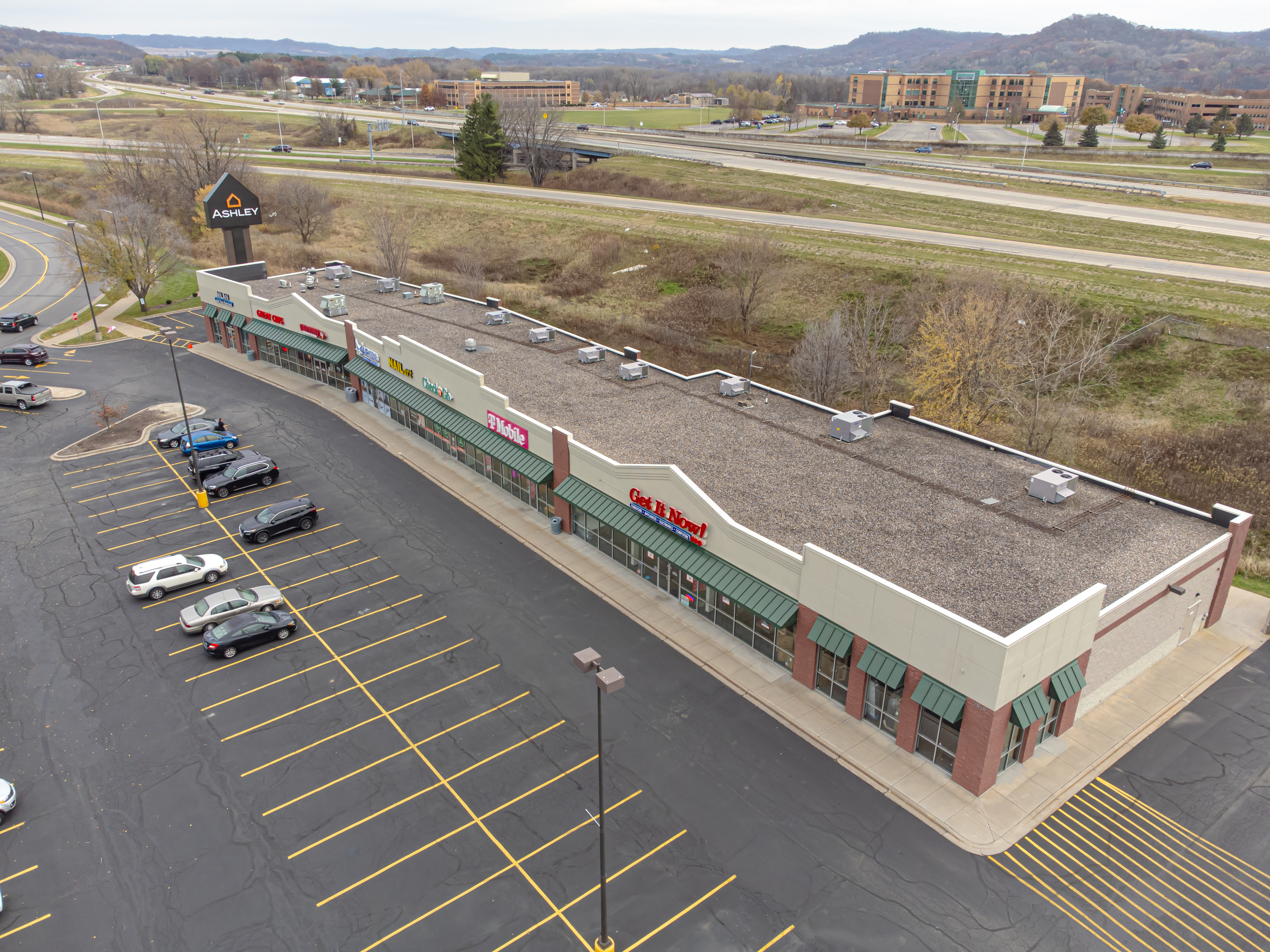
- No Form Exists: If no TREC form exists for that specific type of transaction (e.g., a commercial strip mall sale), you cannot use a TREC form.
The Unauthorized Practice of Law (UPL)
When an agent steps outside the boundaries of filling in the blanks of a promulgated form, they risk committing the unauthorized practice of law. This is a severe violation that can result in the loss of a license and civil liability.
You must view a promulgated contract as a highly calibrated machine. If you start removing or adding gears, the machine breaks. Specifically:
- A Texas real estate licensee commits the unauthorized practice of law by drafting a real estate contract from scratch.
- Adding complex legal provisions to a TREC-promulgated form constitutes the unauthorized practice of law.
- Striking out standard legal language in a TREC-promulgated form constitutes the unauthorized practice of law.
- Advising a client regarding the legal validity of a title instrument crosses the line from real estate advice to legal counsel.
The Trap of Paragraph 11: Special Provisions TREC contracts include a blank section titled Special Provisions. Many agents wrongly view this as a blank canvas to write in creative contingencies. Do not do this. The Special Provisions paragraph is strictly for factual statements and business details (e.g., "Seller will leave the patio furniture"). Furthermore, a licensee must never use the Special Provisions paragraph to add information if a TREC-promulgated addendum already exists for that specific purpose.
Before we look at what TREC does promulgate, we must establish what they do not. TREC regulates the transaction between the buyer and the seller. They do not regulate the employment contract between the broker and the client. Therefore, TREC does not promulgate any listing agreements, buyer representation agreements, or property management agreements.
TREC currently promulgates exactly six distinct purchase contracts for various types of real estate transactions. Understanding which to use requires looking at the physical reality of the property being sold.
| Contract Form | When to Use It | Key Characteristics & Distinctions |
|---|---|---|
| One to Four Family Residential Contract (Resale) | For the sale of a previously occupied single-family home, duplex, triplex, or fourplex. | Crucial: This is the correct promulgated form for selling a townhome. In a townhome, the owner owns the land beneath the unit, making it functionally similar to a single-family home. |
| Residential Condominium Contract (Resale) | For the sale of a condominium unit. | The condo contract must not be used for townhome sales. In a condo, the buyer owns only the interior airspace and shares an undivided interest in the common elements, requiring vastly different legal language than a townhome. |
| Unimproved Property Contract | For the sale of land that lacks buildings or structures. | Often used for empty lots. Lacks the extensive property condition clauses found in residential resale forms. |
| New Home Contract (Incomplete Construction) | When a builder is selling a home that is not yet finished. | Includes provisions for construction documents, allowances, and completion dates. |
| New Home Contract (Completed Construction) | When a builder is selling a newly finished home that has never been occupied. | Similar to resale, but lacks provisions for an existing seller's disclosure, as the home is brand new. |
| Farm and Ranch Contract | For rural properties. | Highly complex. Includes unique provisions for the disposition of crops, farm equipment, and surface leases. |

Seldom does a transaction fit perfectly into the standard contract without additional attachments. TREC provides specific addenda (added before or at the time of signing) and amendments (changes made after signing).
- Third Party Financing Addendum: Used to disclose the terms of a buyer's residential loan (e.g., conventional, FHA, VA). It sets the parameters under which the buyer is seeking lender approval.
- Seller Financing Addendum: Details the exact terms when a seller acts as the bank and provides a loan directly to the buyer.
- Addendum for Sale of Other Property by Buyer: Creates a contingency for situations where a buyer must sell an existing home in order to generate the funds to purchase the new one.
- Addendum for Property Subject to Mandatory Membership in a Property Owners Association: Used when a property is part of an HOA, detailing who pays for transfer fees and resale certificates.
- Amendment to Contract: Unlike an addendum, TREC promulgates an Amendment to Contract form used specifically to modify the terms of an already executed (signed and active) real estate contract—such as changing the closing date or altering the sales price after an inspection.
In the early days of common law, people frequently committed fraud by claiming that oral promises about land had been made. To stop this, the legal system created a rule literally designed to prevent fraud: The Statute of Frauds.
The Statute of Frauds in Texas requires real estate sales contracts to be in writing to be enforceable in a court of law. An oral contract for the sale of real estate is entirely unenforceable in Texas. If a seller looks you in the eye and promises to sell you their farm for $500,000, and you shake on it, you have nothing but a friendly conversation.
To satisfy the Texas Statute of Frauds, the document must be signed by the party to be charged—meaning the person against whom you are trying to enforce the contract.
This requirement extends strictly to three other vital areas of your daily practice:
- Modifications: The Texas Statute of Frauds applies to agreements modifying an existing written real estate contract. If you agree to push closing back by a week, an oral agreement is void; it must be written (using the TREC Amendment form).
- Leases: Under the Texas Statute of Frauds, a lease of real estate for a term longer than one year must be in writing. A six-month oral lease is legally valid; a two-year oral lease is not.
- Commissions: Texas law requires real estate commission agreements to be in writing for a broker to successfully sue a client for compensation. Without a written listing or representation agreement, you have no legal mechanism to demand your fee.
Buying a home is often the largest financial investment of a person's life. To protect buyers from hidden defects, Section 5.008 of the Texas Property Code requires most sellers of single-family residential properties to provide a written Seller's Disclosure Notice.
The Nature of the Disclosure
It is imperative to understand what this document is and what it is not. The Texas Seller's Disclosure Notice is not a warranty of the property condition. It is not a guarantee that the roof won't leak tomorrow. Instead, it represents the seller's actual knowledge of the property condition at the specific time the notice is completed. If the seller legitimately does not know there is a termite infestation inside the walls, they have not violated the disclosure law by failing to list it.

Timelines and Terminations
The law sets strict deadlines for this document, with heavy consequences for the seller if they fail to comply.
- A Texas seller must provide the Seller's Disclosure Notice to the buyer on or before the effective date of the purchase contract.
- If a Texas homebuyer receives the Seller's Disclosure Notice after the contract effective date, the buyer gains a massive point of leverage: they have seven days to terminate the contract for any reason upon receiving the late notice.
- If a Texas seller never provides the required Seller's Disclosure Notice, the buyer may terminate the contract at any time before closing.
Exemptions to the Disclosure Rule
Because the disclosure relies on the seller's actual knowledge of living in the home, the law exempts certain transfers where the seller likely has no such knowledge, or where the transfer is a matter of legal mechanics rather than a standard retail sale.
Exemptions include:
- Distressed / Court Orders: A foreclosure sale, a transfer of property by a bankruptcy trustee, or a transfer of property between spouses resulting from a divorce decree are all exempt.
- Shared or Institutional Ownership: A transfer of property between co-owners, or a transfer of property to or from a governmental entity, is exempt.
- Nature of the Physical Property: The sale of a new single-family residence that has never been occupied is exempt (the builder provides different warranties instead). Furthermore, a transfer of real property where the dwelling's value does not exceed five percent of the total property value (often called a "tear-down" property where the buyer is really just buying the land) is exempt from the Texas Seller's Disclosure Notice.

Stigmatized Properties: Death, Disease, and Crime
A common point of anxiety for agents is what to disclose regarding deaths on a property. Texas law provides absolute clarity on this, balancing the buyer's right to know against the seller's right to privacy.
What you DO NOT have to disclose: Texas sellers are not required to disclose a death on the property resulting from natural causes, nor are they required to disclose a suicide that occurred on the property. Similarly, Texas sellers are not required to disclose a fatal accident on the property that was entirely unrelated to the property's condition (e.g., someone falling off a ladder while hanging their own television).
What you MUST disclose: Because a violent crime can permanently stigmatize a property and affect its market value, Texas sellers must disclose if a murder occurred on the property.
What you CANNOT disclose: Finally, there is a federal and state boundary that you must never cross. It is a violation of federal and state fair housing laws to disclose that a previous property occupant had HIV or AIDS. People living with HIV/AIDS are protected under the disability class of the Fair Housing Act. Disclosing this information is not merely unnecessary; it is a severe, actionable violation of civil rights law.