Types of Deeds in Real Estate
Not sure you’re ready?
Take the ~3-minute readiness diagnostic and see where you stand.
Holding a piece of paper that describes the exact coordinates of a parcel of earth might feel like holding the land itself, but legally, that paper is merely a vehicle. In real estate, a deed is a written legal instrument used to transfer ownership of real property from a grantor to a grantee. It acts as the physical conduit of an intangible concept called "title." Yet, a profound misconception traps many uninitiated buyers: the belief that holding a deed means holding an impenetrable shield of ownership. In truth, a deed provides evidence of title transfer, but importantly, a deed does not prove absolute ownership of a property. If a grantor attempts to convey ownership of the Brooklyn Bridge to you, the deed they hand you might be perfectly valid as a transfer vehicle—but it transfers absolutely nothing, because the grantor owned nothing to begin with.
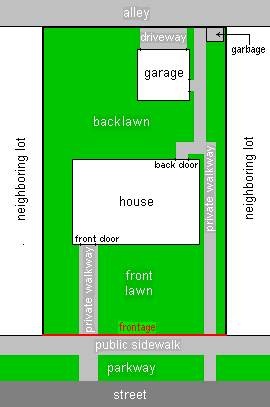
Understanding the varied types of deeds is about understanding the exact legal promises—or the explicit lack thereof—that the seller is making regarding the integrity of the title inside that vehicle.
When a buyer sits at the closing table for a traditional residential transaction, they expect absolute security. They receive this through a general warranty deed, which provides the greatest legal protection to the grantee.
Why is it so protective? Because a general warranty deed covers title defects extending back to the property's origins. The grantor is essentially saying, "I protect you against any title defects caused by me, the person who owned it before me, the person before them, all the way back to the sovereign."
To accomplish this historical guarantee, a general warranty deed includes five basic covenants of title (legally binding promises):
- The Covenant of Seisin: This guarantees that the grantor actually owns the property and has the legal right to convey the property. ("Seisin" is an old feudal term meaning possession of the land).
- The Covenant Against Encumbrances: This guarantees the property is free from undisclosed liens or encumbrances. If an old roofer's lien from three owners ago suddenly surfaces, the grantor is liable.
- The Covenant of Quiet Enjoyment: This guarantees the grantee's title will be good against third parties who might bring court actions to establish superior title. You can sleep soundly—or "quietly"—knowing no one is going to evict you on a legal technicality.
- The Covenant of Further Assurance: This requires the grantor to deliver any instrument necessary to make the title good. If a signature was missed on a document ten years ago, it is the grantor’s burden to hunt down the parties and fix the paperwork.
- The Covenant of Warranty Forever: The ultimate safety net. This promises that the grantor will compensate the grantee for any loss sustained if the title fails in the future.
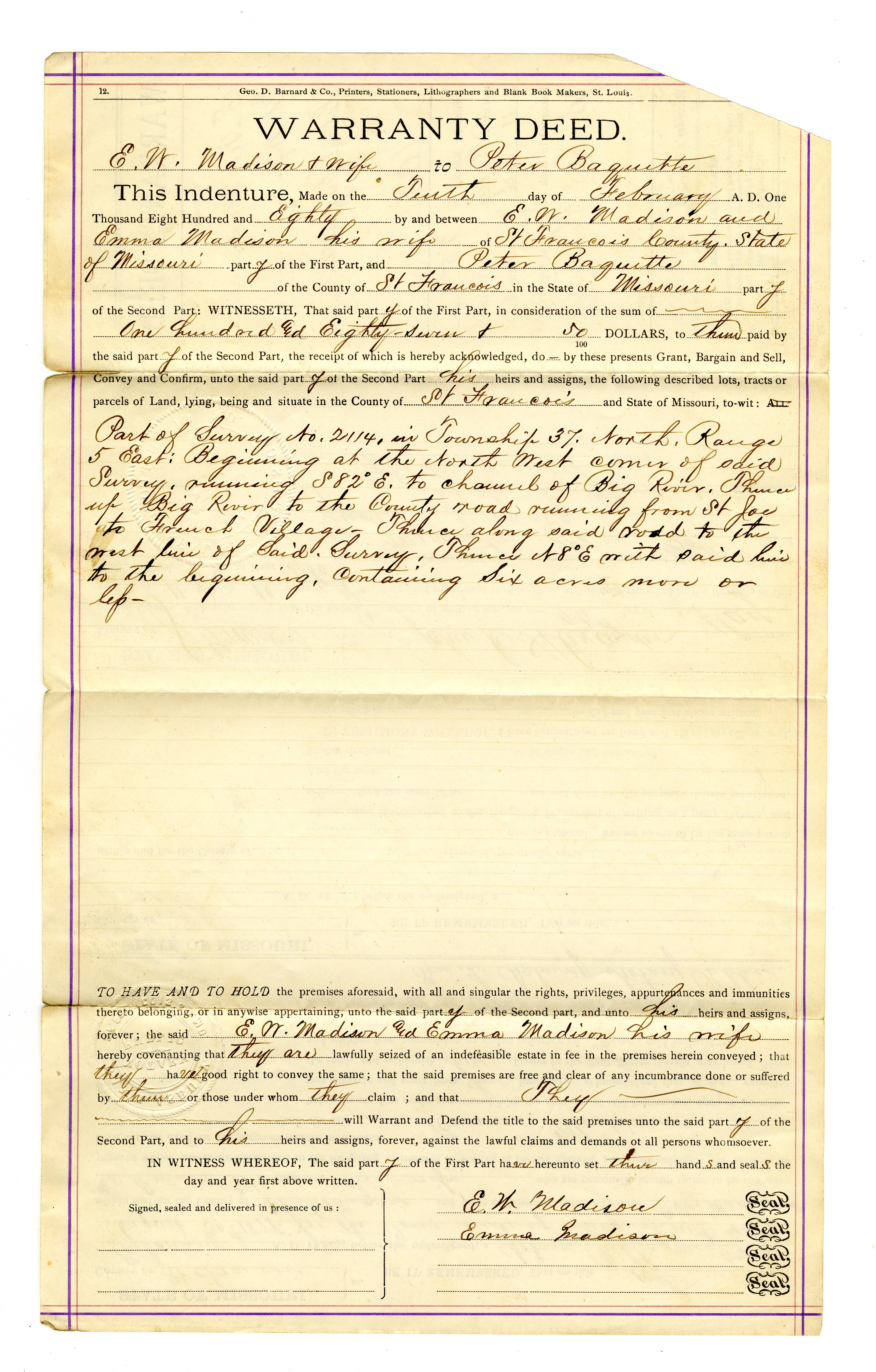
Why this matters for your exam and career: When representing a traditional buyer paying top dollar in an open-market transaction, your client expects a general warranty deed. Anything less shifts a significant burden of risk from the seller to the buyer.
Sometimes, a grantor is willing to guarantee the title, but only for the time they actually owned the dirt. Enter the special warranty deed (which is also known in some jurisdictions as a limited warranty deed).
A special warranty deed limits the grantor's defense of the title to claims arising only during the grantor's period of ownership. Consequently, a special warranty deed does not protect the grantee against title defects that existed before the grantor acquired the property.
Who uses this? Imagine a bank flipping a foreclosed home, or an executor settling an estate. Fiduciaries such as trustees or executors frequently use special warranty deeds to limit their personal liability in a real estate transaction. If you are an executor selling your late uncle's estate, you know you haven't encumbered the property over the last three months. But you have no idea what your uncle did in 1985. You use a special warranty deed to promise, "The title was clean while I held it, but I cannot speak for the ghosts of the past."
At the opposite end of the spectrum from the general warranty deed lies the quitclaim deed.
A quitclaim deed provides the least protection of any deed to the grantee. It operates on a brutally simple premise: a quitclaim deed carries no covenants or warranties of title whatsoever. By signing one, the grantor makes zero promises that they even own the property. A quitclaim deed only transfers whatever legal interest the grantor possesses at the exact time of conveyance.
If I give you a quitclaim deed to the Empire State Building, and I own 0% of the Empire State Building, I have legally and successfully transferred exactly 0% to you.
Because it offers no protections, it is rarely used in standard market sales. However, it is an incredibly powerful legal tool for two specific scenarios:
- To cure a cloud on a real estate title: If a previous deed misspelled a grantor's name as "John Smithh," John can sign a quitclaim deed with the correct spelling to seamlessly bridge the gap in the public record.
- To transfer property between family members without a formal sale: A parent gifting a home to a child, or a divorcing couple where one spouse is removing their name from the house, will commonly use a quitclaim deed. There is no need for historical warranties when transferring property internally.
Summary of the Big Three
| Deed Type | Promises Made | Protection Level | Best Use Case |
|---|---|---|---|
| General Warranty | 5 Covenants, covers history to origins | Maximum | Standard residential/commercial sales |
| Special Warranty | Covers only the grantor's time of ownership | Moderate | Corporate sales, estate sales, fiduciaries |
| Quitclaim | Zero covenants; "whatever I have is yours" | Minimum | Family transfers, curing clouds on title |
Certain regions and specific legal situations utilize variations on the standard deeds.
The Bargain and Sale Deed: Unlike a quitclaim deed, a bargain and sale deed implies that the grantor holds title and possession of the property. However, a bargain and sale deed contains no express warranties against encumbrances. The buyer is on notice that they are receiving the property "as is" regarding title defects. Because of this dynamic, a bargain and sale deed is frequently used in tax sales and foreclosure actions, where the conveying authority clearly possesses the property but refuses to guarantee the historical cleanliness of the title.
The Grant Deed: Commonly used in states like California, a grant deed contains a statutory warranty that the grantor has not previously conveyed the property to another party. Furthermore, a grant deed contains a statutory warranty that the property is free from undisclosed encumbrances made by the grantor. It is a middle-ground tool heavily reliant on state statutes rather than explicit, spelled-out covenants.
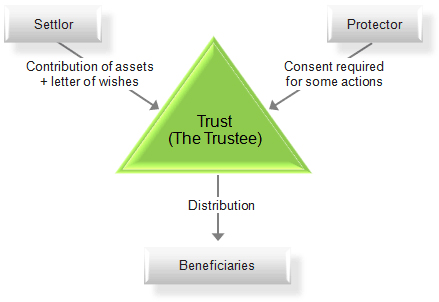
Real estate is frequently moved into and out of trusts for estate planning, anonymity, or asset protection. Understanding the flow of paperwork here is simple if you watch the direction of the property:
- Into the Trust: A deed in trust conveys real estate from a property owner to a trustee. Most commonly, a deed in trust is typically used to establish a land trust, shielding the actual owner's identity from public record while allowing them to retain control over the property.
- Out of the Trust: A trustee's deed is used to transfer property out of a trust to a designated party. This document is strictly functional; a trustee's deed is executed by the trustee acting under the powers granted in the trust agreement.
When a property transaction is forced by financial distress, the deeds reflect the involuntary nature of the transfer.
The Deed in Lieu of Foreclosure: Foreclosure is a brutal, expensive, and highly public legal process. To bypass this, a deed in lieu of foreclosure is used by a defaulting borrower to voluntarily transfer the property title to the lender. By simply handing over the keys and the title, a deed in lieu of foreclosure allows a defaulting borrower to avoid a formal court foreclosure process, potentially saving a fraction of their credit score and saving the bank months of legal fees.
The Sheriff's Deed: If the borrower does not voluntarily surrender the property, the court steps in. A sheriff's deed is issued to the buyer of a property sold at a court-ordered foreclosure sale.
The Tax Deed: Local municipalities do not look kindly on unpaid property taxes. If a homeowner defaults on their tax obligations, the government can force a sale. A tax deed is used to convey title to property sold due to unpaid ad valorem property taxes.
Finally, we encounter deeds that deal with the specific creation or distribution of property rights based on highly specific life events or property types.
Passing On (Estate Conveyances): When a property owner dies, the method by which their property is conveyed depends entirely on whether they left a roadmap.
- An executor's deed conveys the title of a deceased property owner who died with a valid will (testate). The executor named in the will signs the deed.
- An administrator's deed conveys the title of a deceased property owner who died intestate (without a will). In this case, the court appoints an administrator to execute the deed according to state succession laws.
Building Up (Condominium Creation): You cannot simply build an apartment building and start selling the airspace inside it without fundamentally altering the legal nature of the land. A master deed is used to convey a single tract of land to a condominium developer. Filing this document is the legal magic trick that transforms a single plot of dirt into dozens of individual, sellable units, because a master deed subjects a piece of real estate to condominium state laws, allowing horizontal and vertical division of ownership.
Professor's Note: As you prepare for your exam, do not attempt to memorize these terms in a vacuum. Connect them to the human actors involved. Ask yourself: Who is handing the paper to whom? What are they afraid of? What are they promising? A divorcing couple wants speed (Quitclaim). A bank wants to limit liability (Special Warranty). A buyer paying $500,000 wants a guarantee dating back to the dawn of time (General Warranty). Master the motives, and the legal definitions will naturally follow.