Contract Execution, E-Signatures, and Breach Remedies
Not sure you’re ready?
Take the ~3-minute readiness diagnostic and see where you stand.
A real estate contract is fundamentally a mechanism designed to govern the behavior of human beings engaged in the transfer of a highly valuable, uniquely regulated asset. Like any complex machine, a contract requires a spark of ignition to start, clear physical boundaries to operate within, and safety valves to manage system failures. Understanding the law of contracts does not mean memorizing archaic legal phrasing; it means understanding the physical and chronological sequence of how an agreement is formed, how it is tracked, what happens when a gear slips, and how the machine is ultimately disassembled.

A contract does not pop into existence simply because two people agree in principle. It must be built piece by piece, beginning with the foundational requirement of mutual assent. Mutual assent in a contract requires an offer and a corresponding acceptance. One party proposes terms, and the other party agrees to those exact terms without modification.
However, holding a signed agreement in your hands in an empty room is legally meaningless. An offeree must communicate acceptance to the offeror to create a legally binding contract. The opposing party must know they are bound. This introduces the critical concept of delivery. Contract delivery is the physical or electronic transfer of a signed agreement to the opposing party. A real estate contract becomes binding only after the accepted offer is delivered to the offeror.
How do we measure the exact moment of acceptance when parties are communicating from a distance? The law uses a standardized mechanism known as the mailbox rule.
The Mailbox Rule: The mailbox rule dictates that an acceptance becomes effective the moment the acceptance is dispatched in the mail. Even if the offeror has not yet received the envelope, the contract is legally formed the second the offeree drops the properly addressed, stamped envelope into the mailbox.
Once the contract is formed, we must classify its state of motion:
- Executory Contract: An executory contract involves one or more parties with pending contractual obligations. Think of this as the "in-flight" phase of a transaction. A signed purchase agreement waiting for an appraisal, an inspection, and a closing date is strictly executory.
- Executed Contract: An executed contract signifies that all parties have completely fulfilled their contractual obligations. The title is transferred, the funds are distributed, and the machine has reached its final destination.
During the executory phase, time acts as the engine governing performance. Real estate contracts contain numerous deadlines for inspections, loan approvals, and closing. Often, a contract includes a time is of the essence clause. This phrase is not a mere suggestion; a time is of the essence clause requires strict adherence to all deadlines specified within a contract. If a buyer is supposed to deliver funds by 5:00 PM on Friday, delivering them at 5:01 PM is not a minor delay—missing a deadline in a contract containing a time is of the essence clause constitutes a material breach of contract.
Historically, contract delivery required physical couriers. Today, electrons have replaced paper. To bridge the gap between traditional law and modern technology, the federal E-SIGN Act (Electronic Signatures in Global and National Commerce Act) was enacted into law in the year 2000. The E-SIGN Act is a federal law validating electronic records, ensuring that interstate digital commerce functions seamlessly.
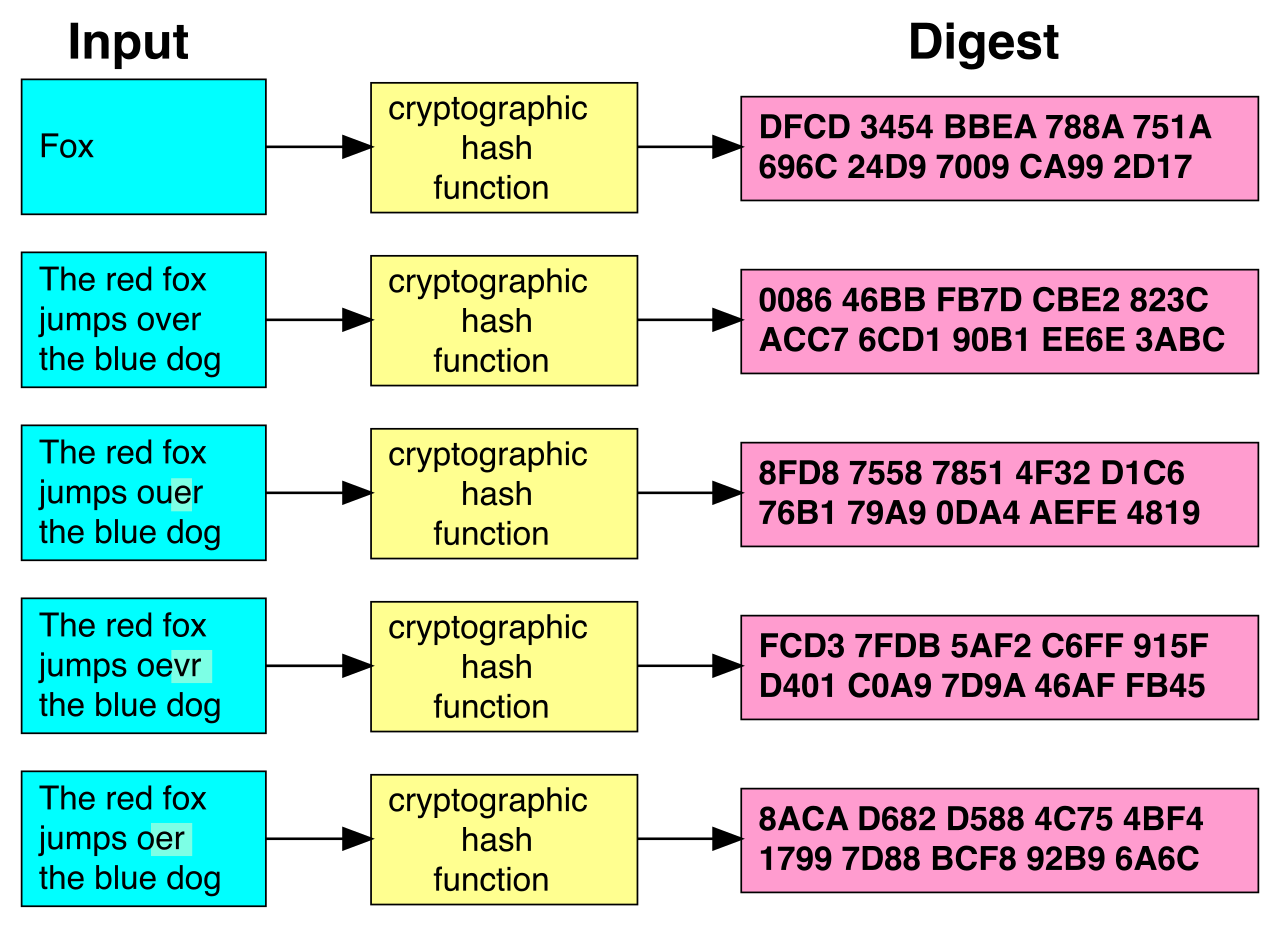
Simultaneously, the Uniform Electronic Transactions Act (UETA) provides a standardized legal framework for electronic signatures at the state level. Together, this means federal law grants electronic signatures the exact same legal validity as traditional ink signatures. A cryptographic hash on a digital PDF carries the exact same legal weight as a wet-ink signature.
However, you cannot force a client into the digital age against their will. To utilize this technology, specific consumer protections are legally mandated:
- Explicit Consent: All parties to a real estate transaction must explicitly consent to the use of electronic signatures.
- Right of Refusal: A party possesses the right to withdraw consent to conduct a real estate transaction electronically at any time.
When electronic signatures are used, modern e-signature platforms generate digital audit trails to verify the identity of the signing party. These trails track IP addresses, timestamp exact signing moments, and authenticate user credentials, making them highly defensible in court.
Yet, paperless transactions are not without severe vulnerabilities. Paperless real estate transactions introduce cybersecurity risks regarding unauthorized access to sensitive consumer data. When a salesperson emails a purchase agreement, they are transmitting an individual's name, address, financial data, and sometimes social security numbers. If a hacker intercepts this digital transfer, the fallout is devastating, which is why encrypted platforms and secure portals are now the professional standard.
A breach of contract occurs when a party fails to perform a legally binding contractual obligation. But not all breaches are created equal.
If a seller accidentally leaves a few boxes in the garage after closing, it is technically a breach, but it doesn't destroy the deal. However, if the seller refuses to transfer the deed altogether, this is a material breach. A material breach of contract fundamentally destroys the value or primary purpose of the agreement. When this occurs, a non-breaching party is entirely discharged from further contractual obligations following a material breach. They do not have to keep performing if the other side has destroyed the core of the contract.

When a breach occurs, the law provides the injured party with specific remedies to balance the scales of justice.
Types of Contract Remedies
| Remedy Type | Definition | Real Estate Application |
|---|---|---|
| Liquidated Damages | Pre-determined funds awarded to a non-breaching party upon a contract violation. | An earnest money deposit frequently serves as liquidated damages for a seller following a buyer's breach of a purchase agreement. If the buyer walks away without legal justification, the seller keeps the earnest money and moves on. |
| Compensatory Damages | Court-awarded funds intended to reimburse the actual financial loss of a non-breaching party. | If a buyer breaches, and the seller must re-list the home and eventually sells it for $20,000 less, the court may award the seller $20,000 in compensatory damages to cover the exact loss. |
| Specific Performance | A court-ordered legal remedy compelling a breaching party to fulfill their original contractual obligations. | Buyers often pursue specific performance remedies because the law considers every parcel of real estate to be entirely unique. If a seller tries to back out, no amount of money can buy that exact identical house, so the court forces the seller to sell it. |
| Punitive Damages | Court-awarded funds intended to punish a breaching party for malicious or fraudulent conduct. | Rarely used for simple contract mistakes, these are applied when a party acts with deceit or intentional harm. |
No matter which remedy a party pursues, they must act before the clock runs out. A statute of limitations imposes a strict statutory time limit for a party to file a lawsuit concerning a contract breach. If the statute of limitations in your state is four years, and a buyer tries to sue five years after a breach, the court will dismiss the case.
Eventually, every contract must come to an end. Contract termination completely releases all involved parties from any future obligations under the agreement. There are several ways a contract reaches termination.
The ideal outcome is full performance of all contractual duties, which is the most common method of contract termination. Everyone does what they promised, the transaction closes, and the contract naturally expires. If things change during the executory phase, parties can utilize mutual agreement, which allows all parties to voluntarily terminate a contract without facing legal penalties.
But what if external reality intervenes?
- Impossibility of Performance: Impossibility of performance terminates a contract when an unforeseen event makes fulfillment legally or physically impossible. For example, the physical destruction of a property before closing terminates a purchase agreement due to impossibility of performance. You cannot sell a house that has just burned to the ground; the subject matter no longer exists.
- Operation of Law: Operation of law terminates a contract due to overriding legal interventions such as a party filing for bankruptcy. The court steps in and automatically overrides the individual contractual obligations.

Rescission vs. Cancellation
If a contract is fundamentally flawed—perhaps built on a lie or mutual mistake—a party may seek rescission. Rescission is a legal remedy that completely invalidates a contract from its inception. It is as if the contract never existed. Because the contract is erased, rescission requires restoring all parties to their original financial positions held prior to signing the agreement (e.g., returning all deposits and voiding all fees).
In contrast, contract cancellation halts all future obligations without waiving the non-breaching party's right to sue for past breaches. You cancel a contract to stop the bleeding today, but you still reserve the right to drag the breaching party to court tomorrow for the damage they caused yesterday.
The Impact of Death on a Contract
The death of a client is a tragic, albeit realistic, scenario that every real estate salesperson must be prepared to navigate. The legal outcome depends entirely on the type of contract.
The law draws a hard line between contracts based on individual human effort and contracts based on real property. Because a listing agreement relies on the specific expertise, license, and effort of the broker, it is classified as a personal service contract. Therefore, the death of a party automatically terminates a personal service contract like a real estate listing agreement.
However, real property survives its owner. The death of a party does not automatically terminate a standard real estate purchase agreement. The contract is attached to the estate. Consequently, the legal heirs of a deceased buyer or seller are generally obligated to complete an existing executory purchase agreement. If a seller dies three days before closing, their estate must step into their shoes, sign the deed, and transfer the property to the buyer. The gears of the real estate transaction continue turning, transferring the asset exactly as the deceased originally authorized.