WA Brokerage Relationships & Statutory Agency Law (Ch. 18.86 RCW)
Not sure you’re ready?
Take the ~3-minute readiness diagnostic and see where you stand.
Washington real estate agency operates not on the ancient traditions of English common law, but on a precise statutory blueprint that governs every interaction a broker has with buyers, sellers, and the public. Chapter 18.86 of the Revised Code of Washington (RCW) completely supersedes the common law fiduciary duties that once left brokers guessing about the boundaries of their loyalties. By codifying agency relationships, the state replaced centuries of legal ambiguity with a concrete set of operational rules. Understanding this framework is not merely about passing a licensing exam; it is the fundamental physics of how you will practice daily as a Washington real estate broker. It dictates exactly who you represent, what you must disclose, and how you protect both your clients and your license.

In traditional common law, an agency relationship could often be inferred simply by who handed you a check. Washington statutory agency law severs that link entirely. The payment of compensation to a Washington real estate broker does not establish an agency relationship. Instead, agency is forged through mutual, written consent.
To represent a principal, a Washington real estate broker requires a written brokerage services agreement. This is an absolute mandate to establish an agency relationship with a seller, and equally required to establish an agency relationship with a buyer. Furthermore, you cannot delay the paperwork. A real estate firm must enter into a written brokerage services agreement with a buyer as soon as reasonably practical after commencing brokerage services.
This written mandate is also tied to your livelihood: a Washington real estate broker requires a written services agreement to receive compensation from a party in a residential transaction. However, the law provides a narrow exception for commercial practitioners. A Washington broker rendering services solely for commercial real estate can substitute a written compensation disclosure for a services agreement. This commercial real estate compensation disclosure must be provided to the buyer before the buyer signs an offer.
To understand your responsibilities under Washington law, imagine them as concentric circles. The outer circle encompasses every person involved in a transaction. The inner circle is reserved solely for your principal.
The Baseline: Duties Owed to All Parties
A broker in Washington owes specific statutory duties to all parties in a transaction, regardless of whom the broker represents. You cannot act as a partisan zealot for your client to the point of defrauding the other side. Towards all parties, a Washington real estate broker must:
- Exercise reasonable skill and care.
- Deal honestly and in good faith.
- Present all written offers and communications to and from either party in a timely manner.
- Account in a timely manner for all money and property received from or on behalf of any party.
Crucially, you must also disclose all existing material facts known by the broker that are not apparent or readily ascertainable to a party.
Defining Material Facts Under Washington law, material facts are strictly limited to information that substantially adversely affects the value of the property, or information that substantially adversely affects a party's ability to perform their obligations in a transaction.
The law requires you to deal in the physical and economic reality of a property, not urban legends or stigmas. Therefore, under Washington law, the fact that a property was the site of a violent crime or death is explicitly excluded from the definition of a material fact. Similarly, the suspicion of illegal drug activity or gang-related activity on a property is not considered a material fact. You also have no statutory duty to disclose that a property was previously occupied by a person infected with HIV or AIDS.
The Limits of Your Investigation
While you must disclose known material facts, you are a broker, not a home inspector or a forensic accountant. Unless explicitly agreed to in writing, Washington real estate brokers have no statutory duty to:
- Independently inspect the property.
- Independently investigate either party's financial condition.
- Independently verify the accuracy of statements made by a party or a reliable source.
The Sacred Trust: Duties Owed to the Principal
When you step into the inner circle by signing a brokerage services agreement, you take on elevated duties to your principal. Chief among these is the statutory duty of loyalty, which requires a Washington real estate agent to take no action adverse or detrimental to the principal's interest in a transaction.
This loyalty demands absolute transparency and boundary-setting. A Washington real estate agent must timely disclose any conflicts of interest to the agent's principal. You must also recognize the limits of your own license; you must advise the principal to seek expert advice on matters beyond your expertise (such as referring them to a structural engineer or a tax attorney).
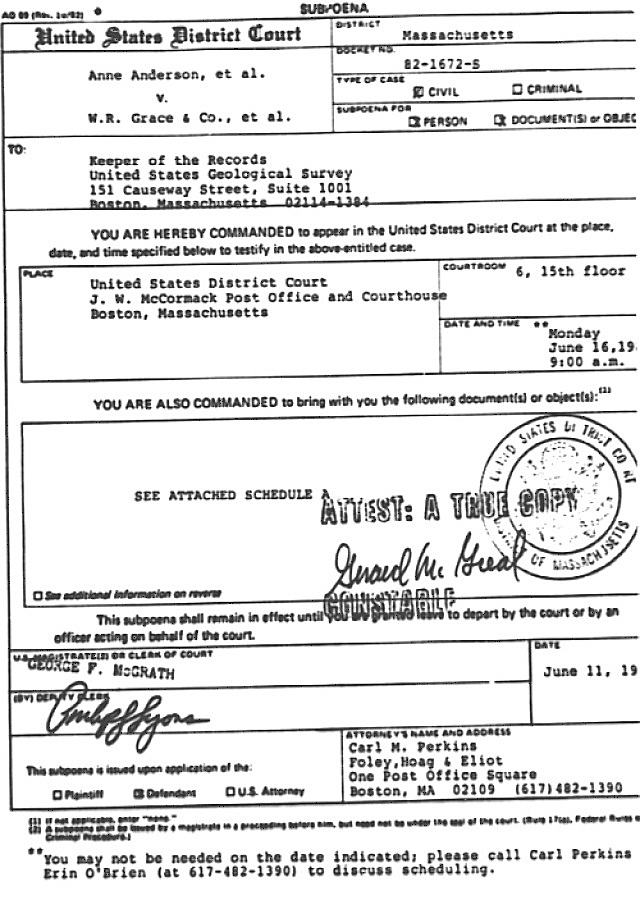
You are also bound to strict confidentiality. A Washington real estate agent must not disclose any confidential information from or about the principal—even after the agency relationship terminates. There is only one mechanism that breaks this seal: a subpoena or court order is the only mechanism that allows a Washington real estate agent to disclose a principal's confidential information without consent.
Continuous Effort and Its Exceptions As an agent, you must make a good faith and continuous effort to find a buyer for the seller or a property for the buyer. However, the law recognizes practical realities. This duty to make a continuous effort can be waived by a written agreement between the Washington broker and the principal. Even without a waiver, a Washington buyer's agent is not obligated to seek additional properties while the buyer is a party to an existing contract to purchase, just as a Washington seller's agent is not obligated to seek additional offers to purchase while the property is subject to an existing contract for sale.
What Does NOT Breach Loyalty? Statutory law protects brokers from frivolous claims of disloyalty when engaging in standard industry practices. Showing a buyer properties not owned by the seller does not breach a Washington seller agent's statutory duty of loyalty. Likewise, showing a property to competing buyers does not breach a Washington buyer agent's statutory duty of loyalty. You are permitted to operate in a free and competitive market.
Transparency in Washington requires specific paperwork at specific times.
First is the mandatory "Real Estate Brokerage in Washington" pamphlet. You must provide this pamphlet to a party before the party signs a services agreement. If you are dealing with an unrepresented party, you must provide it to them before the party signs an offer. Providing the pamphlet is not enough; a Washington real estate broker must obtain a party's written acknowledgment of receipt of the pamphlet.
Second are the transaction-specific disclosures. A Washington real estate broker must disclose their agency relationship in writing before the principal signs an offer. Furthermore, the flow of money must be entirely transparent: a broker must disclose in writing any terms of compensation offered by a party or another firm before the principal signs an offer.
When a broker acts on behalf of both sides of a transaction, they enter a precarious legal state. Washington law defines limited dual agency as a situation where a broker has an agency relationship with both the buyer and the seller in the same transaction.
Because a dual agent cannot possibly provide undivided loyalty to two opposing sides simultaneously, the law demands strict safeguards:
- A Washington real estate broker must obtain written consent from both parties in a brokerage services agreement to act as a limited dual agent.
- A represented party in Washington must initial a specific consent in the brokerage services agreement to allow a broker to serve as a limited dual agent.
- The agreement must state that a limited dual agent may not advocate terms favorable to one principal to the detriment of the other. (You become a neutral facilitator, ensuring the transaction closes smoothly without tipping the scales).
Supervisory Dual Agency
Limited dual agency also travels up the firm's chain of command. If two brokers within the same firm represent opposing parties, their supervisors inevitably become limited dual agents.
- A managing broker acts as a limited dual agent in Washington when supervising two different brokers in the same firm who represent opposing parties in the same transaction.
- Moving to the very top of the hierarchy, a Washington firm's designated broker acts as a limited dual agent when supervising two affiliated brokers who represent opposing parties in a single transaction.
Washington agency law continually adapts to protect the public from modern market distortions.
Anti-Pocket Listing Rules To ensure fair housing and a healthy open market, Washington law prohibits real estate brokers from marketing residential properties to an exclusive group of prospective buyers or brokers (often colloquially known as "whisper" or "pocket" listings). A Washington broker marketing a residential property must concurrently market the property to the general public and all other brokers. You may withhold a residential property from public marketing only under one strict condition: if it is reasonably necessary to protect the health or safety of the owner or occupant.
Short Sale Disclosures In distressed markets, sellers often misunderstand the financial finality of a short sale. A Washington real estate firm representing a seller in a short sale of an owner-occupied residence must provide a specific written short sale disclosure. This Washington short sale disclosure informs the seller that a lender's release of interest for less than the owed amount does not automatically relieve the seller of the obligation to pay remaining debt or commission costs.
Under common law, a principal could be sued for the rogue actions of their agent—a terrifying prospect for a seller who just wanted to list their house. Washington severs this chain of automatic blame. Under Washington law, a principal is not vicariously liable for an act or omission by their real estate agent unless the principal participated in or authorized the act. By the same token, a Washington real estate broker is not vicariously liable for an act or omission of a subagent unless the broker participated in or authorized the act.
Do not mistake this protection for leniency. The duties codified in RCW 18.86 are foundational to the profession. Most Washington statutory agency duties cannot be waived by either the real estate broker or the principal. A violation of the Washington real estate agency duties under RCW 18.86.030 is grounds for disciplinary action under the real estate licensing law, which can result in the suspension or revocation of your broker's license.
Mastering Chapter 18.86 RCW ensures that you not only operate within the strict bounds of Washington law, but that you navigate the complex web of buyers, sellers, and opposing firms with mathematical precision and absolute professional integrity.