Form U4 Filing Requirements and Updates
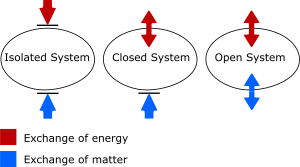
Think of the securities industry as a highly pressurized, closed thermodynamic system where trust is the essential currency. Before a state Administrator will allow an individual to operate within this system, they demand a complete, verifiable mapping of that individual's professional and personal history. This mapping is not a mere bureaucratic hurdle; it is the fundamental mechanism by which the state calculates systemic risk. A single hidden variable—an undisclosed bankruptcy, a forgotten tax lien, a quietly run side business—introduces dangerous volatility into the system, threatening the capital of the investing public. The document that captures this data, continuously tracking an agent's trajectory from applicant to registered professional, is the Form U4.
To step onto the trading floor or legally advise a client, broker-dealer agents must file Form U4 to register with a state securities Administrator. Formally, Form U4 is the Uniform Application for Securities Industry Registration or Transfer.
In the modern era, paper applications are obsolete. Form U4 is filed electronically through the Central Registration Depository system (the CRD). You can think of the CRD as the central nervous system of financial regulation; it routes your background data to the Financial Industry Regulatory Authority (FINRA) and every state Administrator where you seek registration.
Because the integrity of the market rests on the integrity of its participants, the filing process is heavily authenticated. Both the applicant and a principal of the employing broker-dealer must sign the initial Form U4. The principal’s signature is far from a rubber stamp. By signing, the firm stakes its reputation on the applicant; therefore, employing broker-dealers are responsible for verifying the employment history provided by an applicant on Form U4.
To physically corroborate the applicant's identity and detect undisclosed criminal history, fingerprint cards must be submitted in conjunction with Form U4 to facilitate criminal background checks.

When evaluating a physical object's trajectory, physicists look at its past vectors. State Administrators apply the exact same logic to human behavior. To predict how you will handle a client's life savings, the state requires a continuous map of where you have been.
To map this trajectory, Form U4 requires an applicant to disclose five years of continuous residential history and ten years of continuous employment history. The key word is continuous. There are no gaps permitted in this timeline. Even periods of unemployment or full-time education must be accounted for to ensure the state has a complete behavioral vector.
The Warning Lights: Financial and Criminal Disclosures
The Administrator searches for friction in an applicant's past—specifically, financial distress and compromised ethics. The Form U4 acts as a finely tuned instrument to detect these warning lights.
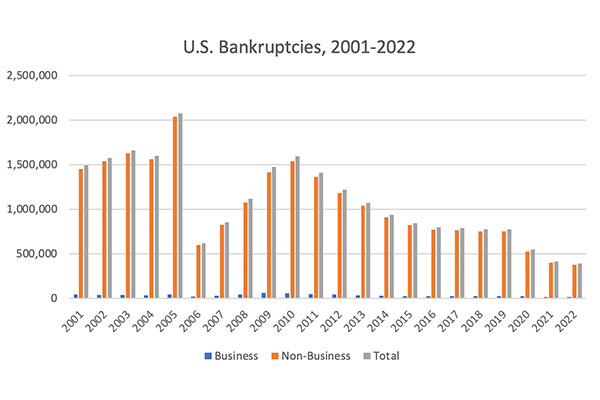
On the financial side, the state wants to know if you can manage your own liabilities before you are permitted to manage others' assets. Consequently, Form U4 requires disclosure of personal bankruptcies filed by the applicant within the past ten years. Furthermore, the form captures ongoing financial distress by mandating that Form U4 requires disclosure of any unsatisfied civil judgments against the applicant as well as any unsatisfied tax liens levied against the applicant.
On the criminal side, the net is cast incredibly wide. Form U4 requires disclosure of any felony criminal convictions, regardless of the nature of the crime. However, the state does not wait for a jury's conviction to assess risk; Form U4 requires disclosure of pleas of guilty or nolo contendere to any felony charges.
Misdemeanors are treated with a more specific lens. While a minor traffic misdemeanor will not typically interest the Administrator, Form U4 requires disclosure of misdemeanor convictions involving investments, fraud, or dishonesty. A misdemeanor conviction for writing a bad check or petty theft demonstrates a fundamental breach of fiduciary character.
Professional Entanglements and the DRP
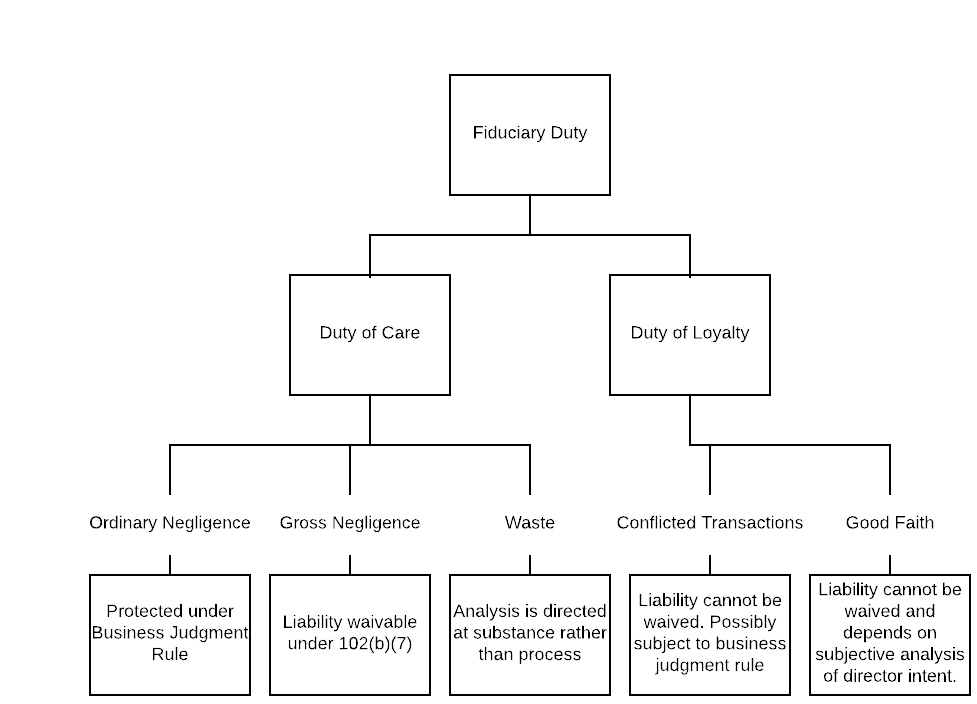
A registered agent owes an undivided duty of loyalty to their clients and their firm. Any division of that loyalty is a conflict of interest. Therefore, Form U4 requires disclosure of any outside business activities conducted by the applicant (OBAs). Whether you are sitting on the board of a local charity or operating a weekend real estate business, the Administrator must be able to see where your time and loyalties are being spent.
The state also tracks your professional friction with the public. Customer complaints alleging sales practice violations must be reported on Form U4, and any formal arbitration claims filed against an agent by customers must be disclosed on Form U4.
The Disclosure Reporting Page (DRP) What happens when an applicant is forced to check "yes" to a question regarding a bankruptcy, a customer complaint, or a criminal charge? A simple checkbox lacks the nuance necessary for a fair regulatory assessment.
To solve this, Form U4 includes a Disclosure Reporting Page for providing detailed explanations of disciplinary events. The rule is absolute: an applicant must complete a Disclosure Reporting Page if the applicant answers affirmatively to any disciplinary disclosure question on Form U4. If the main U4 is the "what," the DRP is the "why, when, and how."
A common misconception among new industry professionals is that Form U4 is a static document—a hurdle cleared once at the beginning of a career. Nothing could be further from the truth. The Form U4 is a living document. Registered agents bear the ongoing responsibility to ensure their Form U4 information remains accurate throughout their entire registration period.
When an agent's life changes, the Form U4 must change to reflect the new reality. The speed at which you must update the state depends on the severity of the change.
The 30-Day Rule: Routine Material Changes
For standard updates, a registered agent must amend Form U4 within 30 days after a routine material change occurs.
- Residential moves: A change of an agent's residential address is a routine material change requiring a Form U4 amendment within 30 days.
- Side businesses: Engaging in a new outside business activity requires a Form U4 amendment within 30 days.
The 10-Day Rule: Statutory Disqualifications
When an event occurs that is severe enough to legally bar an agent from the industry, the timeline compresses drastically to protect the public. A registered agent must amend Form U4 within 10 days if a reportable event results in a statutory disqualification.
- Severe criminal events: A new felony conviction is a statutory disqualification event requiring a Form U4 amendment within 10 days.
| Event Severity | Examples | Amendment Deadline |
|---|---|---|
| Routine Material Change | Change of residential address; New outside business activity (OBA). | Within 30 days |
| Statutory Disqualification | New felony conviction; Misdemeanor conviction for securities fraud. | Within 10 days |
If an agent fails to maintain this living document, the bureaucratic machinery comes to a halt. A state securities Administrator treats a registration application as incomplete if the applicant fails to provide necessary Form U4 amendments, leaving the agent in regulatory limbo.
The regulatory system relies on the assumption of complete transparency. Injecting false data into this system is treated not as a mere clerical error, but as an existential threat to market integrity. The penalties escalate based on the nature of the deception.
First, if deceit is discovered at the threshold, the door is simply shut: Providing false information on a Form U4 is grounds for the state Administrator to deny an agent's registration.
If the agent has already slipped into the system and is found to have hidden a past transgression, the state will actively remove them: Omitting material facts on a Form U4 is grounds for the state Administrator to suspend or revoke an existing registration.
Finally, the state possesses the authority to punish, not just remove. An innocent oversight is one thing, but intentional deception fundamentally breaks the law. Willful misstatements on Form U4 expose the applicant to civil and criminal penalties.
The Form U4 is not merely paperwork; it is the structural foundation of an agent's right to participate in the financial markets. Maintain it with precision, update it with speed, and treat its disclosures with the utmost gravity.