Registration Requirements for Broker-Dealers
Imagine the capital markets as a vast, pressurized pipeline pumping trillions of dollars of equity and debt across state and national borders. Broker-dealers are the master valve operators of this system. They execute trades for clients or for their own books, meaning they hold the public’s financial lifeblood in their hands. Because of the immense power they wield, the regulatory framework governing their registration and operation is one of the most meticulously engineered structures in financial law.

Understanding these rules is not merely an exercise in memorizing bureaucratic red tape; it is learning the fundamental physics of how financial authority is granted, monitored, and revoked. For an agent or principal navigating this landscape, knowing exactly where state authority begins—and where it yields to federal supremacy—will dictate how your firm survives in a highly scrutinized environment.
In the United States, securities law operates on two parallel tracks: federal and state.
At the federal level, the Securities Exchange Act of 1934 is the primary federal law governing the registration and regulation of broker-dealers. This Act mandates that broker-dealers register at the federal level with the Securities and Exchange Commission (SEC).

At the state level, the Uniform Securities Act (USA) serves as the legal template. The core directive of the USA is unambiguous: it is unlawful for a person to transact business in a state as a broker-dealer unless registered in that state under the Uniform Securities Act.
However, state Administrators (the local securities sheriffs) are constrained by federal supremacy. Section 15 of the Securities Exchange Act of 1934 specifically prohibits state Administrators from imposing financial, bonding, or recordkeeping requirements that exceed the requirements of the Securities and Exchange Commission. A state can enforce the rules, but it cannot move the federal goalposts.
Under the Uniform Securities Act, the definition of a broker-dealer focuses purely on function:
A broker-dealer is a person engaged in the business of effecting securities transactions for the accounts of others (acting as a broker) or for the person's own account (acting as a dealer).
To determine if a firm needs to register in a specific state, we must pass the firm through two filters: Exclusions (entities that are simply not broker-dealers by definition) and Exemptions (entities that meet the definition but are granted a free pass from state registration based on specific circumstances).
1. Exclusions (Not a Broker-Dealer)
The USA explicitly excludes certain persons from the definition of a broker-dealer. If you are excluded, the rules of broker-dealer registration do not apply to you at all.
- Agents: The human beings representing the broker-dealer are agents, not broker-dealers themselves. (Think of it this way: the firm is the taxi company; the agent is the driver).

- Issuers: The entities actually creating and issuing the securities (like a corporation selling its own stock) are raising capital, not acting as broker-dealers.
- Banks, Savings Institutions, and Trust Companies: These entities are heavily regulated by vast banking charters and federal banking agencies, so the USA excludes them to prevent overlapping regulatory nightmares.
2. Exemptions (Broker-Dealers Excused from State Registration)
A firm is exempt from state registration if it meets a strict two-part test. First, the person must have no place of business in the state. Second, they must restrict their client base in that state.
If a broker-dealer has no office in State A, they are exempt from registering in State A if they effect transactions exclusively with:
- Issuers of the securities involved.
- Other broker-dealers (wholesaling).
- Institutional buyers, such as banks, trust companies, or pension funds. (The logic here is that institutions are sophisticated and do not require the state's consumer protection safety net).
The "Snowbird" Exemption: What happens when your retail client from New York vacations in Florida for the winter? A broker-dealer with no place of business in a state may transact business with an existing retail customer who is temporarily visiting that state without registering in that state.
If a firm meets the definition and has no exemptions, it must formally request permission to operate.
The Filing Process
The standard document used to apply for registration as a broker-dealer is Form BD. This form is not mailed to 50 different state capitals; rather, it is submitted electronically to the Central Registration Depository (CRD), the computerized database used to process and store the registration records of broker-dealers nationwide.
An applicant for initial broker-dealer registration must submit the following to the state:
- A completed application (Form BD).
- A required state filing fee.
- An irrevocable consent to service of process.
The consent to service of process is a critical legal mechanism. It appoints the state Administrator as the applicant’s legal attorney to receive legal papers in noncriminal civil suits. Why does this matter? If a client in Texas sues a broker-dealer located in Wall Street, the client shouldn't have to chase executives across the country to serve them legal papers. They simply serve the Texas Administrator, and the broker-dealer is considered legally served.

Additionally, the state Administrator may require an applicant for broker-dealer registration to publish a notice of the registration application in one or more state newspapers.
Effective Dates
You cannot begin trading the moment you click "submit." A broker-dealer registration generally becomes effective at noon on the 30th day after a completed application is filed.
However, the state Administrator holds the authority to manipulate this timeline:
- They may specify an earlier effective date if they process it rapidly.
- They hold the authority to delay the effective date of a broker-dealer registration if an amendment is filed before the initial effective date (the 30-day clock essentially restarts).
Once registered, a broker-dealer steps onto a regulatory treadmill that never stops.
Annual Death and Rebirth
Broker-dealer registrations under the Uniform Securities Act do not last forever; they expire annually on December 31, regardless of when during the year the firm originally registered. To maintain active registration status for the upcoming calendar year, a registered broker-dealer must file a renewal application and pay a renewal fee.
Duty to Update
If any information in the registration documents (Form BD) becomes inaccurate or incomplete—such as a change in executive leadership or a shift in business address—a registered broker-dealer must promptly file a correcting amendment. Regulators must know exactly who and what they are regulating at all times.
Corporate Transitions: Successor Firms
In the financial industry, firms are frequently bought, sold, or reorganized. If a broker-dealer restructures mid-year, the registered broker-dealer may file an application to register a successor firm for the unexpired portion of the registration year.
To facilitate this transition without penalizing the business, a successor broker-dealer firm is not required to pay a state filing fee for the unexpired portion of the initial registration year.
Because broker-dealers handle other people's money, state Administrators are deeply concerned with the firm's financial stability.
Minimum Net Capital
A state Administrator may establish minimum net capital requirements for registered broker-dealers to ensure financial solvency. Net capital is the liquid lifeblood of the firm; it ensures the broker-dealer has enough cash on hand to meet its obligations.
The Federal Check: Remember the jurisdiction paradox. Section 15 of the Securities Exchange Act of 1934 prohibits state Administrators from imposing minimum net capital requirements that exceed the Securities and Exchange Commission requirements. If the SEC demands net capital of $250,000, a state Administrator cannot demand $300,000.
Surety Bonds
A state Administrator may also require a registered broker-dealer to post a surety bond. Think of a surety bond as a specialized insurance policy that protects the public from a broker-dealer's catastrophic errors, fraud, or insolvency.
Surety bonds are not required for everyone. They are generally required by a state Administrator only for broker-dealers that:
- Maintain custody of client funds or securities.
- Possess discretionary authority over client accounts.
If a firm doesn't hold client money and doesn't make unauthorized trades, the risk to the public is lower, and the bond is usually waived.
The Federal Check: Once again, Section 15 of the Securities Exchange Act of 1934 prohibits state Administrators from requiring a surety bond amount that exceed the SEC requirements.
Alternatives to Bonds: What if a broker-dealer cannot or will not secure a bond from an insurance company? The law provides a workaround. A state Administrator must accept a deposit of cash in lieu of a required surety bond. Furthermore, the Administrator must accept a deposit of appropriate securities in lieu of a required surety bond.
Regulators verify compliance through a relentless paper trail and the persistent threat of unannounced audits.
Recordkeeping Rules
A state Administrator may require a broker-dealer to make and maintain specific account records and correspondence. However, a state Administrator cannot impose recordkeeping requirements on a broker-dealer that exceed the requirements of the SEC.
When it comes to retention, the industry adheres to the "3 and 2 Rule":
- A broker-dealer must retain most required business records for a minimum of three years.
- A broker-dealer must keep required business records in an easily accessible location for the first two years of the retention period.
Financial Reporting
A broker-dealer must file financial reports with the state Administrator as prescribed by administrative rule or order. Unsurprisingly, the federal ceiling applies here too: a state Administrator cannot require a broker-dealer to file financial reports more frequently than the SEC requires.
The Knock on the Door: Surprise Inspections
To ensure records aren't being forged, a state Administrator may inspect a registered broker-dealer's records at any time within or outside the state without providing prior notice. Regulators do not need a subpoena or a warrant to look at your required books; submitting to unannounced inspections is a fundamental condition of holding the license.
The Administrator acts as the gatekeeper, deciding who is fit to enter the industry and who must be expelled.
Statutory Disqualification
A state Administrator may deny a broker-dealer registration based on the applicant's criminal history. Specifically, registration can be denied if the applicant has been convicted of:
- Any securities-related misdemeanor within the past ten years.
- Any felony within the past ten years.
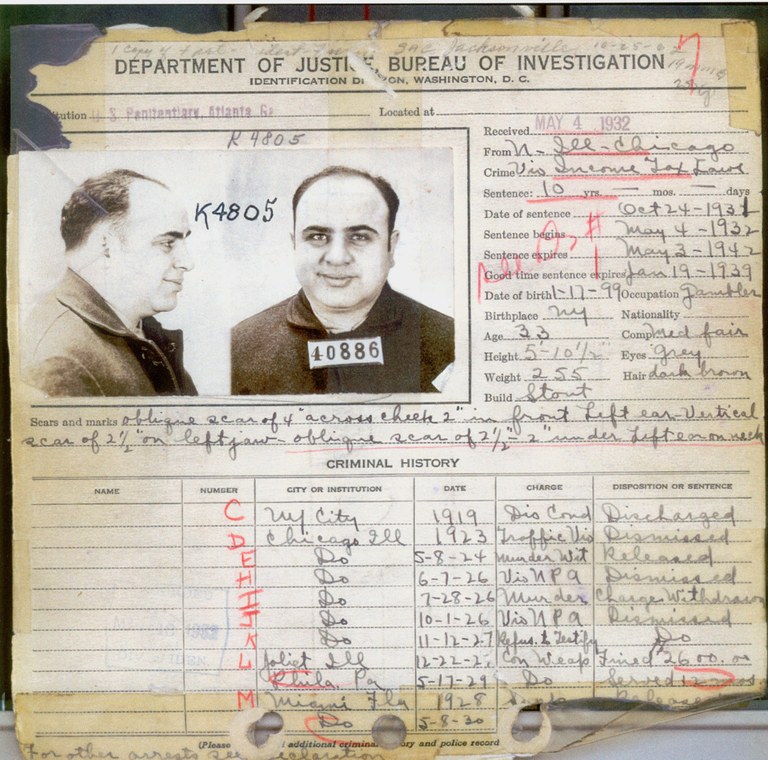
Notice the distinction: any felony counts, even if it has nothing to do with finance (like felony assault), but only securities-related misdemeanors (like petty theft or fraud) trigger the ten-year denial window.
Withdrawing from the Industry
If a firm decides to close up shop, it cannot simply shut off the lights and walk away. A broker-dealer registration withdrawal becomes effective 30 days after the state Administrator receives the application for withdrawal.
Why the delay? Because regulators need time to ensure the firm isn't fleeing a scandal, and that all client assets have been properly transferred.
Even after a firm successfully withdraws, it is not immediately out of the woods. A state Administrator retains jurisdiction and may institute a disciplinary proceeding within one year after a broker-dealer's registration withdrawal becomes effective. This prevents bad actors from surrendering their licenses on a Friday to avoid a fraud investigation on a Monday.